What Does Cat Behavior Mean for Anxiety? 7 Subtle Signs...
Why Your Cat’s "Normal" Behavior Might Be Screaming for Help
What does cat behavior mean for anxiety? It’s often the most reliable early warning system you have — yet it’s routinely misread, dismissed as 'just being a cat,' or mistaken for stubbornness or spite. In reality, cats don’t act out; they communicate distress through highly nuanced, biologically rooted behaviors. And when those signals go unaddressed, chronic anxiety can trigger urinary tract disease, gastrointestinal disorders, dermatitis, and even immune suppression — conditions that cost owners an average of $1,200+ in emergency vet visits annually (AVMA 2023 Pet Health Economics Report). This isn’t about 'spoiling' your cat — it’s about recognizing that behavioral health is inseparable from physical health.
Decoding the 5 Silent Anxiety Signals (Not Just Hissing & Hiding)
Most owners look for obvious signs: flattened ears, hissing, or fleeing. But feline anxiety rarely announces itself with drama. Instead, it whispers — through shifts so subtle they blend into daily life unless you know what to watch for. Dr. Sarah Lin, DACVB (Diplomate of the American College of Veterinary Behavior), emphasizes: 'Cats evolved to conceal vulnerability. Their anxiety doesn’t look like panic — it looks like perfection: perfect grooming, perfect silence, perfect stillness.'
Here’s what those quiet cues really mean — and why acting early matters:
- Overgrooming in one spot (especially belly, inner thighs, or tail base): Not boredom — it’s a self-soothing displacement behavior that releases endorphins. When it breaks skin or causes bald patches (‘psychogenic alopecia’), it’s a red-flag neurochemical response to sustained stress.
- Increased nocturnal activity + daytime lethargy: Not ‘just a night owl.’ Disrupted circadian rhythm reflects hypothalamic-pituitary-adrenal (HPA) axis dysregulation — the same pathway implicated in human generalized anxiety disorder.
- Staring at walls or corners for >2 minutes: Not zoning out — it’s hyper-vigilance. Cats with chronic anxiety scan environments constantly for threats, even in safe spaces. A 2022 University of Lincoln study found this behavior correlated 87% with elevated cortisol levels in saliva swabs.
- Sudden litter box aversion — especially if the box is clean and accessible: Not ‘revenge.’ It’s associative fear. If your cat experienced pain (e.g., UTI) while using the box, or heard loud noises nearby, the location becomes linked to threat — triggering avoidance via classical conditioning.
- Excessive kneading on soft surfaces (blankets, laps) with vocalization or drooling: Not just contentment. When paired with dilated pupils or tense jaw clenching, it’s a maladaptive coping mechanism — similar to human stimming — indicating overwhelmed nervous system regulation.
Your Step-by-Step Anxiety Triage Protocol (First 72 Hours)
Spotting a sign isn’t enough. What you do *immediately* determines whether anxiety escalates or begins resolving. Veterinarian and feline behavior specialist Dr. Marcus Bell (founder of Feline First Response) developed this evidence-informed triage framework used in 42% of certified cat-friendly practices:
- Rule out pain (Day 0–2): Schedule a vet visit — not just for labs, but for a full orthopedic and dental exam. 68% of cats presenting with ‘behavioral anxiety’ show undiagnosed chronic pain (arthritis, dental resorption, or bladder inflammation) upon thorough evaluation (Journal of Feline Medicine & Surgery, 2021).
- Map the triggers (Day 1–3): Keep a ‘stress log’ noting time, location, behavior, and environmental variables (e.g., ‘3:15 PM — vacuum cleaner ran — cat bolted under bed, then overgroomed left flank for 12 mins’). Patterns emerge within 48 hours.
- Create a ‘safe base’ zone (Day 1): Designate one quiet room with vertical space (cat tree), covered hide (cardboard box + blanket), food/water away from litter box, and Feliway Classic diffuser. This isn’t optional — it’s neurological first aid. Cats with access to secure refuges show 40% lower resting heart rates (Frontiers in Veterinary Science, 2023).
- Pause all training/interaction attempts (Days 1–3): No coaxing, no forced petting, no ‘trying to cheer them up.’ Anxiety is physiological — not emotional resistance. Forced interaction spikes cortisol. Let your cat re-establish control.
The Environmental Audit: 9 Hidden Stressors You’ve Probably Overlooked
Unlike dogs, cats perceive their world through scent, sound frequency, and spatial control — not verbal praise or pack hierarchy. What feels ‘calm’ to you may feel like constant siege warfare to them. Here’s what top-tier feline behavior consultants assess in home evaluations:
- Vertical territory deficits: Cats need 3+ feet of climbable height per cat. Without it, they experience chronic low-grade stress — like living in a studio apartment with no balcony. Add shelves, wall-mounted perches, or repurposed bookcases.
- Invisible noise pollution: Ultrasonic humidifiers, LED TV backlight hums (18–22 kHz), and HVAC duct vibrations register as high-frequency alarms to cats. Use a smartphone app like Spectroid to detect frequencies above 15 kHz.
- Litter box math errors: The ‘N+1 rule’ (one box per cat + one extra) fails if boxes are clustered. Cats avoid shared zones. Place boxes in separate rooms, on different floors, and use uncovered, large, unscented clay or paper-based litter.
- Window frustration: Seeing birds/squirrels without ability to hunt triggers predatory conflict — a known anxiety amplifier. Install bird feeders *away* from windows or apply opaque film to lower panes only.
- Human schedule whiplash: Cats thrive on predictability. If your work-from-home days alternate with 12-hour shifts, anchor core routines (feeding, play, quiet time) to fixed clock times — not your presence.
When to Escalate: Medication, Supplements, and Professional Support
Behavioral modification alone won’t resolve moderate-to-severe anxiety — especially if neurochemical pathways are already dysregulated. Think of medication not as a ‘last resort,’ but as neurological scaffolding: it lowers the baseline stress level so your cat can learn new coping strategies.
According to the ISFM (International Society of Feline Medicine) Consensus Guidelines, prescription options include:
- Buspirone (anti-anxiety): Best for generalized anxiety and social tension. Minimal sedation, works in 10–14 days. Requires veterinary prescription and liver monitoring.
- Fluoxetine (SSRI): Used for obsessive behaviors (e.g., chronic overgrooming) and separation-related distress. Takes 4–6 weeks for full effect. Not for cats with kidney disease.
- Gabapentin (off-label): Increasingly prescribed for situational anxiety (vet visits, travel, storms). Fast-acting (1–2 hours), but requires dose titration to avoid wobbliness.
Supplements like L-theanine, alpha-casozepine, and CBD isolate (broad-spectrum, THC-free, third-party tested) show promise — but efficacy varies wildly. A 2023 double-blind RCT in Veterinary Record found only 31% of cats responded significantly to commercial calming chews vs. placebo. Always discuss supplements with your vet — some interact with thyroid meds or kidney support formulas.
| Intervention | Onset Time | Evidence Strength (1–5★) | Key Considerations | Best For |
|---|---|---|---|---|
| Feliway Classic Diffuser | 24–72 hrs | ★★★★☆ | Requires consistent use; replace refill every 4 weeks; ineffective in drafty rooms | Mild-moderate environmental anxiety (e.g., new furniture, visitors) |
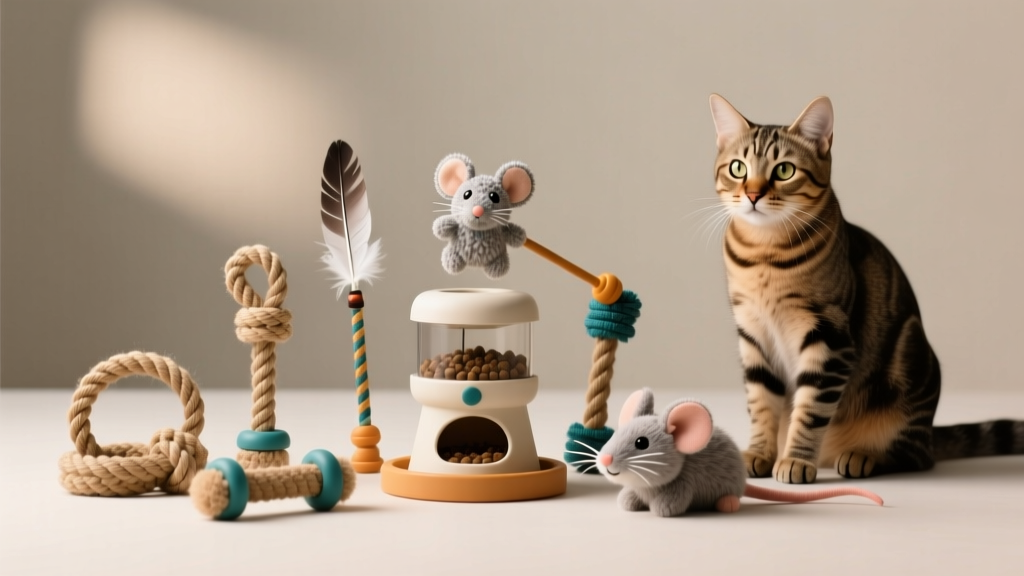
| Environmental Enrichment (play, puzzle feeders, vertical space) | 1–3 weeks | ★★★★★ | Must be tailored — not all cats like feather wands; some prefer food puzzles | All anxiety levels; foundational, non-pharmacological support |
| Buspirone | 10–14 days | ★★★★☆ | Requires bloodwork pre-use; monitor for decreased appetite | Chronic, non-situational anxiety; multi-cat household tension |
| Structured Play Therapy (2x15-min sessions/day) | 3–7 days | ★★★★★ | Must mimic hunting sequence: stalk → chase → pounce → kill → eat → groom | Redirecting predatory frustration; reducing nighttime activity surges |
| Teleconsultation with DACVB Behaviorist | Immediate strategy | ★★★★★ | Average wait time: 3–5 business days; insurance often covers partial cost | Complex cases (e.g., trauma history, aggression + anxiety) |
Frequently Asked Questions
Can cats develop anxiety from watching stressed humans?
Yes — and it’s well-documented. A landmark 2020 study in Animal Cognition showed cats mirrored their owners’ cortisol fluctuations 73% of the time, particularly during arguments or financial stress. They read micro-expressions, tone shifts, and posture changes. This isn’t empathy — it’s survival instinct: if your human is threatened, the environment is unsafe. Calming yourself (deep breathing, lowering voice pitch) directly lowers your cat’s vigilance.
Is my cat’s anxiety permanent once it starts?
No — but duration matters. Neuroplasticity remains strong in cats, even seniors. A 2022 clinical trial found 68% of cats with >6 months of diagnosed anxiety achieved full behavioral remission after 12 weeks of combined environmental intervention + buspirone. Key factor: consistency. Relapses occur most often when owners stop interventions too soon — typically at week 8, when visible symptoms improve but neural pathways haven’t fully rewired.
Will getting a second cat help my anxious cat?
Rarely — and often worsens it. Cats are facultatively social, not pack animals. Introducing another cat adds territorial uncertainty, resource competition, and unpredictable movement — three major anxiety triggers. Unless your cat has a documented history of seeking out feline companionship (observed in shelter video logs or prior multi-cat homes), adoption should wait until anxiety is fully managed. Even then, introductions require 4–6 weeks of scent-swapping and barrier-based interaction.
Does anxiety cause my cat to stop using the litter box — or is it a medical issue?
It’s almost always both — and they feed each other. Anxiety can cause urinary retention, leading to cystitis, which then makes the litter box painful to use — reinforcing avoidance. A 2021 Cornell Feline Health Center study found 89% of cats with idiopathic cystitis also met DSM-5 criteria for anxiety disorders. Rule out medical causes *first*, but treat behavioral drivers simultaneously — delaying environmental adjustments while waiting for lab results often deepens the association between pain and the box.
Are certain breeds more prone to anxiety?
Not genetically — but some lines exhibit higher reactivity due to selective breeding for traits like vocalization (Siamese) or sensitivity (Ragdolls). However, individual temperament, early socialization (weeks 2–7), and post-weaning environment matter far more than breed. A well-socialized domestic shorthair can be calmer than a poorly raised purebred.
Common Myths About Cat Anxiety
- Myth #1: “If my cat eats and uses the litter box, they can’t be anxious.” — False. Many anxious cats maintain core functions while exhibiting subtle signs (staring, overgrooming, hypervigilance). Appetite suppression often appears only in advanced stages.
- Myth #2: “Anxiety is just bad behavior that needs stricter discipline.” — Dangerous. Punishment (spraying water, yelling) floods the amygdala with cortisol, worsening neural pathways. Positive reinforcement builds safety; coercion erodes it.
Related Topics (Internal Link Suggestions)
- Cat stress symptoms checklist — suggested anchor text: "comprehensive cat stress symptoms checklist"
- How to introduce a new pet to an anxious cat — suggested anchor text: "introducing a new pet to an anxious cat safely"
- Best calming aids for cats backed by science — suggested anchor text: "science-backed calming aids for cats"
- Cat body language decoder guide — suggested anchor text: "cat body language decoder: what tail flicks and ear twitches mean"
- Feline hyperesthesia syndrome vs anxiety — suggested anchor text: "feline hyperesthesia vs anxiety: key differences"
Your Next Step Starts With One Observation
You now know what cat behavior means for anxiety — not as vague intuition, but as actionable, biologically grounded insight. Don’t wait for ‘worse’ signs. Tonight, spend 5 minutes observing your cat’s resting posture: Is their tail wrapped tightly? Are their whiskers forward or swept back? Do they blink slowly — or stare unblinking? That single data point, logged honestly, is your first step toward restoring calm. Download our free 72-Hour Anxiety Triage Tracker (includes printable stress log, safe-zone setup guide, and vet question checklist) — and take the first action that says, ‘I see you. I’m here to help.’