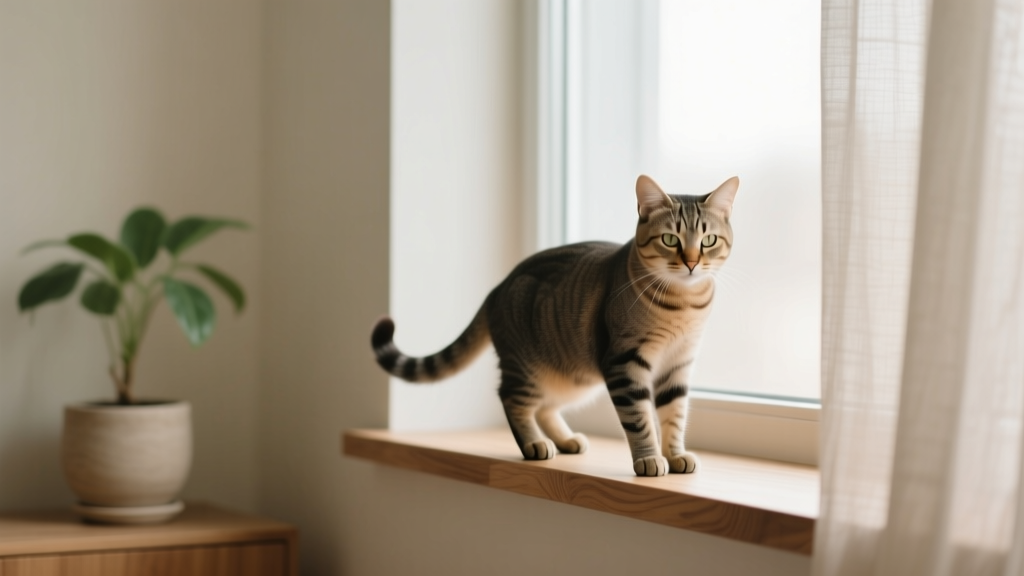
What Cat Behavior Means at Home: 12 Signs Decoded
Why Decoding What Cat Behavior Means at Home Is the #1 Skill Every Cat Guardian Needs Right Now
If you've ever stared at your cat mid-lick, watched them stare blankly out the window for 20 minutes, or wondered why they suddenly sprinted across the living room at 3 a.m., you're not alone—and you're asking exactly the right question: what does cat behavior mean at home? Unlike dogs, cats rarely broadcast their needs with obvious cues. Instead, they communicate through micro-expressions, subtle body shifts, and environmental choices that most humans miss entirely. And when those signals go uninterpreted? Chronic low-grade stress builds—leading to urinary tract issues, overgrooming, aggression, and even behavioral euthanasia (a heartbreaking reality: up to 27% of cats surrendered to shelters are relinquished due to 'behavior problems' that stem from unmet needs, per the ASPCA’s 2023 Shelter Intake Report). The good news? With just 15 minutes of focused observation and science-backed decoding, you can transform confusion into clarity—and turn your home into a sanctuary your cat truly understands.
1. The Silent Language: Reading Posture, Tail, and Ear Signals Like a Feline Ethologist
Cats don’t speak English—but they speak volumes through posture. Dr. Mikel Delgado, certified cat behavior consultant and researcher at UC Davis, emphasizes that context is non-negotiable: a twitching tail isn’t always anger—it’s often intense focus (like before pouncing on a dust bunny), while a low, slow wag may signal rising anxiety. Here’s how to read the top 6 physical cues—without anthropomorphizing:
- Ears forward and slightly tilted: Curiosity or relaxed attention—safe to approach or offer gentle petting (if your cat tolerates it).
- Ears flattened sideways (“airplane ears”): Early stress signal—often precedes hissing or hiding. Step back, remove triggers (e.g., loud noise, unfamiliar person), and offer vertical space (cat tree, shelf).
- Tail held high with a gentle curve at the tip: Confidence and friendly greeting—your cat’s version of a handshake.
- Tail wrapped tightly around body or tucked under: Fear or discomfort—especially common in new environments or after vet visits. Avoid forcing interaction; instead, place a soft blanket with your scent nearby.
- Paw kneading (“making biscuits”): A neon sign of contentment and security—rooted in kitten nursing behavior. It’s not about hunger; it’s deep-rooted comfort signaling.
- Sideways “crab walk” with arched back and puffed fur: Defensive escalation—not aggression. Your cat feels trapped and is buying time. Never punish this; create escape routes (e.g., open doors to quiet rooms) and use Feliway diffusers to lower ambient stress hormones.
A real-world example: Sarah, a Portland-based teacher with two rescue cats, noticed her older cat, Luna, began sleeping exclusively under the bed after her new kitten arrived. She assumed Luna was ‘jealous’—until she filmed Luna’s body language. What she saw wasn’t hostility: Luna’s ears stayed forward when watching the kitten play, her tail remained loosely curled—not tucked—and she’d occasionally blink slowly. A behaviorist explained this was avoidance coping, not resentment—and recommended staggered feeding times and separate play sessions. Within 10 days, Luna resumed napping on the couch—still near, but on her own terms.
2. Vocalizations: Beyond “Meow”—What Your Cat Is Really Saying (and When Silence Is Louder)
Here’s a truth many owners miss: adult cats rarely meow at other cats. They meow almost exclusively at humans—as a learned, cross-species communication tool. That means every meow is tailored to you. But tone, duration, and timing tell the real story:
- Short, high-pitched “mew!”: Greeting or request (e.g., “I’m here! Feed me!”). Often paired with leg-rubbing.
- Long, drawn-out “MRRRROOOOWWW?”: Distress, frustration, or pain—especially if new or escalating. In senior cats, this can signal hyperthyroidism or kidney disease. Rule of thumb: Any vocal change lasting >48 hours warrants a vet check.
- Chirps/chatters (rapid “brrrt-brrrt” sounds): Excitement mixed with predatory frustration—usually directed at birds or squirrels outside windows. Harmless unless obsessive (e.g., 2+ hours daily), which may indicate environmental under-stimulation.
- Purring: Not always happiness. Cats purr when injured, giving birth, or stressed (studies show purring frequencies at 25–150 Hz promote bone density and tissue repair). Observe body language—if purring accompanies flattened ears or stiff posture, it’s likely self-soothing, not contentment.
- Silence in a normally vocal cat: One of the most urgent red flags. Sudden quietness in a talkative cat often signals pain, nausea, or respiratory distress. Don’t wait—schedule a vet visit within 24 hours.
Dr. Tony Buffington, Professor Emeritus of Veterinary Clinical Sciences at Ohio State, stresses: “We’ve trained cats to meow for food, but we haven’t taught ourselves to listen to the grammar of their voices. Duration, pitch inflection, and repetition rate matter more than volume.” His team’s 2022 study (published in Applied Animal Behaviour Science) found that cats used 16 distinct vocal patterns to communicate different needs to their owners—including a unique ‘demand meow’ for food versus a ‘contact call’ for attention.
3. Environmental Choices: How Your Cat’s Movement, Hiding, and Litter Box Use Reveal Their Inner World
Cats vote with their feet—and their paws. Where they choose to sleep, eat, eliminate, and observe tells you more than any behavior chart. According to the International Society of Feline Medicine (ISFM), environmental stress is the leading trigger for feline idiopathic cystitis (FIC)—a painful bladder condition affecting 60% of indoor cats with urinary issues.
Start with the Three Pillars of Feline Welfare (per ISFM guidelines):
1. Safe places to hide or perch
2. Multiple, separated key resources (litter boxes, food, water, scratching posts)
3. Opportunities for positive, predictable human interaction
Let’s break down what your cat’s spatial habits mean:
- Sleeping on your pillow or laptop: High-trust behavior. Your scent is strongest there, and warmth + proximity = safety. Don’t shoo them—it’s bonding.
- Scratching furniture instead of posts: Not defiance—it’s likely location mismatch. Cats scratch where they enter/exit rooms, near sleeping areas, or where they see movement (e.g., TV wall). Place posts there, not just in corners.
- Litter box avoidance: Rarely “spite.” Usually one of three things: box cleanliness (scoop twice daily), substrate aversion (many cats hate scented clay), or location stress (near noisy appliances or in high-traffic hallways). Try the “2+1 Rule”: number of boxes = number of cats + 1, placed on separate floors, away from food/water.
- Bringing you “gifts” (dead bugs, toys, socks): Instinctual teaching behavior—even in spayed/neutered cats. They see you as an inept hunter who needs mentoring. Reward with praise, then quietly dispose of the item. Never yell—it breaks trust.
| Behavior Observed | Most Likely Meaning | Immediate Action to Take | When to Consult a Vet or Behaviorist |
|---|---|---|---|
| Overgrooming (bald patches, skin irritation) | Chronic stress or medical itch (allergies, pain) | Rule out fleas, switch to unscented litter, add Feliway Classic diffuser, provide 2+ vertical spaces per cat | If bald patches persist >7 days or skin is red/swollen—veterinary dermatology consult needed |
| Urine marking (spraying on vertical surfaces) | Perceived territorial threat (new pet, construction, neighbor cat visible) | Block outdoor cat visibility (blackout film on windows), clean marked areas with enzymatic cleaner (not ammonia), add motion-activated deterrents outdoors | If spraying occurs >3x/week for >2 weeks despite environmental fixes—rule out UTI or bladder stones |
| Aggression toward specific people | Fear-based (past negative experience) or overstimulation (petting intolerance) | Teach guests to avoid direct eye contact, offer treats for calm presence, end petting sessions before tail flicks begin | If aggression escalates to biting that breaks skin or occurs without warning—certified behaviorist referral essential |
| Excessive vocalization at night | Circadian rhythm disruption, boredom, or cognitive decline (in seniors) | Implement structured daytime play (2x 15-min interactive sessions), feed last meal at bedtime, install nightlight in hallway | If yowling includes disorientation, staring into corners, or house-soiling—veterinary neurology/cognitive assessment required |
4. Social Dynamics: Interpreting Multi-Cat Households, Human Bonds, and “Alone Time” Signals
Living with multiple cats isn’t like hosting a furry slumber party—it’s more like managing a delicate diplomatic mission. Cats are facultatively social: they can coexist peacefully, but only when resources exceed demand and hierarchy is stable. Misreading their interactions causes unnecessary conflict.
Observe these nuanced dynamics:
- Allogrooming (mutual licking): Strong social bond—usually between related cats or long-term companions. If one cat initiates but the other freezes or licks back half-heartedly, it’s polite tolerance—not friendship.
- Blocking access to resources: A subtle dominance display. If Cat A sits directly in front of the food bowl while Cat B waits, it’s not “sharing”—it’s control. Solution: feed cats in separate rooms, 10+ feet apart.
- Slow blinking: The ultimate feline “I love you.” When your cat holds eye contact, then slowly closes both eyes, they’re signaling safety. Return the gesture—hold eye contact, then blink slowly. Many owners report their cats blink back within days, deepening mutual trust.
- “Cat loaf” position (paws tucked, tail wrapped, eyes half-closed): Deep relaxation—but only in secure environments. If your cat loafs near you, it’s profound trust. If they only loaf in closets or under beds, your home may lack safe zones.
Case in point: Mark in Austin adopted two bonded kittens. After six months, one began hissing at the other during meals. Instead of assuming “fighting,” he filmed their interactions. He noticed the hisser always ate first—and the second cat approached only after the bowl was empty. The issue wasn’t aggression; it was resource insecurity. Adding a second feeding station 12 feet away resolved it in 48 hours.
Frequently Asked Questions
Why does my cat stare at me silently—and should I stare back?
No—don’t stare back. Prolonged direct eye contact is threatening to cats. What looks like “staring” is usually relaxed observation. If your cat holds your gaze and slowly blinks, that’s affection. If they freeze, pupils dilate, or ears flatten, they feel exposed. Soften your gaze, look away briefly, and offer a treat instead.
Is it normal for my cat to sleep 16–20 hours a day?
Yes—absolutely normal. Cats evolved as crepuscular hunters (most active at dawn/dusk), conserving energy for short bursts of activity. However, changes in sleep patterns matter: sudden lethargy, difficulty waking, or sleeping in unusual places (e.g., cold tile floor instead of warm lap) can signal pain, fever, or depression. Track duration and location for 3 days before consulting your vet.
My cat knocks things off shelves—is it spite or play?
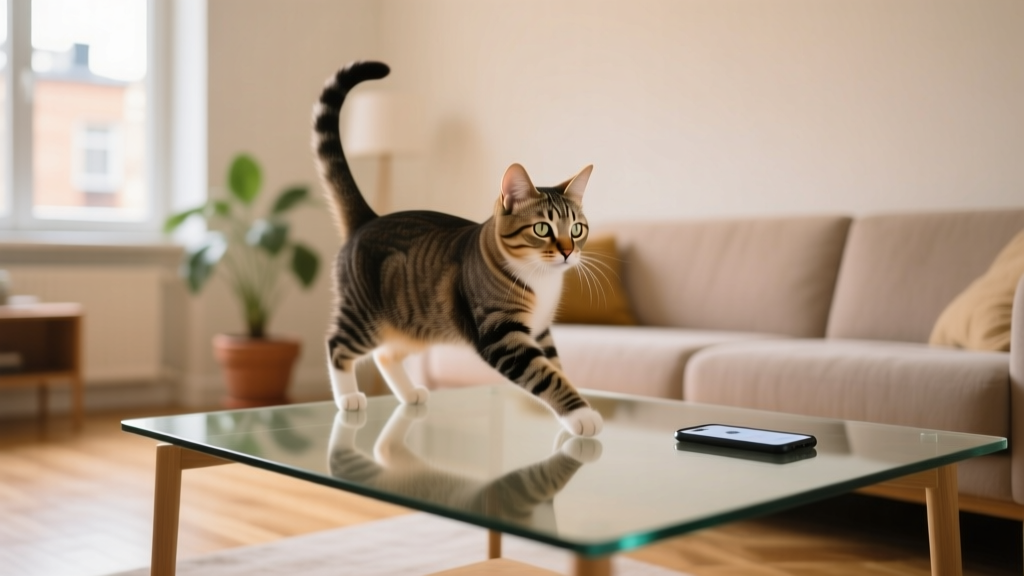
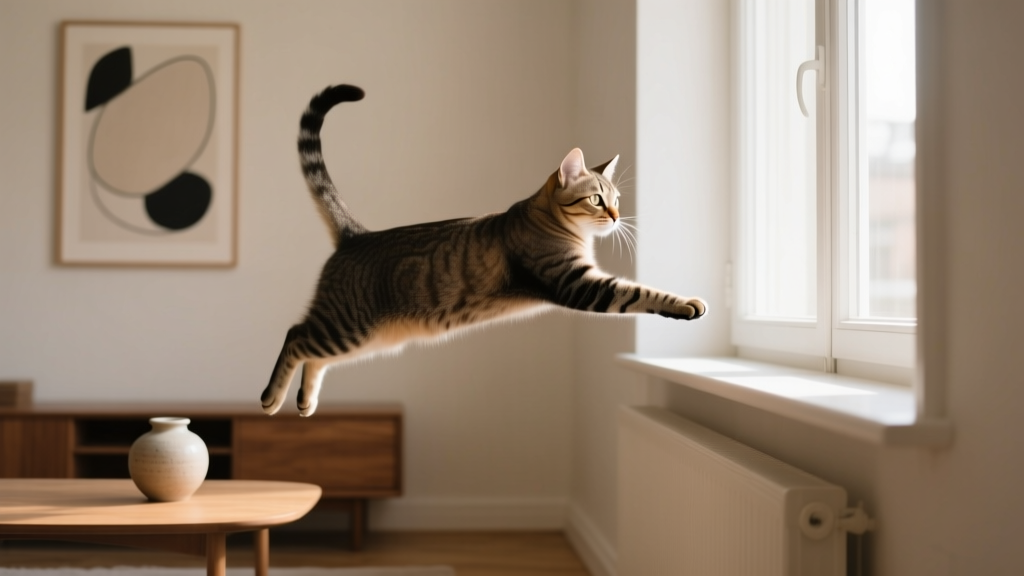
Neither. It’s instinct-driven object play mimicking prey capture. Cats target items that move, make noise, or reflect light—because those traits mimic small rodents or insects. Redirect with wand toys that simulate erratic movement, and remove breakables from edges. Punishment increases anxiety and damages trust.
How do I know if my cat is anxious—not just “grumpy”?
Anxiety hides in subtle shifts: excessive grooming, increased blinking rate (>30 blinks/minute), hiding during routine activities (e.g., vacuuming), or sudden aversion to previously enjoyed spots (like sunbeams). Use the “HIDE” acronym: Hiding, Increased vigilance, Dilated pupils at rest, Excessive vocalization or silence. Spot 2+ signs? Start environmental enrichment before assuming temperament.
Common Myths
Myth #1: “Cats are aloof and don’t form deep bonds.”
False. Neuroimaging studies (University of Tokyo, 2021) show cats experience attachment to owners comparable to dogs and human infants—measured via secure base behavior in novel environments. When scared, bonded cats seek proximity to their person, not just hiding.
Myth #2: “If my cat purrs, they must be happy.”
Incorrect. As noted earlier, purring serves as a self-soothing mechanism during pain, fear, or recovery. Always pair vocalization with body language: a purring cat with flattened ears and shallow breathing is in distress—not bliss.
Related Topics
- Understanding Cat Body Language Cues — suggested anchor text: "cat body language decoder"
- How to Reduce Stress in Indoor Cats — suggested anchor text: "indoor cat stress relief tips"
- Multi-Cat Household Harmony Guide — suggested anchor text: "living with multiple cats peacefully"
- When to See a Feline Behaviorist — suggested anchor text: "cat behaviorist vs. veterinarian"
- Enrichment Ideas for Bored Cats — suggested anchor text: "cat enrichment activities at home"
Your Next Step Starts Today—No Expertise Required
You don’t need a degree in ethology to understand what cat behavior means at home. You need curiosity, consistency, and compassion—and you already have those. Pick one behavior you’ve been wondering about (tail flicks? midnight zoomies? that mysterious head-butt against your shin?). For the next 3 days, observe it without judgment—note time, location, your actions before it happened, and your cat’s full-body posture. Then revisit this guide’s decoding tables. Small observations compound into profound understanding. And if uncertainty lingers? Book a 15-minute consult with a certified cat behaviorist (find one at IAABC.org). Your cat isn’t broken—they’re speaking a language you’re now empowered to learn. Start listening.