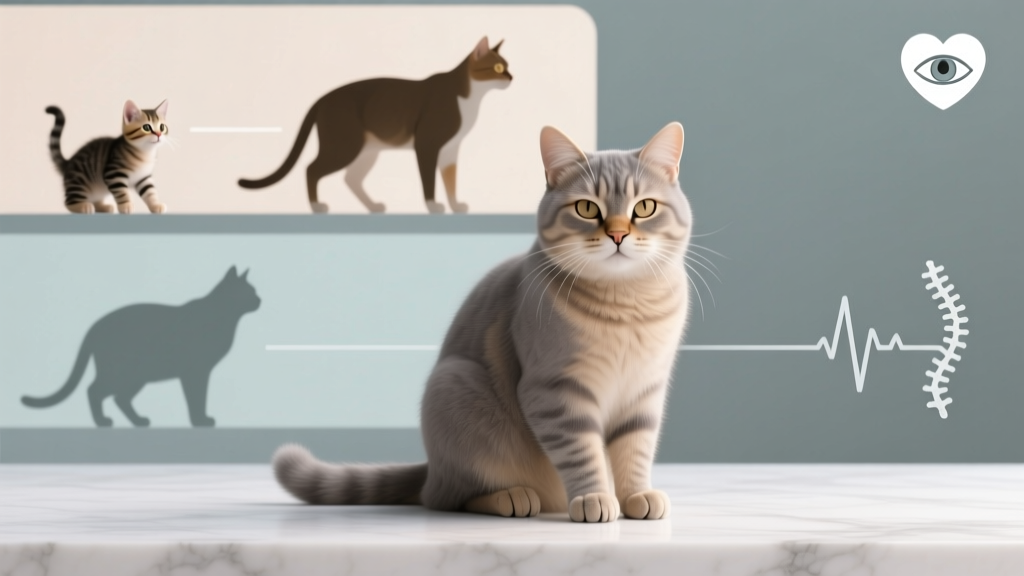
Do cats behavior change as they get older? Yes
Why Your Cat’s Changing Behavior Isn’t ‘Just Getting Older’ — It’s a Conversation They’re Trying to Have
Do cats behavior change as they get older? Absolutely — and those changes are rarely random or inevitable. In fact, over 85% of cats aged 15+ show measurable shifts in sleep-wake cycles, social interaction, activity levels, and environmental responsiveness, according to a landmark 2023 Cornell Feline Health Center longitudinal study. But here’s what most owners miss: these aren’t just ‘senior quirks.’ They’re often the first, quiet language of underlying pain, sensory loss, cognitive dysfunction, or anxiety — all treatable or manageable when caught early. Ignoring them isn’t patience; it’s missed opportunity for comfort, connection, and extended quality of life.
What Changes — and What Stays the Same (Spoiler: Their Core Personality Is Remarkably Stable)
Contrary to popular belief, cats don’t fundamentally ‘reboot’ their personalities with age. Dr. Sarah Wooten, DVM and certified feline behaviorist, explains: ‘A confident, curious cat rarely becomes fearful overnight — but chronic joint pain may make her avoid jumping onto the windowsill she once loved, leading owners to mislabel her as “grumpy” or “withdrawn.”’ The real story lies in three interlocking layers: physical capacity, sensory input, and neurocognitive processing.
Between ages 7–10, many cats enter ‘mature adulthood’ — a transitional phase where metabolism slows, muscle mass begins subtle decline, and hearing/vision acuity starts diminishing (especially high-frequency sounds and low-light contrast). You might notice your cat sleeping 2–3 hours more per day, grooming less thoroughly (particularly along the spine and hindquarters), or startling more easily at sudden noises. These aren’t ‘bad habits’ — they’re physiological adaptations.
By age 12+, behavioral shifts become more pronounced and clinically meaningful. A 2022 Journal of Feline Medicine & Surgery review found that 42% of cats aged 12–15 showed at least one sign consistent with feline cognitive dysfunction syndrome (CDS) — including disorientation, altered interaction patterns, sleep-wake cycle reversal, and house-soiling in previously litter-trained cats. Crucially, CDS symptoms overlap significantly with hyperthyroidism, kidney disease, and dental pain — making veterinary diagnostics essential before assuming ‘it’s just old age.’
The 5 Critical Behavioral Shifts — And Exactly What to Do About Each One
Not all changes carry equal weight. Here’s how to triage what you’re seeing — with actionable, vet-vetted responses:
- Sleep Pattern Reversal: If your cat is awake and vocalizing loudly at 3 a.m. but napping through daylight hours, this isn’t ‘just being nocturnal.’ It often reflects disrupted circadian rhythms linked to vision loss (reducing light cues), decreased melatonin production, or early-stage CDS. Action: Install low-wattage nightlights in hallways and near the litter box; offer gentle daytime enrichment (10-minute play sessions with wand toys); consult your vet about melatonin supplementation only after ruling out hypertension and kidney disease.
- Reduced Grooming & Matting: This is among the most under-recognized red flags. A cat who stops cleaning behind her ears or under her tail may be experiencing painful arthritis in the shoulders, elbows, or spine — not laziness. Action: Perform weekly ‘grooming checks’: gently flex each limb through full range of motion while watching for flinching or withdrawal. Schedule a senior wellness exam with orthopedic palpation and radiographs if stiffness is suspected.
- Increased Vocalization (Especially at Night): While some yowling is territorial or attention-seeking, new-onset, persistent vocalization in older cats correlates strongly with hypertension (common in kidney disease and hyperthyroidism) or CDS-related confusion. Action: Have blood pressure measured at every senior checkup — it’s non-invasive and takes 90 seconds. Record a 60-second audio clip of the vocalizations to share with your vet; pitch and pattern matter more than volume.
- Withdrawal or Avoidance of Familiar People/Places: A cat who hides when grandchildren visit or refuses her favorite sunbeam may be experiencing chronic pain, hearing loss (making voices sound distorted), or anxiety triggered by reduced sensory input. Action: Create ‘low-stimulus sanctuaries’ — quiet rooms with orthopedic beds, heated pads (set to 100°F max), and familiar scents (a worn t-shirt). Never force interaction; instead, use passive bonding: sit nearby reading aloud softly, offering chin scratches only if she initiates contact.
- House-Soiling Outside the Litter Box: This is the #1 reason senior cats are surrendered to shelters — yet over 70% of cases stem from medical causes like urinary tract inflammation, arthritis (making box entry painful), or CDS-related forgetting. Action: First, rule out UTI/kidney disease with urinalysis and bloodwork. Then optimize litter box access: switch to low-entry boxes, use unscented, fine-grained litter, place boxes on every floor (minimum two per level), and clean daily with enzymatic cleaner — never ammonia-based products.
When ‘Normal Aging’ Crosses Into Medical Territory — The 3-Question Triage Tool
Veterinary behaviorist Dr. Tony Buffington developed this rapid assessment used in UC Davis’ Feline Wellness Clinic. Ask yourself these questions — if you answer ‘yes’ to any, schedule a vet visit within 7 days:
- Has this behavior changed within the last 4–6 weeks? (Sudden onset = urgent red flag)
- Does it occur only in specific contexts — e.g., only when approached from behind, only near stairs, only after eating? (Contextual triggers point to pain or sensory deficits)
- Is your cat avoiding activities they once enjoyed — like sitting on your lap, watching birds, or exploring closets? (Loss of motivation signals neurological or systemic illness)
Real-world example: Luna, a 14-year-old tortoiseshell, began avoiding her beloved window perch. Her owner assumed ‘she’s just slowing down’ — until a vet exam revealed severe cervical spondylosis (spinal arthritis) compressing nerves. With gabapentin and a custom ramp, Luna returned to birdwatching within 10 days. Early intervention prevented irreversible muscle atrophy and depression.
Cat Behavior Change Timeline: Key Milestones & Proactive Care Actions
| Life Stage | Typical Behavioral Shifts | Proactive Veterinary Actions | Home Environment Adjustments |
|---|---|---|---|
| Mature Adult (7–10 years) | • Slightly increased sleep (14–16 hrs/day) • Reduced play intensity & duration • Mild hesitancy on high jumps | • Annual bloodwork + urinalysis • Dental exam under anesthesia • Baseline blood pressure | • Add soft landing zones (cushioned steps, padded shelves) • Introduce puzzle feeders for mental engagement • Switch to senior-formula food (lower phosphorus, added omega-3s) |
| Senior (11–14 years) | • Noticeable grooming decline (especially hindquarters) • Increased vocalization at night • Disorientation in familiar spaces (e.g., ‘getting lost’ in hallway) • Subtle personality softening (less assertive, more tolerant) | • Biannual exams with CBC, chemistry panel, T4, SDMA, urine culture • Cognitive function screening (using validated feline CDS checklist) • Orthopedic evaluation (gait analysis, joint palpation) | • Install ramps/steps to favorite perches • Use Feliway Optimum diffusers in high-traffic areas • Place litter boxes with low entry points in every room used daily |
| Geriatric (15+ years) | • Significant sleep-wake reversal • Repetitive pacing or vocalizing • Forgetting litter box location or purpose • Reduced appetite or selective eating • Increased sensitivity to touch or noise | • Quarterly exams with focus on pain management (e.g., buprenorphine trial) • Neurological workup if disorientation worsens • Nutritional consult for calorie-dense, palatable options | • Create dedicated ‘comfort zone’ with heated bed, soft lighting, and white noise machine • Use microchip-activated feeders to prevent resource guarding • Rotate toys weekly to maintain novelty without overstimulation |
Frequently Asked Questions
Why does my senior cat suddenly hate being brushed?
This is rarely about ‘disliking’ grooming — it’s almost always about pain. Arthritic shoulders, sensitive skin from thinning fur, or dental discomfort (triggered by head positioning) can make brushing excruciating. Try switching to a soft silicone glove or damp washcloth for gentle wiping. If resistance persists, request a full orthopedic and dermatological exam — especially checking for lumbosacral pain, which affects up to 60% of geriatric cats.
Can cats develop dementia like humans?
Yes — it’s called Feline Cognitive Dysfunction Syndrome (CDS), affecting an estimated 28% of cats aged 11–14 and 50% of those 15+. Symptoms include spatial disorientation, altered social interactions, sleep-wake cycle disruption, and house-soiling. While there’s no cure, early intervention with environmental enrichment, antioxidant-rich diets (vitamin E, selenium, beta-carotene), and medications like selegiline can slow progression and improve quality of life. Diagnosis requires ruling out medical mimics first — never assume it’s ‘just dementia.’
My old cat is aggressive when I pick him up — is he being mean?
No — aggression is nearly always fear- or pain-based in seniors. Hip dysplasia, spinal arthritis, or abdominal tenderness (from kidney or GI disease) can make lifting unbearable. Observe his body language: flattened ears, dilated pupils, tail lashing, or growling *before* you lift are clear ‘stop’ signals. Instead, support his entire body — cradle hindquarters first, then lift gently — and consider using a lightweight carrier for transport. A vet exam with hands-on orthopedic assessment is essential.
Will changing my senior cat’s routine cause stress?
Ironically, consistency is comforting — but so is predictability in change. Senior cats thrive on rhythm, not rigidity. If you must alter routines (e.g., moving litter boxes, changing feeding times), do so gradually: shift location by 6 inches per day, or adjust timing by 15 minutes daily over a week. Pair changes with positive reinforcement — a favorite treat placed near the new box, or gentle chin scratches during the new feeding window. Sudden changes trigger anxiety; thoughtful transitions build security.
How do I know if my cat’s behavior change is ‘normal aging’ or something serious?
There’s no universal line — but duration, progression speed, and context are key. Normal aging changes evolve gradually over months. Serious issues often accelerate within weeks. Ask: Does this happen *only* when he’s hungry, in pain, or stressed? Does it resolve with rest or comfort? Does it interfere with basic functions (eating, eliminating, sleeping)? When in doubt, document it: film a 30-second clip, note timing/frequency/duration, and bring it to your vet. As Dr. Wooten says: ‘If you’re wondering, it’s worth checking. Your cat can’t tell you — but their behavior is speaking volumes.’
Common Myths About Aging Cat Behavior
Myth #1: “Older cats are supposed to sleep all day — it’s natural.”
While sleep increases slightly, excessive lethargy (beyond 18–20 hours/day) or inability to rouse for meals or affection often signals hypothyroidism, anemia, or chronic pain. Monitor wakeful engagement — if your cat no longer watches birds, responds to your voice, or follows you between rooms, investigate.
Myth #2: “They’re just cranky — it’s part of aging.”
True irritability is rare. What looks like crankiness is usually communication: ‘I’m in pain,’ ‘I can’t hear you,’ ‘That light hurts my eyes,’ or ‘I’m scared because I don’t recognize this space anymore.’ Labeling it ‘crankiness’ delays care and erodes trust.
Related Topics (Internal Link Suggestions)
- Feline Cognitive Dysfunction Syndrome — suggested anchor text: "signs of cat dementia"
- Senior Cat Nutrition Guide — suggested anchor text: "best food for older cats with kidney disease"
- Arthritis in Cats Symptoms — suggested anchor text: "how to tell if your cat has arthritis"
- Litter Box Solutions for Elderly Cats — suggested anchor text: "low-entry litter boxes for senior cats"
- At-Home Pain Assessment for Cats — suggested anchor text: "cat pain scale checklist"
Your Next Step: Turn Observation Into Action — Starting Today
Do cats behavior change as they get older? Yes — but those changes are data points, not destiny. Every altered meow, avoided jump, or shifted nap spot is your cat’s way of asking for understanding, adaptation, and compassionate care. Don’t wait for crisis. This week, choose one action: schedule that overdue senior bloodwork, install a single low-entry litter box, record 60 seconds of nighttime vocalizations, or simply sit quietly beside your cat for 10 minutes — observing without judgment. Small, consistent acts of attentive care compound into profound improvements in longevity and joy. Because aging isn’t about decline — it’s about deepening the bond, one gentle, informed choice at a time.