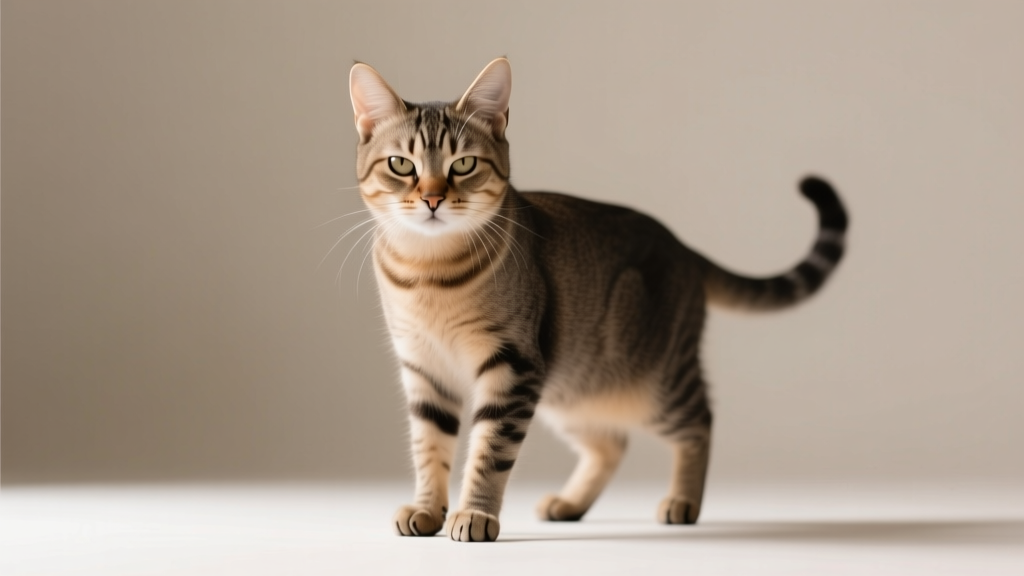
What Cat Behaviors Mean: Vet-Backed Decoder (2026)
Why Understanding What Cats Behaviors Mean Changes Everything
\nIf you’ve ever stared at your cat mid-purr while they’re staring blankly at the wall—or watched them suddenly sprint across the room at 3 a.m.—and wondered, what do cats behaviors mean?, you’re not alone. In fact, over 68% of first-time cat owners misinterpret at least one critical signal within their first six months, according to a 2023 Cornell Feline Health Center survey. That misunderstanding doesn’t just cause confusion—it triggers avoidable stress, erodes trust, and can even escalate into redirected aggression or chronic anxiety for both cat and human. Cats don’t speak our language—but they communicate constantly, precisely, and with astonishing emotional nuance. The good news? With just a few evidence-based decoding principles, you can transform from a puzzled observer into a fluent feline interpreter.
\n\n1. The Body Language Blueprint: Reading Beyond the Tail
\nCats rely on a complex, multi-layered signaling system—posture, ear position, pupil size, vocalizations, and micro-expressions all converge to convey meaning. But here’s what most owners miss: context is non-negotiable. A twitching tail means something entirely different when paired with flattened ears versus slow, rhythmic swaying during play. Dr. Sarah Wooten, DVM and certified feline behavior specialist, emphasizes: “A cat’s body language isn’t a dictionary—it’s a sentence. You must read the whole thing.”
\nLet’s break down the top five high-stakes signals—and what they really say:
\n- \n
- Slow blink + half-closed eyes: Not drowsiness—it’s a deliberate, affectionate ‘cat kiss.’ Studies published in Animal Cognition (2022) confirmed that cats reciprocate slow blinks with humans they trust, and owners who return the gesture see up to 42% more voluntary proximity-seeking behavior within 72 hours. \n
- Ears pinned flat sideways or backward: This isn’t just ‘annoyed’—it’s a pre-flight or pre-fight warning. Paired with dilated pupils and a low crouch, it signals acute fear or defensive readiness. Never approach; instead, create escape routes and remove the trigger. \n
- Kneading with claws extended: Often labeled ‘making biscuits,’ this is a deeply rooted neonatal behavior linked to nursing and comfort. When adult cats knead blankets, laps, or your arm, it’s a sign of profound safety—and often, mild contentment-induced drowsiness. If claws are sharp, place a thick towel under their paws rather than discouraging the behavior itself. \n
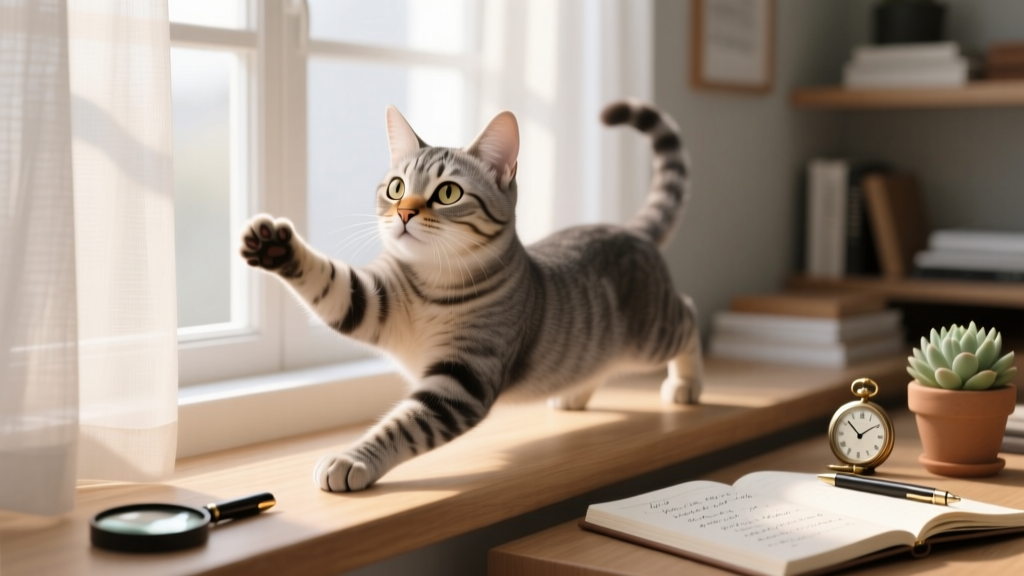
- Chattering at windows: Contrary to popular belief, this isn’t frustration—it’s a motor pattern rehearsal. Research using high-speed video analysis (University of California, Davis, 2021) shows chattering mimics the precise jaw motion used to dispatch small prey. It’s instinctive, not pathological. \n
- Sudden freezing mid-movement: This is a hyper-vigilant ‘pause-and-assess’ response. Your cat has detected subtle movement, sound, or scent—possibly an insect, distant bird call, or even electromagnetic shifts before storms. Don’t interrupt; let them process. Forcing interaction breaks their sense of environmental control. \n
2. Vocalizations Decoded: From Murmurs to Menace
\nWhile cats evolved to be relatively quiet hunters (unlike pack animals), domestication has expanded their vocal repertoire—especially with humans. But tone, duration, and repetition matter far more than pitch alone.
\nConsider Luna, a 4-year-old rescue tabby adopted after living outdoors for 18 months. Her original ‘meow’ was raspy, infrequent, and only used near food bowls. After six months of consistent positive reinforcement training, her vocalizations diversified: soft chirps for greeting, rising trills when seeking attention, and a low, sustained ‘mrrr-OONNN’ when stressed by thunderstorms. Her caregiver learned to distinguish these not by sound alone—but by pairing each vocalization with concurrent body language and environmental cues.
\nVeterinary behaviorist Dr. Tony Buffington notes: “Cats don’t meow at other cats—they meow at us. Every vocalization is a targeted social tool. If your cat suddenly starts yowling at night, rule out pain first (hyperthyroidism, arthritis, dental disease), then assess environmental changes—new furniture, altered schedules, or even LED light flicker invisible to humans but detectable by feline vision.”
\nKey vocal patterns to track:
\n- \n
- Purring: While commonly associated with contentment, purring also occurs during labor, injury recovery, and terminal illness. Frequency (25–150 Hz) stimulates bone density and tissue repair—so it’s as much a self-soothing and healing mechanism as an emotional signal. \n
- Yowling (long, drawn-out, often escalating): Strongly linked to reproductive status in unspayed/unneutered cats—but in seniors, it’s a red flag for cognitive dysfunction syndrome (feline dementia), affecting ~50% of cats over age 15. \n
- Hissing/growling: These are unequivocal distance-increasing signals. Never punish or force interaction. Instead, calmly retreat and identify the source of perceived threat—often another pet, unfamiliar person, or sudden noise. \n
3. Subtle Signals You’re Overlooking (And Why They Matter Most)
\nThe most revealing behaviors aren’t dramatic—they’re quiet, consistent, and easy to dismiss as ‘just how cats are.’ Yet these micro-behaviors form the bedrock of your cat’s emotional baseline.
\nFoot-tapping or paw-shaking: When your cat lifts a paw, shakes it once, and sets it down—especially after stepping on something cold, damp, or textured—it’s not ‘washing’ the surface. It’s a tactile reset: recalibrating sensory input. Repeated foot-tapping near litter boxes may indicate substrate aversion (e.g., clay dust irritating paws) or early urinary discomfort.
\nHead-butting (bunting) vs. cheek-rubbing: Bunting (firm, forward head press) deposits facial pheromones to mark you as ‘safe territory.’ Cheek-rubbing is gentler and often done on vertical surfaces like doorframes—it’s territorial, but less intimate. If your cat stops bunting you altogether, it may signal withdrawal due to chronic stress or illness.
\nStaring without blinking: Unlike dogs, prolonged direct eye contact is threatening to cats. If your cat stares silently while holding still, they’re likely assessing dominance or danger—not showing love. The loving version is the slow blink. Practice returning it daily—it builds mutual trust faster than treats.
\nA 2024 study in the Journal of Veterinary Behavior tracked 127 indoor cats across 12 months and found that owners who logged three or more subtle behaviors weekly (e.g., tail-tip quivers, ear swivels toward sounds, lip-licking during vet visits) were 3.2x more likely to detect early-stage kidney disease before clinical symptoms emerged—simply because they recognized deviations from baseline.
\n\n4. The Behavior Decoder Table: What Your Cat Is Really Saying
\n| Behavior | \nMost Likely Meaning | \nWhat to Do Immediately | \nWhen to Consult a Vet/Behaviorist | \n
|---|---|---|---|
| Tail held straight up with slight tip curl | \nConfident greeting / friendly invitation | \nReturn with slow blink; offer gentle chin scratch if cat leans in | \nRarely urgent—unless accompanied by sudden onset in senior cats (possible neurological issue) | \n
| Low, rapid tail swish (not flick) | \nIntense focus or building frustration (pre-hunt or pre-aggression) | \nPause interaction; redirect with wand toy or toss treat away to break tension | \nIf occurs during routine handling (e.g., brushing, nail trims) despite desensitization, consult behaviorist | \n
| Rolling onto back exposing belly | \nSign of deep trust—but NOT an invitation to rub belly (most cats dislike this) | \nMaintain space; reward with calm praise or treat tossed nearby. Only touch if cat initiates contact. | \nIf rolling occurs with vocalizing, panting, or skin rippling—rule out pain or dermatitis | \n
| Excessive licking/grooming (especially bald patches) | \nStress response OR medical condition (allergies, parasites, pain) | \nAssess environment: new pet, construction noise, litter change? Temporarily add Feliway diffuser | \nAlways vet visit required—dermatology workup needed to differentiate behavioral vs. physical cause | \n
| Bringing dead or ‘gifted’ toys to your bed | \nInstinctual provisioning—cat sees you as inept hunter in need of care | \nThank gently; remove item without scolding. Redirect with interactive play sessions to fulfill hunting drive | \nOnly urgent if gifting increases dramatically with weight loss or lethargy (possible metabolic disorder) | \n
Frequently Asked Questions
\nDo cats really ignore us—or are they just being selective?
\nCats aren’t ignoring you—they’re exercising selective attention, a survival trait honed over millennia. Unlike dogs, who evolved to monitor human faces for cues, cats prioritize environmental vigilance. A 2023 University of Sussex fMRI study showed cats’ brains activate most strongly when hearing their owner’s voice—but only if the tone matches expectation (e.g., calm for feeding, urgent for danger). They respond best to consistency, predictability, and respect for their autonomy—not demands.
\nWhy does my cat stare at me while I’m sleeping?
\nYour cat isn’t plotting—they’re conducting a low-stakes security sweep. Cats are crepuscular (most active at dawn/dusk), so nighttime observation aligns with natural rhythms. They’re monitoring your breathing rate, movement patterns, and ambient sounds to assess safety. If they nudge your hand or ‘boop’ your nose, it’s often a gentle request for reassurance or a reminder that it’s time for their scheduled 4:17 a.m. snack.
\nIs it true that cats don’t feel love like dogs do?
\nNo—this is a persistent myth rooted in anthropomorphism. Cats express attachment differently: through proximity, shared sleeping spaces, grooming reciprocity, and ‘social referencing’ (looking to you for cues in novel situations). A landmark 2019 Oregon State University study using the Secure Base Test found 64.3% of cats display secure attachment to owners—comparable to human infants and dogs. Their love is quieter, but no less real.
\nMy cat hides when guests arrive. Is this shyness—or trauma?
\nIt’s almost always normal stress response. Cats lack evolutionary pressure to socialize with strangers—their default is ‘assess first, engage never.’ Hiding is adaptive, not pathological. However, if hiding lasts >72 hours post-visit, involves trembling or inappropriate urination, or generalizes to family members, consult a veterinary behaviorist. Trauma histories (e.g., shelter stays, abuse) require gradual, reward-based desensitization—not forced exposure.
\nWhat does it mean when my cat bites me gently during petting?
\nThis is a classic ‘overstimulation bite’—not aggression. Cats have sensitive nerve endings along their spine and tail base; repetitive petting triggers sensory overload. The bite is a polite ‘stop now’ signal. Watch for early warnings: tail flicking, skin twitching, flattened ears, or sudden stillness. End petting *before* the bite occurs—and reward calm tolerance with treats.
\nCommon Myths About Cat Behavior
\nMyth #1: “Cats are aloof and don’t bond with humans.”
False. Neuroimaging and behavioral studies confirm cats form strong, bi-directional attachments. Their independence reflects evolutionary adaptation—not emotional detachment. They choose intimacy on their terms.
Myth #2: “If a cat purrs, it must be happy.”
Incorrect. Purring is a physiological response tied to vibration frequency—not exclusively emotion. Cats purr while injured, giving birth, or facing euthanasia. Always assess context, posture, and other signals first.
Related Topics (Internal Link Suggestions)
\n- \n
- How to Stop Cat Aggression Toward People — suggested anchor text: "why is my cat suddenly aggressive" \n
- Best Calming Products for Anxious Cats — suggested anchor text: "natural cat anxiety relief" \n
- Understanding Cat Body Language Chart PDF — suggested anchor text: "free printable cat behavior guide" \n
- When to Take Your Cat to the Vet for Behavioral Changes — suggested anchor text: "cat behavior changes that signal illness" \n
- How to Build Trust with a Rescue Cat — suggested anchor text: "helping shy cats feel safe" \n
Conclusion & Next Step
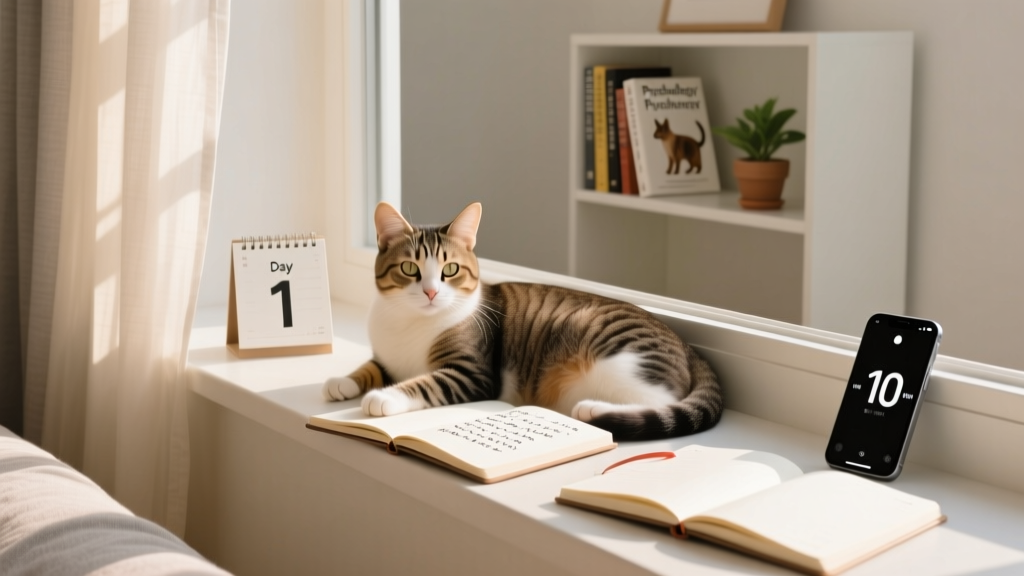
\nWhat do cats behaviors mean? They mean your cat is constantly sharing their inner world—if you know how to listen. Decoding these signals isn’t about control; it’s about collaboration, compassion, and coexisting with integrity. Every slow blink you return, every tail-swish you pause for, every hidden spot you respect—builds a relationship grounded in mutual understanding. So tonight, before bed, try this: sit quietly near your cat (no touching), soften your gaze, and slowly close and open your eyes. Wait. Watch. See if they blink back. That tiny exchange? That’s where fluency begins. Ready to go deeper? Download our free Feline Behavior Baseline Tracker—a printable journal designed with veterinary behaviorists to help you log, spot patterns, and catch subtle shifts before they become problems.