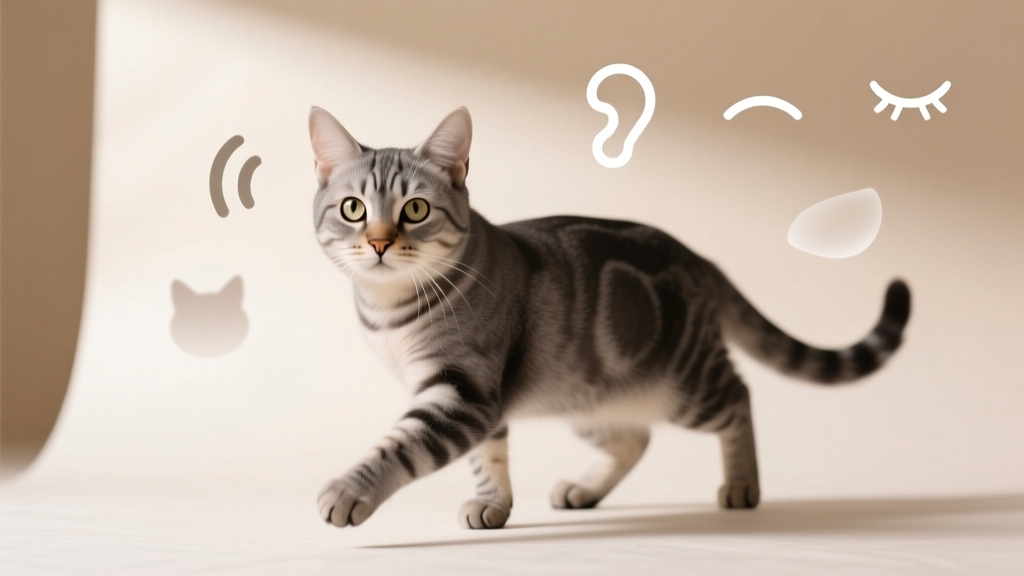
What Cat Behaviors Mean: Science-Backed Insights
Why Understanding What Cat Behaviors Mean Is the Single Most Underrated Skill in Cat Care
If you've ever stared at your cat mid-purr while they stare blankly back—or watched them bolt from an empty corner, knock your coffee off the desk, or suddenly hiss at a vacuum cleaner—you've likely asked yourself: what do cat behaviors mean? This isn’t just curiosity—it’s a critical gap in understanding that affects your cat’s mental health, your home harmony, and even their long-term physical well-being. Unlike dogs, cats evolved as solitary hunters who communicate subtly—through micro-expressions, body angles, scent signals, and timing—not vocal volume or overt gestures. Misinterpreting a flattened ear as 'grumpiness' instead of acute fear, or mistaking overgrooming for 'cleanliness' rather than chronic stress, can delay interventions that prevent urinary tract disease, aggression, or destructive habits. In fact, a 2023 study published in Frontiers in Veterinary Science found that 68% of cats surrendered to shelters showed early behavioral red flags that owners had misread or dismissed for over six months.
The good news? Decoding feline behavior isn’t magic—it’s learnable, evidence-based, and deeply rewarding. With consistent observation and context-aware interpretation, you’ll begin recognizing patterns that reveal your cat’s confidence level, social comfort, pain thresholds, and emotional baseline. And once you speak their language—even a little—you’ll notice fewer surprises, more mutual respect, and a relationship grounded in safety, not speculation.
Decoding the Body Language: Beyond the Tail and Ears
Cats don’t use isolated signals—they broadcast layered messages through synchronized cues. A twitching tail alone means little; it’s the combination with ear position, pupil dilation, whisker angle, and posture that reveals true intent. Dr. Sarah Heath, a European Board-Certified Veterinary Behaviourist, emphasizes: “Cats are contextual communicators. You must ask three questions before interpreting any behavior: What was happening right before? Where is this occurring? And what else is their body saying?”
Let’s break down five high-frequency, high-misinterpretation signals—with real-world examples:
- Slow Blinking: Often called the ‘cat kiss,’ this is a deliberate, relaxed signal of trust—not fatigue. When your cat holds eye contact, then slowly closes and reopens both eyes while remaining still, they’re offering calm reassurance. Try returning it: sit quietly, soften your gaze, and blink slowly. If they reciprocate within 5–10 seconds, you’ve just deepened your bond. A 2019 study at the University of Sussex confirmed that cats were significantly more likely to approach humans who performed slow blinks versus those who maintained direct, unblinking stares.
- Tail Held High with Quiver: This isn’t excitement—it’s intense, joyful greeting mixed with olfactory marking. Cats have scent glands at the base of their tails; the quiver releases pheromones onto your leg or hand. It’s their version of saying, “You’re family—I’m claiming you kindly.”
- Low Crouch + Pivoting Hips: Common before pouncing—but also before defensive aggression. Key differentiator: ears forward and pupils normal = playful anticipation. Ears pinned sideways, dilated pupils, and rapid tail thumps = imminent retreat or lashing out. Never assume ‘cute’ equals ‘safe.’
- Chattering at Windows: That rapid jaw-clicking sound isn’t frustration—it’s a motor pattern linked to the bite-and-kill sequence used on small prey. Neurologically, it’s a ‘rehearsal’—not anger. But if it happens daily for >15 minutes, it may indicate under-stimulation or environmental deprivation.
- Sideways Arch + Fluffed Fur: Classic ‘Halloween cat’ pose. This is pure threat display—designed to look bigger and more intimidating. Crucially, it’s rarely about dominance. It’s almost always fear-based self-defense. Punishing or forcing interaction at this moment worsens learned helplessness.
Pro tip: Keep a 7-day ‘Behavior Log’ (pen & paper works fine). Note time, location, trigger (if visible), full-body posture, vocalizations, and your response. Patterns will emerge—like your cat consistently retreating to the closet after guests arrive, or pacing the hallway at 3 a.m. only when the furnace kicks on. Context is your most powerful decoder.
The Hidden Language of Vocalizations: From Murmurs to Wails
Cats have over 16 distinct vocalizations—and domestication has dramatically expanded their repertoire specifically to communicate with humans. Interestingly, adult cats rarely meow to each other; it’s a ‘human dialect’ they developed over millennia. But not all meows are equal. Tone, duration, pitch contour, and repetition tell vastly different stories.
Dr. Mikel Delgado, a certified cat behavior consultant and researcher at UC Davis, explains: “A short, rising ‘mew?’ is usually a question—‘Where’s my food?’ or ‘Is that door open?’ A drawn-out, descending ‘meeee-owww’ signals distress or urgency—often linked to pain, loneliness, or cognitive decline in seniors.”
Here’s how to distinguish key vocal types in practice:
- Purring: Not always contentment. While purring during petting or nursing is positive, cats also purr when injured, giving birth, or facing terminal illness. The frequency (25–150 Hz) has documented tissue-regeneration properties—so it’s likely a self-soothing, healing mechanism. Observe body tension: relaxed muscles + slow breathing = comfort. Tense shoulders + flattened ears + shallow breaths = discomfort.
- Yowling: Persistent, melodic, often at night. In intact cats, it signals mating readiness. In spayed/neutered adults, it frequently indicates pain (e.g., hyperthyroidism, kidney disease), cognitive dysfunction (feline dementia), or severe anxiety. Rule out medical causes first—then assess environment.
- Hissing/Growling: These are unequivocal ‘stop now’ signals—not aggression for its own sake. They’re distance-increasing behaviors. If ignored, cats escalate to swatting or biting. Never punish hissing—it erodes trust and teaches cats to skip warning signs entirely.
- Chirps & Trills: High-pitched, staccato sounds used almost exclusively by mothers to call kittens—and adopted by adults to get your attention playfully. Think of it as a polite ‘excuse me.’ Responding reinforces this positive, non-demanding communication.
Case Study: Luna, a 4-year-old rescue tabby, began yowling nightly at 2 a.m. Her owner assumed ‘attention-seeking’ and ignored her—until Luna stopped eating and lost weight. A vet visit revealed painful dental resorption. Once treated, the yowling ceased. This underscores why vocal changes demand immediate investigation—not assumption.
Subtle Signals You’re Probably Missing (But Your Cat Relies On)
Some of the most meaningful cat behaviors happen below human radar—requiring patience, consistency, and quiet observation. These aren’t ‘quirks’; they’re intentional, biologically rooted communications.
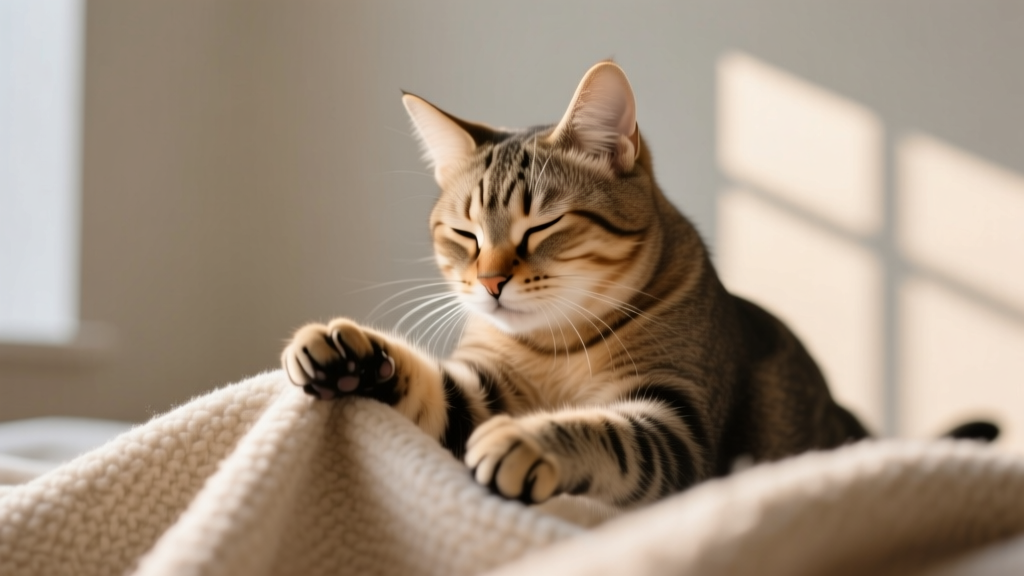
Kneading (“Making Biscuits”): Rooted in kittenhood, where rhythmic paw presses stimulated milk flow. In adults, it signals deep comfort and security—but also serves olfactory marking (paw pads contain scent glands). If your cat kneads your lap while purring softly, they’re literally imprinting you as safe territory. However, if kneading turns aggressive (digging claws, biting), it may reflect overstimulation or displaced nursing behavior from early weaning.
Bringing You ‘Gifts’ (Dead or Toy Prey): This isn’t guilt or training—it’s inclusive hunting behavior. Your cat views you as an inept but beloved member of their pride and is attempting to teach or provide. Discourage live prey capture (use bell collars, keep cats indoors), but never scold the offering. Instead, praise calmly and redirect with interactive play using wand toys that mimic prey movement.
Head-Butting (Bunting): One of the highest-trust gestures. Cats have facial pheromone glands (F3) on their cheeks, chin, and forehead. Rubbing these areas on you deposits calming, colony-scent markers—telling the world (and themselves), “This person belongs to me, and I feel safe here.” It’s the feline equivalent of signing a lease.
Exposing the Belly: Contrary to popular belief, this isn’t universal invitation to rub. For many cats, it’s a vulnerable position held only when deeply relaxed *and* in total control of their environment. If they roll over near you while watching intently, tail still, ears forward—they’re offering trust. If they flatten ears, flick tail, or tense legs when you reach—stop immediately. Respect the boundary.
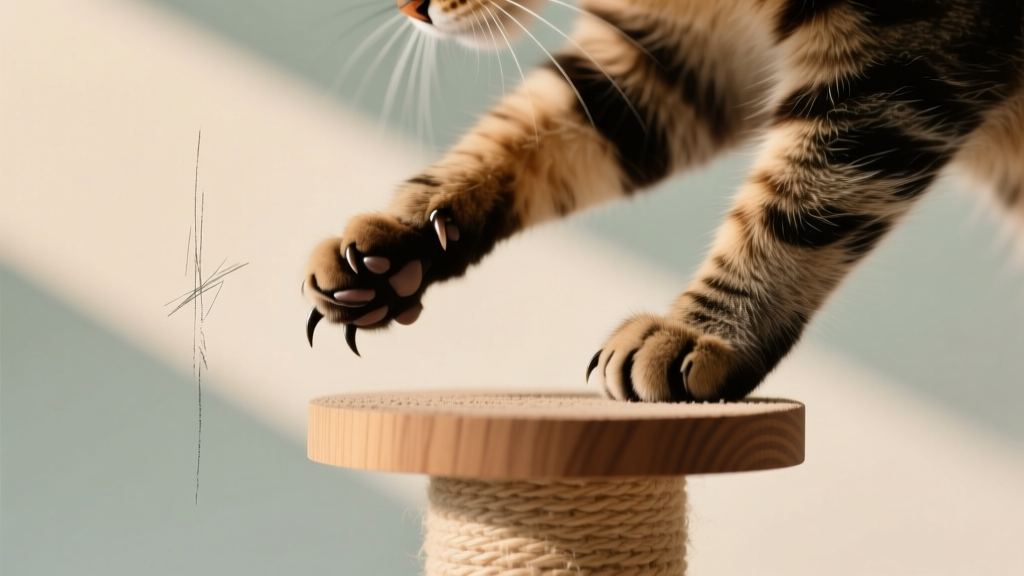
Scratching Vertical Surfaces: It’s not just nail maintenance. Scratching stretches shoulder muscles, marks territory visually *and* via interdigital scent glands, and provides proprioceptive feedback. Provide tall, stable, sisal-wrapped posts near sleeping/resting zones—not just by the couch. Reward use with treats or play—not punishment for scratching furniture.
| Behavior | Most Likely Meaning | Key Context Clues | Action to Take |
|---|---|---|---|
| Excessive licking/grooming (especially belly, legs) | Stress, anxiety, or underlying pain (e.g., allergies, cystitis) | Occurs in bursts, skin redness/lesions, avoids interaction during grooming | Rule out medical cause with vet; enrich environment with vertical space, predictability, and Feliway diffusers |
| Staring without blinking | Intense focus (prey/hunt) OR challenge/threat (in multi-cat homes) | Ears forward + tail still = hunting. Ears back + low crouch = tension. Paired with growl = immediate withdrawal needed | Redirect with toy if hunting; separate cats & add resources if territorial |
| Following you room-to-room | Attachment, routine-seeking, or mild separation anxiety | Waits outside closed doors, vocalizes when you leave room, sleeps on your belongings | Build independent confidence with scheduled play, puzzle feeders, and ‘alone time’ desensitization |
| Sucking on fabric or wool | Oral fixation from early weaning or breed predisposition (e.g., Siamese, Burmese) | Begins before age 2, targets soft textures, no distress shown | Provide safe chew alternatives (food-grade rubber toys), increase play, avoid punishment |
| Backing into you with raised tail | Greeting + invitation to sniff/touch (olfactory bonding) | Tail upright, relaxed posture, may rub against legs afterward | Sniff gently or offer light pet—this is high-trust permission |
Frequently Asked Questions
Why does my cat stare at me and then look away slowly?
This is one of the clearest signs of trust. Direct, prolonged eye contact is threatening in cat language. By holding your gaze briefly and then looking away slowly—especially with a blink—they’re signaling, “I see you, and I’m not afraid.” It’s their version of saying, “You’re safe.” Returning the slow blink strengthens this bond.
My cat hides when guests arrive. Is this shyness—or something more serious?
Hiding is a normal fear response—but duration and intensity matter. If your cat emerges within 30 minutes, eats, uses the litter box, and resumes napping, it’s likely situational stress. If hiding lasts >24 hours, involves refusal to eat/drink, or triggers diarrhea/vomiting, it signals acute anxiety that can suppress immunity. Proactively create ‘guest protocols’: confine guests to one room initially, offer high-value treats near the hideout (not forced interaction), and use synthetic feline facial pheromones (Feliway) 30 minutes pre-arrival.
Does my cat really recognize my voice—or am I imagining it?
Yes—research confirms it. A landmark 2013 study in Nature Scientific Reports found cats consistently turned their heads and ears toward recordings of their owner’s voice (but not strangers’) and showed increased pupil dilation—a physiological sign of recognition and engagement. They just choose not to obey on command, unlike dogs. It’s not indifference—it’s selective responsiveness.
Why does my cat knead me but bite softly while doing it?
This ‘love bite’ is common and usually benign—rooted in kitten nursing behavior where gentle biting stimulated milk flow. As adults, it’s a sign of deep contentment and sensory overload. However, if bites break skin or occur with tension (flattened ears, tail lashing), it’s overstimulation. Learn your cat’s threshold: stop petting *before* they show warning signs (tail flick, skin twitch), and reward calm disengagement with treats.
My senior cat has started wandering and vocalizing at night. Should I be concerned?
Yes—this is a red flag. Nocturnal confusion, disorientation, and yowling in cats over 10 years old are hallmark signs of feline cognitive dysfunction syndrome (CDS), affecting ~55% of cats aged 11–15 and ~80% over 16. Other signs include staring into space, forgetting litter box location, or altered sleep-wake cycles. Schedule a vet visit for bloodwork (to rule out kidney disease, hyperthyroidism) and discuss management options like melatonin, environmental enrichment, and antioxidant supplements.
Common Myths About Cat Behavior
Myth #1: “Cats are aloof and don’t form attachments like dogs.”
False. Groundbreaking attachment research (2019, Oregon State University) showed 64% of cats display secure attachment to their owners—comparable to human infants and dogs. In the ‘Strange Situation Test,’ securely attached cats explored freely when their owner was present, sought proximity upon reunion, and used the owner as a ‘secure base.’ Their independence reflects evolutionary strategy—not emotional detachment.
Myth #2: “If my cat sleeps on my chest, they’re trying to ‘steal my breath’ or smother me.”
Completely unfounded folklore. Cats seek warmth, rhythmic breathing (soothing heartbeat), and scent-rich areas. Sleeping on your chest is profound trust—it places them in a vulnerable position with full access to your airway. They feel safest there. No credible veterinary or ethological source supports the ‘smothering’ myth.
Related Topics (Internal Link Suggestions)
- How to Stop Cat Aggression Toward People — suggested anchor text: "why is my cat suddenly aggressive"
- Best Enrichment Toys for Indoor Cats — suggested anchor text: "indoor cat enrichment ideas"
- Signs of Pain in Cats (That Aren’t Obvious) — suggested anchor text: "subtle signs your cat is in pain"
- Multi-Cat Household Harmony Guide — suggested anchor text: "how to introduce cats peacefully"
- Feline Stress Relief: Calming Products That Work — suggested anchor text: "best calming aids for anxious cats"
Conclusion & Next Step
Understanding what cat behaviors mean transforms cohabitation from guesswork into genuine dialogue. It’s not about achieving perfect fluency overnight—it’s about cultivating curiosity, honoring boundaries, and responding with empathy instead of assumption. Every slow blink you return, every scratching post you install, every vet visit you schedule for unexplained vocal changes builds a foundation of safety your cat feels in their bones. So start small: tonight, spend five minutes observing your cat without interacting—note their ear direction, tail rhythm, and breathing pace. Then, tomorrow, try one slow blink. Watch closely. Their response—however subtle—is your first real conversation.
Your next step? Download our free 7-Day Feline Behavior Tracker (PDF)—complete with illustrated cue cards, logging prompts, and vet-validated interpretation guides. It takes 90 seconds per day and reveals patterns no app or book can match: your cat’s unique dialect.