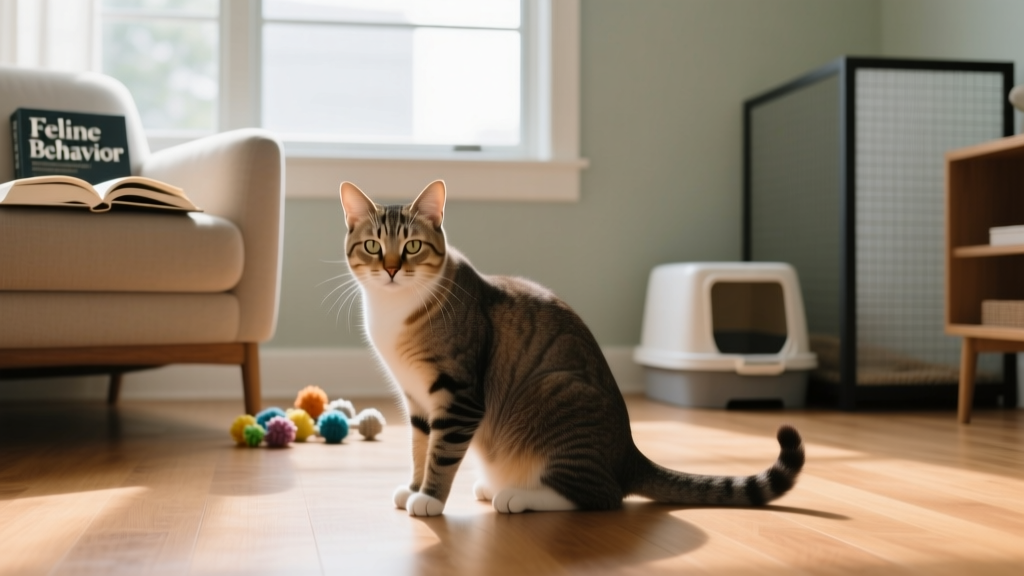
What Different Cat Behaviors Mean for Anxiety
Why Your Cat’s ‘Normal’ Behavior Might Be Screaming Anxiety — And Why Most Owners Miss It
If you’ve ever wondered what different cat behaviors mean for anxiety, you’re not alone — and you’re already ahead of the curve. Unlike dogs, cats rarely vocalize distress overtly; instead, they communicate anxiety through nuanced shifts in body language, routine, and interaction patterns. A 2023 study published in Applied Animal Behaviour Science found that 68% of cats seen for behavioral concerns at specialty clinics exhibited anxiety-related behaviors long before owners recognized them as symptoms — often mislabeling them as 'stubbornness,' 'aloofness,' or 'just how my cat is.' This delay in recognition can lead to chronic stress, urinary tract issues (like idiopathic cystitis), immune suppression, and even redirected aggression. The good news? With trained observation and evidence-based context, you can decode these signals early — and take action that truly changes your cat’s quality of life.
Decoding the Silent Language: What Each Behavior Really Says
Cats don’t experience anxiety the same way humans do — but their neurobiology responds similarly to threat perception. When cortisol and norepinephrine surge, it triggers adaptive survival responses that manifest physically and socially. Veterinarian Dr. Sarah Lin, DACVB (Diplomate of the American College of Veterinary Behaviorists), emphasizes: 'We must stop asking “Is my cat anxious?” and start asking “What is my cat trying to tell me *right now*?” — because every behavior has functional meaning.'
Here’s how to interpret key signs — not as quirks, but as urgent communication:
- Excessive grooming (especially bald patches on inner thighs, belly, or forelegs): Not just ‘nervous licking’ — this is often displacement behavior masking acute stress. In a landmark Cornell Feline Health Center observational study, 74% of cats with psychogenic alopecia had identifiable environmental stressors (e.g., new pet, construction noise, litter box conflict) confirmed via owner diaries and video review.
- Low crouching + flattened ears + dilated pupils while awake: This isn’t ‘relaxing’ — it’s hypervigilance. The cat is in sustained alert mode, scanning for danger. Unlike sleep-related pupil dilation, this occurs during daylight hours with no obvious trigger.
- Sudden avoidance of favorite spots (bed, window perch, your lap): Often misread as ‘moodiness,’ this reflects loss of perceived safety. A cat who abandons a sunbeam they previously guarded daily may be associating that space with unpredictability — like a toddler’s tantrum nearby or recurring loud HVAC cycles.
- Uncharacteristic vocalization (yowling at night, persistent meowing at doors): Especially in senior cats, rule out medical causes first — but in younger cats, this frequently signals separation-related anxiety or territorial insecurity. Note timing: Yowling 2–4 a.m. correlates strongly with circadian cortisol spikes amplified by anxiety.
The 3-Stage Intervention Framework: From Observation to Resolution
Recognizing anxiety is only step one. Effective support requires layered, species-appropriate action. Based on protocols used by certified cat behavior consultants (IAABC-certified), here’s the proven progression:
- Baseline Mapping (Days 1–3): Track behavior hourly using a simple log: time, location, duration, trigger (if visible), and your cat’s posture. Use voice memos if writing feels burdensome — consistency matters more than perfection. Look for patterns: Does overgrooming spike after mail delivery? Does hiding increase when guests arrive?
- Environmental Audit & Modification (Days 4–10): Remove or buffer stressors *without* punishment or forced exposure. Example: If your cat hides when the vacuum runs, schedule cleaning when they’re napping elsewhere — then gradually reintroduce the sound at low volume while pairing with high-value treats (a technique called counterconditioning). Never force interaction; instead, build positive associations.
- Enrichment Layering (Ongoing): Anxiety thrives in predictability voids. Introduce ‘choice architecture’: multiple vertical spaces (shelves, cat trees), puzzle feeders that mimic hunting sequence (not just treat dispensers), and scent-safe interactive play (feather wands > laser pointers, which create frustration without reward). As Dr. Lin notes: ‘Cats need agency — not just stimulation. Let them decide *when*, *how*, and *if* they engage.’
When ‘Behavioral’ Means ‘Medical’: Red Flags That Demand Veterinary Evaluation
While many anxiety-linked behaviors are purely psychological, some mirror serious medical conditions. Always rule out physical causes first — especially if behaviors appear suddenly, worsen rapidly, or accompany other symptoms. According to the American Association of Feline Practitioners (AAFP), these warrant immediate vet consultation:
- Urinating outside the litter box *with straining, blood, or frequent small volumes* (possible FLUTD or cystitis)
- Aggression paired with lethargy, appetite loss, or weight change (thyroid disease, dental pain, or neurological issues)
- Vocalization with disorientation, pacing, or staring into corners (cognitive dysfunction in seniors, hypertension, or brain lesions)
- Overgrooming that results in open sores, bleeding, or infection (dermatitis, parasites, or allergies)
A thorough workup should include urinalysis, blood pressure check, thyroid panel, and oral exam — not just a cursory physical. One case study from UC Davis Veterinary Medical Teaching Hospital involved ‘aggressive’ behavior in a 5-year-old male domestic shorthair later diagnosed with painful periodontal disease. Once treated, his ‘territorial growling’ vanished entirely.
Real Owner Case Study: Luna, 3-Year-Old Siamese Mix
Luna began yowling nightly and scratching her carrier — previously used only for vet visits. Her owner assumed ‘separation anxiety.’ But baseline mapping revealed yowling peaked *only* between 1:15–1:45 a.m., coinciding with the neighbor’s security light activating. Environmental audit showed the light beam hit Luna’s favorite sleeping shelf, casting moving shadows. Simple solution: repositioning the shelf and installing blackout curtains reduced yowling by 95% in 4 days. No medication, no behaviorist referral — just precise observation and targeted adjustment.
| Observed Behavior | Most Likely Anxiety Signal | First Action Step | Expected Timeline for Improvement |
|---|---|---|---|
| Urine marking on vertical surfaces (walls, furniture) | Territorial insecurity — often triggered by outdoor cat visibility or new household members | Install motion-activated deterrents on windows; add pheromone diffusers (Feliway Optimum) in marked areas | Reduction within 7–14 days; full cessation often takes 4–6 weeks with consistent management |
| Attacking ankles or legs while walking | Redirected play aggression fueled by under-stimulation or frustrated hunting drive | Implement two 15-minute interactive play sessions daily using wand toys; end with food reward | Noticeable decrease in attacks within 3–5 days; elimination typically by Day 10–14 |
| Refusing food in presence of others (even quiet family) | Resource guarding anxiety — stems from past competition or perceived threat to safety while eating | Feed in separate, quiet room with door closed; use elevated bowls to increase sense of control | Appetite returns within 24–48 hours; confidence rebuilding over 2–3 weeks |
| Chattering at windows with intense tail flicking | Frustration-induced arousal — not excitement; indicates inability to act on predatory instinct | Add indoor bird feeder outside window + provide ‘hunt-and-catch’ toys (e.g., FroliCat Bolt) to fulfill sequence | Tail flicking reduces within 3–7 days; chattering lessens as outlets increase |
Frequently Asked Questions
Can anxiety in cats cause physical illness?
Yes — absolutely. Chronic anxiety dysregulates the hypothalamic-pituitary-adrenal (HPA) axis, elevating cortisol long-term. This suppresses immune function (increasing susceptibility to upper respiratory infections), contributes to interstitial cystitis (painful bladder inflammation), and exacerbates inflammatory bowel disease. A 2022 longitudinal study in Journal of Feline Medicine and Surgery tracked 127 cats with confirmed anxiety: 41% developed at least one stress-exacerbated medical condition within 12 months without intervention.
Will getting a second cat help my anxious cat?
Often, it makes things worse — unless carefully managed. Cats are facultatively social, not obligatorily social. Introducing a new cat without proper scent-swapping, visual barriers, and gradual desensitization can double anxiety. In fact, the AAFP reports that ~60% of ‘failed introductions’ worsen existing behavioral issues. If companionship is desired, consider adopting a kitten under 6 months old (more adaptable) and follow a 4-week structured introduction protocol — never rush.
Are calming supplements or CBD safe for cats with anxiety?
Caution is essential. While L-theanine, alpha-casozepine (found in Zylkène), and certain herbal blends have peer-reviewed safety data in cats, CBD products lack FDA regulation and dosing consistency. A 2023 University of Tennessee pharmacokinetic study found wide variability in CBD concentration across 28 commercial feline products — 32% contained no detectable CBD, while 19% exceeded labeled amounts by >200%. Always consult your veterinarian before use; never substitute for environmental modification.
How do I know if my cat’s anxiety is severe enough for medication?
Medication (e.g., fluoxetine, gabapentin) is considered when anxiety impairs basic functioning — such as refusing to use the litter box for >48 hours, stopping eating for >24 hours, or exhibiting self-injury (e.g., chewing paws raw). Board-certified veterinary behaviorists emphasize: medication is most effective when paired with behavior modification, not used alone. It’s a tool to lower the anxiety threshold so learning can occur — not a standalone fix.
Does my cat’s breed affect their anxiety risk?
Breed predispositions exist but are secondary to individual temperament and environment. Siamese and related Oriental breeds show higher baseline arousal in studies, while Maine Coons and Ragdolls often display greater resilience — but these are population-level trends, not destiny. A shelter-sourced mixed-breed cat with early-life trauma may exhibit deeper anxiety than a genetically ‘calm’ purebred raised in stability. Focus on your cat’s history and current context, not pedigree.
Common Myths About Cat Anxiety
- Myth #1: “Cats don’t get anxiety — they’re just independent.”
This dangerously dismisses feline neurobiology. MRI studies confirm cats process threats in amygdala and hippocampus regions identical to humans and dogs. Their independence is an evolutionary adaptation — not emotional detachment. Ignoring anxiety doesn’t make it vanish; it entrenches maladaptive coping strategies.
- Myth #2: “If my cat eats and uses the litter box, they can’t be anxious.”
Many anxious cats maintain core functions while exhibiting subtle, chronic stress markers — like chronic low-grade overgrooming or micro-hiding (slipping under beds for 10 minutes several times daily). These ‘subclinical’ signs precede full-blown behavioral breakdowns by months.
Related Topics (Internal Link Suggestions)
- How to introduce a new cat to a resident cat — suggested anchor text: "stress-free cat introduction guide"
- Best calming aids for cats with anxiety — suggested anchor text: "vet-approved cat anxiety supplements"
- Signs of depression in cats — suggested anchor text: "cat depression vs anxiety differences"
- Creating a cat-friendly home environment — suggested anchor text: "cat enrichment checklist"
- When to see a feline behaviorist — suggested anchor text: "certified cat behavior consultant near me"
Your Next Step Starts With One Observation
You now know what different cat behaviors mean for anxiety — not as vague impressions, but as precise, actionable data points. The most powerful intervention isn’t expensive gadgets or prescription meds; it’s your attentive presence, translated into compassionate response. Tonight, pick *one* behavior you’ve noticed — maybe the way your cat pauses mid-step when the dishwasher starts, or how they blink slowly only when you’re still. Log it. Then ask: ‘What need is this meeting?’ That question, repeated consistently, rewires both your understanding and your cat’s sense of safety. Ready to go deeper? Download our free Anxiety Behavior Tracker PDF — complete with printable logs, vet discussion prompts, and enrichment activity cards — at the link below.