What Cat Behaviors Mean Homemade
Why Decoding 'What Cat Behaviors Mean Homemade' Is the Missing Link in Your Relationship
If you’ve ever stared blankly as your cat gently bites your hand, stares unblinkingly from across the room, or suddenly darts under the bed after licking your face — you’re not alone. What cat behaviors mean homemade isn’t about diagnosing illness or memorizing textbook definitions. It’s about building a shared language with your cat using tools you already have: your attention, consistency, and curiosity. In an era where 68% of cat owners report feeling confused by their pet’s actions (2023 AVMA Companion Animal Survey), misinterpreting behavior is the #1 cause of avoidable stress — for both cats and humans. And unlike dogs, cats rarely 'train' in obvious ways; they communicate through subtle shifts in posture, timing, and context. That means the most powerful tool isn’t a clicker or treat pouch — it’s your ability to observe *at home*, in real time, without judgment or urgency.
How to Build Your Homemade Behavior Decoder (Step-by-Step)
Decoding cat behavior isn’t magic — it’s pattern recognition grounded in ethology (the science of animal behavior) and refined through daily practice. Dr. Sarah Wooten, DVM and certified feline behavior consultant, emphasizes: “Cats don’t have ‘good’ or ‘bad’ behaviors — they have functional ones. Your job isn’t to suppress them, but to understand their purpose and respond supportively.” Here’s how to start:
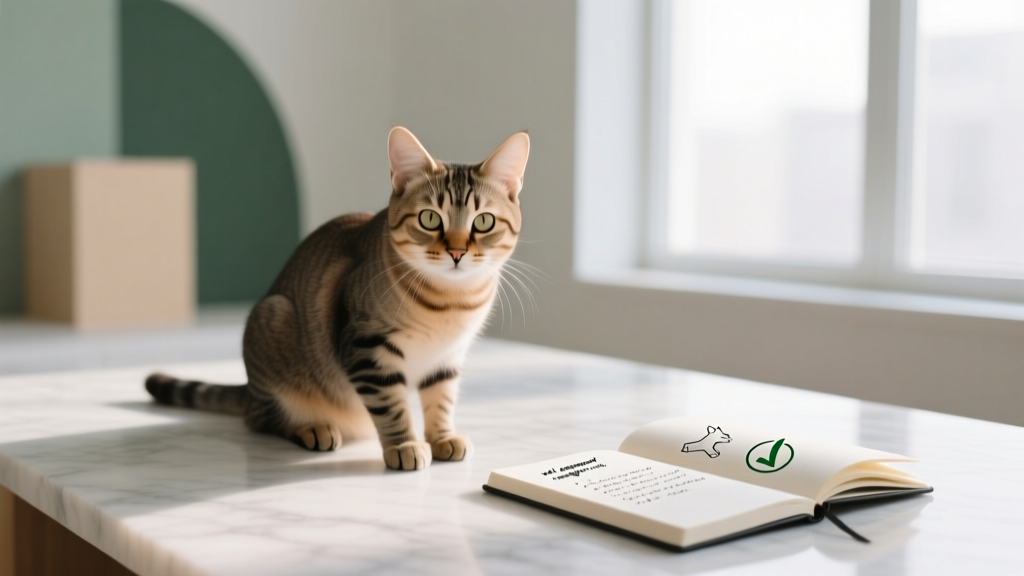
- Observe before reacting. When your cat does something puzzling (e.g., scratching the sofa post-lunch), pause for 15 seconds. Note: time of day, location, who’s present, what happened just before, and your cat’s body language (ears forward? tail tip twitching?). Write it down — even one line in your Notes app builds memory and reveals patterns.
- Map the ABCs: Antecedent-Behavior-Consequence. This simple framework, used by veterinary behaviorists, helps isolate cause-and-effect. Example: Antecedent = you sit on the couch → Behavior = cat rubs your arm then bites → Consequence = you move away. The bite isn’t ‘aggression’ — it’s a signal that petting has exceeded tolerance. The consequence (you leaving) reinforces the behavior.
- Rule out pain silently. Over 40% of cats over age 5 show signs of undiagnosed osteoarthritis (Journal of Feline Medicine and Surgery, 2022). Litter box avoidance, reduced jumping, or sudden aggression often stem from discomfort — not ‘spite’. Always consult your vet *before* labeling a behavior ‘homemade’ if it’s new, escalating, or paired with lethargy, appetite change, or vocalization.
The Top 7 Everyday Behaviors — and What They *Really* Mean at Home
Forget vague labels like “your cat is aloof” or “she’s being dramatic.” These are observable, contextual actions — each with a clear functional meaning when interpreted correctly:
- Kneading with paws (‘making biscuits’): This neonatal behavior triggers oxytocin release — it’s self-soothing and signals deep safety. If your cat kneads your lap while purring, she’s not ‘claiming’ you; she’s accessing a primal comfort state. Tip: Place a soft blanket on your lap first — protects clothing and honors her need for texture.
- Slow blinking (‘cat kisses’): A deliberate, eyelid-lowering gesture that signals trust and non-threat. It’s not fatigue. When your cat slow-blinks at you, return it — research shows this mutual blink reduces stress in both parties (University of Sussex, 2019). Do it for 2 seconds, look away, repeat. No pressure — just reciprocity.
- Bringing you ‘gifts’ (dead bugs, toys, socks): This is cooperative hunting behavior — not guilt or training. Your cat sees you as part of the pride. She’s sharing resources and inviting participation. Instead of recoiling, say “thank you” calmly and redirect with a toy toss — reinforcing the bond without rewarding unwanted items.
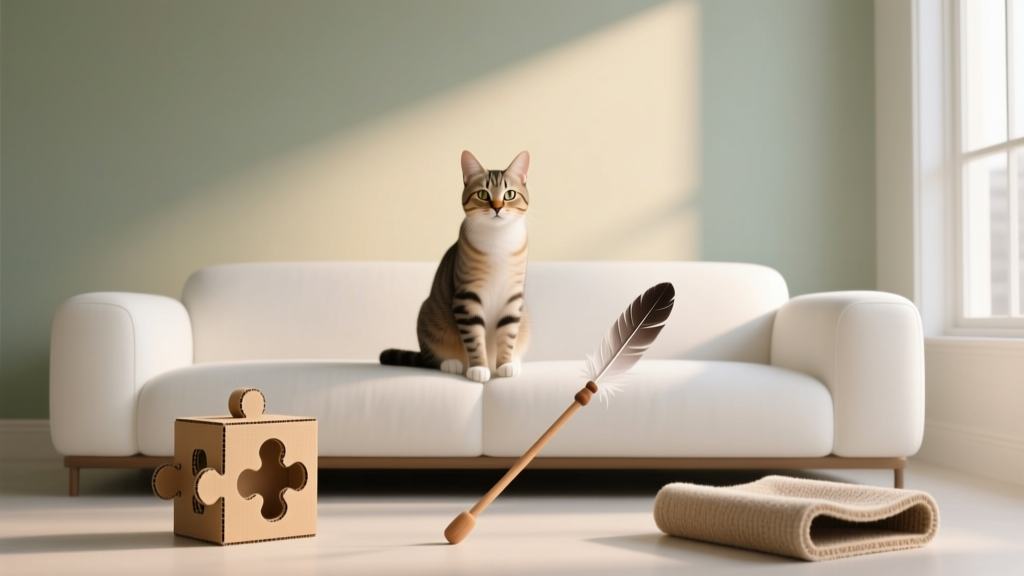
- Sudden sprinting (‘midnight zoomies’): Not madness — energy regulation. Indoor cats lack natural outlets for short-burst hunting. Zoomies peak at dawn/dusk (crepuscular rhythm) and decrease with consistent 10-minute interactive play sessions using wand toys *before* meals. One client, Maya (two indoor rescue cats), cut nighttime zoomies by 90% in 10 days using this timing rule.
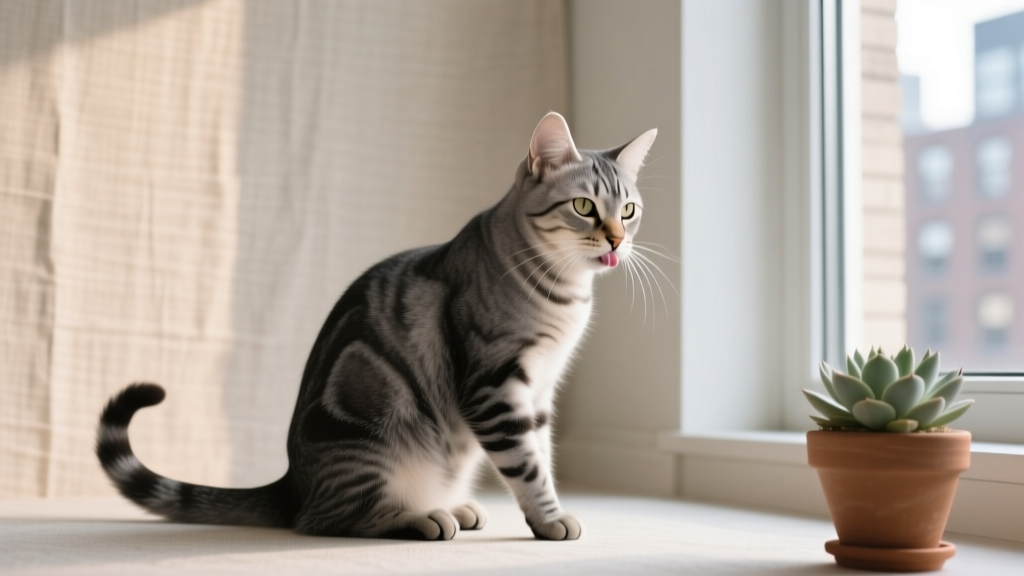
- Chattering at windows: A motor pattern linked to jaw movement during prey capture — it’s excitement + frustration. Don’t ignore it. Redirect with a bird feeder *outside* the window (safe distance) or use a laser pointer *on the floor* (never on walls/ceiling) followed immediately by a treat — satisfying the hunt sequence.
- Head-butting (bunting): Depositing facial pheromones (F3) to mark you as safe territory. This is profound social bonding — far more intimate than licking. If your cat bunts your hand while you’re working, she’s saying, “You’re mine, and I feel secure here.” Return gentle strokes *only* if she leans in — never force contact.
- Excessive grooming (especially focused on one spot): Can indicate anxiety (stress-licking) OR pain (e.g., arthritis in hips). Observe: Is fur thinning? Is skin red? Does licking stop when distracted? Track duration. If >30 minutes/day or causes bald patches, consult your vet — but also audit environmental stressors: new pets, construction noise, litter box placement.
Your Homemade Behavior Tracker: A Practical Table for Daily Use
| Behavior Observed | Context Clues (Time, Location, Trigger) | Possible Meaning | Safe, Supportive Response | When to Flag for Vet |
|---|---|---|---|---|
| Low growl/hiss during petting | After 12 seconds of stroking back; ears flattened slightly | Petting intolerance — overstimulation, not aggression | Stop immediately. Offer chin scratch *if cat initiates*. Try shorter sessions (5–7 sec) with breaks. | New onset in previously tolerant cat, or paired with stiffness/trembling |
| Urine spraying on vertical surfaces | After neighbor’s cat visible outside window; near entryways | Stress-related territorial marking — not litter box failure | Block visual access to outdoors. Use Feliway diffusers. Add vertical space (shelves, cat trees). | Spraying on horizontal surfaces (bed, carpet) — indicates medical issue like UTI |
| Excessive vocalization at night | 3–4 AM; cat circles, meows loudly, no apparent distress | Age-related cognitive decline (in seniors) or hunger-driven attention-seeking | Feed last meal via timed feeder at 10 PM. Provide puzzle feeder before bed. Ignore vocalizations — don’t reinforce. | Vocalization accompanied by disorientation, pacing, or accidents — requires geriatric workup |
| Aggression toward specific person | Only with child who runs past cat; no history of rough handling | Fear-based response to rapid movement — not ‘disliking’ the child | Teach child slow movements & offering treats from low position. Never force interaction. | Unprovoked attacks with no trigger — rule out neurological causes |
Frequently Asked Questions
Does my cat ‘love’ me — or is it just food association?
Science confirms cats form genuine attachment bonds. A landmark 2019 study in Current Biology found that 64% of kittens showed secure attachment to caregivers — mirroring human infant patterns. Your cat chooses you: sleeping on your chest, bringing gifts, slow-blinking, and following you room-to-room aren’t transactional. They’re relational. Food is part of care, but affection behaviors persist even when food isn’t present — like greeting you at the door after work or sitting beside you while you read.
Why does my cat bite me gently while purring?
This is called ‘love biting’ — a carryover from kitten nursing behavior where gentle mouthing regulates milk flow. In adults, it signals overstimulation *within* a positive interaction. It’s not aggression; it’s her way of saying, “This feels amazing… but I’m reaching capacity.” Watch for ear twitches or tail flicks *before* the bite — those are earlier cues. Stop petting at the first sign, and reward calm contact with treats or quiet praise.
My cat hides constantly — is this normal or anxious?
Hiding is instinctual and healthy — but duration and context matter. Brief hiding after loud noises (thunder, vacuums) is normal. Hiding for >12 hours/day, avoiding food/water, or hiding only in dark closets (not favorite beds) signals distress. Common triggers: new pets, moving, untreated dental pain, or chronic stress from poor litter box setup (e.g., hooded box in high-traffic area). Start by adding 2–3 new ‘safe zones’ with covered beds, elevated perches, and Feliway spray — then observe changes over 7 days.
Can I train my cat to stop scratching furniture?
You can’t eliminate scratching — it’s essential for claw health, stretching, and scent-marking. But you *can* redirect it. Place sturdy, vertical sisal posts *next to* the scratched furniture (not across the room). Rub with catnip or silvervine. Reward with treats *only* when she uses it. Cover the furniture temporarily with double-sided tape or aluminum foil (cats hate the texture). Never punish — it erodes trust and increases anxiety. Consistency for 3–4 weeks reshapes the habit.
Is it okay to interpret behavior without a professional?
Yes — for everyday, stable behaviors. Homemade interpretation empowers proactive, compassionate care. However, always involve a veterinarian or board-certified veterinary behaviorist (DACVB) for sudden changes, aggression with injury risk, elimination issues, or behaviors interfering with quality of life. Think of it like home blood pressure monitoring: useful daily insight, but not a replacement for clinical diagnosis when readings are abnormal.
2 Common Myths Debunked
- Myth #1: “Cats are solitary and don’t need companionship.” While less pack-oriented than dogs, cats form complex social hierarchies and bonds — especially with trusted humans and familiar cats. Feral colonies show cooperative kitten-rearing and shared grooming. Loneliness manifests as overgrooming, vocalization, or destructive behavior in single-cat homes without enrichment.
- Myth #2: “If my cat isn’t purring, she’s unhappy.” Purring occurs in pain, stress, and healing — not just contentment. Many cats purr during labor or at the vet. Focus on *whole-body language*: relaxed eyes, slow blinks, upright tail with curled tip, and voluntary proximity are stronger happiness indicators than purring alone.
Related Topics (Internal Link Suggestions)
- Cat Body Language Cheat Sheet — suggested anchor text: "cat body language guide"
- How to Introduce a New Cat Safely — suggested anchor text: "introducing cats step by step"
- Best Enrichment Toys for Indoor Cats — suggested anchor text: "indoor cat enrichment ideas"
- When to See a Feline Behaviorist — suggested anchor text: "cat behaviorist vs. vet"
- Homemade Calming Cat Sprays (Safe Recipes) — suggested anchor text: "DIY cat calming spray"
Start Today — Your Cat Is Already Speaking. Are You Listening?
Understanding what cat behaviors mean homemade isn’t about becoming a behavior expert overnight. It’s about shifting from reaction to observation — from labeling (“She’s stubborn”) to wondering (“What is she trying to tell me right now?”). Every slow blink you return, every scratching post you place thoughtfully, every moment you pause before picking up a stressed cat builds trust deeper than any treat. So grab your phone, open Notes, and log *one* behavior today — the time, the setting, what you did, and how your cat responded. In 7 days, review it. You’ll spot patterns you never noticed. And that’s where true connection begins. Ready to go further? Download our free Homemade Behavior Journal Template — pre-formatted with ABC trackers, body language prompts, and vet-consultation checklists.