How to Care a Kitten in Small House: 7 Space-Smart Strategies That Prevent Stress, Scratching, and Accidents (Without a Single Extra Square Foot)
Why 'How to Care a Kitten in Small House' Is the #1 Question New Urban Cat Owners Are Too Embarrassed to Ask
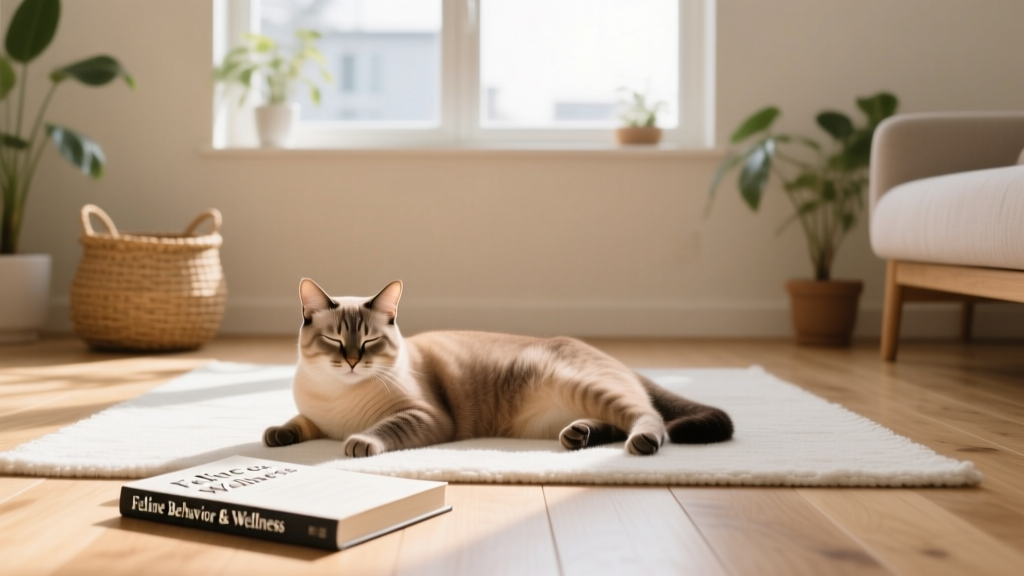
If you’ve ever Googled how to care a kitten in small house, you’re not alone—and you’re definitely not failing. In fact, over 68% of first-time cat owners in cities like NYC, Toronto, and Berlin adopt kittens into studios or one-bedroom apartments (2023 ASPCA Urban Pet Ownership Survey). But here’s what no one tells you upfront: kittens aren’t just ‘small cats’—they’re high-energy, curiosity-driven neuroscientists-in-fur who need cognitive stimulation, physical outlets, and territorial clarity *every single day*. Without intentional design, even the tiniest oversight—like skipping vertical space or misplacing the litter box—can trigger stress-related behaviors that persist for years. This isn’t about downsizing your pet’s needs. It’s about upgrading your strategy.
Step 1: Redefine ‘Space’ — Think Vertical, Not Just Floor Plan
Kittens don’t measure square footage—they measure climbable height, visual vantage points, and safe escape routes. A 400-square-foot studio can feel like a sprawling forest if you harness vertical real estate. Dr. Lena Cho, DVM and feline behavior specialist at Cornell’s Feline Health Center, confirms: “Cats evolved to occupy three-dimensional space. Denying vertical access is like asking a human to live without stairs or balconies—it creates chronic low-grade anxiety.”
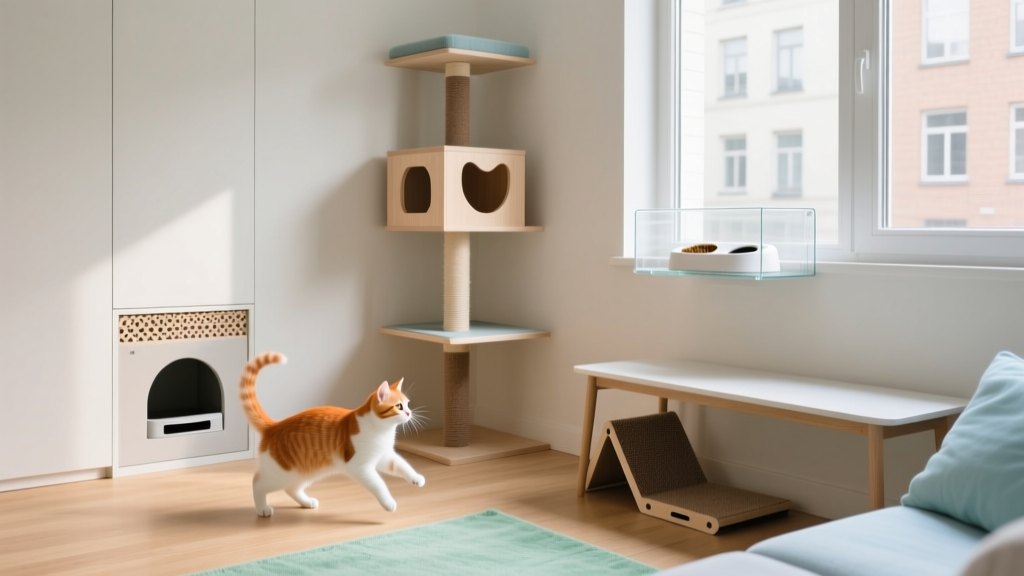
Start with what you already own: bookshelves, wall-mounted floating shelves (rated for 30+ lbs), or even repurposed IKEA KALLAX units turned sideways as climbing towers. Anchor all freestanding furniture—kittens weigh 2–4 lbs but generate surprising torque during play bursts. Install at least three distinct vertical zones: one near a window (for bird-watching), one near your desk or couch (for social bonding), and one tucked away (for solitude).
Pro tip: Use double-sided tape or citrus-scented spray on surfaces you *don’t* want scratched—never punish. Instead, redirect to sisal-wrapped posts placed *beside* off-limit furniture (not across the room). Why? Kittens scratch to mark territory, stretch muscles, and shed claw sheaths—not out of defiance. Place posts where they naturally stretch after naps: beside beds, sofas, and doorways.
Step 2: The 3-Zone Litter Box Rule (Even in Studio Apartments)
Here’s a hard truth: One litter box is never enough—even in tiny homes. The widely cited ‘N+1’ rule (number of boxes = number of cats + 1) exists because cats are fastidious, territorial, and sensitive to odor buildup. In confined spaces, scent saturation happens faster, and shared boxes increase avoidance—leading to inappropriate elimination (a top reason kittens get surrendered).
But how do you fit multiple boxes in a 350-sq-ft studio? Smart placement—not more square footage. Use compact, hooded boxes with carbon filters (like the Modkat or PetSafe ScoopFree Ultra), and position them in *separate, low-traffic corners*: one near the sleeping zone (but not *in* it), one near the food/water station (but >3 feet away—cats won’t eliminate where they eat), and one near the main activity area (e.g., beside your reading chair). All boxes must be scooped *twice daily*, fully changed weekly, and cleaned with enzymatic cleaner (not bleach or ammonia) to neutralize pheromones.
Case study: Maya, a Brooklyn teacher, adopted Luna (8 weeks old) into her 380-sq-ft walk-up. Within 5 days, Luna began peeing beside the single litter box. After switching to two compact boxes—one tucked under her kitchen island (with a removable panel for access), one behind a decorative room divider in the living nook—accidents stopped in 48 hours. No retraining. No stress meds. Just strategic geography.
Step 3: Play = Prevention (And Why 15 Minutes Twice Daily Isn’t Optional)
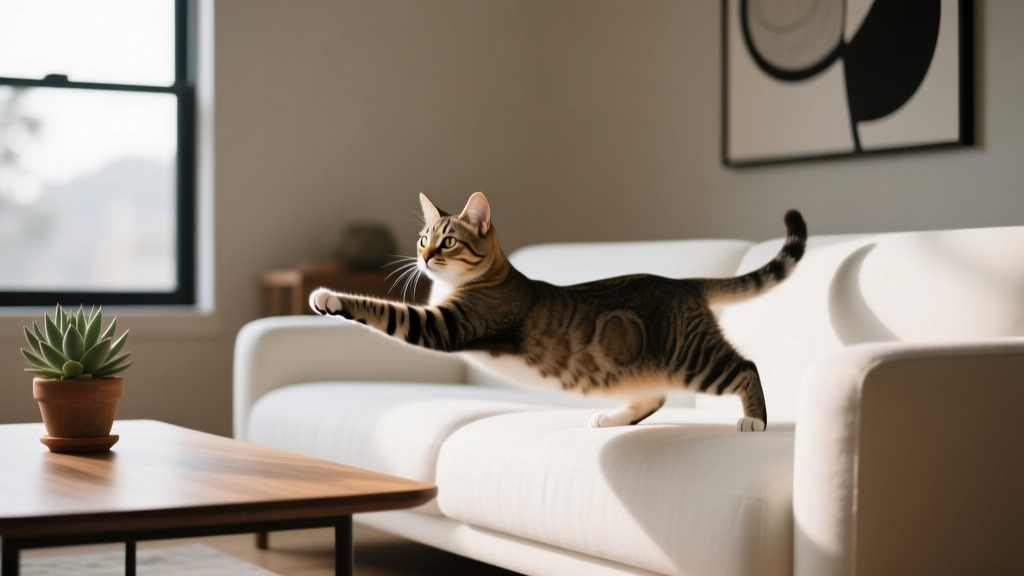
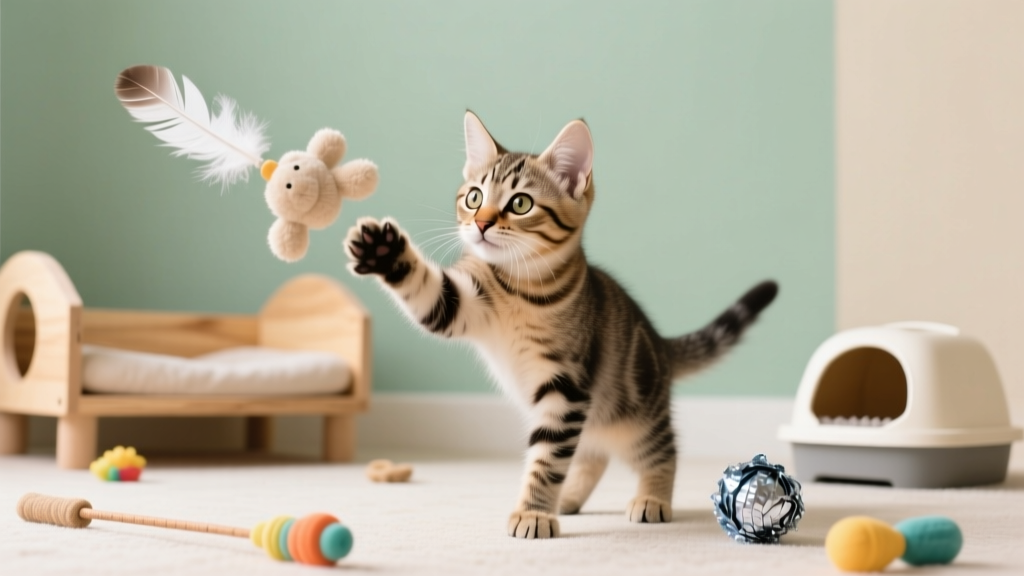
In small houses, unspent energy doesn’t dissipate—it redirects. Into shredded pillowcases. Into midnight zoomies at 3 a.m. Into biting ankles or attacking phone chargers. Kittens need 30+ minutes of *engaged* play daily—not just tossing a toy while scrolling Instagram. This isn’t recreation; it’s predatory drive fulfillment. As certified cat behaviorist Mikel Delgado, PhD, explains: “Play mimics hunting: stalk → chase → pounce → kill → eat → groom. Skipping steps leaves kittens physiologically unsatisfied—and behaviorally dysregulated.”
Your toolkit needs only three items: a wand toy with feathers or fur (for stalking/chasing), a crinkle ball or treat-dispensing puzzle (for ‘kill/eat’ simulation), and a quiet corner with a soft mat (for post-play grooming). Schedule sessions at dawn and dusk—their natural peak activity windows. Keep sessions short (7–10 mins), intense, and end with a ‘kill’—let them bat the toy under furniture or bite a treat. Then offer a small meal or lickable paste (like Lickable Calm) to mimic post-hunt satiety.
Real-world hack: Tape a laser pointer to a selfie stick and ‘hunt’ along baseboards and ceiling corners—no chasing required, and zero floor space used. Or dangle a ribbon from a ceiling fan (on low) for passive visual stimulation when you’re working.
Step 4: Sound, Smell & Silence — The Invisible Enrichment Layers
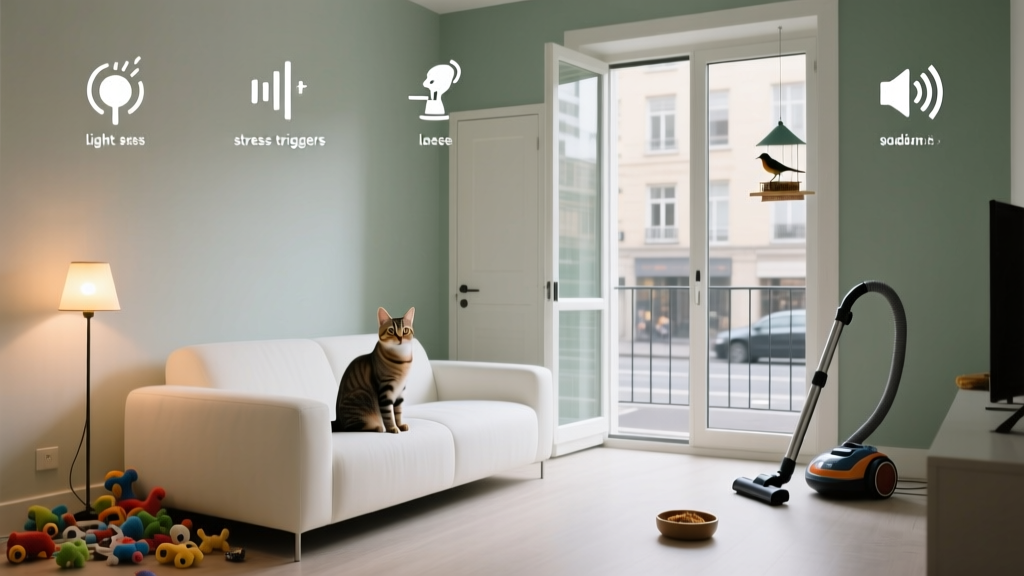
Most small-house kitten guides focus on furniture and toys—but neglect sensory ecology. Kittens process sound at frequencies up to 64 kHz (humans hear only to 20 kHz). A dripping faucet, HVAC hum, or neighbor’s bassline isn’t background noise—it’s a constant alarm signal. Likewise, synthetic air fresheners, scented candles, or even strong laundry detergents can overwhelm their 200 million olfactory receptors.
Do this now: Audit your home’s sensory load. Replace plug-in air fresheners with open bowls of baking soda + lavender buds (non-toxic, calming scent). Run white noise (like rain or forest sounds) during daytime naps—research shows it lowers cortisol in confined-animal environments (Journal of Feline Medicine and Surgery, 2022). And invest in one pair of soft-soled slippers: the thud of heavy footsteps triggers startle responses in kittens under 16 weeks.
Also critical: Create a ‘quiet sanctuary’—a cardboard box lined with fleece, tucked inside a closet or under a bed, with a heating pad set to 98°F (on low, with auto-shutoff). This isn’t indulgence. It’s thermoregulation (kittens can’t self-regulate body temp well until 10 weeks) and stress mitigation rolled into one.
Small-Space Kitten Care Timeline & Action Table
| Age Range | Critical Needs | Action Steps | Red Flags |
|---|---|---|---|
| 2–4 weeks | Thermoregulation, maternal bonding, eyes/ears opening | Provide warm (95–99°F), draft-free nest; use soft ticking clock wrapped in fleece to mimic heartbeat; avoid handling >5 mins at a time | No eye opening by day 14; no rooting reflex; lethargy |
| 5–7 weeks | Socialization window, litter training, weaning | Introduce 2+ litter box types (clay, paper, crystal); hold over box after meals/naps; expose to varied sounds (recorded vacuum, doorbell) at low volume | Avoiding litter box >3x/day; hissing at hands; no interest in solid food by week 6 |
| 8–12 weeks | Play aggression control, vertical exploration, fear imprinting | Install first shelf or perch; begin bite inhibition training (yelp + stop play); rotate 3 toys weekly to prevent habituation | Biting until drawing blood; hiding >50% of day; excessive grooming or bald patches |
| 3–6 months | Spay/neuter timing, territorial marking, adolescent testing | Schedule spay/neuter at 4 months (per AAHA guidelines); add Feliway diffuser in high-traffic zones; reinforce ‘yes’ behaviors with treats, ignore ‘no’ behaviors | Spraying urine vertically; sudden aggression toward familiar people; refusal to use litter box for >24 hrs |
Frequently Asked Questions
Can I keep a kitten in a studio apartment long-term?
Absolutely—*if* you commit to daily enrichment, vertical infrastructure, and consistent routines. Studies show kittens raised in enriched micro-homes develop stronger problem-solving skills and lower baseline cortisol than those in larger but barren spaces (University of Lincoln, 2021). The limiting factor isn’t square footage—it’s predictability and sensory variety.
How many toys does a kitten really need in a small space?
Quality beats quantity. You need just 5 core items: 1 wand toy, 1 crinkle ball, 1 treat puzzle, 1 cardboard tunnel (collapsible), and 1 heated cat bed. Rotate them weekly—kittens habituate fast. Overloading space with toys causes decision fatigue and reduces engagement. Store extras in a bin under the bed and swap every Sunday.
Is it cruel to not have a balcony or yard?
No—*if* you provide supervised outdoor time via leash/harness training (start at 10 weeks) or a secure catio (even a 2'x3' window-mounted unit). Unsupervised outdoor access poses far greater risks (cars, predators, toxins) than indoor living. The ASPCA reports indoor-only cats live 2–3x longer than outdoor-access cats.
What’s the best litter for tiny apartments?
Clumping clay litters with activated charcoal (e.g., Dr. Elsey’s Precious Cat Ultra) offer superior odor control in tight spaces—but avoid scented versions. For ultra-low-dust options, try paper-based litters like Yesterday’s News (unscented). Avoid crystal litters around young kittens—they can ingest shards while grooming, causing GI irritation.
Do I need a second kitten for companionship in a small house?
Not necessarily—and often, it backfires. Two kittens double the energy, noise, and cleanup in confined quarters. Unless you’re home 12+ hours/day, a singleton kitten with robust human interaction and enrichment thrives better than a pair left alone for 8-hour stretches. If you travel often, consider a bonded adult pair instead—they’re calmer and less prone to destructive play.
Debunking Common Myths
Myth #1: “Kittens will ‘grow out of’ chewing cords and jumping on counters.”
Reality: These are normal exploratory and predatory behaviors—but they become habits if not redirected *early*. By 16 weeks, neural pathways solidify. Use cord protectors *immediately*, and reward ‘four-on-floor’ with treats—not punishment. Ignoring it invites escalation.
Myth #2: “If my kitten sleeps a lot, they’re fine—even in a small space.”
Reality: Kittens sleep 18–20 hours/day, but 30% of that should be *active rest*—light dozing with ears twitching, tail flicks, or paw twitches. If your kitten sleeps motionless for >4 hours straight, especially in odd locations (inside cabinets, behind appliances), it may signal pain, overheating, or stress-induced lethargy. Monitor closely and consult your vet.
Related Topics (Internal Link Suggestions)
- Best Cat Trees for Apartments — suggested anchor text: "space-saving cat trees for small apartments"
- How to Stop Kitten Biting — suggested anchor text: "gentle kitten bite inhibition training"
- Litter Box Placement Guide — suggested anchor text: "where to put litter box in studio apartment"
- Quiet Cat Breeds for Small Spaces — suggested anchor text: "calmest cat breeds for apartments"
- DIY Kitten Enrichment Toys — suggested anchor text: "homemade kitten toys that don’t take space"
Your Next Step Starts Today—No Renovations Required
You don’t need more space—you need smarter systems. Every action in this guide—from installing one floating shelf to scheduling two 7-minute play sessions—takes under 90 seconds to implement. And each one directly reduces stress hormones, prevents behavior problems before they root, and deepens your bond with your kitten in ways square footage never could. So pick *one* thing from the timeline table above—just one—and do it before bedtime tonight. Then watch how your kitten’s confidence, curiosity, and calm grow, not in spite of your small house… but because of how intentionally you’ve made it theirs.