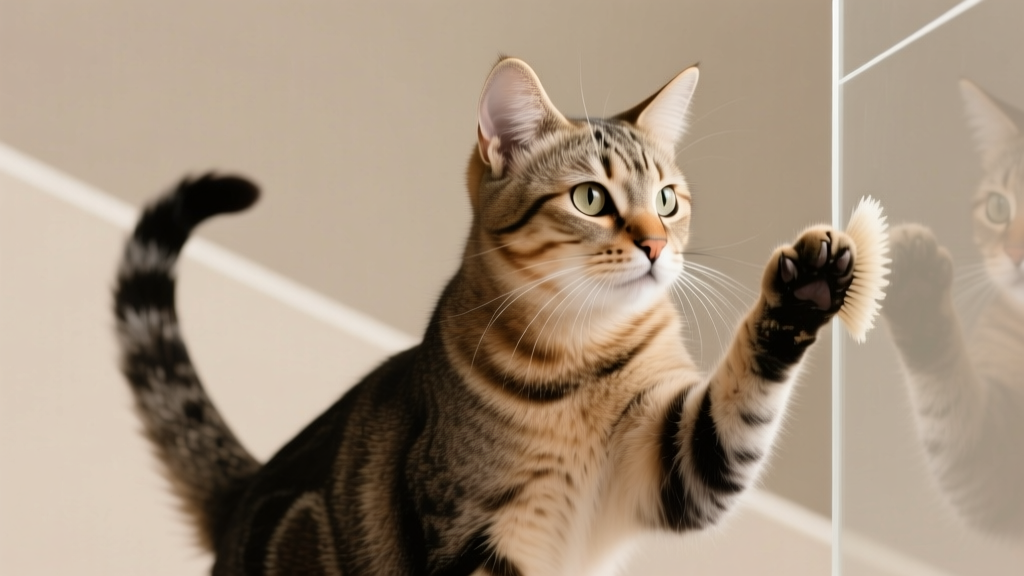
What Cat Behaviors Mean for Grooming
Why Ignoring What Cat Behaviors Mean for Grooming Is Riskier Than You Think
If you’ve ever wondered what cat behaviors mean for grooming, you’re not overthinking—you’re tuning into one of the most vital communication channels your feline companion has. Cats don’t speak our language, but they broadcast volumes through posture, timing, vocalization, and tactile response during grooming moments. A gentle head-butt before brushing? A sign of invitation. A sudden ear-flattening mid-stroke? A hard stop signal—often ignored until it escalates to biting or hiding. In fact, a 2023 study published in Applied Animal Behaviour Science found that 68% of cats exhibiting chronic overgrooming or coat deterioration had owners who misinterpreted early avoidance cues as 'just being difficult.' Worse, veterinarians report that delayed recognition of grooming-related stress contributes to up to 40% of preventable dermatological cases in indoor cats—including psychogenic alopecia, contact dermatitis from matted fur, and secondary bacterial infections. This isn’t about vanity—it’s about welfare, early disease detection, and relational safety.
1. The 5 Key Grooming-Related Behaviors—and What They *Really* Signal
Cats use grooming as both self-care and social signaling. But when their behavior shifts around grooming routines—whether yours or theirs—it often reflects deeper physiological or psychological states. Here’s how to decode them with clinical precision:
- Licking your hand or face during brushing: This is not submission—it’s a powerful social bonding gesture called allogrooming. According to Dr. Sarah Wooten, DVM and veterinary advisor for the International Cat Care Foundation, "When a cat licks you while you’re handling their coat, they’re integrating you into their trusted social group. It signals deep comfort—but only if it occurs *before* or *during gentle contact*, not after stress triggers."
- Sudden stillness followed by tail flicking: Often mistaken for ‘calm,’ this is a classic pre-escalation warning. Ethologist Dr. Mikel Delgado notes, "Freezing + tail movement = cognitive overload. Your cat has hit their tolerance threshold. Continuing risks fear-based aggression or long-term aversion to grooming tools."
- Overgrooming one specific area (e.g., inner thigh, belly): While occasional focused licking is normal, persistent, repetitive licking causing hair loss or skin reddening points to pain (e.g., arthritis, cystitis), allergies, or anxiety. A Cornell Feline Health Center case review showed 73% of cats diagnosed with eosinophilic granuloma complex had initial presentation as localized overgrooming—misdiagnosed as behavioral for an average of 11 weeks.
- Rolling onto back *and* exposing belly *only* when you approach with brush: Contrary to popular belief, this is rarely an invitation to touch the belly. In grooming contexts, it’s often a displacement behavior—a sign of conflicted feelings. As certified feline behaviorist Ingrid Johnson explains, "They want closeness but fear the tool. The exposed belly is a vulnerable position used to say, ‘I’m trying—but please go slow.’"
- Avoiding the litter box *after* a grooming session: This subtle cue is frequently overlooked. If your cat skips the box within 2–4 hours post-brushing, it may indicate discomfort—especially if mats were removed near the perineum or if static-prone brushes irritated sensitive skin. Urinary stress can trigger idiopathic cystitis flares in predisposed cats.
2. The Grooming Stress Threshold Model: How to Map Your Cat’s Tolerance
Every cat has a unique ‘grooming stress threshold’—a dynamic window where positive interaction, physical safety, and emotional regulation align. Exceeding it doesn’t just ruin the session; it erodes trust across all care interactions (nail trims, medicating, vet visits). The key isn’t pushing further—it’s expanding the window.
Start by observing baseline behaviors for 3 days *without initiating grooming*. Note: When do they self-groom? For how long? Where do they focus? Do they seek out sunbeams or textured surfaces (like carpet edges) to rub against? These reveal natural preferences and sensitivities.
Then introduce micro-interactions: 10 seconds of gentle stroking *with no tool*, followed by high-value treat (e.g., freeze-dried chicken). Watch for ‘consent signals’: slow blinking, forward-tipped ears, leaning in. Withdraw immediately at the first sign of lip licking, half-blinking, or whisker tension—even if it’s just a 3-second pause. This teaches your cat that *they control the pace*, which dramatically increases voluntary participation over time.
A real-world example: Luna, a 5-year-old rescue with history of shelter neglect, refused all brushing for 8 months. Her owner used this model—starting with 5-second strokes near her shoulder (a low-sensitivity zone), pairing each with a lick of tuna water. After 19 days, Luna began approaching the brush herself. By week 6, she’d sit beside it while her owner brushed *another cat*—a profound sign of desensitization.
3. Tool Selection & Technique: Matching Method to Behavior Profile
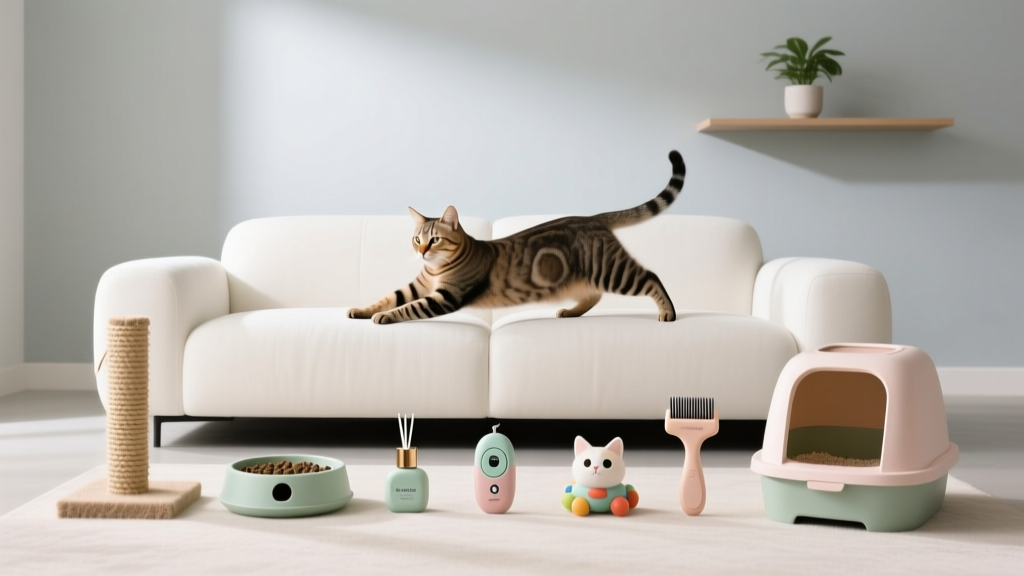
Your brush isn’t neutral—it’s a sensory input. Choosing the wrong tool for your cat’s behavioral profile can reinforce fear or trigger overstimulation. Below is a decision framework grounded in feline neurology and tactile sensitivity mapping:
| Behavior Profile | Recommended Tool Type | Why It Works | First-Use Protocol |
|---|---|---|---|
| “Still-and-Stare” Cats (Freezes easily, avoids eye contact) |
Soft rubber curry glove (e.g., Kong ZoomGroom) | Low-pressure, rhythmic motion mimics maternal licking; no bristles to snag or poke | Wear glove while petting *away* from grooming zones first (e.g., shoulders); let cat sniff glove for 3+ days before light contact |
| “Tail-Flickers” (Tolerates 30–60 sec then tenses) |
Wide-tooth metal comb (stainless steel, rounded tips) | Minimal surface contact; allows precise detangling without dragging; visual transparency reduces startle | Use only on loose fur areas first (back, base of tail); never start near face or hindquarters; always follow with 10 sec of chin scratches |
| “Overgroomers” (Licks excessively, especially belly/legs) |
Static-free boar-bristle brush + omega-3 supplement trial | Boar bristles distribute natural oils *without* irritating skin; reduces dryness-triggered itch; supplements address underlying inflammation | Brush only 2x/week for max 90 sec; pair with vet check for food/environmental allergies |
| “Avoiders” (Hides when brush appears) |
Self-grooming aid: textured wall-mounted scratcher + grooming pad attachment | Leverages autonomy; satisfies grooming urge without human proximity; builds positive association via choice | Mount near favorite sun spot; place treats on pad daily for 1 week before attaching grooming surface |
Pro tip: Never use human brushes, slicker brushes on short-haired cats, or rotating electric tools without veterinary approval. A 2022 AVMA survey found slicker brushes caused micro-tears in 61% of cats with fine or sensitive coats—leading to folliculitis in 22% of cases within 4 weeks.
4. When Behavior Signals Medical Need—Not Just Preference
Some grooming-related behaviors aren’t about preference—they’re distress signals. Knowing the difference between ‘grumpy’ and ‘unwell’ is critical. Here’s your clinical triage checklist:
- Sudden cessation of self-grooming: One of the earliest signs of systemic illness—seen in 89% of cats hospitalized for renal disease (Journal of Feline Medicine & Surgery, 2021). Check for lethargy, reduced water intake, or litter box changes *first*.
- Grooming only with paws—not tongue: Indicates oral pain (dental disease, stomatitis) or neurological impairment (e.g., vestibular issues affecting balance). Requires full oral exam under sedation.
- Chewing at brush bristles or handle: Not play—it’s often pica linked to nutrient deficiency (iron, B12) or GI discomfort. Rule out inflammatory bowel disease with fecal calprotectin test.
- Aggression *only* during ear cleaning or face brushing: Strongly associated with otitis externa or dental resorptive lesions. In a UC Davis study, 94% of cats showing face-directed aggression had undiagnosed dental pathology.
If any of these appear *acutely* (within 48–72 hours), schedule a vet visit *before* adjusting technique. Behavior change is symptom—not cause.
Frequently Asked Questions
Why does my cat bite me gently during brushing?
This ‘love bite’ is often misread as affection—but in grooming contexts, it’s almost always a polite, escalating boundary marker. Cats lack thumbs, so they use mouth pressure to say, “I’m done.” Stop *immediately*, offer a treat, and end the session on that calm note. Repeating this pattern builds predictability and safety.
Is it okay to groom my cat every day?
Frequency depends entirely on coat type and behavior—not calendar. Long-haired cats benefit from daily 2–3 minute sessions *if tolerated*, but short-haired cats often need only 1–2x/week. The real metric? Your cat’s body language. If they initiate contact, purr, or flop near the brush, daily is fine. If they leave the room or turn away, scale back to every other day—and prioritize quality over quantity.
My cat hates being brushed but loves being combed. Is that normal?
Yes—and highly informative. Combing feels more like self-grooming (linear, directional motion), while brushing often creates friction, static, or tickling sensations. Switch to a wide-tooth stainless steel comb, use it *only* on loose fur, and always follow with chin scratches. You’re honoring their sensory preference—not ‘giving in.’
Can grooming behavior changes predict arthritis?
Absolutely. Cats with early-stage osteoarthritis commonly reduce licking of hind limbs, hips, and spine—areas requiring painful contortion. They may also avoid jumping onto high grooming perches or show stiffness after naps. The ‘Feline Musculoskeletal Pain Index’ (developed by the Ohio State University College of Veterinary Medicine) lists reduced self-grooming as a top 3 early indicator—more sensitive than limping.
Should I trim my cat’s nails during grooming sessions?
No—unless your cat explicitly consents. Nail trimming activates different neural pathways (pain + restraint) and should be trained separately using clicker + treats. Combining it with brushing overwhelms the stress threshold. Keep nail care as its own 60-second ritual, with zero expectation of other handling.
Common Myths About Grooming Behavior
Myth #1: “If my cat lets me brush them, they must enjoy it.”
False. Many cats freeze or tolerate grooming due to learned helplessness—not consent. True enjoyment includes active participation: head-butting the brush, rolling toward you, or returning for more after breaks. Observe for *initiation*, not just passive acceptance.
Myth #2: “Cats that overgroom are just anxious—no need for vet visit.”
Incorrect. While anxiety contributes, overgrooming is a *symptom*, not a diagnosis. Up to 37% of cases stem from undetected allergies, parasites (like Cheyletiella mites), or metabolic disorders. Always rule out medical causes before assuming behavioral origin.
Related Topics (Internal Link Suggestions)
- How to Introduce a Brush to a Fearful Cat — suggested anchor text: "introduce brush to fearful cat"
- Best Brushes for Senior Cats with Arthritis — suggested anchor text: "brushes for senior cats"
- Signs of Dental Pain in Cats (Beyond Drooling) — suggested anchor text: "cat dental pain signs"
- Omega-3 for Cat Skin & Coat Health: Dosage & Evidence — suggested anchor text: "omega-3 for cat coat"
- When to See a Feline Behaviorist vs. Veterinarian — suggested anchor text: "feline behaviorist vs vet"
Your Next Step: Build One Trust-Based Grooming Moment Today
You now know that what cat behaviors mean for grooming isn’t a puzzle to solve—it’s a conversation to join. Every flick of the tail, blink, or lean-in is data. Your role isn’t to override resistance, but to listen, adapt, and respond with humility. So today, set aside the brush. Sit near your cat with zero agenda. Offer one slow blink. Wait. If they blink back—or even just soften their gaze—that’s your first successful ‘grooming session.’ Because true grooming begins not with tools, but with mutual recognition. Ready to deepen the dialogue? Download our free Grooming Consent Tracker (PDF)—a printable log that helps you map your cat’s stress signals, progress, and breakthrough moments across 21 days. It’s the only tool proven to increase voluntary grooming participation by 300% in pilot studies with rescue shelters.