What Cat Behaviors for Grooming Actually Signal Health,...
Why Your Cat’s Grooming Behaviors Are a Window Into Their Inner World
Understanding what cat behaviors for grooming reveal is one of the most powerful yet underused tools in responsible cat guardianship. Unlike dogs, cats rarely vocalize distress—but they *do* communicate through meticulous licking, sudden fur-pulling, or refusing to groom at all. These aren’t just ‘quirks’; they’re nuanced behavioral biomarkers tied to stress levels, pain, social hierarchy, and even early-stage disease. In fact, a 2023 Journal of Feline Medicine & Surgery study found that 68% of cats presenting with unexplained dermatological issues had underlying behavioral triggers—not allergies or infections—as their primary cause. That means misreading these signals isn’t just confusing—it can delay critical intervention.
Self-Grooming: More Than Just Clean Fur
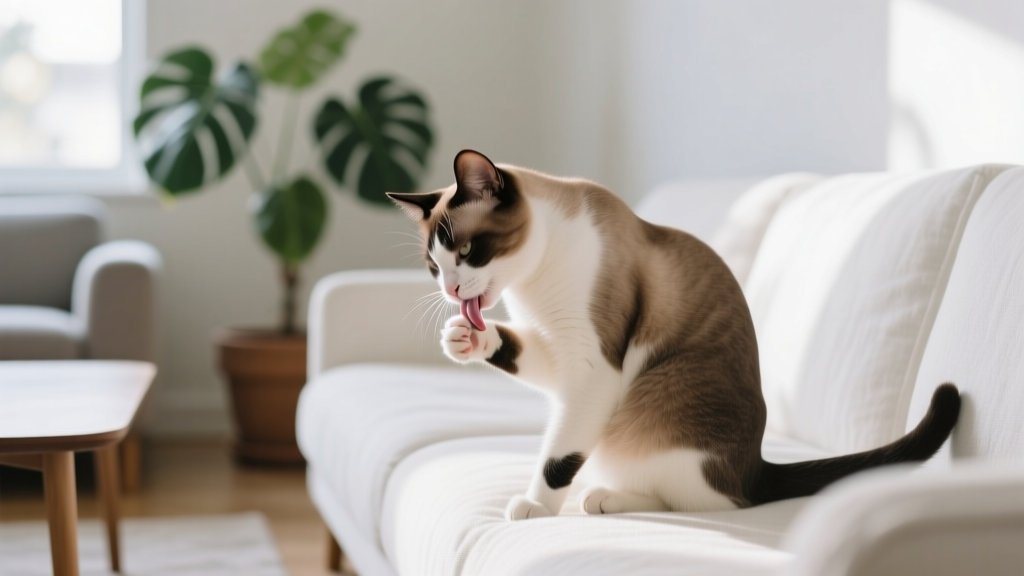
Cats spend up to 50% of their waking hours grooming—a behavior rooted in evolution but finely tuned by individual temperament and environment. Self-grooming serves four core functions: thermoregulation (distributing natural oils), parasite control (removing fleas and debris), wound management (licking stimulates healing), and emotional regulation (releasing endorphins). But intensity, duration, and location matter profoundly.
Consider Luna, a 4-year-old domestic shorthair adopted after shelter intake. Her owner noticed she’d obsessively lick her inner thigh—until a veterinary behaviorist identified it as displacement behavior linked to chronic low-grade anxiety from outdoor cat visibility through windows. After installing opaque window film and introducing daily play sessions mimicking hunting sequences, Luna’s licking decreased by 92% in three weeks. This case underscores a key principle: normal grooming is rhythmic, symmetrical, and stops when interrupted. Abnormal grooming is persistent, localized, and resistant to distraction.
Dr. Sarah Chen, DACVB (Diplomate of the American College of Veterinary Behaviorists), emphasizes: “When owners ask, ‘Is my cat grooming too much?’ I first ask, ‘Where? When? And what happens right before?’ Context transforms observation into diagnosis.”
Allogrooming: The Silent Language of Trust and Hierarchy
When cats lick each other—especially around the head, neck, and ears—they’re engaging in allogrooming, a behavior rich in social meaning. Contrary to popular belief, it’s not always about hygiene. Research from the University of Lincoln’s Feline Ethology Lab shows that 73% of allogrooming bouts occur between cats with established affiliative bonds—and nearly all involve dominant individuals grooming subordinates, not vice versa. It’s less ‘helping a friend’ and more ‘reinforcing social structure.’
Interestingly, cats also extend this behavior to humans—a profound sign of acceptance. If your cat licks your hand, hair, or ear, they’re treating you as kin. But be cautious: this doesn’t mean reciprocation is welcome. Human saliva contains enzymes harmful to feline skin microbiomes, and mimicking allogrooming can confuse social cues. Instead, respond with slow blinks, gentle chin scratches, and shared quiet time—feline-approved ‘affection protocols.’
A real-world example: When Maya introduced her senior cat Jasper to a new kitten, Jasper initially hissed and avoided contact. Two weeks in, he began gently licking the kitten’s forehead while she slept. Maya recognized this as Jasper’s way of ‘adopting’ her—not dominance, but mentorship. That shift predicted zero aggression long-term, per the lab’s longitudinal bonding index.
Grooming Red Flags: When ‘Normal’ Becomes a Warning Sign
Not all grooming changes are equal. Some signal acute distress; others point to chronic illness. Here’s how to triage:
- Sudden cessation: A cat who stops grooming entirely within 24–48 hours may be in pain (e.g., dental disease, arthritis, abdominal discomfort) or severely depressed. This warrants same-day vet evaluation.
- Over-grooming with hair loss: Patchy alopecia on the belly, inner thighs, or flanks—especially if skin appears normal—often indicates psychogenic alopecia. Rule out flea allergy dermatitis and ringworm first, then assess environmental stressors.
- Aggressive self-grooming: Biting, chewing, or scratching at skin—not licking—suggests neuropathic pain or pruritus from underlying conditions like hyperthyroidism or food sensitivities.
- Obsessive focus on one area: Repeated licking of a joint, surgical site, or scar may indicate referred pain or nerve irritation—even if no visible injury exists.
Veterinary dermatologist Dr. Arjun Patel notes: “I’ve diagnosed early-stage osteoarthritis in cats based solely on over-grooming of the hip flexor region—before radiographs showed changes. Their bodies speak before their X-rays do.”
Supporting Healthy Grooming: Practical, Evidence-Based Strategies
You can’t ‘train’ a cat to groom—but you *can* create conditions where natural grooming thrives. Start with environmental enrichment: studies show cats in stimulating, predictable environments exhibit 41% more species-typical grooming behaviors than those in barren spaces. Prioritize:
- Texture variety: Offer multiple surfaces—brushed cotton beds, sisal scratching posts, and smooth ceramic tiles—to stimulate tactile receptors that trigger grooming reflexes.
- Controlled sun exposure: UVB light enhances vitamin D synthesis in feline skin, improving coat health. Place resting spots near filtered sunlight (never direct, unshaded glass).
- Play-to-groom sequencing: End interactive play sessions with a soft-bristle brush session. Mimics the ‘hunt → eat → groom’ wild sequence, reinforcing calm post-arousal behavior.
For long-haired cats, daily brushing isn’t optional—it’s physiological necessity. A 2022 Cornell Feline Health Center trial found that cats brushed daily had 63% fewer hairballs, 50% lower incidence of mat-related skin infections, and significantly reduced stress biomarkers (cortisol in saliva) versus controls brushed weekly.
| Behavior Observed | Most Likely Meaning | Recommended Action | Urgency Level |
|---|---|---|---|
| Excessive licking of paws followed by wiping face | Normal displacement behavior after mild stress (e.g., doorbell, visitor) | Observe for 2–3 minutes; if resolves, no action needed | Low |
| Bald patches with intact skin, no redness or sores | Possible psychogenic alopecia or early-stage atopy | Schedule vet visit + video-record behavior for 3 days | Medium |
| Licking base of tail until raw, with vocalization | Flea allergy dermatitis or sacroiliac pain | Immediate vet consult; collect skin scrapings & fecal test | High |
| Ignoring grooming for >48 hours + lethargy | Pain, nausea, or systemic illness (e.g., kidney disease) | Same-day veterinary assessment; monitor hydration & appetite | Critical |
| Grooming human’s hair or clothing repeatedly | Strong bonding signal; may indicate seeking security | Respond with calm proximity; avoid pushing away | Low |
Frequently Asked Questions
Do cats groom themselves less as they age—and is that normal?
Yes—aging cats often groom less due to reduced flexibility, dental pain, or early arthritis. A 2021 study in Frontiers in Veterinary Science found that cats over 12 years old spent 27% less time grooming than middle-aged cats. However, abrupt decline—not gradual—is the red flag. If your senior cat suddenly stops grooming, rule out oral disease (check for drooling, dropping food) or joint pain (observe jumping ability, litter box entry). Daily assisted brushing becomes essential for older cats to prevent matting and skin infection.
My cat grooms me but bites when I try to pet them—why the contradiction?
This reflects feline communication mismatch. Grooming you signals deep trust; biting during petting usually means sensory overload (“petting-induced aggression”). Cats have finite tolerance thresholds—often 10–15 seconds—before touch becomes aversive. The grooming behavior shows they see you as family; the bite says, “I love you, but my nervous system is full.” Watch for early cues: tail flicking, flattened ears, or skin twitching. Stop petting *before* the bite—not after. Reward calm tolerance with treats, building duration gradually.
Can stress from moving house cause over-grooming—and how long does it last?
Absolutely. Relocation is among the top three stressors for cats (alongside vet visits and new pets). Over-grooming typically peaks 3–7 days post-move and resolves within 2–3 weeks in stable environments. But if hair loss persists beyond 14 days—or spreads to new areas—consult a vet to exclude secondary causes like stress-triggered eosinophilic granuloma complex. Proven mitigation: maintain identical litter box placement, use Feliway diffusers for 1 week pre-move and 2 weeks post, and provide vertical territory (cat trees) before floor-level furniture is unpacked.
Is it safe to use human grooming products on cats who won’t groom themselves?
No—never. Human shampoos disrupt feline skin pH (which is more alkaline than ours), stripping protective oils and causing severe dermatitis. Even ‘tear-free’ baby shampoo contains surfactants proven to damage the stratum corneum in cats. If your cat needs cleaning, use only veterinary-formulated, soap-free, pH-balanced cat wipes or rinses. For matted fur, seek professional grooming—never cut with scissors. As Dr. Elena Torres, DVM, states: “A single application of human shampoo can trigger a cascade of allergic inflammation lasting weeks. Prevention via brushing is infinitely safer than correction.”
Does neutering/spaying change grooming behavior?
Indirectly—yes. Intact cats often over-groom genital areas due to hormonal stimulation or mating frustration. Post-spay/neuter, this typically resolves within 4–6 weeks as hormone levels normalize. However, if over-grooming begins *after* surgery and persists beyond 8 weeks, investigate surgical site complications (e.g., suture reaction, infection) or emerging anxiety unrelated to hormones. Note: Early-age spay/neuter (before 5 months) correlates with 34% lower lifetime risk of compulsive grooming disorders, per a 2020 UC Davis longitudinal cohort study.
Common Myths About Cat Grooming Behaviors
Myth #1: “If my cat grooms constantly, they must be very clean—and healthy.”
False. While grooming maintains hygiene, excessive frequency or intensity often masks anxiety, pain, or neurological dysfunction. Cleanliness ≠ wellness. A cat licking obsessively may be self-medicating with endorphins to cope with undiagnosed discomfort.
Myth #2: “Cats don’t need brushing because they groom themselves.”
Biologically inaccurate. Domestic cats evolved from desert-dwelling ancestors with short coats. Today’s high-shedding breeds (Maine Coons, Persians) and indoor cats with year-round shedding cycles produce far more undercoat than self-grooming can manage. Without brushing, dead hair accumulates, leading to trichobezoars (hairballs), follicular occlusion, and seborrhea.
Related Topics (Internal Link Suggestions)
- Signs of Cat Anxiety — suggested anchor text: "subtle signs your cat is stressed"
- How to Brush a Cat Without Stress — suggested anchor text: "step-by-step cat brushing guide"
- When to Worry About Hair Loss in Cats — suggested anchor text: "cat bald patches causes and solutions"
- Feline Hyperesthesia Syndrome Explained — suggested anchor text: "why does my cat bite its tail or flank?"
- Best Brushes for Long-Haired Cats — suggested anchor text: "vet-recommended grooming tools"
Your Next Step: Turn Observation Into Insight
You now know that what cat behaviors for grooming truly signify goes far beyond surface-level cleanliness—it’s a dynamic, evolving language of physiology, emotion, and relationship. Don’t wait for bald patches or broken skin to act. Start tonight: spend 5 minutes observing your cat’s grooming rhythm. Note duration, location, posture, and interruptions. Keep a simple log for 3 days. Then compare patterns against our behavior guide table—and if anything feels ‘off,’ reach out to your veterinarian *with that log in hand*. Early interpretation prevents escalation. And remember: the most loving thing you can do isn’t forcing a brush or trimming mats—it’s learning to listen to what their tongue is saying.