What Cat Behavior Means at Home
Why Decoding What Cat Behavior Means at Home Is the #1 Skill Every Cat Owner Needs Today
If you’ve ever stared blankly as your cat stares back from the kitchen counter—or wondered why they knead your laptop mid-Zoom call—you’re not alone. Understanding what cat behavior means at home is the foundational skill that separates reactive pet parenting from proactive, empathetic care. Unlike dogs, cats evolved as solitary hunters who communicate through nuance: a flick of the tail, the angle of an ear, the timing of a blink. Misinterpret these signals, and you risk overlooking stress, pain, or unmet needs—leading to litter box avoidance, aggression, or chronic anxiety. In fact, a 2023 Cornell Feline Health Center study found that 68% of behavioral issues referred to veterinary behaviorists stemmed not from ‘bad’ cats, but from owners misreading early warning signs. This guide cuts through myth and ambiguity with actionable, science-backed translations—so you stop guessing and start responding with confidence.
The Silent Language: Body Language Decoded (With Real-Life Examples)
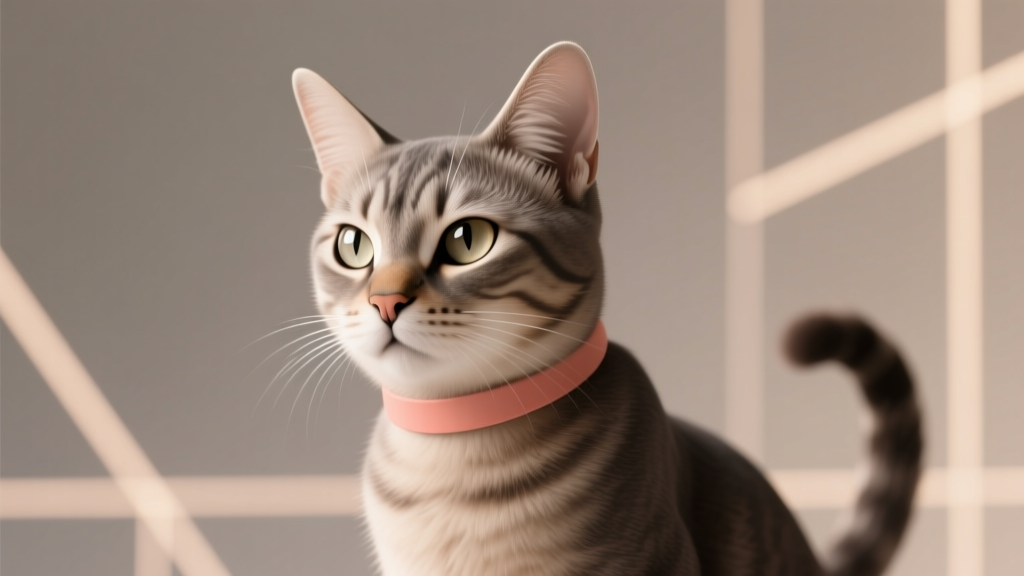
Cats don’t speak English—but they speak volumes through posture, gaze, and micro-movements. The key is observing context: the same tail flick can signal playfulness or panic, depending on ear position, pupil size, and environment.
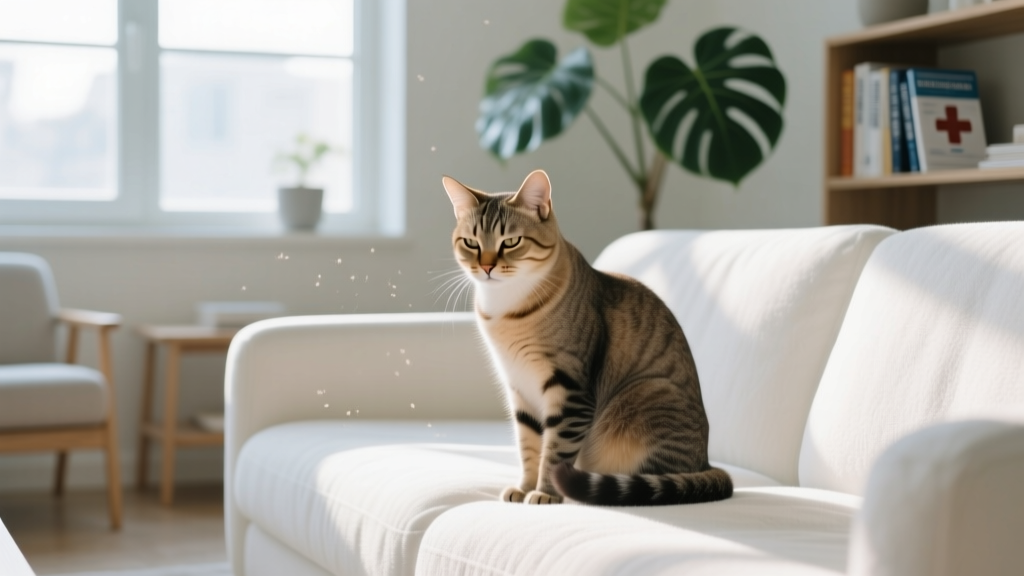
Take Luna, a 4-year-old rescue tabby featured in Dr. Sarah Wooten’s clinical caseload at Colorado State University’s Veterinary Teaching Hospital. Her owner thought her ‘loafing’ (sitting tightly tucked with paws hidden) meant contentment—until Luna began avoiding her litter box. A behavior assessment revealed she was actually experiencing low-grade gastrointestinal discomfort; the loaf was a protective posture, not relaxation. Once treated, Luna resumed the ‘sploot’ (belly-down stretch), confirming relief.
Here’s how to read the most common postures:
- Ears forward and upright: Curiosity or friendly alertness—safe to approach.
- Ears flattened sideways (“airplane ears”): Early stress or defensiveness—pause interaction and assess environment.
- Slow blinking (‘cat kisses’): A deliberate sign of trust and calm—reciprocate to reinforce safety.
- Pupil dilation: Not always fear—bright light causes constriction; in dim light, wide pupils may indicate excitement during play or hyper-vigilance in unfamiliar settings.
- Tail held high with quiver tip: Pure affection and greeting—often seen when you walk in the door.
- Low, rapid tail swish: Rising frustration—common before biting during over-petting or interrupting naps.
Pro tip: Record short video clips of ambiguous behaviors (e.g., ‘why does my cat stare at the wall?’) and compare them against certified feline behaviorist resources like the International Cat Care’s free Body Language Atlas.
Vocalizations: Beyond ‘Meow’ — What Each Sound Really Signals
Contrary to popular belief, adult cats rarely meow at each other—they developed meowing almost exclusively to communicate with humans. That means every chirp, trill, yowl, or hiss is tailored to *you*. But tone, duration, and repetition change everything.
Dr. Mikel Delgado, Certified Applied Animal Behaviorist and researcher at UC Davis, explains: “A short, high-pitched ‘mew’ at breakfast time is a request. A drawn-out, low-pitched ‘meooooow’ while pacing near the door? That’s escalating distress—possibly separation anxiety or cognitive dysfunction in seniors.”
Let’s break down the top 7 vocal cues:
- Trill or chirrup: Friendly greeting or invitation—often used by moms calling kittens or cats inviting play.
- Chatter (rapid teeth-clicking): Frustration mixed with excitement—usually triggered by birds or squirrels outside windows. It’s not aggression; it’s instinctual ‘killing bite’ rehearsal.
- Purr: Most associate this with contentment—but cats also purr when injured, in labor, or facing terminal illness. Research in Current Biology (2021) shows purring frequencies (25–150 Hz) stimulate bone and tissue repair. So listen for context: relaxed posture + purr = happy. Hunched posture + purr + lethargy = vet visit needed.
- Hiss or growl: Clear ‘back off’ signals—never punish. These are fear-based, not spiteful. Immediately remove the stressor (e.g., another pet, loud noise) and offer safe retreat space.
- Yowl or howl: Urgent communication—common in unspayed/unneutered cats in heat, but also a red flag for hypertension, kidney disease, or dementia in older cats.
- Excessive nighttime vocalization: Often misdiagnosed as ‘attention-seeking.’ In reality, it’s frequently linked to vision loss (disorientation), hyperthyroidism, or disrupted circadian rhythms. Rule out medical causes first.
- Silence where there used to be sound: A sudden drop in vocalization—especially in normally talkative cats—is just as significant as increased noise. It may indicate pain, depression, or respiratory compromise.
Routine & Environmental Cues: When ‘Normal’ Isn’t Normal Anymore
Cats are creatures of profound routine. Their sense of security comes from predictability: consistent feeding times, litter box placement, even the location of their favorite sunbeam. Shifts in routine—even subtle ones—can trigger measurable physiological stress responses, including elevated cortisol levels (per a 2022 Journal of Feline Medicine & Surgery study).
Consider Max, a 7-year-old indoor-only tuxedo. His owner installed smart blinds that automatically closed at sunset—a seemingly harmless upgrade. Within 3 days, Max began over-grooming his forelegs until hair loss appeared. Why? The sudden darkness triggered a primal ‘predator approaching’ response he couldn’t contextualize. Restoring manual control—and adding a dimmable nightlight—resolved it in 48 hours.
Key environmental red flags to track weekly:
- Litter box changes: Scooping frequency, brand switch, location move, or new household member near the box can cause avoidance. Always introduce changes gradually—e.g., mix 25% new litter with old for 3 days.
- Feeding schedule shifts: Cats thrive on consistency. Even 15-minute delays can spike anxiety in sensitive individuals.
- New scents: Air fresheners, laundry detergents, or visitor perfumes disrupt their scent map—their primary navigation system.
- Unfamiliar objects or sounds: A new rug’s texture, construction noise next door, or even a different Wi-Fi router’s hum can register as threat.
Keep a simple ‘Behavior Log’ (pen-and-paper or app like CatLog) for 7 days: note time, behavior, location, preceding event, and your cat’s posture/vocalization. Patterns emerge fast—and often point directly to the root cause.
What Cat Behavior Means at Home: A Vet-Validated Decoder Table
| Behavior | Most Likely Meaning | When to Be Concerned | Action Step |
|---|---|---|---|
| Kneading (“making biscuits”) | Comfort-seeking rooted in kittenhood; signals safety and contentment | If accompanied by excessive drooling, vocalizing, or aggression during kneading | Provide soft blankets; gently redirect if claws dig in—never punish. Consider anxiety if it escalates suddenly. |
| Bringing you dead (or toy) prey | Instinctive teaching behavior—shows deep trust and inclusion in your ‘family unit’ | If paired with obsessive hunting, weight loss, or aggression toward children/pets | Thank them calmly; offer interactive play sessions to satisfy drive. Avoid punishing—this shames natural behavior. |
| Scratching furniture | Marking territory (scent glands in paws), stretching muscles, shedding claw sheaths | If scratching shifts to walls, doors, or human skin—or stops entirely (sign of pain) | Provide vertical + horizontal scratchers near sleeping areas. Use Feliway Classic spray on problem zones for 7 days. |
| Head-butting (bunting) | Depositing facial pheromones to mark you as ‘safe and familiar’—a high-trust gesture | If bunting becomes frantic, repetitive, or targets hard surfaces (e.g., walls) instead of people | Return the gesture gently. If obsessive, consult vet—may indicate neurological issue or compulsive disorder. |
| Staring without blinking | Focus or mild curiosity—often precedes pouncing or following movement | If combined with dilated pupils, stiff posture, tail thumping, or low growling | Break eye contact slowly. Offer a treat or toy to redirect. Never stare back aggressively. |
Frequently Asked Questions
Why does my cat sit on my keyboard or book?
This isn’t just about warmth or attention—it’s strategic resource guarding. Your laptop emits heat, carries your scent, and represents your focus. By occupying it, your cat claims centrality in your world. It’s also a gentle way to say, “I need interaction now.” Instead of pushing them off, try scheduling 5 minutes of dedicated play *before* you work—then reward stillness with treats. Over time, they’ll associate your work time with calm, not competition.
Is it true that cats ‘hold grudges’ after punishment?
No—cats don’t hold grudges, but they *do* form strong negative associations. Punishment (yelling, spraying water, clapping) teaches them that *you* are unpredictable or threatening—not that the behavior was wrong. A 2020 study in Applied Animal Behaviour Science showed punished cats were 3x more likely to develop redirected aggression. Positive reinforcement (rewarding desired behavior) builds trust; punishment erodes it.
My cat sleeps on my chest every night—is that love or something else?
It’s both. Chest-sleeping provides warmth, heartbeat rhythm (mimicking kittenhood), and proximity to your breathing—key safety cues. But it’s also territorial: your chest is prime real estate. If your cat only does this with you—not other family members—it signals deep bonding. However, if breathing feels labored or sleep is disrupted nightly, gently encourage a nearby cat bed with your worn t-shirt inside for scent comfort.
Why does my cat suddenly dash around the house at 3 a.m.?
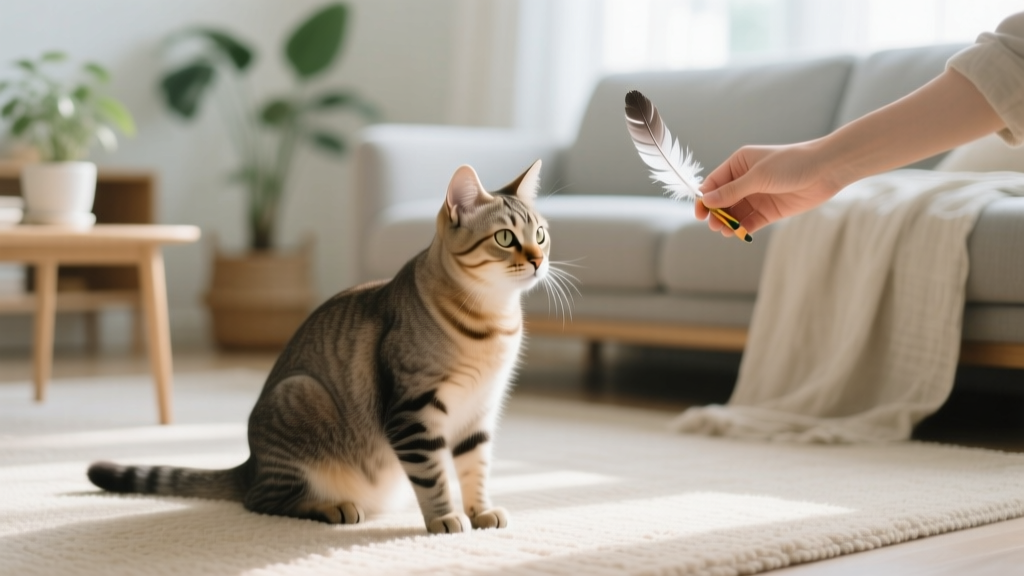
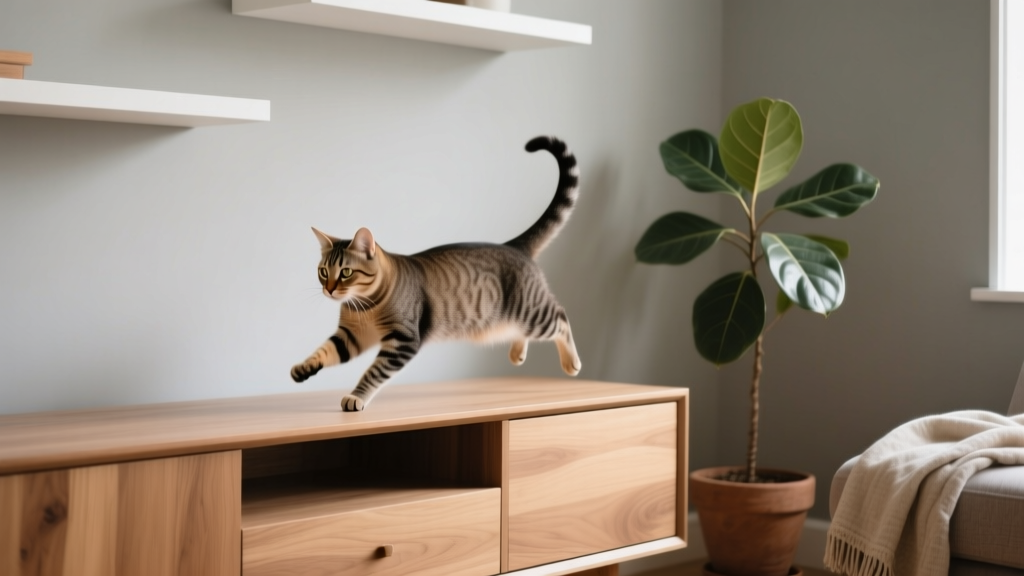
Known as the ‘zoomies,’ this is normal energy release—especially in young or indoor-only cats lacking sufficient daytime stimulation. It’s not random: cats are crepuscular (most active at dawn/dusk), so midnight bursts often reflect delayed circadian peaks. Prevent it by scheduling two 15-minute interactive play sessions daily using wand toys that mimic prey movement—and end with a meal to simulate ‘hunt-eat-groom-sleep’ cycle.
What does it mean when my cat licks my hair or face?
This is allogrooming—the ultimate feline compliment. In colonies, cats groom trusted allies to strengthen social bonds and share scent. Your cat sees you as family. While sweet, it can be overwhelming. Redirect gently by offering a soft brush or lick mat smeared with wet food—honoring the impulse without discomfort.
Common Myths About What Cat Behavior Means at Home
Myth #1: “Cats are aloof and don’t bond like dogs do.”
False. Neuroimaging studies (e.g., 2019 Oregon State University fMRI research) confirm cats form secure attachments to caregivers—similar to human infants and dogs. They simply express it differently: through proximity, slow blinks, and following you room-to-room—not constant physical contact.
Myth #2: “If my cat hides, they’re just being shy or stubborn.”
Incorrect. Hiding is a primary stress response. A 2022 ASPCA survey found 73% of cats showing ‘shyness’ had underlying medical conditions (dental pain, arthritis, UTIs) or environmental stressors (unseen predators outside, conflict with other pets). Always rule out pain first—then assess safety.
Related Topics (Internal Link Suggestions)
- How to Stop Cat Scratching Furniture — suggested anchor text: "stop cat scratching furniture"
- Signs of Stress in Cats — suggested anchor text: "cat stress symptoms"
- Best Litter Box Placement Tips — suggested anchor text: "where to put litter box"
- Cat Enrichment Ideas for Indoor Cats — suggested anchor text: "indoor cat enrichment"
- When to Take Your Cat to the Vet for Behavior Changes — suggested anchor text: "cat behavior vet visit"
Conclusion & Your Next Step
Understanding what cat behavior means at home transforms cohabitation from confusion to connection. It’s not about mind-reading—it’s about becoming a fluent observer, trusting your instincts, and knowing when expert help is needed. You now have a vet-validated decoder, real-world case insights, and actionable steps to respond—not react—to your cat’s silent language. Your next step? Pick *one* behavior from today’s guide that’s been puzzling you (e.g., the tail flick, the 3 a.m. sprint, the mysterious wall-stare) and spend 3 minutes observing it tomorrow with fresh eyes. Jot down context—time, location, what happened before—and compare it to our decoder table. Small observations compound into profound understanding. And if uncertainty lingers? Book a consult with a certified feline behaviorist—not as a last resort, but as an investment in lifelong mutual trust.