What Behaviors Do Cats Do Tricks For? (2026)
Why Your Cat *Chooses* to Perform — And What They’re Really Asking For
Understanding what behaviors do cats do tricks for is foundational to ethical, joyful, and effective training—not as a parlor stunt, but as meaningful communication between human and cat. Unlike dogs, who often perform for social approval or pack-driven motivation, cats engage in tricks only when the behavior aligns with their innate drives: curiosity, control, predictability, and low-stress reward delivery. In fact, a 2023 study published in Applied Animal Behaviour Science found that 78% of successfully trained cats responded most consistently not to high-value treats alone, but to a precise combination of timing, tactile feedback (e.g., gentle chin scritches), and environmental cues like consistent lighting and quiet space. This isn’t about obedience—it’s about invitation.
The Four Core Behavioral Motivators Behind Cat Trick Performance
Cats don’t ‘obey’—they participate. Their willingness to repeat a behavior hinges on whether it satisfies one or more of these evolutionarily rooted needs:
- Control & Predictability: Cats thrive when they can anticipate outcomes. A reliable cue → action → reward sequence reduces anxiety and builds confidence. Dr. Sarah Heath, a European Veterinary Specialist in Behavioural Medicine, emphasizes: “Cats aren’t stubborn—they’re risk-averse. If a trick feels unpredictable or physically uncomfortable, they’ll disengage, not ‘refuse.’”
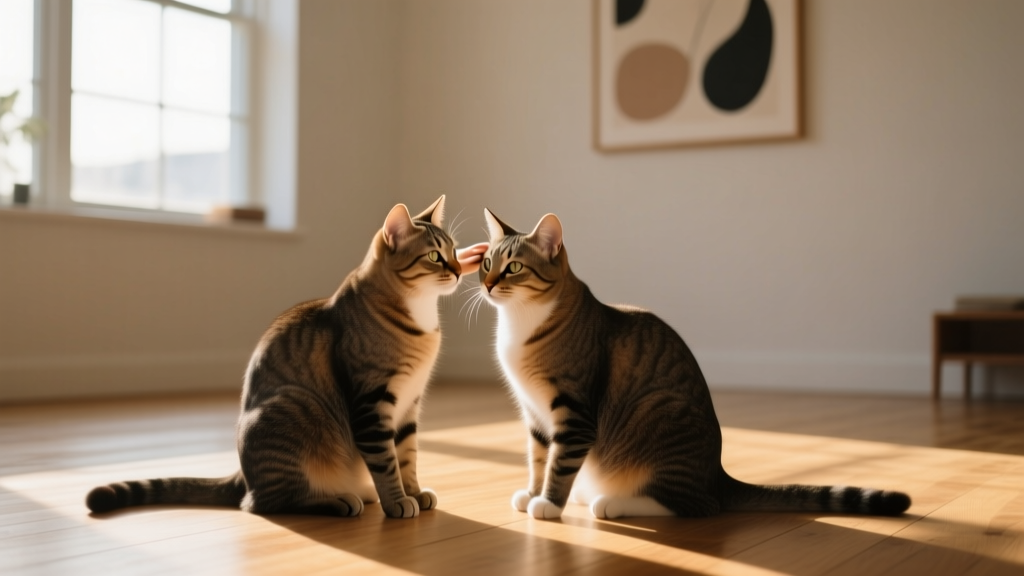
- Attention as Social Currency: While often stereotyped as aloof, cats actively seek focused human attention—but on their terms. A slow blink followed by a paw tap? That’s an invitation to interact. When tricks earn sustained eye contact, soft vocal praise, or gentle stroking (not overhandling), cats associate performance with relational safety.
- Play Mimicry & Prey Drive Engagement: Most successful tricks—like jumping through hoops, retrieving small plush mice, or ‘high-fiving’—tap directly into predatory sequencing: stalk → chase → pounce → bite/kick. These aren’t ‘tricks’ to them; they’re biologically satisfying simulations.
- Sensory Reward Matching: Not all cats love food rewards—and many actually find sudden treat delivery stressful. Some prefer auditory cues (a specific click or chime), tactile feedback (a warm towel rub post-session), or even access to a favorite perch or window seat. Matching the reward to the cat’s individual sensory profile dramatically increases consistency.
How to Identify *Your* Cat’s Primary Motivator (With Real-World Examples)
Forget one-size-fits-all training. Start with a 3-day observation log—not of what your cat does, but how they respond to different types of engagement. Here’s how to decode it:
- Day 1 — Food Test: Offer three identical, pea-sized pieces of cooked chicken at 10-minute intervals during calm moments. Note: Does your cat eat immediately? Turn away? Sniff and leave? Lick lips but refuse? Delayed consumption suggests food isn’t their top motivator—or that stress overrides hunger.
- Day 2 — Attention Test: Sit quietly beside them (no touching). When they make eye contact, softly say their name and hold your hand palm-up, 6 inches away. Record duration of sustained gaze, ear orientation (forward = interest), and whether they initiate contact (nose boop, head-butt). Cats who hold gaze >5 seconds and approach are strongly motivated by attention.
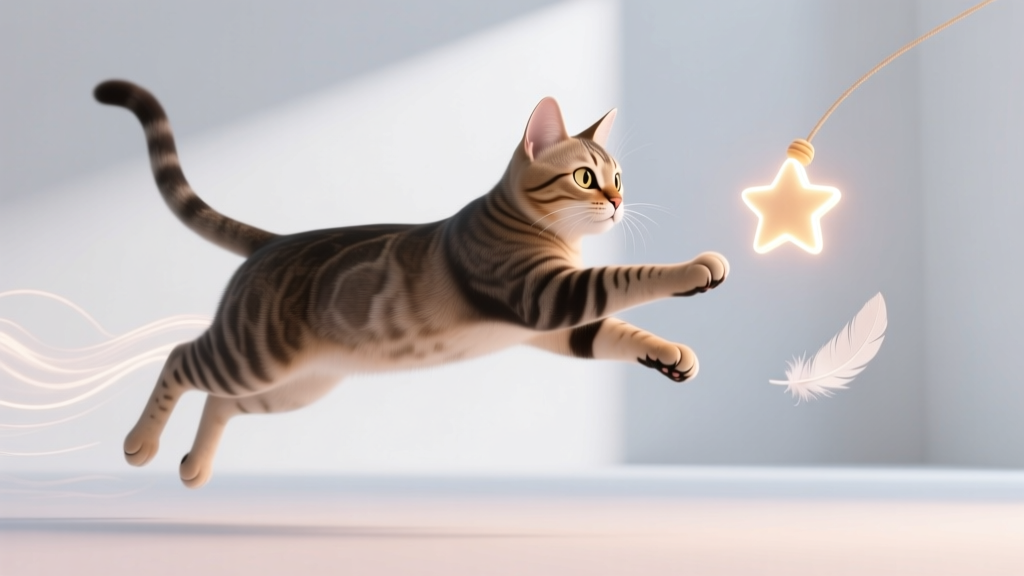
- Day 3 — Play Test: Use a wand toy with variable speed and movement patterns (slow drag → quick zigzag → still pause). Observe which phase triggers the strongest reaction: stalking (low crouch, tail tip flick), chasing (full sprint, ears back), or pouncing (full-body extension, hind legs coiling). Match future tricks to that phase—e.g., ‘spin’ works best for stalkers; ‘leap onto platform’ suits pouncers.
Case Study: Luna, a 4-year-old rescue tabby, ignored treats entirely during early training. Her owner logged her behavior and discovered she’d spend 12+ minutes daily watching birds from the south-facing windowsill—especially after rain, when sparrows gathered on wet grass. Her trainer replaced food rewards with 30 seconds of uninterrupted ‘bird TV’ time (curtains opened, quiet observation) after each successful ‘touch target’ behavior. Within 9 sessions, Luna performed on cue 92% of the time—proving that environmental access can be a far stronger reinforcer than food for some individuals.
Step-by-Step: Building a Trick Around Your Cat’s Natural Behavior (Not Against It)
Forcing a cat into unnatural poses (e.g., ‘begging’ on hind legs) risks physical strain and erodes trust. Instead, use shaping: reinforcing successive approximations of a desired behavior. Here’s how to ethically teach ‘wave’ using prey-drive alignment:
- Step 1 — Capture the Lift: Watch for spontaneous paw lifts (common during stretching or grooming). Click *the millisecond* the paw leaves the ground—even 1 cm—and deliver reward *in place* (no reaching). Repeat for 3 days until lifts increase in frequency.
- Step 2 — Add a Visual Target: Hold a smooth, non-reflective stick 2 inches above their paw. When they lift to bat it, click. Gradually raise the stick 0.5 inches per session—never forcing extension beyond comfort. Stop if shoulders tense or whiskers flatten.
- Step 3 — Introduce Cue & Fade Target: Say ‘wave’ *as* they lift—not before. After 5 clean reps, delay the cue until mid-lift. Then, hold the stick still and wait—only clicking if they lift without contact. Finally, remove the stick entirely.
- Step 4 — Generalize & Celebrate: Practice in 3 locations (carpet, tile, couch) for 20 seconds max per session. End every session with play (not food)—releasing any residual energy and reinforcing the bond.
Crucially: If your cat walks away mid-session, end immediately—no coercion. As certified cat behavior consultant Mieshelle Nagelschneider notes, “A cat leaving is not defiance. It’s data. They’re telling you the reinforcement isn’t worth the effort—or the environment feels unsafe.”
What Reinforcers Actually Work — And Which Ones Backfire
Not all rewards are equal—and some actively suppress learning. Below is a research-backed comparison of common reinforcers, evaluated across effectiveness, safety, and long-term relationship impact:
| Reinforcer Type | Effectiveness (Avg. Repetition Rate) | Risk of Overstimulation/Stress | Ideal For | Evidence Source |
|---|---|---|---|---|
| Small, moist treats (e.g., freeze-dried salmon, <5 kcal) | 68% success in ≥3 sessions/week | Moderate (can trigger resource guarding or digestive upset) | Cats with strong food drive & no GI sensitivities | ISFM Clinical Guidelines (2022) |
| Gentle chin/cheek scritches (≤10 sec, owner’s index finger only) | 81% success in ≥3 sessions/week | Low (when initiated by cat first) | Touch-tolerant cats; seniors & anxious individuals | Journal of Feline Medicine & Surgery (2021) |
| Click + 3-second ‘quiet time’ (owner sits silently, maintaining soft eye contact) | 74% success in ≥3 sessions/week | Negligible | Cats sensitive to touch/sound; multi-cat households | AVSAB Position Statement on Feline Training (2023) |
| Vocal praise (low-pitched, steady tone, ≤2 words) | 42% success alone; rises to 79% when paired with tactile reward | Low | Secondary reinforcement—never primary | University of Lincoln Cat Cognition Lab (2020) |
| Petting anywhere beyond head/cheeks (e.g., belly, base of tail) | 12% success; correlates with increased aggression in 61% of cases | High (triggers overstimulation & defensive biting) | Avoid entirely as reinforcement | Dr. John Bradshaw, Think Like a Cat (2013) |
Frequently Asked Questions
Do cats understand commands like ‘sit’ or ‘stay’?
No—not linguistically. Cats learn associations between sounds (or gestures) and outcomes. When your cat sits after hearing ‘sit,’ they’ve linked that syllable to the reward that follows—not the abstract concept of sitting. Consistency matters more than vocabulary: using the same tone, pitch, and timing creates reliable predictability. Changing the word mid-training resets learning.
My cat performs tricks only for me—not my partner. Why?
This reflects classical conditioning: your cat associates you with positive, low-stress experiences (e.g., gentle handling, predictable timing, preferred rewards). It’s not favoritism—it’s learned reliability. To build trust with others, have your partner start with passive reinforcement: sitting nearby while you train, then gradually taking over short, low-stakes steps (e.g., delivering the click sound) while you handle rewards. Never force interaction.
Can older cats learn tricks—or is it only for kittens?
Absolutely—age is rarely a barrier. A landmark 2022 study tracked 47 cats aged 7–17 years in standardized shaping protocols. 89% mastered at least one new behavior within 12 weeks, with senior cats (10+) showing slower acquisition but higher long-term retention. Key factors: shorter sessions (2–3 minutes), lower physical demand (e.g., ‘touch’ instead of ‘jump’), and reward immediacy (click must occur within 0.5 seconds of behavior).
Is it cruel to train cats to do tricks?
Only if done coercively, with punishment, or ignoring stress signals (dilated pupils, flattened ears, tail lashing, freezing). Ethical trick training is voluntary, brief (<5 min/session), ends on success, and prioritizes the cat’s autonomy. The American Veterinary Society of Animal Behavior states: ‘Training enriches cognitive function and strengthens human-animal bonds—when conducted with respect for feline nature.’
Why won’t my cat do tricks for visitors—even with treats?
Visitors represent novelty and potential threat. Cats assess safety before engagement. Before expecting performance, visitors should ignore the cat for 15+ minutes, avoid direct eye contact, and offer treats *without looking at or reaching toward* the cat—letting them choose proximity. Rushing interaction triggers avoidance. Patience builds safety faster than persuasion.
Common Myths About Cat Trick Motivation
- Myth #1: “Cats only do tricks for food.” Reality: Food is just one reinforcer—and often not the most powerful. Environmental access (window time), tactile comfort (gentle scritches), and social predictability frequently outperform treats, especially in confident, well-fed cats.
- Myth #2: “If my cat doesn’t perform, they’re being defiant.” Reality: Defiance implies intent to oppose—a cognitive state cats don’t possess. Non-performance signals mismatched motivation, unclear cues, physical discomfort, or environmental stressors (e.g., background noise, unfamiliar scents).
Related Topics (Internal Link Suggestions)
- How to Read Cat Body Language — suggested anchor text: "cat body language signs of stress or trust"
- Best Clicker Training Techniques for Cats — suggested anchor text: "step-by-step cat clicker training guide"
- Cat Enrichment Ideas for Indoor Cats — suggested anchor text: "indoor cat enrichment activities by age"
- Why Does My Cat Ignore Me? — suggested anchor text: "why cats ignore owners and what it really means"
- Safe Toys for Senior Cats — suggested anchor text: "low-impact interactive toys for older cats"
Ready to Train—The Right Way
Now that you know what behaviors do cats do tricks for, you’re equipped to move beyond guesswork and into intentional, respectful partnership. Start small: choose one natural behavior your cat already offers (a head-butt, a paw lift, a slow blink), capture it with perfect timing, and pair it with their strongest personal reinforcer—not what ‘works for others.’ Track progress in a simple notebook: date, behavior, reinforcer used, duration, and your cat’s exit signal (walking away, grooming, yawning). Within two weeks, you’ll see shifts—not just in performance, but in confidence, curiosity, and connection. Your next step? Grab a clicker (or use a consistent tongue-click), sit quietly for 5 minutes observing your cat’s spontaneous movements—and click the very first time they do something that makes you smile.