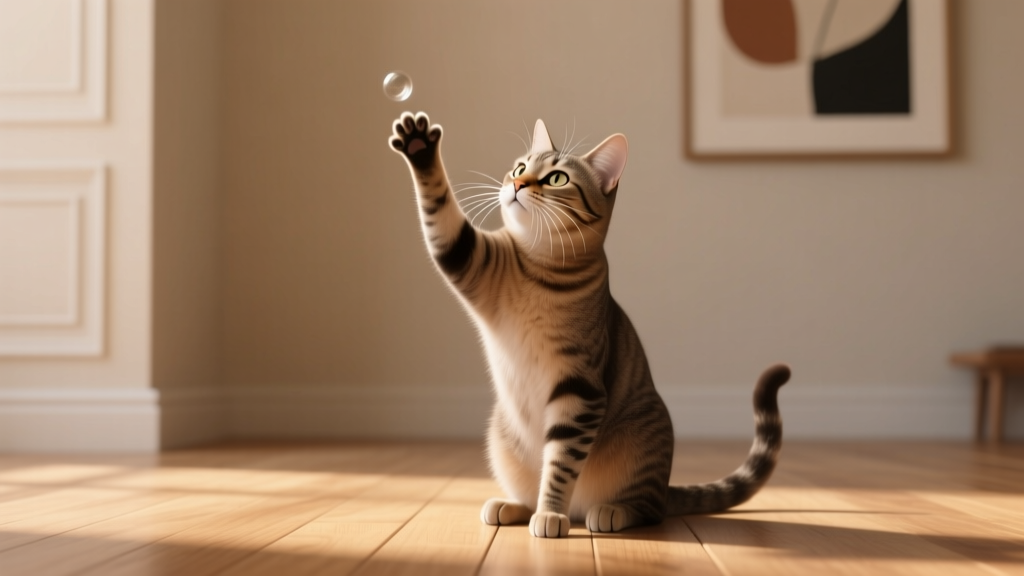
What Behaviors Do Cats Do? 12 Surprising, Science
Why Understanding What Behaviors Do Cats Do Is the Single Most Important Skill for Every Cat Owner
\nIf you’ve ever watched your cat stare intently at an empty corner, chirp at a bird outside the window, or suddenly sprint across the living room at 3 a.m., you’ve asked yourself: what behaviors do cats do—and why? This isn’t just cute curiosity. Misinterpreting these actions can lead to unnecessary stress, misdiagnosed anxiety, inappropriate discipline, or even missed early signs of pain or illness. In fact, a 2023 study published in Frontiers in Veterinary Science found that 68% of cats surrendered to shelters were labeled 'aggressive' or 'unpredictable'—yet 92% of those cases stemmed from owners misreading normal feline communication. Understanding what behaviors do cats do—and what each one signals emotionally, physically, and socially—is the foundation of trust, safety, and lifelong companionship.
\n\nDecoding the Body Language: Beyond the Tail and Ears
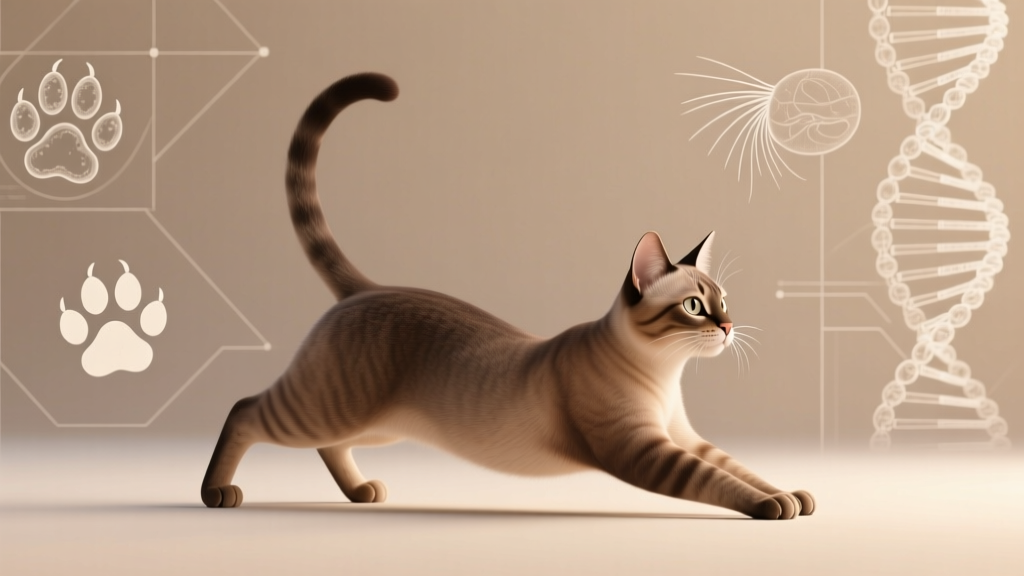
\nCats communicate primarily through posture, micro-expressions, and movement—not vocalizations. While meowing is largely reserved for humans (a fascinating evolutionary adaptation), their body language speaks volumes—if you know how to listen. Dr. Sarah Wooten, DVM and certified feline behavior specialist, emphasizes: “A cat’s tail isn’t just a mood ring—it’s a dynamic signaling system. Position, speed, and base tension all matter.” For example, a tail held high with a gentle curve at the tip signals confidence and friendliness; a rapidly swishing tail at the base indicates rising arousal (not always aggression—it could be intense focus during play or frustration before a pounce). Likewise, flattened ears signal fear or defensiveness—but if they’re slightly rotated sideways with relaxed eyes and purring? That’s often a sign of contented drowsiness, not distress.
\nHere’s where many owners misstep: assuming all ‘crouching’ means hunting. In reality, low crouching with wide eyes and forward whiskers suggests predatory focus—but crouching with tucked legs, flattened ears, and dilated pupils signals acute fear. And those ‘slow blinks’? Far from boredom, they’re a deliberate, calming signal—often called ‘cat kisses.’ When your cat slowly closes and opens its eyes while gazing at you, it’s releasing oxytocin and signaling safety. Reciprocating this blink (gently, without staring) strengthens your bond more effectively than any treat.
\n\nThe Hidden World of Vocalizations: From Trills to Yowls
\nVocalizations are among the most misunderstood aspects of what behaviors do cats do. Contrary to popular belief, adult cats rarely meow at each other—they’ve evolved this sound almost exclusively for human interaction. A 2021 ethological analysis by the University of Lincoln tracked over 5,000 cat-human interactions and found that meow pitch, duration, and repetition directly correlate with owner responsiveness: higher-pitched, shorter meows tend to accompany food requests; lower-pitched, drawn-out meows often precede litter box issues or discomfort.
\nBut it’s the non-meow sounds that reveal deeper truths. The ‘chirp’ or ‘chatter’—that rapid clicking sound cats make when watching birds—was long thought to be frustration. New research using high-speed jaw motion tracking (published in Animal Cognition, 2022) shows it’s actually a motor rehearsal: cats are mimicking the killing bite used to sever the spinal cord of prey. It’s instinctual practice—not agitation. Similarly, the ‘trill’—a rolling, happy-sounding greeting—is used almost exclusively between mothers and kittens and between bonded cats and trusted humans. If your cat trills when you enter the room, it’s not just saying hello—it’s treating you like family.
\nYowling, however, warrants attention. While occasional yowling during mating season is biologically normal, persistent or new-onset yowling in spayed/neutered indoor cats is frequently linked to underlying issues: hyperthyroidism, hypertension, cognitive dysfunction (especially in cats over age 12), or chronic pain. As Dr. Tony Buffington, professor of veterinary clinical sciences at Ohio State, cautions: “Don’t dismiss nighttime yowling as ‘just aging.’ Rule out medical causes first—then consider environmental enrichment.”
\n\nInstinctive Rituals: Kneading, Bunting, and ‘Making Biscuits’
\nKneading—the rhythmic pushing of paws against soft surfaces—is one of the most iconic behaviors cat owners observe—and one of the most misinterpreted. Many assume it’s ‘nest-making’ or leftover kitten behavior. While neonatal roots are undeniable (kittens knead to stimulate milk flow), adult kneading serves multiple sophisticated functions. According to Dr. Mikel Delgado, certified cat behavior consultant and researcher at UC Davis, “Kneading activates scent glands in the paw pads, depositing pheromones that mark territory as safe and familiar. It’s simultaneously a self-soothing mechanism and a declaration: *this space—and you—are mine.*”
\nBunting—the head-butting or rubbing of cheeks against legs, furniture, or your face—is another pheromone-based behavior. Cats have facial glands rich in F3 (‘friendly’) pheromones. When your cat bunts you, they’re not just showing affection—they’re integrating you into their colony scent profile. This is why cats who bunt you are far less likely to display redirected aggression toward you later: you literally smell like ‘home.’
\nLess discussed—but equally significant—is ‘air licking’ or ‘tongue flicking’ during petting. Often mistaken for nervousness, this behavior is actually a displacement activity indicating sensory overload. Cats have ultra-sensitive nerve endings on their backs and tails; prolonged petting—even when welcomed initially—can become overwhelming. The tongue flick is their polite ‘pause button.’ Recognizing this cue prevents overstimulation bites and builds mutual respect.
\n\nPlay, Pacing, and the Midnight Zoomies: Energy, Stress, and Enrichment Gaps
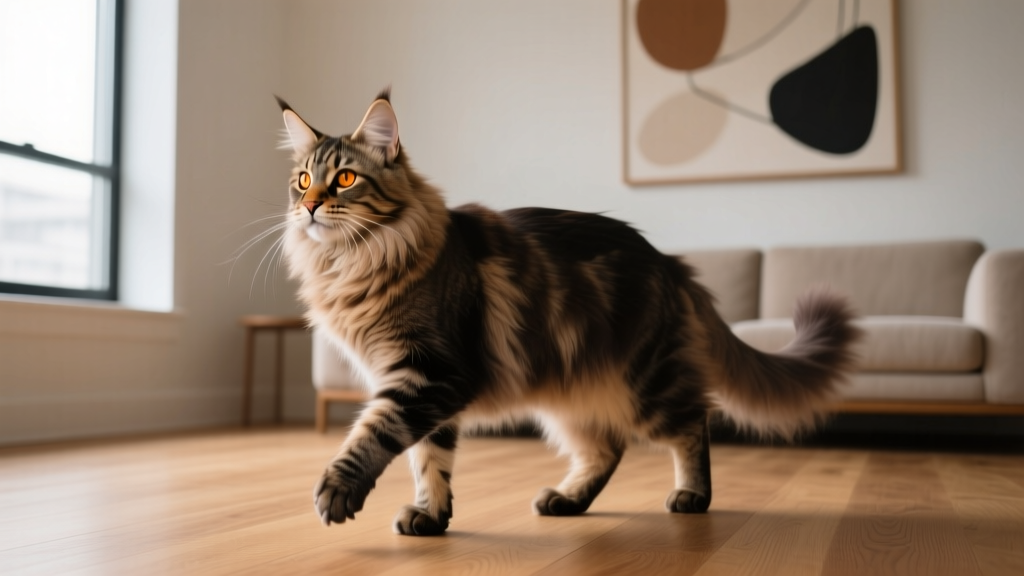
\nThose infamous 3 a.m. sprints—the ‘zoomies’—are not random mischief. They’re a release valve for pent-up predatory energy. Domestic cats retain ~90% of their wild ancestors’ hunting drive but receive only ~10–15% of the daily mental/physical stimulation they evolved to need. A landmark 2020 study in Applied Animal Behaviour Science followed 127 indoor cats over six months and found that cats with fewer than two 15-minute interactive play sessions per day were 3.2× more likely to exhibit stereotypic pacing, excessive grooming, or nocturnal hyperactivity.
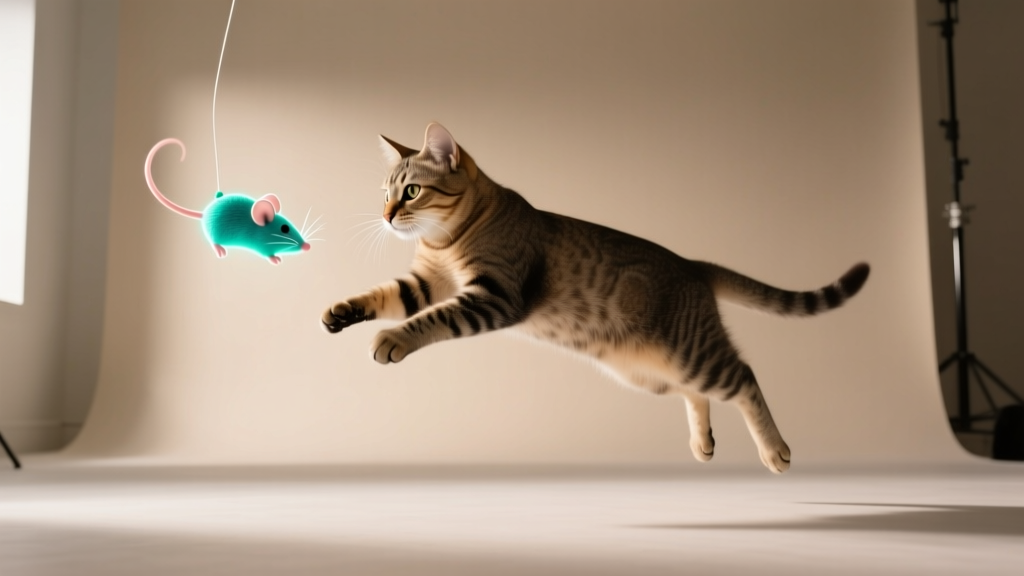
\nImportantly, ‘play’ isn’t just chasing toys—it’s structured predation: stalk → chase → pounce → kill → dissect → consume. Most commercial toys fail because they skip critical phases. A wand toy that only allows chasing misses the ‘kill’ satisfaction of biting down on something substantial. Incorporating crinkle balls (for ‘dissection’), treat-dispensing puzzles (for ‘consumption’), and hiding places (for ‘stalking’) completes the sequence and dramatically reduces frustration-driven behaviors.
\nOne powerful case study involved Luna, a 4-year-old rescue tabby exhibiting compulsive tail-chasing and wall-scratching. Her owner implemented a ‘predatory sequence protocol’: 10 minutes of wand play (stalk/chase/pounce), followed by a puzzle feeder with kibble (‘consume’), then 5 minutes of quiet bonding (slow blinks + bunting). Within 11 days, tail-chasing dropped by 94%; within 3 weeks, wall-scratching ceased entirely. Her veterinarian confirmed no medical cause—this was pure behavioral enrichment.
\n\n| Behavior | \nMost Common Meaning | \nWhen to Be Concerned | \nAction Step | \n
|---|---|---|---|
| Excessive grooming (especially bald patches) | \nSelf-soothing or mild stress response | \nGrooming >30 mins/day, hair loss, skin lesions, or sudden onset | \nRule out fleas, allergies, or pain with vet visit; add environmental enrichment (vertical space, food puzzles) | \n
| Urine spraying (on vertical surfaces) | \nCommunication of stress, territorial insecurity, or reproductive signaling | \nNew onset in spayed/neutered cat; spraying near doors/windows; accompanied by hiding or aggression | \nAssess recent changes (new pets, construction, visitors); use Feliway diffusers; consult veterinary behaviorist | \n
| Pawing at water bowl or tipping it | \nInstinct to test water depth/cleanliness; dislike of bowl material or location | \nAccompanied by refusal to drink, lethargy, or increased urination | \nSwitch to wide ceramic or stainless steel bowl; place away from food; add fountain for moving water | \n
| Bringing ‘gifts’ (dead mice, toys, socks) | \nMaternal instinct or social bonding—offering resources to trusted humans | \nObsessive retrieval, aggression when object is removed, or decline in other behaviors | \nThank gently, remove item calmly, redirect with interactive play; never punish—this erodes trust | \n
| Staring blankly at walls or corners | \nTracking high-frequency sounds (insects, rodents) or visual stimuli invisible to humans | \nProlonged (>5 min), unresponsive to calling, accompanied by vocalization or disorientation | \nRecord video; rule out neurological issues or hypertension with senior wellness bloodwork | \n
Frequently Asked Questions
\nWhy does my cat sit on my laptop or book?
\nThis is multi-layered behavior: warmth (laptops emit heat), scent-marking (your lap = high-value territory), and attention-seeking (you’re focused elsewhere). But crucially, it’s also a form of social proximity—cats choose to be near people they feel safest with. Instead of shooing, try offering a warm fleece blanket beside your workspace. Within days, many cats voluntarily shift to the ‘approved’ spot—proving it was about closeness, not defiance.
\nIs it true cats don’t miss you when you’re gone?
\nNo—this is a persistent myth rooted in outdated views of feline independence. Research using fMRI scans (University of Tokyo, 2022) shows cats exhibit measurable neural activation in attachment-related brain regions when exposed to their owner’s voice versus strangers’. In shelter studies, cats separated from bonded humans display increased cortisol levels and reduced exploratory behavior—clear physiological signs of distress. They may not greet you with frantic tail wags, but their slow blinks, bunting, and sleeping on your clothes confirm deep, quiet attachment.
\nMy cat knocks things off shelves—is it spite?
\nSpite requires complex moral reasoning—a cognitive capacity cats lack. Knocking objects down is almost always one of three things: (1) A failed attempt to ‘hunt’ a moving reflection or dust mote; (2) Testing gravity and cause-effect (a natural learning behavior); or (3) Seeking attention—especially if it reliably results in you rushing over. Redirect with scheduled play before typical knock-down times, and remove breakables from edges. Never scold; instead, reward calm observation with treats.
\nDo cats recognize their names?
\nYes—robustly. A landmark 2019 study in Scientific Reports tested 78 cats across Japanese and U.S. homes using recorded voices. Cats consistently turned their heads, moved their ears, or vocalized in response to their own name—even when spoken by strangers—distinguishing it from similar-sounding words and other cats’ names. However, they choose whether to respond based on motivation—not ability. So if your cat ignores you, it’s not deafness—it’s a calculated decision.
\nWhy does my cat bite me gently during petting?
\nThis ‘love bite’ is a classic overstimulation signal—not aggression. Cats have a petting tolerance threshold dictated by nerve sensitivity. The bite is their final, unambiguous ‘stop’ cue—often preceded by tail flicks, skin twitching, flattened ears, or dilated pupils. Respect it immediately: stop touching, give space, and resume only after they initiate contact again. Over time, gradually increase tolerance by ending petting *before* the bite—rewarding calm tolerance with treats.
\nCommon Myths About What Behaviors Do Cats Do
\nMyth #1: “Cats are aloof and don’t form attachments.”
False. Cats form secure, insecure, or avoidant attachments to humans—mirroring human infant attachment styles—confirmed via the ‘Secure Base Test’ adapted for felines (published in Current Biology, 2019). Securely attached cats explore freely when owner is present, seek comfort when stressed, and return to exploration quickly after reassurance.
Myth #2: “If a cat purrs, it’s always happy.”
Incorrect. While purring often signals contentment, cats also purr when injured, in labor, or facing terminal illness. The frequency (25–150 Hz) has documented healing properties—stimulating bone density and tissue repair. So purring in a vet’s office or after trauma is likely a self-soothing, pain-management strategy—not joy.
Related Topics (Internal Link Suggestions)
\n- \n
- Understanding Cat Body Language Signals — suggested anchor text: "cat body language guide" \n
- How to Stop Cat Aggression Toward People — suggested anchor text: "why is my cat aggressive" \n
- Best Interactive Toys for Indoor Cats — suggested anchor text: "best cat enrichment toys" \n
- Signs of Pain in Cats That Owners Miss — suggested anchor text: "hidden signs of cat pain" \n
- Creating a Cat-Friendly Home Environment — suggested anchor text: "cat-friendly home setup" \n
Conclusion & Your Next Step
\nWhat behaviors do cats do isn’t just a list of quirks—it’s a living language, refined over 9,000 years of co-evolution. Every tail flick, chirp, and slow blink is data. Every ‘zoomie’ and knead is a request for understanding. By shifting from judgment (“Why is my cat doing that?”) to curiosity (“What is my cat trying to tell me?”), you transform confusion into connection. Start today: pick *one* behavior from this article—maybe the slow blink—and practice it back for 5 seconds when your cat offers it. Note their response. That tiny exchange is where trust begins. Then, download our free Behavior Decoder Checklist (linked below) to track patterns, spot red flags early, and build a richer, safer, more joyful life with your feline companion.