What Are the Behavioral Adaptations of a Cat? 7 Instinct
Why Your Cat’s ‘Strange’ Habits Are Brilliant Survival Tools (And What They Reveal About Their Inner World)
\nWhat are the behavioral adaptations of a cat? These aren’t quirks — they’re finely tuned survival strategies honed over 9,000 years of domestication and millions of years of wild ancestry. From the silent pounce to the slow blink, every observable action serves an evolutionary purpose: avoiding predators, securing resources, communicating without sound, or regulating stress. If you’ve ever wondered why your cat brings you dead mice, scratches your sofa at dawn, or hides when guests arrive, you’re not dealing with defiance — you’re witnessing millennia of adaptive intelligence in real time. Misreading these behaviors is the #1 reason cats develop chronic stress, urinary issues, aggression, and destructive habits. Understanding them isn’t just fascinating — it’s foundational to compassionate, effective cat care.
\n\n1. Hunting & Foraging: The Predator’s Rhythm in a Safe Home
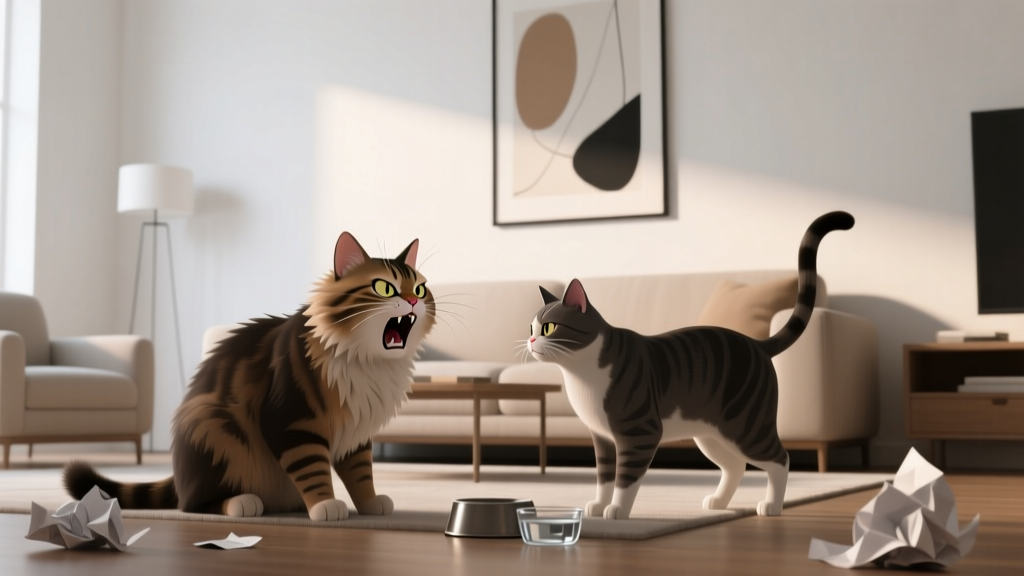
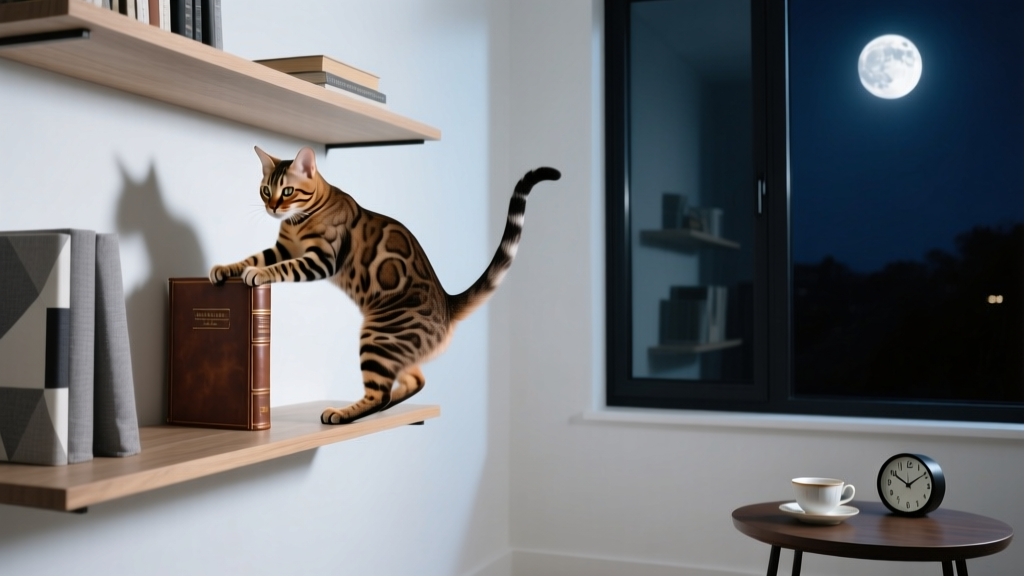
\nCats are *obligate predators* — not scavengers or opportunistic feeders like dogs. Their behavioral adaptations reflect this: short bursts of intense activity followed by long rest periods conserve energy while priming neural pathways for ambush. According to Dr. Mikel Delgado, certified cat behavior consultant and researcher at UC Davis, “A domestic cat’s hunting sequence — stalk, chase, pounce, kill-bite, eat — remains neurologically intact even in well-fed indoor cats. When we deprive them of outlets for this sequence, frustration manifests as redirected aggression, overgrooming, or compulsive chewing.”
\nThis explains the infamous ‘midnight crazies.’ It’s not random chaos — it’s circadian alignment with crepuscular (dawn/dusk) peak hunting windows. In the wild, those hours offer optimal light for detecting movement and cooler temperatures for sustained activity. Indoor cats retain that rhythm — but without prey, they redirect energy toward toys, shadows, or even your toes.
\nActionable insight: Replace passive feeding with daily ‘hunting’ sessions. Use puzzle feeders that require batting, flipping, or sliding to release kibble — mimicking the effort of catching live prey. A 2022 study in Applied Animal Behaviour Science found cats engaging in 15+ minutes of active foraging per day showed 43% lower cortisol levels and 68% fewer stereotypic behaviors (e.g., tail-chasing, wool-sucking) than control groups.
\n\n2. Communication Beyond Meows: Scent, Posture, and Micro-Gestures
\nHere’s a truth many owners miss: adult cats rarely meow to other cats — they meow almost exclusively to humans. That vocalization is a *learned adaptation*, not instinct. Their primary language is olfactory and postural. Scent-marking via cheek-rubbing (bunting), scratching, and urine spraying deposits pheromones from facial glands, paw pads, and bladder — each signaling safety, territory boundaries, or reproductive status.
\nConsider this case study: Luna, a 3-year-old rescue tabby, began urinating outside her litter box after her owner adopted a second cat. Standard advice suggested ‘litter box hygiene’ — but behaviorist consultation revealed Luna wasn’t stressed by competition; she was attempting to re-establish spatial security through targeted cheek-rubbing along baseboards and doorframes. Once her owner placed soft blankets (with Luna’s scent) in key zones and added vertical space (cat trees near windows), marking ceased in 4 days — no medication, no punishment.
\nSimilarly, the ‘slow blink’ isn’t just ‘cat love’ — it’s a deliberate de-escalation signal. In feral colonies, direct eye contact signals threat. Blinking slowly communicates non-aggression and trust. When your cat blinks at you, they’re offering vulnerability — and returning that blink builds mutual safety.
\n\n3. Environmental Control: Why Cats Demand Predictability (and How to Give It)
\nCats don’t adapt to change — they *assess risk*. Their behavioral adaptations prioritize environmental predictability because unpredictability equals danger in the wild. This underlies their aversion to loud noises, sudden movements, unfamiliar people, or rearranged furniture. A 2021 University of Lincoln study tracked cortisol levels in 120 cats during home renovations: those with access to a consistent ‘safe zone’ (a quiet room with familiar bedding, food, and litter) showed stable stress markers, while cats forced to navigate shifting layouts had cortisol spikes lasting up to 72 hours post-disturbance.
\nThis need for control manifests in subtle ways: choosing high perches for surveillance, rotating sleeping spots based on temperature/sunlight, or refusing new litter types overnight. It’s not stubbornness — it’s risk mitigation. As Dr. Sarah Heath, European Veterinary Specialist in Behavioural Medicine, states: “Cats don’t have a ‘dominance hierarchy’ like dogs. They have a ‘resource security hierarchy.’ Every decision — where to sleep, drink, eliminate — is calculated to minimize exposure to perceived threats.”
\nPractical framework: Apply the ‘3-3-3 Rule’ for transitions (new home, pet, baby): 3 days of confinement to one safe room, 3 days of supervised exploration, 3 weeks of gradual integration. Always let the cat initiate contact — never force handling. Offer multiple identical resources (litter boxes, water bowls, resting spots) to reduce competition anxiety.
\n\n4. Social Flexibility: Solitary by Design, Not by Defect
\nContrary to popular belief, cats aren’t ‘independent’ — they’re *socially flexible*. Feral colonies demonstrate complex hierarchies, allomothering (auntie-care), and cooperative kitten-rearing. But unlike pack animals, cats evolved to form bonds *on their own terms*. Their behavioral adaptations favor voluntary association — hence the ‘aloof’ reputation. This isn’t disinterest; it’s selective investment.
\nA telling example: In multi-cat households, cats often sleep in contact (‘pile-ups’) only with individuals they’ve exchanged scents with over weeks — a sign of deep social acceptance. Conversely, parallel lying (cats resting side-by-side but not touching) signals tolerance, not affection. Misinterpreting this leads owners to ‘push’ interaction, triggering withdrawal or swatting.
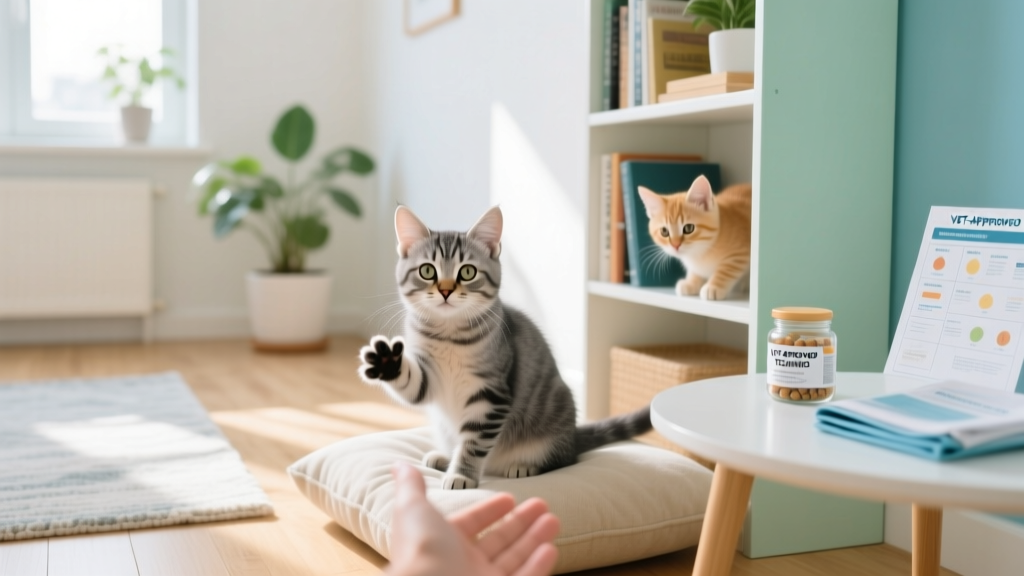
\nNeuroimaging research (published in Nature Communications, 2023) confirms cats process human voices differently than dogs: they recognize their owner’s voice but choose whether to respond — a conscious behavioral adaptation reflecting agency, not indifference. Reward-based training works precisely because it aligns with their innate motivation: trading effort for predictable, low-risk rewards.
\n\n| Behavioral Adaptation | \nEvolutionary Purpose | \nModern Manifestation | \nRisk if Misinterpreted | \nEvidence-Based Intervention | \n
|---|---|---|---|---|
| Kneading (“making biscuits”) | \nStimulates milk flow in kittens; signals safety and contentment | \nPressing paws rhythmically on soft surfaces (laps, blankets, beds) | \nClipping claws or punishing interrupts bonding and triggers anxiety | \nProvide textured blankets; gently redirect to designated ‘knead zone’ if claws dig in | \n
| Scent-Rubbing (Bunting) | \nMarking territory with calming facial pheromones (F3) | \nRubbing cheeks on furniture, legs, or your face | \nUsing citrus cleaners or wiping away marks erases security cues | \nUse pheromone diffusers (Feliway Classic); avoid strong-smelling cleaners in frequented areas | \n
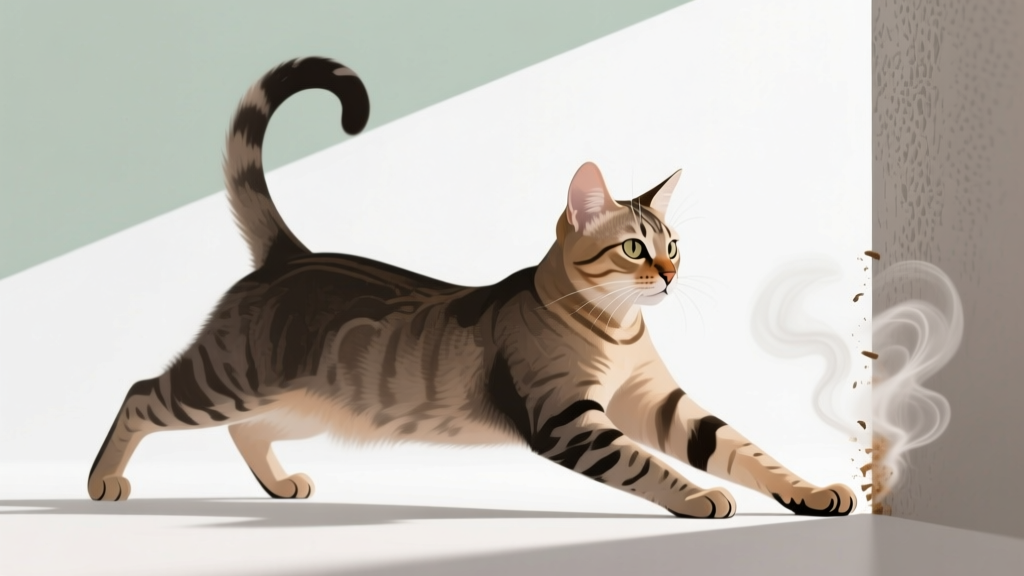
| Scratching Vertical Surfaces | \nMaintaining claw health, stretching muscles, depositing scent from interdigital glands | \nScratching doorframes, posts, or sofas — especially upon waking | \nDeclawing causes chronic pain and increases biting/aggression (AVMA position statement) | \nProvide sturdy, tall, sisal-wrapped posts near sleeping areas; reward use with treats | \n
| Bringing ‘Gifts’ (toys, prey) | \nTeaching offspring hunting skills; offering resources to trusted group members | \nLeaving dead mice, crumpled paper balls, or socks at your feet | \nYelling or discarding gifts damages trust and may increase frequency | \nThank calmly, then quietly remove item; provide interactive wand toys to fulfill teaching impulse | \n
| Hiding During Illness/Stress | \nReducing predation risk when vulnerable | \nWithdrawing to closets, under beds, or high shelves during vet visits or storms | \nForcing emergence increases cortisol and delays recovery | \nUse hiding boxes with two exits; offer Feliway wipes on bedding; monitor appetite/elimination remotely | \n
Frequently Asked Questions
\nDo cats really ‘choose’ their humans — or is it just habit?
\nIt’s both biology and choice. Cats assess humans through scent, vocal tone, movement patterns, and consistency of care. A landmark 2019 Oregon State University study found cats formed secure attachments to caregivers comparable to human infants — demonstrated by seeking comfort during stress, then returning to exploration. But unlike dogs, cats require *repeated, positive reinforcement* to solidify that bond. They don’t default to attachment — they evaluate and decide.
\nIs my cat’s ‘aggression’ during petting actually behavioral adaptation?
\nAbsolutely — it’s called ‘petting-induced aggression,’ and it’s rooted in sensory overload. Cats have dense nerve endings along their back and tail base. Stroking beyond their tolerance threshold triggers a reflexive bite or swipe — not anger, but neurological self-preservation. Watch for early signs: tail flicking, skin twitching, flattened ears, or dilated pupils. Stop *before* the bite, and reward calm disengagement with treats.
\nWhy does my cat stare at walls or ‘nothing’ for minutes?
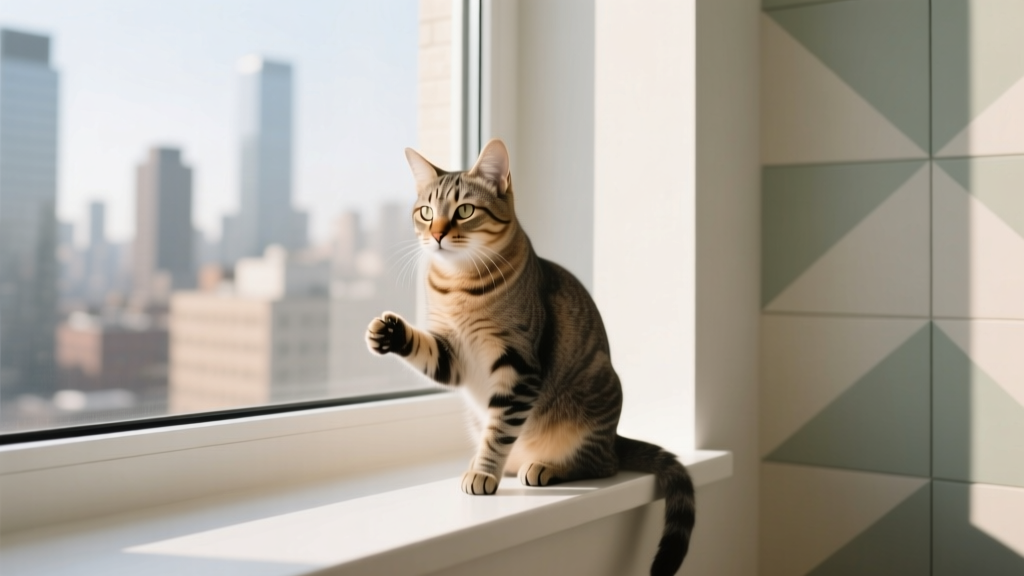
\nThey’re likely detecting ultrasonic sounds (mice, insects, HVAC vibrations) or subtle air currents invisible to us. Cats hear frequencies up to 64 kHz (humans max at 20 kHz) and detect airflow changes as small as 0.001 m/s. This isn’t hallucination — it’s hyper-acute sensory processing. If accompanied by vocalizing, pacing, or apparent distress, consult a vet to rule out neurological issues — but silent staring is usually normal environmental monitoring.
\nCan I ‘train’ a cat to stop unwanted behaviors — or are adaptations fixed?
\nYou can’t erase adaptations — but you can redirect them. Training works best when aligned with instinct: use food puzzles for hunting urges, vertical spaces for surveillance needs, and scent-friendly routines for security. Punishment suppresses behavior temporarily but increases fear-based adaptations (hiding, avoidance). Positive reinforcement builds new neural pathways *alongside* existing instincts — making change sustainable and stress-free.
\nDo kittens learn behavioral adaptations from their mothers — or are they hardwired?
\nBoth. Core motor patterns (pouncing, kneading) are innate, but refinement requires maternal modeling. Kittens separated before 8 weeks show deficits in social communication and prey capture efficiency. A 2020 study in Animal Cognition proved orphaned kittens exposed to video of mother cats hunting developed significantly better stalking accuracy than controls — proving visual learning augments instinct. Early socialization (2–7 weeks) shapes lifelong adaptability.
\nCommon Myths About Cat Behavioral Adaptations
\nMyth #1: “Cats are solitary because they’re antisocial.”
Reality: Cats are facultatively social — meaning they form fluid, context-dependent bonds. In resource-rich environments, colonies thrive with shared grooming and kitten care. Their ‘solitary’ label comes from lacking rigid dominance hierarchies, not from emotional incapacity.
Myth #2: “If my cat doesn’t purr or rub, they don’t love me.”
Reality: Purring occurs during stress, injury, and labor — not just contentment. Some cats express affection through proximity, following, or gentle head-butts instead of vocalizations. Love is measured in behavioral consistency (choosing you for naps, greeting you first), not performative displays.
Related Topics (Internal Link Suggestions)
\n- \n
- How to Introduce a New Cat to Your Household — suggested anchor text: "stress-free multi-cat introduction guide" \n
- Best Puzzle Feeders for Indoor Cats — suggested anchor text: "top-rated cat foraging toys" \n
- Understanding Cat Body Language Signals — suggested anchor text: "decoding cat tail flicks and ear positions" \n
- When to See a Veterinarian for Behavior Changes — suggested anchor text: "medical causes of sudden cat aggression" \n
- Feline Stress Signs You’re Missing — suggested anchor text: "subtle indicators of cat anxiety" \n
Your Next Step: Observe, Don’t Judge — Then Respond With Respect
\nWhat are the behavioral adaptations of a cat? They’re not problems to fix — they’re a language to learn. Every scratch, stare, or slow blink is data about your cat’s sense of safety, autonomy, and belonging. Start today: spend 10 minutes observing without interaction. Note when they groom, where they perch, what triggers retreat or approach. Then, adjust *your* environment — not theirs. Add a cardboard box near their favorite sunbeam. Swap squeaky toys for feather wands. Clean litter boxes daily. These small acts of translation build profound trust. Ready to go deeper? Download our free Behavioral Adaptation Tracker — a printable journal with prompts, checklists, and vet-approved intervention tips — and transform confusion into connection, one instinct at a time.