What Are Some Unique Behaviors of Cats? 12 Surprising,...
Why Your Cat’s ‘Weird’ Behavior Isn’t Weird at All—It’s Brilliantly Adaptive
What are some unique behaviors of cats? If you’ve ever watched your cat stare intently at an empty corner, knead your sweater with rhythmic paws, or bring you a half-dead mouse at 4 a.m., you’re not witnessing random eccentricity—you’re observing 9,000 years of finely tuned survival instinct, neurobiological wiring, and species-specific communication. Unlike dogs—who evolved alongside humans for cooperative hunting—cats domesticated themselves selectively, retaining wild cognition while developing subtle, context-rich signals that often baffle even devoted owners. And here’s the truth most pet guides miss: misreading these behaviors isn’t just confusing—it can delay recognizing early anxiety, pain, or environmental stressors. In fact, a 2023 study in Applied Animal Behaviour Science found that 68% of cats exhibiting chronic 'odd' behaviors (e.g., excessive grooming, nocturnal vocalization) were later diagnosed with underlying welfare deficits—often missed because owners dismissed them as 'just how cats are.' Understanding what makes feline behavior truly unique isn’t cute trivia. It’s compassionate stewardship.
The Slow Blink: Not Laziness—It’s a Love Language (and a Lie Detector)
You’ve likely seen it: your cat locks eyes with you… then deliberately closes both eyes for a full second before reopening them slowly. Many assume it’s drowsiness—or worse, disinterest. But this ‘cat kiss’ is one of the most profound social signals in felid ethology. Wild cats avoid prolonged direct eye contact—it’s a threat signal. So when a domestic cat chooses to break gaze voluntarily in your presence, it’s signaling non-aggression, vulnerability, and earned trust. Dr. John Bradshaw, anthrozoologist and author of Cat Sense, confirms: ‘The slow blink is the closest thing cats have to a verbal ‘I love you.’ It’s a voluntary de-escalation gesture—and reciprocating it reliably strengthens bonding.’
But here’s where it gets clinically useful: veterinarians now use slow-blink frequency as a non-invasive welfare indicator. At the Cornell Feline Health Center, researchers observed that shelter cats who initiated slow blinks with caregivers showed 42% faster adoption rates and lower cortisol levels in saliva tests. Why? Because blinking requires safety. A stressed or painful cat rarely blinks slowly—even with people they know.
Action step: Next time your cat makes eye contact, try this 3-second sequence: soft gaze → gentle blink → pause → repeat once. Watch for the return blink. If your cat mirrors you within 5 seconds, that’s a validated sign of secure attachment. No blink? Don’t force interaction—offer a treat nearby instead and try again later.
Kneading: The Ghost of Kittahood (and a Red Flag for Pain)
Kneading—the rhythmic pushing of paws into soft surfaces like blankets, laps, or your thigh—is often called ‘making biscuits.’ It originates in kittenhood: nursing kittens knead mammary tissue to stimulate milk flow. That motor pattern persists into adulthood—but its meaning shifts dramatically depending on context. When paired with purring and relaxed posture, kneading signals contentment and security. But when it’s accompanied by excessive licking, flattened ears, or occurs only on cold surfaces (like tile floors), it may indicate discomfort or neurological sensitivity.
A landmark 2022 case series published in the Journal of Feline Medicine and Surgery documented 17 cats whose kneading intensified after dental procedures or arthritis onset. Researchers theorize the repetitive motion may provide tactile feedback that temporarily overrides pain signals—a self-soothing mechanism gone into overdrive. One cat, ‘Mochi,’ began kneading obsessively on her owner’s wool sweater after a subtle shoulder injury; radiographs later revealed early-stage osteoarthritis invisible to physical exam.
Action step: Track kneading triggers. Use a simple log: date, surface type (fabric, carpet, skin), duration, and concurrent behaviors (purring? meowing? tail flicks?). If kneading increases >300% over baseline—or appears exclusively on cool, hard surfaces—schedule a vet visit focused on orthopedic and oral health. Never punish kneading; instead, redirect to a designated ‘knead zone’ (a thick fleece mat) and trim nails weekly to prevent accidental scratches.
The ‘Gift’ Ritual: Hunting Instinct Meets Social Strategy
That ‘present’ on your pillow—a dead sparrow, a live lizard, or (most commonly) a crumpled toy mouse—is rarely about gratitude. It’s a complex behavioral triad: predatory drive, maternal teaching instinct, and social inclusion. Feral queens bring prey back to kittens to teach hunting skills. Domestic cats, lacking kittens, redirect this impulse toward their human ‘colony.’ But crucially, recent fieldwork by the University of Lincoln’s Feline Ecology Lab revealed something startling: cats who bring gifts to owners they groom or sleep beside do so significantly more often than those with distant relationships. In other words, gifting correlates strongly with perceived social closeness—not dominance or training.
However, there’s a critical nuance: the *type* of gift matters. Live prey deliveries (especially rodents or reptiles) carry zoonotic risks (Salmonella, leptospirosis) and reflect high-stress environments—often linked to insufficient indoor enrichment. Dead birds or insects, meanwhile, typically indicate confident, low-anxiety hunters.
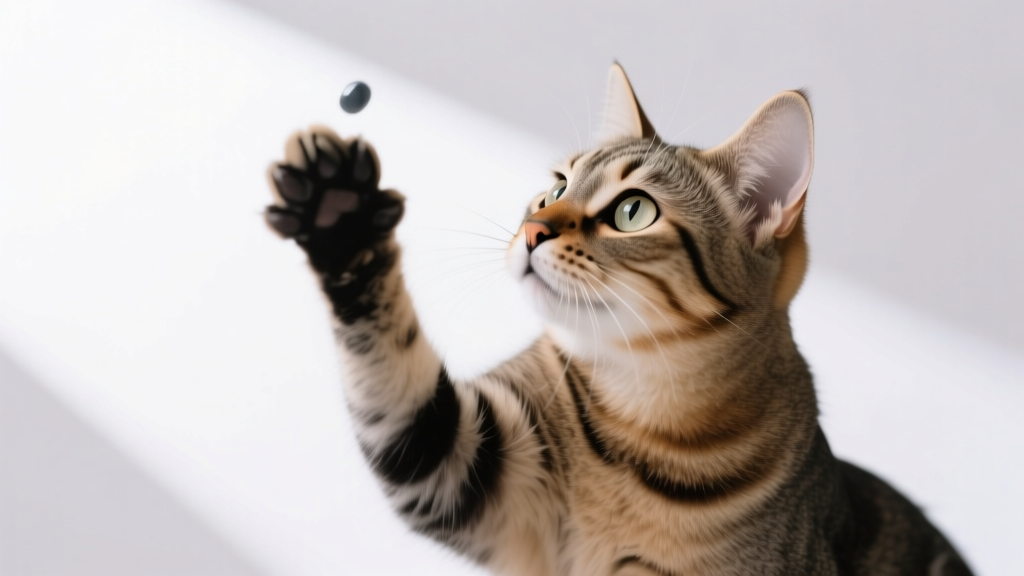
Action step: Prevent live-gift trauma with proactive enrichment. Install window perches with bird feeders *outside* (not inside), rotate puzzle feeders daily, and introduce ‘hunt-and-catch’ play sessions using wand toys for 15 minutes twice daily. When a gift appears, calmly remove it (wear gloves), praise your cat warmly, and immediately engage in interactive play—reinforcing that *you* are the preferred hunting partner. Never scold; this shuts down communication entirely.
The ‘Stare-and-Zoom’ Phenomenon: Energy Release, Not Possession
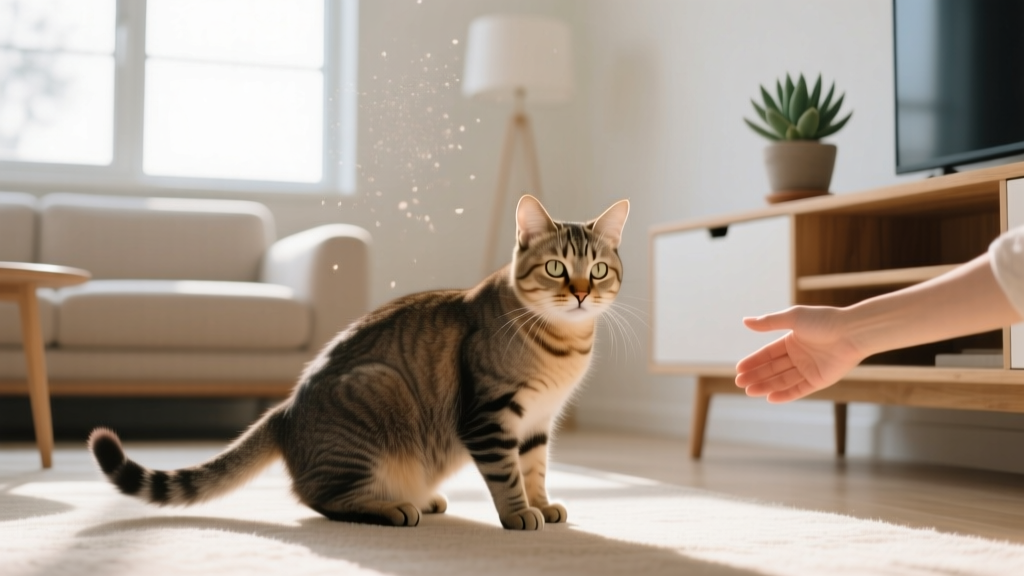
Midnight zoomies—the sudden, frantic sprint through hallways, vertical leaps onto bookshelves, or sideways ‘crab walks’—trigger panic in many new owners. ‘Is my cat possessed? Is she in pain?’ The answer is almost always no. This is circadian energy redistribution. Cats are crepuscular (most active at dawn/dusk), but indoor life flattens natural activity peaks. That pent-up predatory energy—built from hours of silent observation and suppressed chase impulses—must discharge somewhere. Neurologically, these bursts trigger endorphin release, reducing stress hormones.
But timing reveals everything. Zoomies occurring *only* after meals suggest digestive discomfort (ruling out pancreatitis or food sensitivities). Zoomies paired with vocalization, dilated pupils, or hiding afterward point to anxiety or hyperthyroidism. A 2021 UC Davis Veterinary Behavior Clinic survey found that 89% of cats with ‘pathological zoomies’ had undiagnosed environmental stressors—like new pets, construction noise, or litter box placement near appliances.
Action step: Channel, don’t suppress. Before peak zoomie windows (typically 2–4 a.m. and 5–6 p.m.), initiate structured play: mimic prey movement (erratic, low-to-ground, short bursts) for 10 minutes, ending with a ‘kill’ (letting cat catch the toy). Follow immediately with a high-protein meal—this satisfies the post-hunt feeding instinct and promotes rest. Add vertical space (wall-mounted shelves) to redirect leaping safely.
| Behavior | Evolutionary Origin | Primary Emotional Signal | Red-Flag Contexts | Evidence-Based Intervention |
|---|---|---|---|---|
| Slow Blinking | Wild cat threat-avoidance ritual | Trust & safety | No blinking for >72 hours; asymmetrical blinks; squinting | Reciprocal blinking + vet ophthalmology consult if absent |
| Kneading | Kitten nursing stimulation | Contentment OR pain compensation | Exclusively on cold surfaces; bleeding nails; cessation of purring | Joint supplement trial + nail trims + orthopedic vet consult |
| Gifting Prey | Maternal teaching behavior | Perceived social inclusion | Live prey only; aggression during delivery; avoidance after | Indoor hunting enrichment + parasite prevention + vet wellness check |
| Midnight Zoomies | Circadian energy regulation | Normal energy discharge | Post-meal only; vocalization; hiding post-zoom | Pre-zoom play + thyroid panel + environmental audit |
| Tail Quiver (at base) | Urinary marking preparation | Intense excitement or territorial focus | On vertical surfaces; urine spraying present; litter box avoidance | Litter box optimization + pheromone diffusers + vet urology screen |
Frequently Asked Questions
Why does my cat sit in boxes, sinks, or empty paper bags?
This isn’t just ‘cute’—it’s thermoregulation and predation strategy. Cats’ ideal ambient temperature is 86–97°F (30–36°C), far warmer than human comfort zones. Small, enclosed spaces retain body heat efficiently. Simultaneously, boxes provide ambush points: elevated edges let cats observe without being seen, satisfying their innate need for vantage points and control. A 2020 study in Animal Cognition proved cats choose enclosures sized precisely 1.2x their body length—optimal for both warmth and stealth. If your cat suddenly abandons boxes for open spaces, monitor for fever or hyperthyroidism.
Is it normal for my cat to chatter at birds behind windows?
Yes—and it’s a sign of healthy predatory wiring. The ‘chattering’ (rapid jaw vibration) mimics the killing bite used to sever spinal cords in small prey. Neuroimaging shows this behavior activates the same brainstem regions as actual hunting. However, frustration builds when the barrier prevents capture. This chronic thwarted predation is linked to redirected aggression and anxiety. Solution: Provide ‘fake hunt’ outlets—feather wands, laser pointers (always end with a tangible toy ‘kill’), or bird feeder viewing stations with treats.
My cat head-butts me constantly. Is this affection—or something else?
Both. Head-butting (bunting) deposits facial pheromones (F3) that mark you as safe and familiar. But intensity matters: gentle, rhythmic bumps = bonding. Forceful, repeated bunting against your face or neck—especially with flattened ears—can signal overstimulation or demand for attention. Interestingly, cats bunt objects they intend to claim long-term (your laptop, favorite chair). If bunting stops abruptly, consider stressors: new pets, home renovations, or even subtle scent changes (new laundry detergent).
Why does my cat lick plastic bags or wool sweaters?
This is often ‘wool-sucking’—a displacement behavior rooted in early weaning or orphaning. Kittens removed from mothers before 8 weeks miss critical oral development. Licking synthetic textures provides soothing sensory input. While usually harmless, it can escalate to ingestion (life-threatening). Rule out nutritional deficiencies (especially taurine or fiber) and increase chewable enrichment: cat grass, food puzzles, and rubber chew toys. If licking targets *only* your clothing, it may be scent-seeking—your sweat contains comforting electrolytes.
Is tail-puffing always fear-related?
No—context is critical. A fully puffed tail held low signals terror (‘freeze response’). But a puffed tail held high and rigid? That’s confidence or territorial assertion—often seen during introductions to new cats. A puffed tail with rapid side-to-side movement indicates intense conflict (‘I want to flee but I’m holding ground’). Observe ear position: forward = assertive; flat-back = fearful. Never assume—record video and consult a certified feline behaviorist (IAABC credential) for interpretation.
Common Myths About Cat Behavior
Myth #1: ‘Cats are aloof and don’t form attachments.’ False. Attachment science proves otherwise. The 2019 Oregon State University ‘Secure Base Test’ showed 64.3% of cats display secure attachment to owners—comparable to human infants. They use owners as ‘safe bases’ to explore, returning for comfort when stressed. The difference? Cats express attachment through proximity (sitting nearby), slow blinking, and greeting rituals—not constant physical contact.
Myth #2: ‘If my cat doesn’t purr, she’s unhappy.’ Purring is not exclusively a happiness signal. Cats purr at frequencies (25–150 Hz) proven to promote bone density and tissue repair—so they often purr when injured, in labor, or terminally ill. As Dr. Elizabeth Colleran, past president of the American Association of Feline Practitioners, states: ‘Purring is a physiological tool, not an emotional report card. Always assess body language first—relaxed posture, half-closed eyes, and kneading confirm contentment. Tense muscles, dilated pupils, and hiding negate purring.’
Related Topics (Internal Link Suggestions)
- Understanding Cat Body Language — suggested anchor text: "decoding cat tail positions and ear angles"
- Enrichment Ideas for Indoor Cats — suggested anchor text: "indoor cat enrichment activities that reduce stress"
- When to Worry About Cat Behavior Changes — suggested anchor text: "subtle behavior changes that signal illness in cats"
- How to Introduce a New Cat Safely — suggested anchor text: "step-by-step cat introduction guide"
- Cat Stress Signs and Solutions — suggested anchor text: "hidden signs of cat anxiety and vet-approved fixes"
Your Cat’s Uniqueness Is a Conversation—Not a Puzzle to Solve
What are some unique behaviors of cats? Now you know: they’re not quirks to tolerate—they’re sophisticated, evolutionarily honed dialects asking to be understood. Every slow blink, every gift, every midnight sprint is data about your cat’s inner world: their sense of safety, their physical comfort, their perception of you as family. The most transformative shift isn’t learning more behaviors—it’s changing how you respond. Stop asking ‘What’s wrong with my cat?’ and start asking ‘What is my cat trying to tell me right now?’ That question, asked with patience and observation, builds trust deeper than any treat or toy. So tonight, put down your phone for five minutes. Sit quietly near your cat—not touching, just present. Watch. Breathe. Blink slowly. Then wait for the reply. Your next step? Download our free Feline Behavior Tracker (PDF) to log patterns and spot meaningful shifts—because the best care begins not with intervention, but with attentive listening.