What Are Cat Behaviors for Weight Loss? 7 Subtle but...
Why Your Cat’s Behavior Is the Most Honest Weight-Loss Report Card You’ll Ever Get
What are cat behaviors for weight loss? They’re not just quirks—they’re vital physiological and psychological signals your feline is sending about metabolism, motivation, stress, and satiety. Unlike dogs, cats rarely overeat out of boredom; instead, they mask discomfort, suppress natural drives, or develop compensatory habits when carrying excess weight. In fact, a 2023 study in the Journal of Feline Medicine and Surgery found that 68% of overweight cats exhibited at least three distinct behavioral shifts—often weeks before physical symptoms like labored breathing or grooming decline became obvious. Ignoring these cues doesn’t just stall progress—it risks accelerating joint degeneration, diabetes onset, and hepatic lipidosis during rapid diet changes. This guide decodes those signals, translates them into actionable interventions, and helps you become the most attuned weight-loss ally your cat has ever had.
1. The ‘Silent Slump’: When Lethargy Isn’t Just Laziness
Cats sleep 12–16 hours daily—but overweight cats often shift into what veterinary behaviorist Dr. Sarah Wooten calls ‘passive inertia’: prolonged napping in low-stimulation zones (e.g., under furniture), delayed or incomplete stretching after waking, and avoidance of vertical spaces they once mastered. This isn’t ‘just being a cat.’ It’s biomechanical compensation. Extra weight increases joint load by up to 4x per pound—so a 15-lb cat carrying 3 lbs of excess fat experiences the equivalent of dragging an extra 12 lbs uphill with every jump. A real-world case: Luna, a 9-year-old domestic shorthair, stopped using her cat tree entirely at 14.2 lbs (her ideal weight was 11.8 lbs). Her owner assumed she’d ‘lost interest’—until a vet exam revealed early-stage osteoarthritis in her right hip. After a 12-week gradual weight-loss plan paired with low-impact laser therapy and environmental tweaks (ramps, floor-level perches), Luna resumed climbing—and her resting respiratory rate dropped from 42 to 28 breaths/minute.
✅ Action Plan:
- Track baseline activity: Use a simple tally sheet for 3 days—note number of jumps, sustained play sessions (>2 mins), and time spent on elevated surfaces.
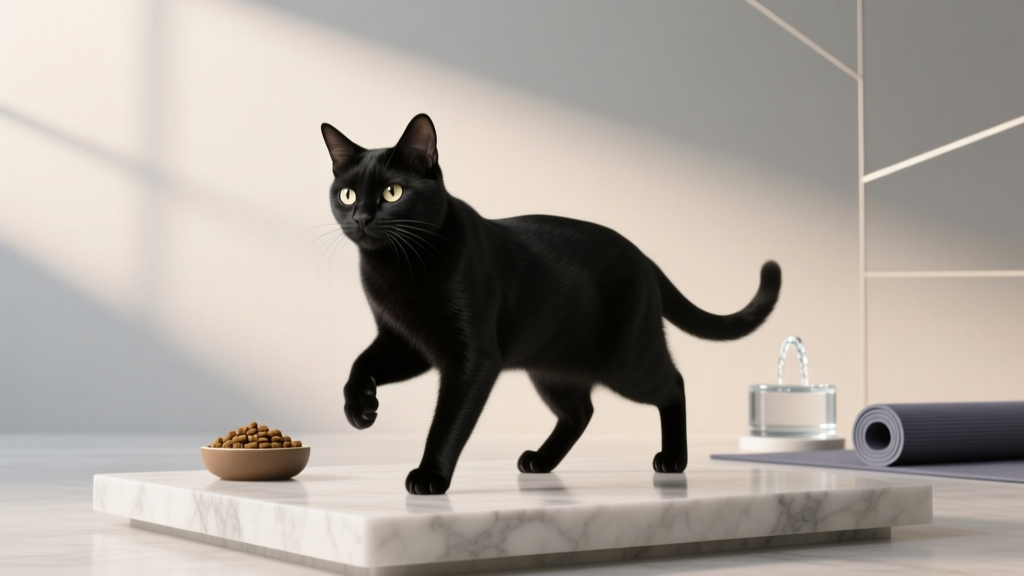
- Introduce ‘micro-movement’ triggers: Place food puzzles on stable, low platforms (6–8 inches high); position water bowls 6 feet from food to encourage gentle ambulation.
- Rule out pain: Any sudden drop in vertical activity warrants a vet visit—even if no limping is visible. Cats hide orthopedic pain exceptionally well.
2. The Food-Seeking Paradox: Why ‘Always Hungry’ Often Means ‘Never Satisfied’
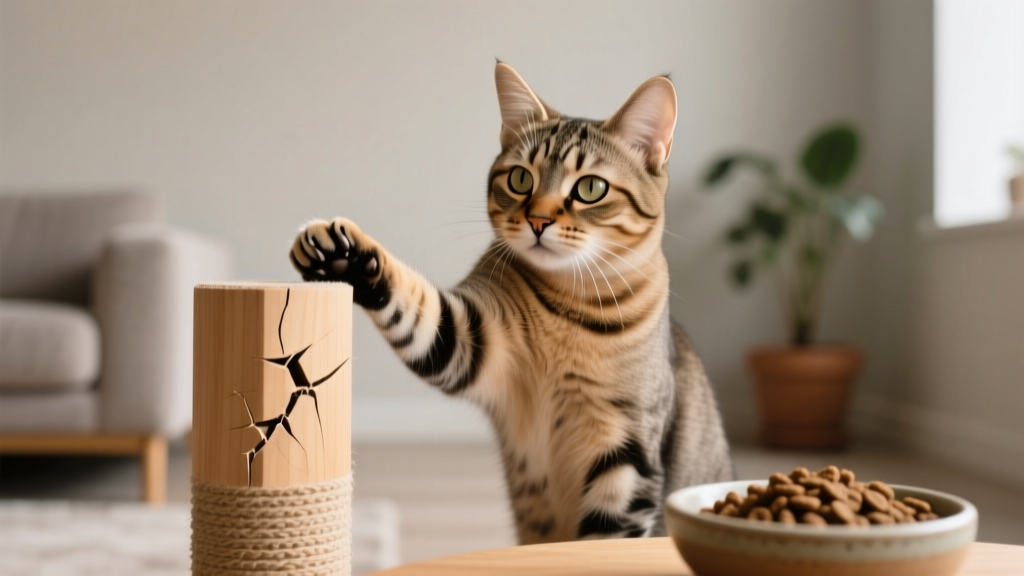
Overweight cats frequently display obsessive food-related behaviors—staring at empty bowls, vocalizing at meal times, stealing from other pets, or pawing at cabinets—even when calorie intake is appropriate. This isn’t greed. It’s leptin resistance. Leptin, the ‘satiety hormone,’ becomes less effective in adipose tissue, so the brain never receives the ‘I’m full’ signal. According to Dr. Tony Buffington, DVM, PhD, a leading feline nutrition researcher at Ohio State, ‘A cat eating 20% more calories than needed doesn’t feel 20% fuller—it feels no fuller at all. That’s why portion control alone fails without behavioral recalibration.’
✅ Action Plan:
- Switch from scheduled meals to ‘foraging windows’: Divide daily calories into 15–20 small portions placed in timed-release puzzles (e.g., Frolicat Bolt set to 3-min intervals) across 12 hours. This mimics natural hunting rhythms and stabilizes blood glucose.
- Eliminate ‘food as attention’: Replace treat-based greetings with 90-second interactive play sessions using wand toys—this satisfies predatory drive without caloric input.
- Test hunger vs. habit: For 3 days, offer identical portions in two different bowls—one plain ceramic, one novel (e.g., silicone with texture). If begging persists only with the familiar bowl, it’s conditioned behavior—not true hunger.
3. Grooming Withdrawal & Skin Changes: The Hidden Stress Signal
Excess weight makes self-grooming physically difficult—especially around the base of the tail, flanks, and hindquarters. But behavioral withdrawal goes deeper: chronic low-grade inflammation from obesity elevates cortisol, suppressing grooming motivation. A landmark 2022 Cornell Feline Health Center study tracked 112 overweight cats and found that 73% developed patchy alopecia or dandruff within 4 months of crossing the 15% overweight threshold—not due to parasites or allergies, but reduced licking frequency. One owner reported her cat, Oliver, began ‘twitching’ his tail aggressively when touched near his lower back—a sign of referred discomfort from abdominal fat pressing on lumbar nerves.
✅ Action Plan:
- Perform weekly ‘grooming audits’: Part fur along spine and flanks; look for dullness, flaking, or matting. Note areas your cat avoids when licking.
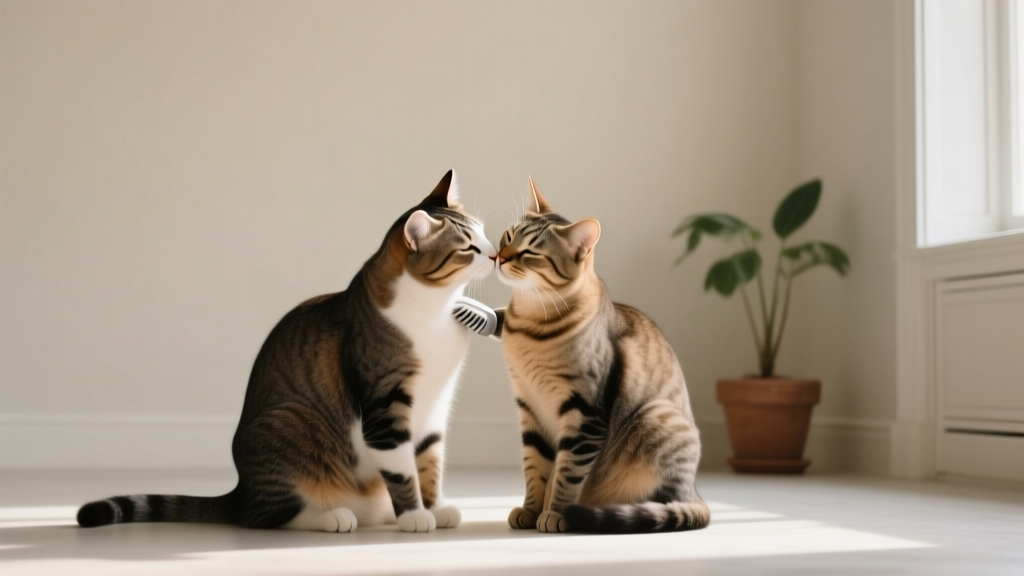
- Introduce assisted grooming: Use a soft-bristle brush for 60 seconds daily on hard-to-reach zones—pair with calm praise (no treats) to build positive association.
- Monitor for ‘stress grooming’ elsewhere: Over-grooming of paws or forelimbs may indicate redirected anxiety from inaccessible areas.
4. Play Resistance & Toy Avoidance: When Motivation Meets Mechanics
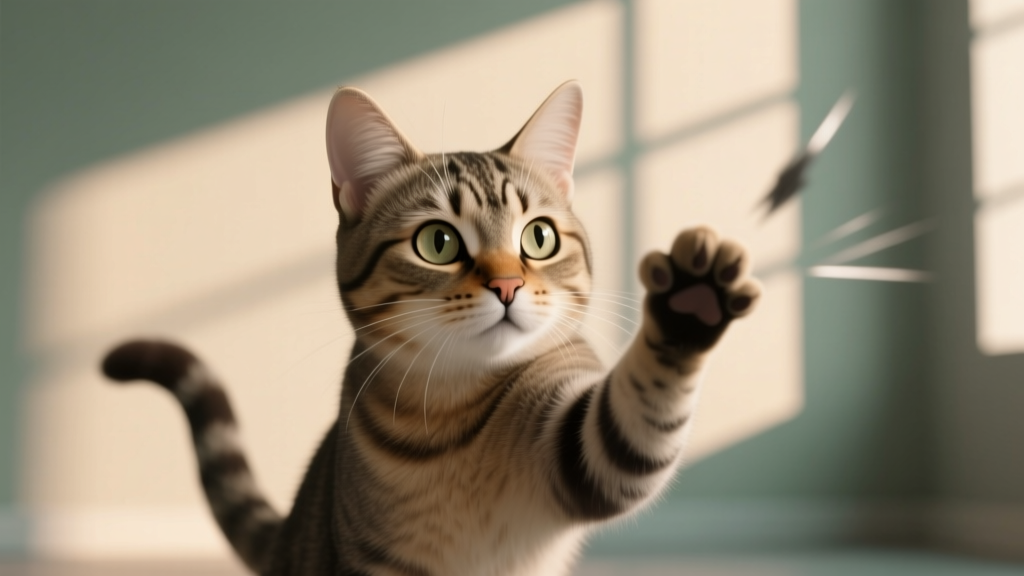
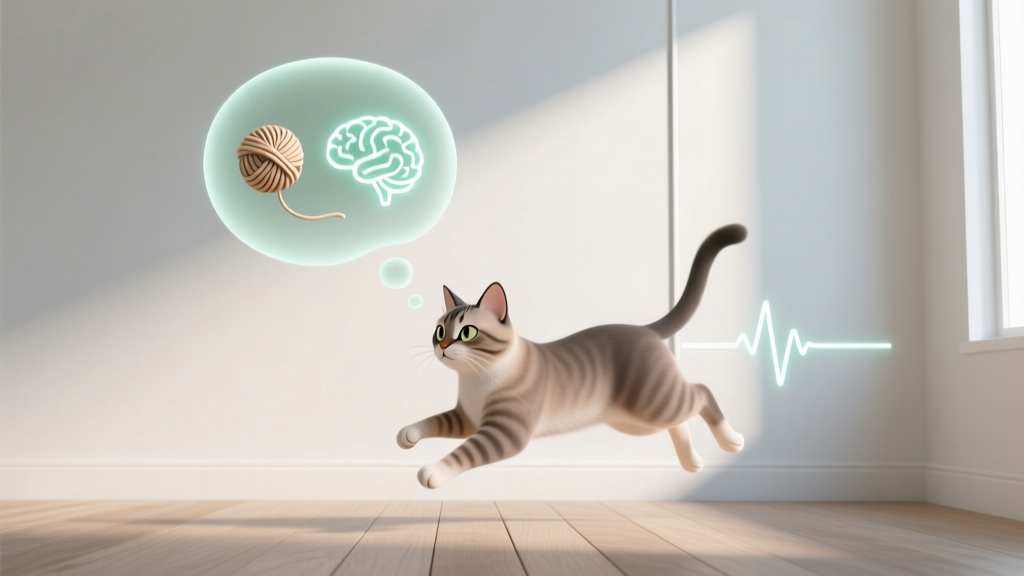
It’s easy to assume a cat refusing toys is ‘not in the mood.’ But overweight cats often exhibit specific, reproducible avoidance patterns: turning away from fast-moving objects, batting once then disengaging, or choosing static toys (e.g., crinkle balls) over dynamic ones (e.g., feather wands). Why? Because initiating explosive movement requires significant energy investment—and their bodies haven’t adapted to efficient neuromuscular recruitment. A 2021 University of Bristol trial showed overweight cats required 37% more oxygen to sustain 90 seconds of chasing compared to lean controls, triggering early fatigue and learned helplessness.
✅ Action Plan:
- Start with ‘prey inertia’ training: Drag a toy slowly *away* from your cat (not toward) for 5 seconds—this triggers pursuit instinct with minimal exertion.
- Use scent to reignite drive: Rub toys with catnip or silver vine *only* before play—never leave out. This prevents olfactory desensitization and preserves novelty.
- Measure engagement, not duration: Track ‘successful captures’ (cat makes contact) per session—not minutes played. Aim for 3–5 captures/session, gradually increasing to 8–10 over 8 weeks.
| Behavioral Sign | Typical Onset (vs. Ideal Weight) | Key Underlying Cause | First-Line Intervention | When to Vet Consult |
|---|---|---|---|---|
| Refusal to jump onto favorite perch | +10–12% body weight | Patellar subluxation risk + reduced proprioception | Add ramps; lower perch height by 3 inches | If accompanied by hind-limb trembling or asymmetrical stance |
| Increased nighttime vocalization + pacing | +15–18% body weight | Leptin resistance disrupting circadian ghrelin rhythm | Feed largest meal at dusk; add white noise during peak activity hours | If vocalization exceeds 5 episodes/hour or includes yowling |
| Obsessive licking of same spot (e.g., flank) | +8–10% body weight | Referred pain from abdominal fat compressing nerves | Apply warm compress 2x/day; switch to elevated food bowl | If skin breaks or hair loss exceeds 2 cm diameter |
| Avoidance of litter box entry (circling outside) | +12–14% body weight | Pelvic girdle strain limiting flexion | Switch to rimless, large-entry box; place on non-slip mat | If urination outside box occurs >2x/week |
| Reduced blinking during human interaction | +5–7% body weight | Chronic low-grade sympathetic activation | Practice ‘slow blink’ exchanges 3x/day for 10 seconds each | If accompanied by dilated pupils at rest or flattened ears |
Frequently Asked Questions
How long does it take to see behavioral changes after starting a weight-loss plan?
Most owners notice subtle shifts—like increased curiosity about toys or longer stretches between naps—within 2–3 weeks of consistent calorie control (not restriction) and enriched activity. However, meaningful behavioral normalization (e.g., spontaneous climbing, confident grooming) typically takes 10–16 weeks. Why? Neural pathways adapt slowly: a 2020 study in Frontiers in Veterinary Science confirmed it takes ~11 weeks for obese cats to re-establish optimal dopamine response to play stimuli. Patience isn’t passive—it’s neurobiological necessity.
Can stress cause weight gain even if my cat eats the same amount?
Absolutely—and it’s alarmingly common. Chronic stress elevates cortisol, which directly promotes abdominal fat deposition and insulin resistance. Indoor-only cats facing resource competition (e.g., multi-cat households), unpredictable schedules, or lack of control over environment are especially vulnerable. In one shelter study, cats exposed to inconsistent feeding times gained 12% more weight over 8 weeks than matched controls on fixed schedules—even with identical calories. The fix isn’t more food—it’s more predictability and agency.
My cat won’t use food puzzles—does that mean the weight-loss plan won’t work?
No—it means you need puzzle-adjacent alternatives. Only ~40% of cats engage with traditional puzzles initially. Try ‘olfactory foraging’: hide kibble in shallow cardboard boxes filled with shredded paper; scatter dry food on carpet for paw-based ‘digging’; or use a muffin tin with tennis balls covering portions (cats bat balls aside to access food). Success hinges on matching your cat’s natural hunting style—some stalk, some dig, some bat. Observe first, then engineer.
Is it safe to let my overweight cat ‘play it off’ without dietary changes?
Unfortunately, no. While activity is essential, it’s insufficient alone. A typical 12-lb cat burns ~20–25 calories in 10 minutes of vigorous play—but consumes ~250 calories daily. To lose 1 lb (3,500 calories), that cat would need to burn an extra 500 calories/day for 7 days—equivalent to 3+ hours of continuous intense play. Realistically, combining 10–15% calorie reduction with targeted activity yields safer, sustainable loss (0.5–1% body weight/week) and prevents muscle catabolism. Vets consistently report best outcomes when nutrition and behavior are addressed in tandem.
Common Myths About Cat Weight-Loss Behaviors
Myth 1: “If my cat is still playful, they can’t be overweight.”
Reality: Many overweight cats retain bursts of energy but avoid sustained activity or complex motor tasks (e.g., twisting to groom, balancing on narrow ledges). Playfulness ≠ metabolic health.
Myth 2: “Cats don’t get depressed—so behavioral changes must be physical.”
Reality: Feline depression is well-documented and manifests behaviorally—withdrawal, altered sleep cycles, decreased exploration. Obesity-induced systemic inflammation directly impacts neurotransmitter function. As Dr. Dennis Turner, ethologist and author of The Domestic Cat: The Biology of its Behaviour, states: ‘A cat who stops investigating new objects isn’t lazy. It’s biologically disincentivized.’
Related Topics (Internal Link Suggestions)
- Safe Calorie Calculators for Cats — suggested anchor text: "how many calories should my cat eat"
- Best Interactive Toys for Overweight Cats — suggested anchor text: "low-impact cat toys for weight loss"
- Veterinary Weight-Loss Programs Explained — suggested anchor text: "prescription weight-loss food for cats"
- Multi-Cat Household Feeding Strategies — suggested anchor text: "how to feed overweight and lean cats together"
- Recognizing Early Arthritis in Cats — suggested anchor text: "subtle signs of cat joint pain"
Your Next Step Starts With One Observation
You now know what are cat behaviors for weight loss—not as vague symptoms, but as precise, interpretable data points. The most powerful intervention isn’t a new food or gadget. It’s pausing for 60 seconds today to watch your cat move: How does she land after jumping down? Does she stretch fully—or cut it short? Where does her gaze linger when you walk away? These micro-observations build the foundation for compassionate, evidence-based care. Your next step: Pick one behavior from the table above that resonates most—and track it daily for 3 days using our free printable log (downloadable at [YourSite.com/cat-behavior-log]). Then, bring those notes to your vet. Not as proof something’s wrong—but as proof you’re already doing the most important part: listening.