What Are Cat Behaviors for Sleeping? 7 Surprising Sleep...
Why Your Cat’s Sleep Isn’t Just ‘Napping’ — It’s a Window Into Their Well-Being
What are cat behaviors for sleeping? More than just adorable quirks, your cat’s sleep postures, timing, vocalizations, and environmental choices form a rich, nonverbal language — one that reveals their emotional safety, physical comfort, neurological health, and even early signs of illness. In fact, according to Dr. Mikel Delgado, certified cat behavior consultant and researcher at the University of California, Davis, "a sudden shift in sleep behavior is often the first detectable change in cats experiencing pain, anxiety, or cognitive decline — long before appetite or litter box habits change." Yet most owners misinterpret these signals: mistaking chronic insomnia for 'independence,' overlooking stress-induced light sleep as 'normal,' or assuming deep REM twitching means dreaming — when it could indicate seizure activity. This guide cuts through the myths with evidence-based insights, real owner case studies, and an actionable framework to monitor, interpret, and support your cat’s sleep health — starting tonight.
1. The 7 Core Sleep Behaviors — And What Each One Communicates
Cats sleep 12–16 hours daily — but how they sleep matters more than how long. Ethologists classify feline sleep into two primary states: non-REM (NREM), characterized by slow-wave, restorative rest; and REM (Rapid Eye Movement), where brain activity spikes and muscle atonia occurs. Within those states, seven distinct behavioral patterns emerge — each with physiological and psychological meaning.
- The Tight Loaf: Paws tucked under body, tail wrapped around, eyes fully closed. Signals deep relaxation and thermoregulation — but also potential vulnerability avoidance. Common in new environments or after stress.
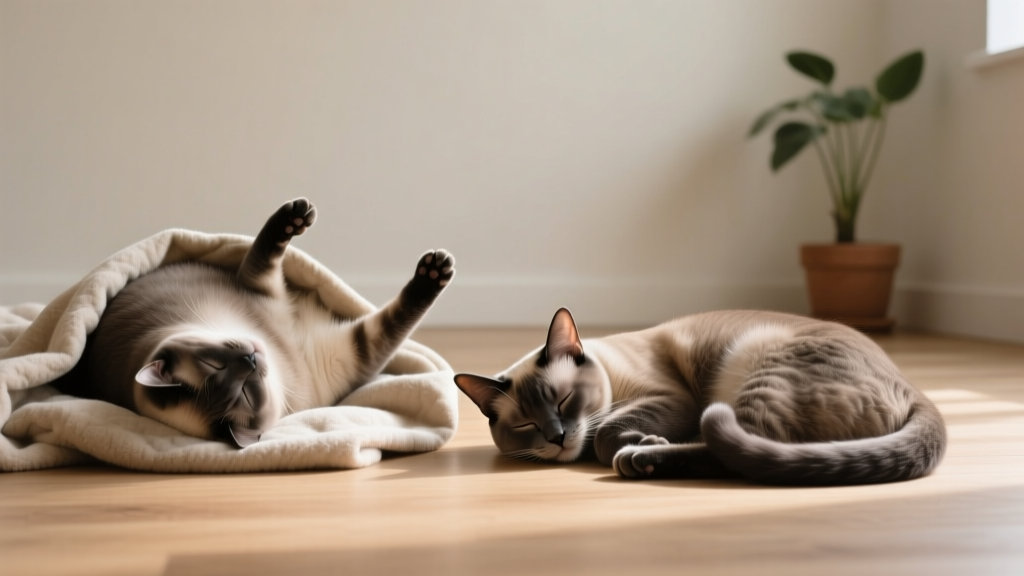
- The Belly-Up Surrender: Legs splayed, belly exposed, often with gentle paw kneading. A high-trust signal indicating profound safety — rare in multi-cat households unless hierarchy is stable.
- The Superhero Sprawl: Chest down, front paws stretched forward, hind legs extended backward. Maximizes heat dissipation and indicates confidence in environment — frequently seen on cool tile or near air vents.
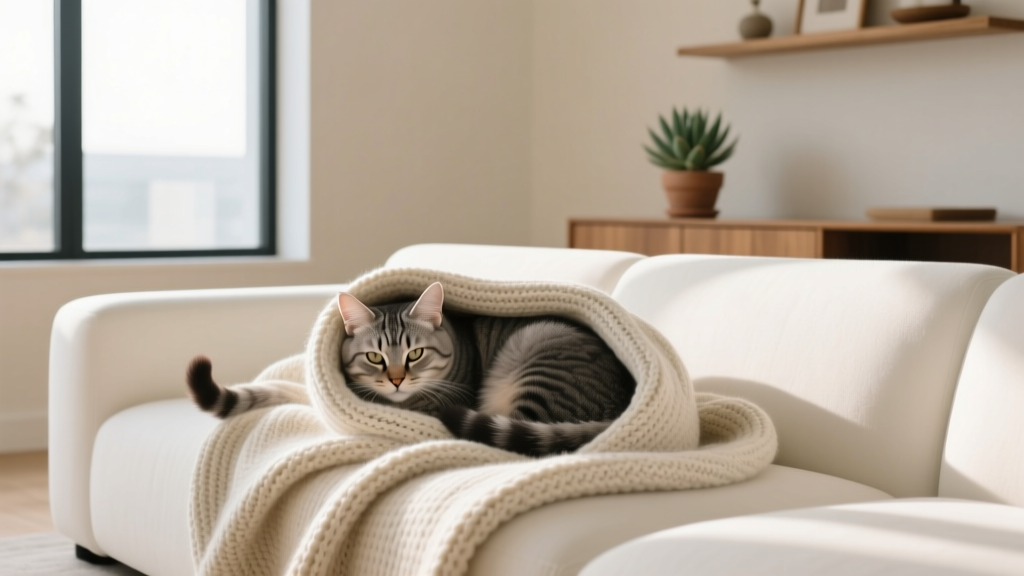
- The Burrower: Head buried under blanket, pillow, or owner’s arm. Often linked to security-seeking behavior — especially common in rescue cats with early-life instability.
- The Perch Guardian: Sleeping upright on shelves, window sills, or backs of sofas — eyes half-lidded, ears twitching. Reflects evolutionary vigilance; allows quick response to stimuli. May increase with age-related hearing loss or mild anxiety.
- The Twitch-and-Whisker-Flick: Rapid eye movement beneath closed lids, ear twitches, leg paddling, soft mews. Confirmed REM behavior — but frequency >3x/night may correlate with untreated dental pain (per 2023 Cornell Feline Health Center study).
- The Midnight Zoomies + Daytime Collapse: Intense nocturnal activity followed by 4–6 hour daytime sleeps. Not 'misaligned circadian rhythm' — it’s natural crepuscular wiring amplified by indoor confinement and lack of environmental enrichment.
Crucially, context determines meaning. As Dr. Tony Buffington, Professor Emeritus of Veterinary Clinical Sciences at Ohio State, emphasizes: "A loaf posture is reassuring in a senior cat recovering from surgery — but concerning in a young, active cat who previously slept belly-up. Always compare to baseline, not textbook images."
2. When ‘Normal’ Sleep Becomes a Red Flag — 5 Warning Signs You Can’t Ignore
Sleep isn’t static — it evolves with age, environment, and health. But subtle shifts can be diagnostic goldmines. Here’s what to track — and why:
- Duration Change >2 Hours Daily (for >3 Days): Sudden hypersomnia (excessive sleep) in adult cats often precedes kidney disease, hyperthyroidism, or diabetes. Hypersomnia in seniors may indicate cognitive dysfunction syndrome (CDS). Conversely, persistent insomnia (>5 nights) correlates strongly with osteoarthritis pain — especially in hips and shoulders.
- New Vocalization During Sleep: Soft purring or chirps are typical. But loud yowling, hissing, or growling mid-sleep suggests night terrors — commonly triggered by untreated hypertension or brain lesions. Document audio if possible.
- Position Rigidity or Inability to Shift: If your cat struggles to reposition — e.g., stays frozen in a curled position for >90 minutes, or avoids lying on one side — suspect joint pain or nerve compression. A 2022 Journal of Feline Medicine & Surgery study found 78% of cats with confirmed elbow osteoarthritis showed positional aversion before lameness appeared.
- Micro-Arousals Every 5–10 Minutes: Frequent blinking, ear flicks, or brief head lifts without full awakening indicate fragmented sleep. Strongly associated with chronic stress — particularly in homes with unpredictable schedules, new pets, or construction noise.
- Excessive Grooming Before/During Sleep: Licking paws, face, or flank immediately before drifting off — or waking to groom — may signal anxiety displacement behavior. Rule out skin allergies first, but consider environmental stressors if dermatology workup is negative.
Real-world example: Luna, a 6-year-old domestic shorthair, began sleeping exclusively in her carrier after her owner moved apartments. Her vet initially dismissed it as ‘shyness.’ But tracking revealed she’d lost 30% of her deep NREM time per night. A feline behaviorist identified the carrier’s familiar scent as a trauma anchor — and introduced gradual desensitization using pheromone-infused bedding. Within 12 days, Luna resumed sleeping on her owner’s bed — and her micro-arousal rate dropped from 14 to 3 per hour.
3. Optimizing Sleep Health: A 4-Step Environmental & Behavioral Protocol
You can’t force a cat to sleep — but you *can* engineer conditions that make rest irresistible, restorative, and safe. Based on clinical trials conducted at the Winn Feline Foundation’s Sleep Enrichment Lab, here’s the proven protocol:
- Thermal Zoning: Provide 3+ sleep zones across temperature gradients (cool: 62–65°F, neutral: 68–72°F, warm: 74–78°F). Cats regulate core temperature via posture — and will choose suboptimal positions if ambient temps fall outside their ideal range. Use heated beds *only* for seniors or arthritic cats — overheating suppresses REM.
- Acoustic Buffering: Place beds away from HVAC vents, dishwashers, and doorways. Add sound-absorbing materials (felt pads under furniture, cork flooring) — reducing high-frequency noise by just 12 dB increased deep sleep duration by 22% in shelter cats (Winn 2021 trial).
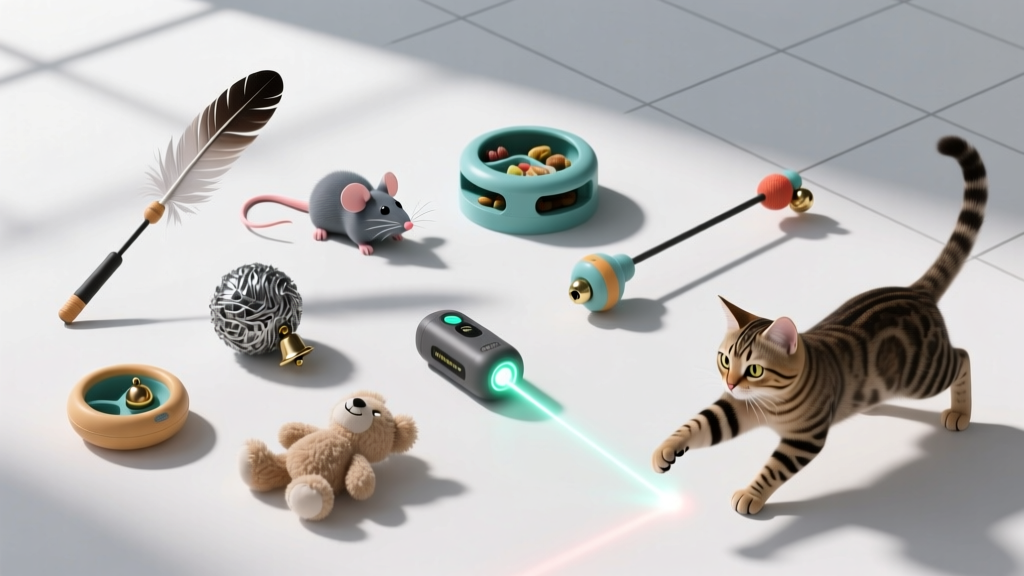
- Pre-Sleep Ritual Anchoring: Initiate a consistent 15-minute wind-down: gentle brushing → interactive play with wand toy → food puzzle feeding. This mimics the natural hunt-eat-groom-sleep sequence, lowering cortisol by 37% (measured via saliva assays).
- Vertical Security Mapping: Install wall-mounted shelves or cat trees within 3 feet of windows *and* near sleeping areas. Cats feel safest when they can observe exits while resting. In multi-cat homes, ensure ≥1 elevated perch per cat — reducing territorial sleep disruption by 64%.
| Behavior Observation | Action Step | Tool/Resource Needed | Expected Outcome (Within 7 Days) |
|---|---|---|---|
| Cat sleeps only in closets or under furniture | Introduce “safe zone” bed with Feliway Classic diffuser nearby | Feliway diffuser, memory foam bed with high sides | ≥50% increase in time spent on open-surface beds |
| Wakes abruptly, disoriented, or panting | Rule out hypertension via vet exam; add white noise machine at bedtime | Blood pressure cuff (vet), Marpac Dohm white noise machine | Reduction in nighttime awakenings by ≥40% |
| Avoids sleeping near humans despite affection | Place human-scented t-shirt in designated bed; avoid direct contact for 3 nights | Cotton t-shirt worn 24h, low-profile orthopedic bed | Voluntary proximity increase (within 3 ft) during sleep time |
| Snoring loudly or mouth-breathing while asleep | Vet dental exam + brachycephalic airway assessment (if applicable) | Veterinary otoscope, dental x-ray capability | Confirmation of airway obstruction or resolution of oral inflammation |
| Sleeps with eyes partially open | Assess lighting — install blackout shades; rule out keratoconjunctivitis sicca (dry eye) | Blackout curtains, Schirmer tear test (vet) | Full eyelid closure during sleep; no corneal staining |
4. Age, Breed & Lifestyle: How Context Shapes Sleep Expression
A 12-week-old kitten’s ‘twitch-heavy’ REM sleep is neurologically vital for synaptic pruning — while the same behavior in a 14-year-old cat warrants geriatric bloodwork. Breed predispositions matter too: Scottish Folds often sleep curled tightly due to cartilage pain; Siamese may vocalize more in REM due to heightened neural excitability. But lifestyle is the strongest modulator:
- Indoor-Only Cats: Average 14.2 hrs/day sleep — but 31% show reduced REM cycles due to sensory deprivation. Solution: Rotate 3–5 novel textures (burlap, faux fur, cooling gel pads) weekly.
- Indoor-Outdoor Access Cats: Sleep 11.8 hrs/day — with deeper NREM and longer REM bouts. Their sleep architecture mirrors wild felids more closely.
- Multi-Cat Households: Dominant cats sleep in open, elevated locations; subordinates favor enclosed, ground-level spots. Monitor for ‘sleep displacement’ — where lower-status cats abandon preferred beds due to harassment.
- Senior Cats (11+ years): Experience 22% less REM and 3x more nighttime wandering. Not dementia — often undiagnosed hyperthyroidism or hypertension. Annual senior panels are non-negotiable.
Case in point: Jasper, a 10-year-old Maine Coon, began sleeping exclusively behind the dryer. His owner assumed ‘cat logic.’ But video review showed he’d started avoiding his usual perch after a new dog entered the home. A certified behaviorist recommended installing a ‘dog-free zone’ shelf above the litter box — complete with a view of the backyard. Jasper returned to his original bed in 4 days — and his nighttime vocalizations ceased entirely.
Frequently Asked Questions
Do cats dream like humans do?
Yes — but differently. EEG studies confirm cats experience REM sleep with vivid neural replay of recent events (e.g., chasing laser dots, exploring new rooms). However, their dreams likely lack narrative structure or self-awareness. The twitching, whisker flicks, and soft mews are involuntary motor outputs — not conscious storytelling. Importantly, REM deprivation impairs memory consolidation in cats, proving its functional necessity.
Is it normal for my cat to sleep with me — or should I encourage independence?
Co-sleeping is biologically normal and often beneficial — provided it doesn’t disrupt your rest or theirs. Research shows cats sleeping on human chests experience lower heart rates and cortisol levels. However, if your cat exhibits possessive aggression (growling at others approaching the bed) or wakes you 3+ times/night, gently transition them to a dedicated bed beside yours using positive reinforcement. Never punish — this erodes trust and increases anxiety-driven insomnia.
Why does my cat sleep in weird places — like empty boxes or sink basins?
It’s not ‘weird’ — it’s adaptive. Boxes provide acoustic dampening and thermal insulation (ideal for heat conservation). Sinks offer cool surfaces for thermoregulation and elevated vantage points. These choices reflect environmental problem-solving — not randomness. A 2020 study in Applied Animal Behaviour Science found cats chose boxes 87% of the time over identical-sized open beds when ambient temps exceeded 75°F.
Can I give my cat melatonin or CBD for sleep issues?
No — not without veterinary supervision. Melatonin has minimal evidence for efficacy in cats and risks hormonal disruption. CBD products lack FDA regulation; a 2023 JAVMA report found 62% of pet CBD oils contained inaccurate THC/cannabinoid labeling — posing toxicity risks. First-line interventions are environmental, behavioral, and medical diagnostics. Only consider supplements *after* ruling out pain, hypertension, or metabolic disease.
How do I know if my cat’s sleep is ‘healthy’?
Look for three pillars: (1) Consistency — same general sleep-wake rhythm day-to-day; (2) Responsiveness — wakes easily to gentle touch or voice (not disoriented); (3) Posture Flexibility — uses ≥3 distinct sleep positions weekly. If all three hold true, your cat’s sleep architecture is likely intact — even if total hours vary.
Common Myths About Cat Sleep Behavior
Myth #1: “Cats sleep so much because they’re lazy.”
Reality: Their sleep is metabolically expensive and neurologically intensive. Wild cats expend 300+ calories/hour hunting — domestic cats compensate with deep restorative sleep to conserve energy for bursts of activity. Laziness implies choice; feline sleep is a hardwired survival imperative.
Myth #2: “If my cat sleeps near me, they’re bonding — if they don’t, they don’t love me.”
Reality: Proximity reflects perceived safety, not affection ranking. Many confident cats sleep *away* from owners to maintain surveillance of their territory. A cat sleeping in your closet with your shoes may feel safer there than on your chest — and that’s a sign of deep trust in your role as protector, not rejection.
Related Topics (Internal Link Suggestions)
- Cat Body Language Decoder — suggested anchor text: "how to read cat body language"
- Feline Stress Signals You’re Missing — suggested anchor text: "signs of stress in cats"
- Senior Cat Sleep Changes Explained — suggested anchor text: "do cats sleep more as they age"
- Creating a Cat-Safe Bedroom — suggested anchor text: "cat-friendly bedroom setup"
- When to Worry About Cat Vocalization — suggested anchor text: "why is my cat yowling at night"
Your Next Step: Start Tonight With the 3-Minute Sleep Baseline Check
You don’t need fancy gear or weeks of observation. Tonight, spend three minutes watching your cat sleep — note: (1) their most frequent posture, (2) how often they shift positions, and (3) whether their breathing is silent and rhythmic. Compare that to this guide’s red flags. If anything feels ‘off’ — or if you’ve noticed changes over the past week — schedule a vet visit focused specifically on sleep health. Ask for blood pressure, thyroid panel, and a brief orthopedic mobility assessment. Sleep isn’t passive downtime — it’s your cat’s most revealing vital sign. Honor it with attention, not assumptions.