What Are Cat Behaviors for Play? 12 Subtle But Critical...
Why Understanding What Are Cat Behaviors for Play Is the #1 Skill Every Cat Guardian Needs Today
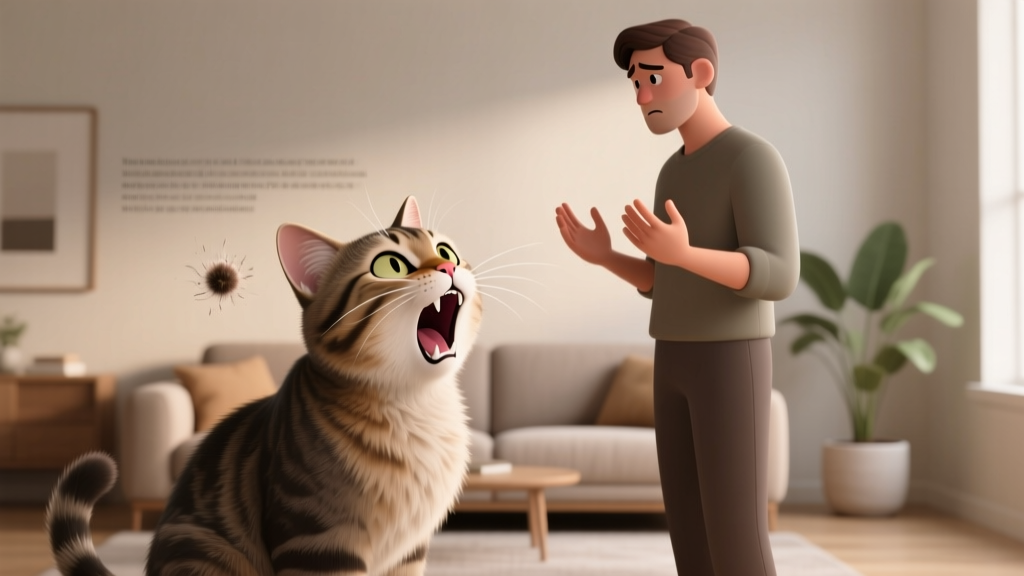
If you’ve ever been ambushed by a sudden bite mid-petting session, watched your kitten freeze and bolt after what seemed like joyful play, or wondered why your adult cat ignores toys but stalks your shoelaces at 3 a.m., you’re not failing as a caregiver—you’re missing the foundational code. What are cat behaviors for play isn’t just trivia; it’s the real-time language your cat uses to communicate consent, boundaries, excitement, and distress—all in milliseconds. And according to Dr. Mikel Delgado, certified cat behavior consultant and researcher at the University of California, Davis, up to 68% of so-called 'aggression problems' in indoor cats stem not from temperament, but from chronic misinterpretation of play signals—leading to eroded trust, redirected stress, and even surrender to shelters. This isn’t about training your cat to behave. It’s about learning to listen—in movement, posture, and timing.
The 4 Core Play Behavior Categories (and What Each Really Means)
Cats don’t ‘play’ as humans do—they rehearse survival skills. Ethologists classify feline play into four biologically rooted categories: predatory, social, locomotor, and object-based. But crucially, each category expresses itself through distinct, context-dependent body language. Ignoring the category shifts your interpretation entirely.
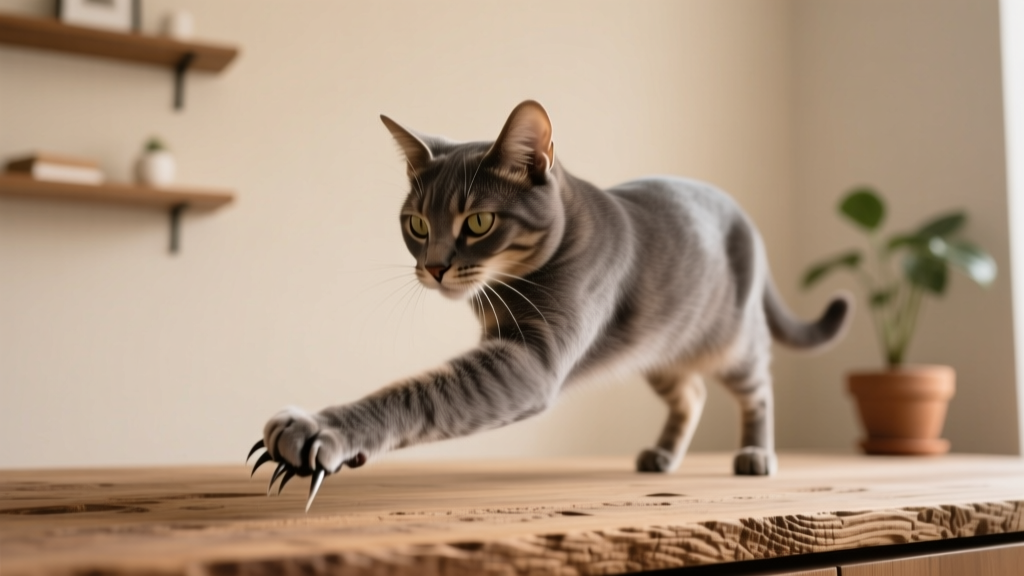
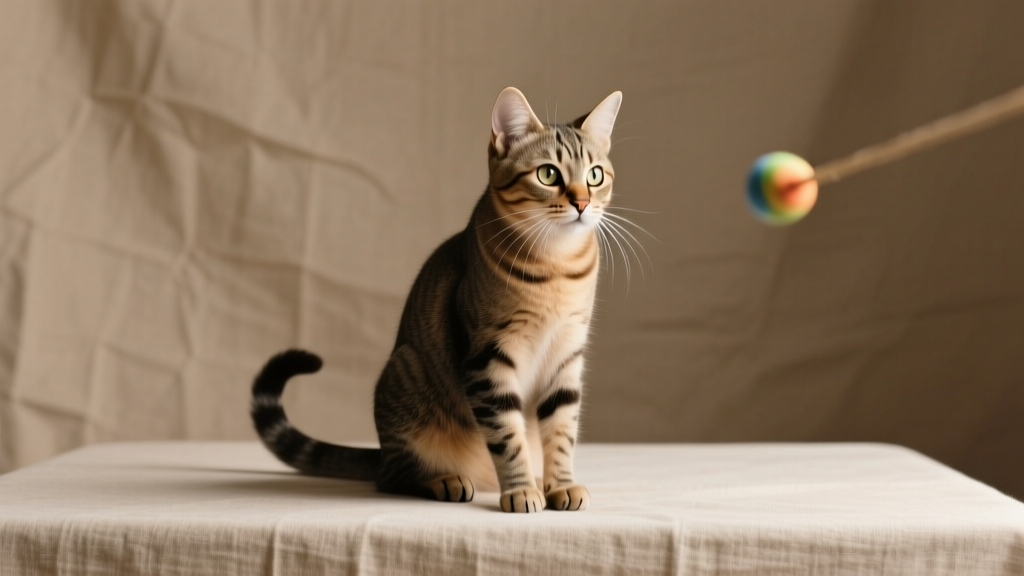
Predatory play (the most common and frequently misunderstood) mimics hunting: stalking, pouncing, biting, and ‘killing’ with a neck bite or shake. It’s silent, focused, and often directed at moving stimuli—even your fingers. A 2022 study in Applied Animal Behaviour Science found that 91% of cats exhibiting ‘play aggression’ toward owners were actually engaged in unfulfilled predatory sequences—lacking appropriate outlets like wand toys that mimic prey movement.
Social play occurs almost exclusively between kittens under 16 weeks—and rarely continues into adulthood unless carefully nurtured. It includes gentle wrestling, mutual chasing, and inhibited biting. Adult cats engaging in prolonged social play with humans may be signaling anxiety or seeking reassurance—not invitation. As Dr. Kristyn Vitale, feline behavior researcher at Oregon State University, explains: “When an adult cat rolls onto its back and bats at your hand, it’s not asking for belly rubs—it’s practicing defensive posturing. That exposed belly is a vulnerability, not an open door.”
Locomotor play involves bursts of high-energy movement: zoomies, sideways hops, wall-scaling, and sudden direction changes. Often dismissed as ‘crazy cat moments,’ these episodes serve critical neurological functions—releasing pent-up energy, strengthening neural pathways for coordination, and reducing cortisol. But timing matters: if locomotor play spikes right after meals or late at night, it may indicate insufficient daytime enrichment—or underlying pain (e.g., arthritis in senior cats).
Object play centers on manipulation: batting, pawing, carrying, and ‘kneading’ non-living items. Kittens use this to develop fine motor control; adults use it to assess novelty and safety. A cat repeatedly dropping a toy at your feet isn’t ‘giving’ it to you—it’s performing a ‘prey delivery’ ritual, testing your response. Reward that behavior with praise and a brief interactive session—not picking up the toy yourself (which breaks the sequence).
Decoding the 12 Key Play Signals: From Innocuous to Urgent
Below are the most frequently observed—but routinely misread—behaviors during play. We break down each signal, its biological origin, the danger of misreading it, and exactly what to do instead.
- Ears forward and slightly tilted: Indicates intense focus and readiness—not friendliness. If paired with dilated pupils and a low crouch, it’s the pre-pounce ‘lock-on.’ Don’t reach in; pause and let the cat initiate contact.
- Slow, deliberate tail swish (not flick): Not boredom—it’s deep concentration. Interrupting this rhythm disrupts the cat’s mental rehearsal. Let it continue; then offer a toy that matches its current trajectory.
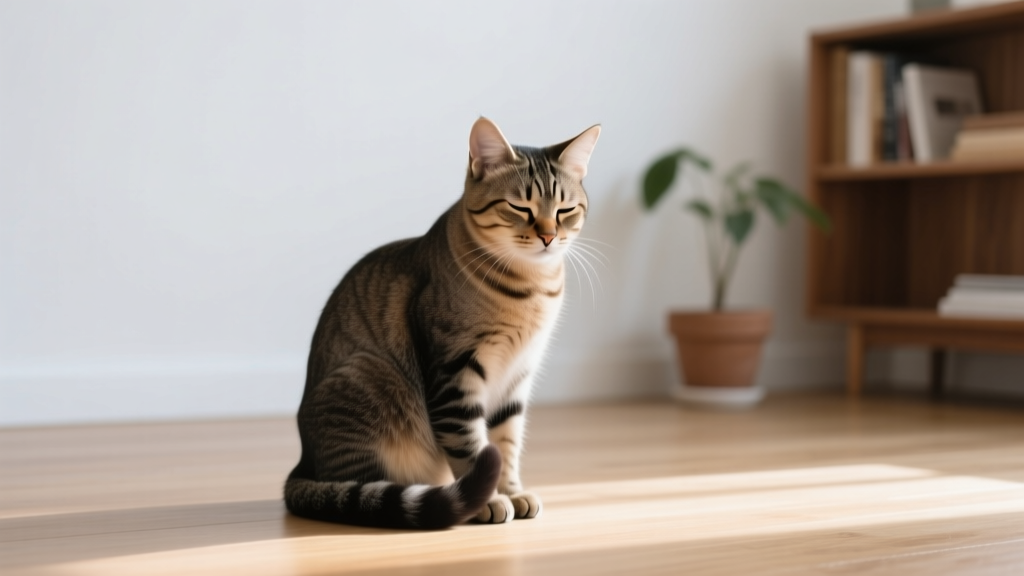
- Half-closed eyes + slow blink: A sign of relaxed engagement, not sleepiness. This is your cat’s ‘I trust you’ signal mid-play. Return the blink—silently reinforcing safety.
- Front paws ‘paddling’ or kneading while lying on side: Often mistaken for contentment. In play context, it’s a ‘restraint practice’—mimicking holding down prey. Avoid touching the paws; redirect with a dangling feather toy.
- Sudden stillness + flattened ears: The ‘freeze-and-assess’ phase before flight or fight. This isn’t hesitation—it’s acute threat detection. Stop all movement. Back away slowly. Do not call their name or reach out.
- Chattering teeth at windows: Not frustration—it’s a motor mimicry of the killing bite used to dispatch birds. It’s neurologically satisfying. Provide a ‘chatter box’ toy (a small box with a string and bell inside) to channel the impulse.
- Rolling onto back with paws up: Defensive posture—not submission. If you touch the belly, you’ll likely get scratched. Instead, dangle a toy just above the paws to engage the ‘grab-and-hold’ reflex safely.
- Quick head turn away mid-interaction: A polite ‘time-out’ request. Cats use gaze aversion to de-escalate. Honor it—pause for 5 seconds, then resume only if the cat re-engages.
- Light nibbling on fingers/ankles: Not aggression—it’s ‘teeth-testing’ to gauge pressure control. Respond by immediately offering a chew-safe rope toy. Never yelp or pull away (triggers chase instinct).
- Tail held high with quivering tip: A sign of intense excitement and affection—rarely seen outside secure bonds. This is your cat’s version of ‘I love you.’ Pause play and offer quiet petting *only if* the cat leans in.
- ‘Bunny-kick’ with hind legs while holding toy: A full predatory sequence. Don’t grab the toy—let them finish. Then praise and offer a new one. Interrupting causes frustration buildup.
- Bringing you ‘gifts’ (toys, socks, leaves): Not clutter—it’s a teaching behavior. Your cat sees you as inept at hunting and is attempting mentorship. Thank them verbally and place the item in a designated ‘trophy basket’ to validate the effort.
When Play Goes Off-Script: Red Flags & Real-Time Intervention
Healthy play has rhythm: build-up → peak → cooldown → rest. When that arc fractures, it’s a warning. Here’s how to spot deviations—and intervene without escalating:
Overstimulation spiral: Characterized by escalating intensity, loss of inhibition (harder bites, louder vocalizations), and inability to disengage. Triggered by prolonged petting, erratic toy movement, or lack of ‘kill’ resolution. Immediate action: Freeze. Turn sideways (reducing visual threat). Count silently to 10. Then walk away—no eye contact. Do NOT punish or shout.
Redirected aggression: Occurs when a cat sees outdoor stimuli (birds, squirrels) but can’t act—then attacks the nearest moving target (you, another pet). Prevention: Install bird feeders *away* from windows, use opaque window film, and provide ‘frustration-release’ toys like puzzle feeders filled with kibble.
Play avoidance: A cat who consistently walks away, hides, or flattens ears at the sight of toys may be experiencing pain, anxiety, or past trauma. Rule out medical causes first (especially dental pain or arthritis) with a vet visit. Then reintroduce play gradually using scent-based games (catnip mice rolled in silvervine) and floor-level wand toys that require zero jumping.
A mini case study illustrates the power of accurate reading: Luna, a 3-year-old rescue tabby, was labeled ‘unplayful’ by her adopter until a behaviorist noticed she’d stare intently at ceiling fans—her preferred ‘prey.’ Switching to a lightweight, fluttering ribbon toy held at fan-height reduced her stress-related overgrooming by 70% in two weeks. Her ‘avoidance’ wasn’t apathy—it was hyper-specific preference.
Play Behavior Reference Table: Signal, Meaning, & Response Protocol
| Behavior | Biological Meaning | Risk of Misreading | Immediate Response | Long-Term Strategy |
|---|---|---|---|---|
| Low crouch + tail twitch | Predatory focus: preparing to ambush | Mistaking for anxiety or aggression | Pause movement. Offer a wand toy moving horizontally 6 inches from nose | Provide daily 3x5-min ‘hunt sessions’ with varied prey-like motions |
| Rolling + exposed belly | Defensive readiness—not invitation | Touching triggers defensive scratching | Do not touch. Gently toss a soft ball nearby to redirect | Teach ‘belly touch’ via gradual desensitization: reward calm exposure with treats, no contact |
| Vocalizing (chirps, trills) | Excitement or ‘calling in’ prey | Interpreting as distress or demand | Respond with animated voice: “Yes! There it is!” + move toy erratically | Use vocal cues consistently during play to strengthen bonding association |
| Sudden ear flattening + wide eyes | Perceived threat—flight-or-fight trigger | Forcing interaction worsens fear memory | Stop all motion. Step back 3 feet. Wait 15 sec before slow retreat | Identify and remove environmental stressors (loud appliances, unfamiliar scents) |
| Bringing toy to owner’s lap | ‘Prey delivery’—seeking validation or instruction | Ignoring or discarding undermines confidence | Say “Good hunt!” + gently stroke head (not back) + offer treat | Create a ‘hunting log’—photograph ‘kills’ and celebrate weekly wins |
Frequently Asked Questions
Why does my cat bite me gently during play—but then suddenly get aggressive?
This ‘play-bite escalation’ happens when your cat’s predatory sequence isn’t completed. Gentle nibbles are part of the ‘catch’ phase; sudden hard bites occur when they’re denied the ‘kill’ (e.g., you pull your hand away too fast) or the ‘disembowel’ (e.g., no toy to ‘finish’ with). Solution: Always end play with a tangible ‘kill’—let them bite a stuffed mouse or crinkle ball for 5 seconds before praising and stopping. Never withdraw your hand mid-sequence.
Is it normal for my cat to hiss or growl during play?
Yes—if it’s low-volume, intermittent, and accompanied by loose body posture and forward ears, it’s ‘play vocalization,’ not fear. But if hissing is loud, sustained, or paired with flattened ears and tail tucked, stop immediately—this is stress. Record a 10-second clip and compare to Cornell Feline Health Center’s free online library of play vs. fear vocalizations.
My kitten plays too roughly—how do I teach gentler play without discouraging it?
Never punish rough play—it teaches fear, not manners. Instead: 1) Immediately end play the *second* teeth touch skin (no yelling—just freeze and walk away); 2) Redirect to a toy *before* they bite; 3) Use ‘bite inhibition training’: when they mouth your hand, insert a finger *gently* into their mouth and hold 2 seconds—mimicking maternal correction. They’ll learn pressure = play stops.
Do older cats stop playing? Should I worry if mine doesn’t?
No—they shift play style. Senior cats prefer scent-based games (silvervine tunnels), slow-stalk puzzles, and lap-based ‘hunts’ (treats hidden under blankets). But if play drops >50% over 2 weeks, consult your vet: early arthritis, dental pain, or hyperthyroidism often present as ‘loss of interest.’ A 2023 Journal of Feline Medicine study found 41% of cats diagnosed with osteoarthritis had been mislabeled ‘lazy’ for months prior.
Can I use laser pointers safely for play?
Yes—with strict rules: 1) Always end with a physical ‘kill’ (point laser at a plush toy they can bite); 2) Never shine near eyes or on walls where reflection could hit eyes; 3) Limit to 2 mins/session. Laser-only play without resolution causes obsessive frustration and ‘ghost hunting’ behaviors (staring at walls, air-biting). A UC Davis trial showed cats given ‘laser + kill’ sessions had 3x lower cortisol than laser-only groups.
Common Myths About Cat Play Behavior
Myth #1: “If my cat plays with me, they see me as family.”
Reality: Cats don’t assign human familial roles. They engage in play because you’re a convenient, responsive ‘prey simulator’—not because they view you as kin. Their social structure is based on resource-sharing and spatial tolerance, not emotional kinship.
Myth #2: “Kittens will naturally learn appropriate play from other cats.”
Reality: Orphaned or early-weaned kittens miss critical ‘bite inhibition’ lessons taught by littermates’ yelps and mother’s corrections. These cats are 3.2x more likely to develop play-related aggression (per International Society of Feline Medicine data). Human-guided redirection is essential.
Related Topics (Internal Link Suggestions)
- How to Stop Cat Play Aggression — suggested anchor text: "stop cat play aggression"
- Best Toys for Indoor Cats by Age — suggested anchor text: "best toys for indoor cats"
- Cat Body Language Dictionary — suggested anchor text: "cat body language guide"
- Enrichment Ideas for Single Cats — suggested anchor text: "indoor cat enrichment ideas"
- When to Worry About Cat Behavior Changes — suggested anchor text: "cat behavior red flags"
Conclusion & Your Next Step
Understanding what are cat behaviors for play transforms every interaction from guesswork into grounded connection. You’re not decoding a mystery—you’re honoring an ancient, elegant language shaped by 9,000 years of co-evolution. Start today: pick *one* behavior from our table—like the slow blink or tail quiver—and practice noticing it three times this week. When you catch it, pause, breathe, and respond with the recommended action. That tiny moment of alignment builds trust deeper than any treat or toy. Ready to go further? Download our free Play Signal Tracker PDF—a printable checklist with photo examples and daily logging prompts—to spot patterns and prevent escalation before it starts. Because the most loving thing you can do for your cat isn’t more toys—it’s better listening.