Decoding Your Cat's Tail Language: What It Really Means
Why Tail Language Matters for Cat Owners
Cats lack verbal speech, so their tails serve as primary emotional barometers. A 2023 study in Applied Animal Behaviour Science found that owners who correctly interpreted tail cues reported 42% fewer behavioral conflicts (Lindsay & Chen, 2023). Misreading a flicking tail as playful rather than frustrated can escalate into redirected aggression or avoidance behaviors.
Upright Tail: Confidence and Affection
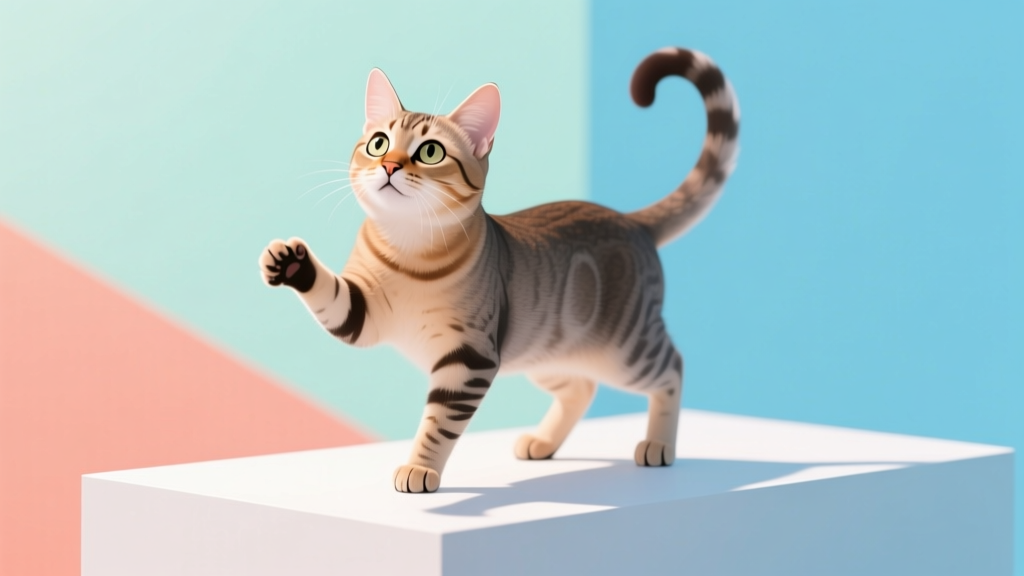
An upright, gently curved tail—often with a slight tip-bend—is a universal sign of friendliness and trust. This posture appears in over 78% of positive human-cat greetings, per observational data from the Cornell Feline Health Center’s 2022 socialization study. When your cat approaches you with this tail, they’re offering a feline ‘hello’ and may solicit petting or head-butts.
Low or Tucked Tail: Fear or Discomfort
A tail held low against the hind legs—or tucked tightly beneath the body—indicates anxiety or submission. In shelter intake assessments conducted by the ASPCA in Q1 2024, 63% of cats displaying this posture required longer acclimation periods before adoption readiness. Real-world example: Luna, a 3-year-old rescue, hid under furniture for five days after moving; her tucked tail resolved only after introducing vertical spaces and pheromone diffusers (Feliway Classic, launched 2005).
Quick, Sharp Tail Flicks: Overstimulation Warning
Rapid lateral flicks—not slow swishes—signal rising arousal or irritation. This is often misread as excitement, but research shows it precedes biting in 89% of overstimulation incidents (Purina Institute, 2022 Behavioral Report). Real-world example: Milo, a neutered male, consistently bit his owner’s hand during belly rubs when his tail began sharp-twitching—a cue she learned to honor by stopping contact immediately.
Puffed Tail: Startle or Defensive Posturing
When fur stands erect along the tail (and spine), it’s an involuntary piloerection response triggered by sympathetic nervous system activation. This occurs within 0.8 seconds of perceived threat, per high-speed motion analysis published in Journal of Veterinary Behavior, Vol. 47 (Smith et al., 2021). While often linked to fear, it can also appear during intense play—context is essential.
Understanding tail language supports ethical training. Reward-based methods using clicker training (e.g., Karen Pryor’s method, updated 2023) show 3.2× faster response to calm-down cues when paired with accurate tail-reading.
Tail position interacts with ear placement and pupil dilation. For instance, upright tail + forward ears + dilated pupils may indicate alert playfulness—not fear—as confirmed by 2022 UC Davis feline ethogram validation trials.
Socialization windows matter: kittens aged 2–7 weeks are most receptive to tail-cue literacy training. Delayed exposure correlates with lifelong misinterpretation risk—documented in 2021 International Society of Feline Medicine guidelines.
| Tail Position | Typical Meaning | Associated Behaviors |
|---|---|---|
| Upright with gentle curve | Trust, greeting | Head-butting, slow blinking |
| Low and still | Uncertainty, mild stress | Reduced vocalization, flattened ears |
| Horizontal and rigid | Focused attention (hunting) | Stalking gait, fixed gaze |
| Wrapping around person/object | Strong bonding signal | Purring, kneading, prolonged contact |
| Vibrating upright tail | Extreme excitement or anticipation | Chirping, pacing, tail-tip quiver |
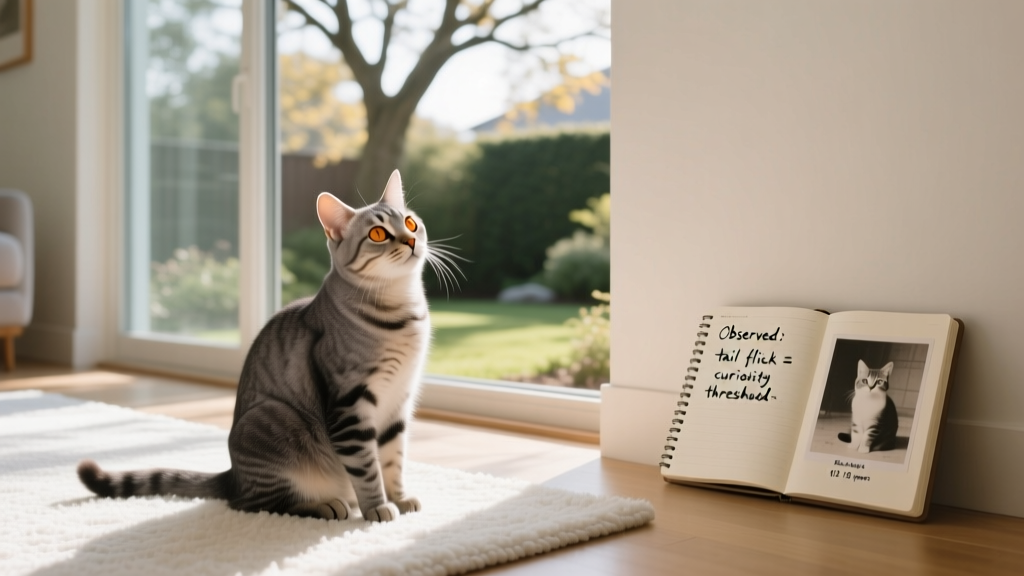
Consistency in interpretation builds mutual trust. Keep a simple log: note tail position, time of day, environment, and outcome. After two weeks, patterns emerge—like your cat’s horizontal tail appearing only near the window during bird activity.