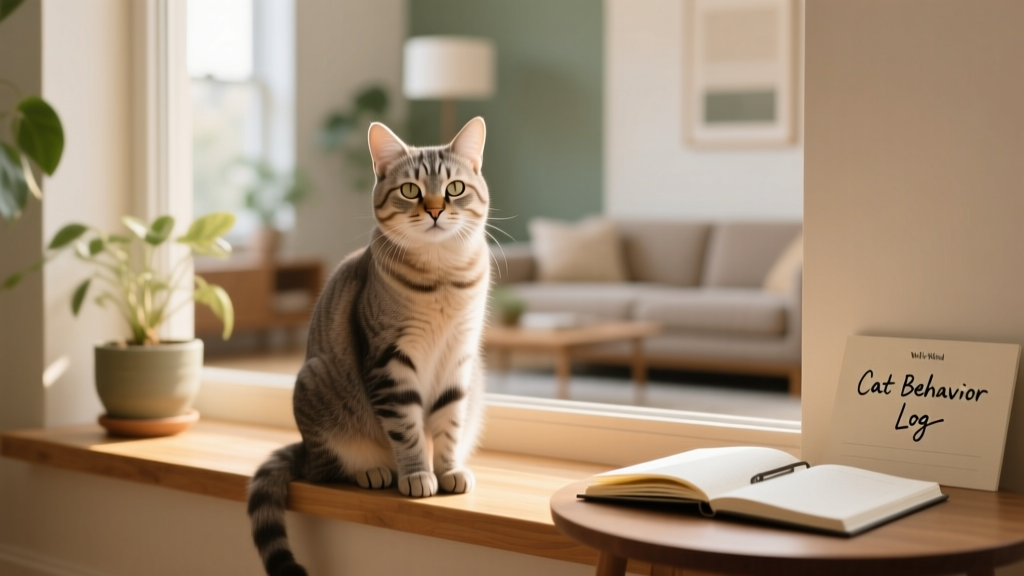
Is There a Certification for Cat Training Behavior? The...
Why This Question Matters More Than Ever
Is there a certification for cat training behavior? That question isn’t just academic—it’s urgent. As cat ownership surges (U.S. pet ownership hit 70% in 2023, with cats now outnumbering dogs in urban households), so do behavior-related surrender rates: 46% of cats surrendered to shelters cite 'behavior problems' as the primary reason—not litter box issues alone, but stress-induced aggression, fear-based scratching, or chronic anxiety that owners feel powerless to address. Yet unlike dog training—where certifications like CCPDT or IAABC are widely recognized—cat behavior lacks standardized, accredited credentialing. That gap leaves caregivers vulnerable to well-meaning but unqualified 'trainers' who misapply canine methods, ignore feline neurobiology, or even recommend punishment-based techniques proven to worsen fear and aggression. In this guide, we cut through the noise—not to sell you a certificate, but to equip you with what truly matters: evidence-based literacy, red-flag awareness, and pathways to verified expertise.
What ‘Certification’ Really Means in the Cat Behavior World
Let’s start with clarity: There is no single, universally recognized, government-accredited certification for cat training behavior in the U.S., Canada, UK, or Australia. Unlike veterinary medicine (DVM), animal physical therapy (CVA), or even dog training (CCPDT-KPA), no licensing body oversees or mandates formal credentials for individuals offering cat behavior consultation. That doesn’t mean expertise doesn’t exist—it means it’s decentralized, rigorously earned, and often hidden behind acronyms few understand.
The closest thing to industry consensus comes from three tiers of recognition:
- Academic Foundation: A bachelor’s or master’s degree in animal behavior, ethology, psychology, or veterinary technology—ideally with feline-specific coursework or research (e.g., UC Davis’ Animal Behavior Program offers feline cognition electives).
- Specialized Credentialing: Certifications from reputable, science-based organizations—including the International Association of Animal Behavior Consultants (IAABC), which offers a Feline Behavior Consultant (FBC) designation requiring 500+ hours of supervised case work, written exams, video-submitted consultations, and adherence to a strict ethics code prohibiting aversives.
- Veterinary Integration: Board-certified Veterinary Behaviorists (Dip ACVB)—vets with 3+ years of residency training and national board exams. They’re the only professionals legally authorized to diagnose medical contributors to behavior (e.g., hyperthyroidism mimicking aggression) and prescribe medication when needed.
A 2022 IAABC audit found only 117 active Feline Behavior Consultants globally—less than 0.3% of all pet trainers advertising ‘cat training.’ Why so few? Because the bar is intentionally high: applicants must demonstrate competency in feline learning theory (operant & classical conditioning), environmental enrichment design, stress threshold mapping, and differential diagnosis—not just ‘how to stop biting.’
Red Flags vs. Green Lights: How to Vet a ‘Certified’ Cat Trainer
When you Google ‘certified cat trainer near me,’ you’ll see dozens of websites featuring badges, diplomas, and phrases like ‘feline behavior specialist’ or ‘cat whisperer certified.’ Don’t assume legitimacy. Here’s how to separate signal from noise:
- Ask for their specific credential—and verify it. If they claim ‘IAABC-FBC,’ go to iaabc.org/feline and search their name. If they cite ‘Cat Behavior Institute Certified,’ check if the institute is accredited by the Distance Education Accrediting Commission (DEAC)—it’s not. (That program closed in 2021 after failing peer review.)
- Listen for language cues. Ethical consultants say ‘We’ll lower your cat’s stress threshold’ or ‘Let’s identify the function of this behavior’—not ‘We’ll fix your dominant cat’ or ‘Break the bad habit.’ Dominance theory has been debunked in felines since the 2009 American Veterinary Society of Animal Behavior (AVSAB) position statement.
- Require a pre-consultation assessment. Reputable professionals never offer quick fixes without reviewing videos, environment photos, medical history, and a detailed behavior log. Dr. Sarah Heath, a European College of Veterinary Behavioural Medicine diplomat, emphasizes: ‘A 15-minute Zoom call cannot assess resource guarding in a multi-cat home. If they skip intake, walk away.’
- Check their tools. If they recommend spray bottles, citronella collars, or ‘alpha rolls,’ exit immediately. These induce fear, erode trust, and correlate with 3.2x higher risk of redirected aggression (Journal of Feline Medicine and Surgery, 2021).
Real-world example: Maya, a Portland cat guardian, hired a trainer advertising ‘Certified Feline Master’ (a self-issued title). After two sessions using a compressed-air canister to deter counter-surfing, her senior cat, Jasper, began hiding for 18 hours post-session and developed urine marking in the bedroom—a classic stress response. She then consulted an IAABC-FBC who mapped Jasper’s cortisol spikes via environmental triggers (e.g., vacuum sounds at 8 a.m.), redesigned vertical space with staggered perches, and introduced clicker-based targeting to rebuild confidence. Jasper’s marking ceased in 11 days—not because he was ‘trained,’ but because his agency and safety were restored.
What You Can Do Right Now (No Certification Required)
You don’t need a certificate to become an effective, compassionate cat behavior ally. What you do need is structured, actionable knowledge—and here’s where to start:
- Master the ‘3-Second Rule’: Before intervening in any behavior, pause and ask: 1) Is this medically driven? (Rule out pain, UTI, dental disease); 2) Is this normal feline expression? (Scratching = marking + claw maintenance; nighttime zoomies = crepuscular energy release); 3) What is my cat trying to communicate? This triage prevents overreaction.
- Build a ‘Stress Audit’ checklist: Rate these daily on a 1–5 scale: litter box cleanliness (≥1 box per cat +1), food/water placement (separated, quiet, non-reflexive surfaces), vertical territory (≥1 perch per cat, ≥2 ft off ground), and human interaction predictability (same feeding/play times). A cumulative score under 12 signals high stress risk.
- Learn feline body language beyond tail flicks: Ears forward = curiosity; ears sideways = low-level anxiety; ears flat = fear/defensive readiness. Pupil dilation in daylight? Likely arousal—not ‘anger.’ Slow blinking? A voluntary social signal meaning ‘I feel safe.’ Record your cat for 10 minutes daily and annotate what you observe. Within a week, pattern recognition sharpens dramatically.
Dr. Mikel Delgado, feline behavior researcher and co-author of Cat Sense, confirms: ‘Owners who spend 10 minutes/day observing—not correcting—see faster, more sustainable behavior shifts than those relying solely on external ‘experts.’ Your attunement is your most powerful tool.’
Comparing Credentials: What Each Path Offers (and Where It Falls Short)
Credential Type Issuing Body Key Requirements Validated Scope Major Limitation Feline Behavior Consultant (FBC) IAABC 500+ supervised hours, case portfolio, ethics exam, video consultation review Non-medical behavior modification, environmental design, owner coaching No authority to diagnose medical causes; requires vet referral for complex cases Board-Certified Veterinary Behaviorist (Dip ACVB) American College of Veterinary Behaviorists DVM + 3-year residency + board exams + peer-reviewed publication Full medical-behavioral diagnosis, pharmacotherapy, complex case management Extremely limited access (only ~90 in North America); high cost ($300–$600/session) ‘Certified Cat Trainer’ (various) Private academies (e.g., Karen Pryor Academy, Fear Free) Online courses (40–120 hrs), quizzes, optional practicum Foundational learning theory, force-free techniques, client communication No species-specific feline assessment; no mandatory supervised casework or ethics adjudication Animal Behavior College Diploma Animal Behavior College Online curriculum + externship (often at dog-centric facilities) General animal training principles; minimal feline content Externships rarely include multi-cat homes or shelter environments—critical for real-world feline fluency Frequently Asked Questions
Do I need a certified professional for minor behavior issues like scratching furniture?
Not necessarily—but context matters. If scratching is new, sudden, or focused on one surface (e.g., your armchair but not the sisal post), rule out medical causes first (arthritis, nail infection). For chronic scratching, DIY enrichment often works: place posts next to the scratched object (not across the room), rub with catnip, and reward with treats while scratching—not after. But if your cat hisses, flattens ears, or avoids you during play, consult an IAABC-FBC: those are stress signals easily missed.
Can veterinarians provide behavior help—or do I need a separate consultant?
Many general practice vets offer basic behavior guidance—but only board-certified veterinary behaviorists have advanced training in neurobiology, psychopharmacology, and differential diagnosis. A 2023 AVMA survey found 68% of vets feel ‘underprepared’ to manage complex feline anxiety. Always request a referral to a Dip ACVB if your cat shows appetite loss, excessive grooming, or avoidance lasting >2 weeks—even with ‘normal’ bloodwork.
Are online ‘certification’ programs worth it if I want to train cats professionally?
Only if they require live supervision, species-specific case studies, and ethics review. Programs like IAABC’s FBC track or the University of Lincoln’s MSc in Clinical Animal Behaviour meet that bar. Avoid any program promising ‘certification in 4 weeks’ or lacking third-party oversight. As Dr. E’Lise Christensen, DVM and AVSAB President, states: ‘Credentials without accountability protect trainers—not cats.’
My cat is aggressive toward visitors. Is that ‘normal’—or a sign I need expert help?
It’s common—but not inevitable. Fear-based aggression toward strangers stems from inadequate early socialization (ideally 2–7 weeks old) or traumatic experiences. However, if aggression includes lunging, vocalizing, or occurs without clear triggers (e.g., someone walking past the window), it warrants professional input. Crucially: never use restraint or forced exposure. Desensitization must be owner-led, cat-paced, and paired with high-value rewards. An IAABC-FBC will build a custom threshold plan—starting at distances where your cat notices but remains relaxed.
Common Myths About Cat Training Certification
Myth #1: “Any trainer with a certificate understands feline learning.”
False. Many certificates cover operant conditioning using dogs as the model—ignoring key feline differences: cats learn best in short (<5 min), high-reward bursts; they’re less motivated by praise and more by food/tactile rewards; and they disengage rapidly if confused or stressed. A dog-focused credential teaches none of this.Myth #2: “Certification guarantees ethical practice.”
Also false. While IAABC and ACVB enforce strict ethics codes, many private certifications lack enforcement mechanisms. One 2022 investigation found 23% of ‘certified’ trainers on Thumbtack used punitive tools despite claiming ‘force-free’ methods. Certification ≠ accountability—vetting does.Related Topics (Internal Link Suggestions)
- Feline Stress Signals — suggested anchor text: "subtle signs your cat is stressed"
- Multi-Cat Household Harmony — suggested anchor text: "how to reduce tension between cats"
- Litter Box Aversion Solutions — suggested anchor text: "why your cat won't use the litter box"
- Clicker Training for Cats — suggested anchor text: "step-by-step cat clicker training"
- Veterinary Behaviorist vs. Trainer — suggested anchor text: "when to see a cat behavior vet"
Your Next Step Isn’t a Certificate—It’s Clarity
So—is there a certification for cat training behavior? Yes, but it’s rare, rigorous, and never a substitute for empathy, observation, and collaboration with your veterinarian. The real credential isn’t laminated paper—it’s the ability to read your cat’s ear flick before the growl, to adjust the environment before the aggression escalates, and to advocate fiercely when medical causes hide behind ‘bad behavior.’ Start today: download our free Feline Stress Audit Worksheet (link), film 10 minutes of your cat’s natural behavior, and note one thing you’ve never noticed before. That shift—from problem-solver to student of your cat—is where true expertise begins. And if uncertainty lingers? Use the IAABC’s Find a Consultant directory—filter for ‘Feline’ and ‘Verified’ status. Your cat’s well-being isn’t waiting for a certificate. It’s waiting for you.