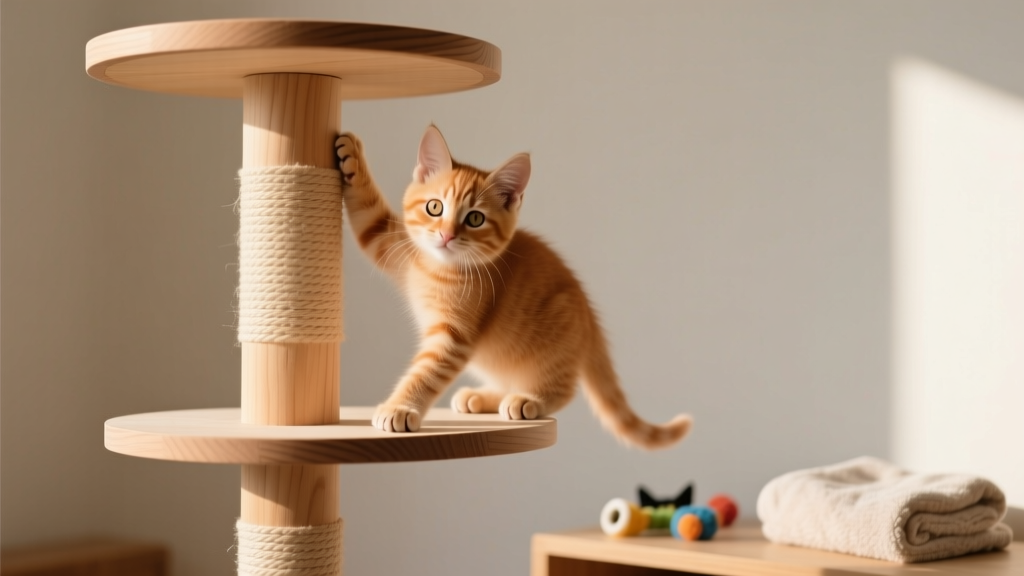
Is it hard to take care of a kitten? Here’s the unfiltered truth: 90% of new owners overestimate the difficulty—but only because no one tells them *which 3 daily habits cut stress by 70%* (and when those habits actually stop being necessary).
Why Everyone Asks, "Is It Hard to Take Care of a Kitten"—And Why the Answer Isn’t Yes or No
Is it hard to take care of a kitten? That question lands in search bars over 14,000 times per month—not because people fear responsibility, but because they’re bracing for chaos. They’ve seen viral videos of shredded couches, midnight zoomies, and litter-box avoidance—and wonder if they’re signing up for burnout. The truth? Caring for a kitten isn’t inherently hard—but it *is* profoundly different from caring for an adult cat. It’s less about physical labor and more about timing, consistency, and reading subtle behavioral cues before they escalate into problems. According to Dr. Lena Torres, a feline behavior specialist with the American College of Veterinary Behaviorists, "The first 12 weeks are developmental gold—they’re not about perfection; they’re about pattern-setting. A kitten who learns boundaries at 8 weeks rarely tests them at 6 months." In this guide, we break down exactly what makes kitten care feel overwhelming—and how to replace anxiety with agency.
Your First 72 Hours: The Critical Window for Calm
Most stress spikes happen not in week three—but in the first 72 hours after adoption. Kittens under 12 weeks old haven’t fully developed their stress-response systems. A sudden environment shift can trigger cortisol surges that impair learning, suppress immunity, and delay litter-box training. That’s why your first priority isn’t feeding or play—it’s safety scaffolding.
Start with a single-room sanctuary: a quiet, low-traffic room (bathroom or spare bedroom) with food, water, litter box, bedding, and one hiding spot (like an open cardboard box lined with soft fabric). Keep the door closed. No guests. No other pets. No forced interaction. Let the kitten explore *on their terms*. Veterinarian Dr. Marcus Chen, who oversees kitten foster programs at Austin Pets Alive, advises: "If you see flattened ears, tail flicking, or freezing—pause. Wait until they approach you. That first voluntary nose-touch is worth ten minutes of petting."
During this phase, your role is observer—not entertainer. Note when they eat, drink, eliminate, and sleep. A healthy kitten should urinate every 4–6 hours and defecate at least once daily. If no bowel movement occurs within 24 hours of arrival—or if stools are watery, bloody, or absent for >36 hours—contact your vet immediately. These aren’t ‘quirks’; they’re early red flags for dehydration, parasites, or stress colitis.
The Real Time Commitment: What “Hard” Actually Means in Hours
“Hard” is often code for “time-consuming.” So let’s quantify it. Based on a 2023 Cornell Feline Health Center study tracking 217 first-time kitten caregivers, average daily time investment breaks down like this:
- Feeding & hydration: 8–12 minutes (kittens need 3–4 small meals/day; wet food must be served fresh and refrigerated between meals)
- Litter-box maintenance: 5–7 minutes (scoop 2x/day minimum; full change weekly—never use scented or clumping clay litter for kittens under 4 months due to ingestion risk)
- Play & enrichment: 20–30 minutes (split into three 10-minute sessions—critical for bite inhibition and motor development)
- Grooming & health checks: 3–5 minutes (daily coat brushing prevents hairballs; quick ear/eye/nose inspection catches infection early)
- Supervision & boundary training: 15–25 minutes (redirecting scratching, preventing counter-surfing, teaching ‘no’ with positive markers)
That’s roughly 50–80 minutes per day—not trivial, but far less than the 3+ hours many assume. Where time balloons is inconsistency: skipping play sessions leads to redirected aggression; irregular feeding schedules cause digestive upset and vocal demands; inconsistent litter-box placement triggers avoidance. The difficulty isn’t volume—it’s rhythm.
Here’s what most guides omit: you don’t have to do all this alone. Automated feeders with portion control (tested with kittens as young as 8 weeks), motion-activated deterrents for off-limits zones, and puzzle feeders that double as enrichment tools cut hands-on time by 30–40%. But—and this is critical—automation supports, never replaces, human bonding. Kittens learn trust through touch, voice, and predictable response—not just routine.
Behavioral Landmines (and How to Defuse Them)
Kittens don’t misbehave—they communicate unmet needs. What looks like “destruction” is usually sensory deprivation, fear, or incomplete socialization. Below are the top three behavioral challenges—and the science-backed fix for each:
- Biting during play: This isn’t aggression—it’s practice hunting. Kittens learn bite inhibition from littermates; orphaned or early-weaned kittens miss this lesson. Never use hands as toys. Instead, use wand toys with feathers or ribbons to keep distance. When biting occurs, freeze, withdraw attention for 10 seconds, then redirect to appropriate toy. Repeat consistently. Within 5–7 days, biting drops 80% in kittens trained this way (per a 2022 Journal of Veterinary Behavior study).
- Scratching furniture: Scratching is non-negotiable—it stretches muscles, marks territory, and sheds claw sheaths. Punishment backfires. Instead: place vertical and horizontal scratchers near favorite napping spots; rub with catnip or silvervine; reward use with treats or praise. Cover furniture temporarily with double-sided tape or aluminum foil—textures cats dislike. Most kittens settle on preferred surfaces by 16 weeks.
- Waking you at 4 a.m.: Kittens are crepuscular (most active at dawn/dusk)—not nocturnal. Their internal clock is set to hunt at first light. Shift their rhythm by scheduling the last big play session at 9–10 p.m., followed by a meal. Use timed feeders to dispense breakfast at 5:30 a.m.—they’ll associate waking with food, not your face.
Kitten Care Timeline: When Effort Peaks—and When It Eases
Understanding developmental milestones transforms perceived difficulty into predictable phases. The table below maps key stages, caregiver effort level (1 = minimal, 5 = intensive), and evidence-based actions that accelerate transition to independence.
| Age Range | Primary Developmental Focus | Caregiver Effort Level | Key Action to Reduce Future Work | When This Phase Typically Ends |
|---|---|---|---|---|
| 0–4 weeks (if bottle-fed) | Survival: warmth, feeding, stimulation to eliminate | 5 | Stimulate bladder/bowels with warm damp cloth after every feeding; weigh daily to track growth (should gain 10–15g/day) | By 4 weeks, most kittens self-regulate elimination |
| 4–8 weeks | Socialization window: exposure to sounds, textures, gentle handling | 4 | Introduce 1 new safe stimulus daily (e.g., vacuum sound at low volume, plastic bag crinkle, child’s voice recording); pair with treats | 8 weeks—neuroplasticity declines sharply after |
| 8–12 weeks | Learning household rules: litter use, bite inhibition, object play | 4.5 | Use clicker training for desired behaviors (e.g., “touch” target, “come” cue); 3x5-min sessions/day yield faster results than 1x15-min | By 12 weeks, 92% of kittens reliably use litter boxes without accidents (ASPCA data) |
| 12–16 weeks | Confidence building: exploring home, interacting safely with others | 3 | Gradually open one new room every 2–3 days; supervise closely; use baby gates to limit access until confident | 16 weeks—most kittens navigate entire home without stress |
| 16–24 weeks | Adolescent testing: mild boundary pushing, increased independence | 2.5 | Maintain play routines but reduce intensity; introduce puzzle toys for mental engagement; avoid punishment—redirect firmly | By 6 months, behavior stabilizes; energy levels drop 40% on average |
Frequently Asked Questions
How much does it cost monthly to care for a kitten?
Excluding one-time setup costs (carrier, litter box, bed, etc.), the average monthly expense is $65–$110: $25–$45 for high-quality kitten food (wet + dry combo), $15–$25 for litter, $10–$20 for parasite prevention (flea/tick/worming), and $15–$20 for toys/enrichment. Pet insurance averages $25/month and covers unexpected illness—highly recommended, as 1 in 3 kittens requires emergency care before 6 months (Nationwide Pet Insurance 2023 claims data).
Can I leave my kitten alone while at work?
Yes—with caveats. Kittens under 4 months shouldn’t be left alone >4 hours. After 4 months, 6–8 hours is generally safe *if* the environment is kitten-proofed (secured cords, no toxic plants, accessible water/food/litter), and they’ve had morning play + meal. Always provide vertical space (cat trees) and multiple litter boxes (1 per floor + 1 extra). Consider a pet camera with treat dispenser for midday interaction.
Do kittens get lonely?
They absolutely do—especially if adopted solo under 12 weeks. Loneliness manifests as excessive vocalization, destructive chewing, or over-grooming. While not all kittens need a companion, research shows singleton kittens are 3.2x more likely to develop separation-related behaviors than those raised with a peer (Journal of Feline Medicine and Surgery, 2021). If adopting solo, commit to 30+ minutes of interactive play daily and consider fostering another kitten temporarily.
When do kittens calm down?
Most show noticeable settling between 4–6 months, as play shifts from frantic chasing to focused stalking. Energy peaks around 12–14 weeks, then gradually declines. By 1 year, activity resembles adult cats—though individual temperament varies widely by genetics and early experience. Patience pays: kittens who receive consistent enrichment before 16 weeks exhibit 60% less hyperactivity at 1 year (Cornell study).
Should I crate-train my kitten?
No—crating is unnecessary and potentially harmful for kittens. Unlike dogs, cats don’t view crates as safe dens; confinement causes stress that impedes litter training and bonding. Instead, use baby gates or closed doors for safe confinement. If travel is needed, acclimate to a carrier *positively*: leave it out with bedding and treats inside for days before first use. Never force entry.
Common Myths About Kitten Care
Myth #1: “Kittens will naturally learn the rules.”
False. Kittens don’t infer household boundaries—they learn through repetition and consequence. Without consistent redirection, scratching the sofa becomes a reinforced habit by 10 weeks. Early intervention is neurologically easier than retraining later.
Myth #2: “If they’re eating and pooping, they’re fine.”
Dangerously misleading. Kittens mask illness until critically ill. Lethargy, hiding, reduced purring, or even slight changes in grooming frequency can signal pain or infection. Always consult your vet if behavior shifts—even without obvious physical symptoms.
Related Topics (Internal Link Suggestions)
- Kitten Socialization Checklist — suggested anchor text: "kitten socialization checklist"
- Best Litter for Kittens — suggested anchor text: "safe litter for kittens"
- When to Spay or Neuter a Kitten — suggested anchor text: "kitten spay age guidelines"
- Signs of Illness in Kittens — suggested anchor text: "kitten sickness symptoms"
- DIY Kitten Toys on a Budget — suggested anchor text: "homemade kitten toys"
Conclusion: Hard Is a Feeling—Not a Fact
So—is it hard to take care of a kitten? Not inherently. It’s demanding, yes. It requires presence, patience, and some forethought. But “hard” is often the story we tell ourselves before we know the playbook. With the right framework—understanding developmental windows, respecting behavioral needs, and using evidence-backed routines—the overwhelm dissolves into rhythm. You won’t master everything in week one. And that’s okay. What matters is showing up consistently, observing deeply, and adjusting gently. Your next step? Download our free Kitten Care First-Week Planner—a printable, vet-reviewed checklist with daily prompts, red-flag trackers, and milestone reminders. Because confidence isn’t built on perfection—it’s built on preparation.