Is Bad Behavior in Cats Really Bad? 7 Reasons
Why 'Bad Behavior' Is a Misleading Label — And Why It Matters Right Now
When you search 'is bad behavior in cats', you're likely frustrated, exhausted, or even worried — wondering if your cat is broken, stubborn, or beyond help. But here's the truth: is bad behavior in cats a real thing? Not in the way most people assume. What we label as 'bad behavior' is almost always a symptom — not a character flaw. Cats don’t act out for attention or revenge; they communicate unmet physical, emotional, or environmental needs through behavior. With over 60% of cats surrendered to shelters cited for 'behavior problems' — and nearly 80% of those cases linked to treatable underlying causes (AVSAB, 2023) — misunderstanding this distinction doesn’t just strain your bond; it risks your cat’s well-being and home stability.
This isn’t about excusing destructive scratching or midnight zoomies. It’s about shifting from punishment to precision — diagnosing root causes with empathy and evidence. In this guide, you’ll get vet-vetted frameworks to decode what your cat is *really* saying, proven interventions backed by feline behavior science, and a clear roadmap to transform confusion into connection.
1. The Hidden Triggers: What ‘Bad’ Behavior Really Signals
Feline behavior is evolutionary wiring — finely tuned for survival, not domestic harmony. When your cat pees outside the litter box, bites during petting, or swats at ankles, it’s rarely defiance. More often, it’s distress signaling. According to Dr. Sarah Heath, a European Veterinary Specialist in Behavioural Medicine, 'Cats are masters of camouflage — they suppress pain and anxiety until it erupts behaviorally. A sudden change in conduct should always prompt a medical rule-out first.'
Here’s what common 'bad behaviors' typically indicate:
- Litter box avoidance: Often the #1 red flag for urinary tract infections, arthritis (making squatting painful), or substrate aversion (e.g., scented litter irritating sensitive paws).
- Aggression toward people or other pets: Can stem from redirected frustration (seeing outdoor cats through windows), fear-based triggers (unpredictable handling), or cognitive decline in senior cats.
- Excessive vocalization at night: Frequently tied to hyperthyroidism, hypertension, or age-related disorientation — not 'demanding attention.'
- Scratching furniture: A natural need to mark territory, stretch muscles, and shed claw sheaths — not vandalism. Banning scratching without offering alternatives is like asking a human to stop breathing.
Real-world example: Luna, a 4-year-old tabby, began urinating on her owner’s bed after years of perfect litter habits. A full veterinary workup revealed sterile cystitis — a stress-induced bladder inflammation. Once environmental stressors (a new dog, loud HVAC system) were mitigated and anti-anxiety medication prescribed, her 'bad behavior' vanished in 10 days. Her 'misbehavior' was her only voice.
2. The Medical-Mental-Environmental Triad: Your Diagnostic Framework
Before assuming behavioral training is needed, run this three-layer assessment — recommended by the American College of Veterinary Behaviorists:
- Medical Layer: Rule out pain, infection, neurological issues, or endocrine disorders. Even subtle discomfort changes behavior. A 2022 study in the Journal of Feline Medicine and Surgery found that 37% of cats exhibiting 'aggression' had undiagnosed dental disease or osteoarthritis.
- Mental Layer: Assess for anxiety, fear, or trauma. Cats process stress differently than dogs — often freezing, hiding, or over-grooming instead of barking. Chronic low-grade stress elevates cortisol, weakening immunity and triggering compulsive behaviors (e.g., wool-sucking).
- Environmental Layer: Audit resources: Are there enough litter boxes (n+1 rule), vertical spaces, safe retreats, and predictable routines? Indoor cats need enrichment equivalent to 2–3 hours of daily hunting simulation — most get less than 15 minutes.
Action step: Keep a 7-day 'Behavior Log.' Note time, location, trigger (if visible), duration, and your cat’s body language (dilated pupils? flattened ears? tail flicks?). Patterns emerge fast — e.g., biting only during belly rubs (overstimulation) vs. only near windows (redirected aggression).
3. Science-Backed Solutions: From Stop-Gap Fixes to Lasting Change
Punishment (spraying water, yelling, clapping) doesn’t work — it erodes trust and increases fear-based reactivity. Instead, use these evidence-based strategies:
- Redirect & Reward: When your cat scratches the couch, calmly guide them to a sturdy sisal post *beside* it, then reward with high-value treats (freeze-dried chicken) *while* they scratch. Repetition builds neural pathways faster than correction ever can.
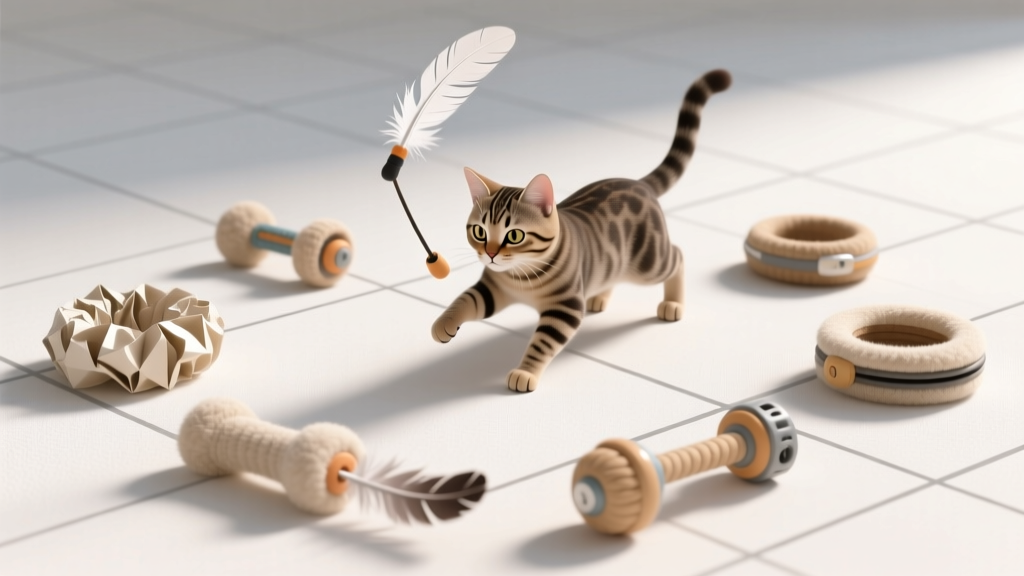
- Environmental Enrichment That Works: Not just toys — think 'prey sequence': 1) Stalking (laser pointer *ending* in a treat), 2) Pouncing (fishing rod toy), 3) Capturing (treat under cup), 4) Eating (kibble puzzle feeder). Rotate items weekly to prevent habituation.
- Desensitization for Fear-Based Behaviors: For cats terrified of carriers, leave it open with blankets and treats inside for weeks. Gradually close the door for 5 seconds while feeding — never force. This builds positive association, not trauma.
- Medication & Supplements (When Needed): FDA-approved drugs like fluoxetine (Reconcile) or gabapentin (for situational anxiety) are safe and effective under veterinary supervision. Natural options like Feliway diffusers (synthetic feline facial pheromones) show 62% efficacy in reducing urine marking in multi-cat homes (Cornell Feline Health Center, 2021).
Case study: Max, a rescue tom, attacked his owner’s ankles every evening. His log showed attacks occurred 15 minutes after dinner — coinciding with his peak hunting drive. Switching to scheduled 10-minute interactive play sessions *before* dinner, followed by a meal, reduced incidents by 95% in two weeks. His 'bad behavior' was predatory energy with no outlet.
4. When to Call a Professional — And How to Choose One
Not all behavior issues resolve with DIY strategies. Seek certified help if:
- Your cat shows sudden, severe aggression (biting hard enough to break skin, growling without warning)
- There’s self-injury (excessive licking causing bald patches or sores)
- Behavior worsens despite consistent environmental adjustments
- You have multiple cats and tension is escalating (hissing, blocking access to resources, weight loss)
Look for credentials: CAVB (Certified Applied Animal Behaviorist), DACVB (Diplomate of the American College of Veterinary Behaviorists), or IAABC (International Association of Animal Behavior Consultants)-certified feline specialists. Avoid trainers who use prong collars, shock devices, or dominance theory — these are outdated and harmful.
| Solution Type | Best For | Time to See Results | Risk Level | Professional Oversight Needed? |
|---|---|---|---|---|
| Environmental enrichment | Mild stress, boredom-related scratching/zoomies | 1–3 weeks | None | No |
| Feliway diffusers/sprays | Multi-cat tension, urine marking, travel anxiety | 3–7 days | Very low | No (but consult vet for chronic cases) |
| Prescription anti-anxiety meds | Severe aggression, self-mutilation, panic attacks | 2–6 weeks | Low (with monitoring) | Yes — requires vet diagnosis & follow-up |
| Behavior modification plan | Fear of carriers, vet visits, strangers | 2–8 weeks | None (if done correctly) | Recommended for complex cases |
| Homeopathy/herbal supplements | Mild anxiety support (adjunct only) | 2–4 weeks | Low–moderate (quality varies) | Yes — discuss with vet to avoid interactions |
Frequently Asked Questions
Why does my cat bite me gently during petting?
This is almost always 'petting-induced aggression' — a sign of overstimulation, not affection. Cats have sensitive nerve endings; repetitive stroking triggers discomfort long before humans notice. Watch for early cues: tail twitching, skin rippling, flattened ears, or dilated pupils. Stop petting *before* the bite — and reward calm tolerance with treats. Never punish; it teaches your cat that hands equal danger.
Is spraying urine the same as inappropriate urination?
No — and confusing them delays proper care. Spraying is a vertical, territorial marking behavior (back legs stiff, tail quivering, small amount of urine). Inappropriate urination is horizontal, often in sinks/bathtubs, and involves larger volumes — strongly suggesting medical issues like UTIs or kidney disease. Always test urine via vet visit before assuming it’s 'just behavior.'
Can older cats learn new behaviors — or is 'you can’t teach an old cat new tricks' true?
It’s a myth. Senior cats absolutely can adapt — but require patience, consistency, and accommodations for age-related changes (reduced mobility, hearing loss, cognitive decline). Use high-value rewards, shorter sessions (3–5 minutes), and eliminate physical barriers (e.g., place litter boxes on every floor). A 2020 study in Applied Animal Behaviour Science showed 78% of cats aged 10+ successfully adopted new routines with modified reinforcement schedules.
My cat hisses at visitors — will getting another cat help?
Almost never — and often makes it worse. Introducing a second cat adds social pressure and resource competition, escalating anxiety. Hissing is a fear signal; forcing proximity increases stress. Instead, create safe zones (closed rooms with food/water/litter), use Feliway, and let your cat observe guests from a distance — rewarding calm observation with treats. Desensitization takes time, but builds lasting confidence.
Do declawed cats have more behavior problems?
Yes — significantly. Declawing (onychectomy) is amputation of the last bone of each toe. It causes chronic pain in 20–40% of cases (JAVMA, 2017), leading to increased aggression, litter box avoidance (due to paw pain on litter), and anxiety. Many countries ban it. If your cat is declawed and showing 'bad behavior,' pain management and environmental adaptations are essential first steps.
Common Myths About Cat Behavior
Myth #1: 'Cats are aloof and don’t form deep bonds.'
False. fMRI studies show cats experience attachment to owners comparable to dogs and infants — they just express it differently (slow blinks, head-butting, following you room-to-room). Ignoring this leads to misreading their needs as 'indifference.'
Myth #2: 'If I ignore bad behavior, it will go away.'
Also false. Ignoring doesn’t remove the underlying cause — pain, fear, or unmet needs persist. Unaddressed stress compounds, often worsening behavior or triggering health issues like cystitis or dermatitis. Proactive, compassionate intervention is key.
Related Topics (Internal Link Suggestions)
- Cat Litter Box Problems — suggested anchor text: "why is my cat peeing outside the litter box"
- Feline Stress Signs — suggested anchor text: "subtle signs your cat is stressed"
- Enrichment Ideas for Indoor Cats — suggested anchor text: "indoor cat enrichment activities"
- When to See a Cat Behaviorist — suggested anchor text: "cat behaviorist near me"
- Safe Cat Calming Products — suggested anchor text: "best calming aids for cats"
Your Next Step: Shift from Judgment to Insight
So — is bad behavior in cats real? Only if we define 'bad' as behavior that harms their welfare or your relationship. But in truth, every scratch, bite, or yowl is data — a clue in a puzzle you’re fully equipped to solve. Start today: Grab a notebook, observe one behavior without judgment for 48 hours, and ask yourself: 'What need is my cat trying to meet right now?' That question alone changes everything. Then, pick *one* strategy from this guide — whether it’s adding a second litter box, scheduling daily play, or calling your vet for a wellness check — and commit to it for 10 days. Small, consistent actions build profound trust. Your cat isn’t broken. They’re speaking a language you’re learning to hear — and that understanding is where true companionship begins.