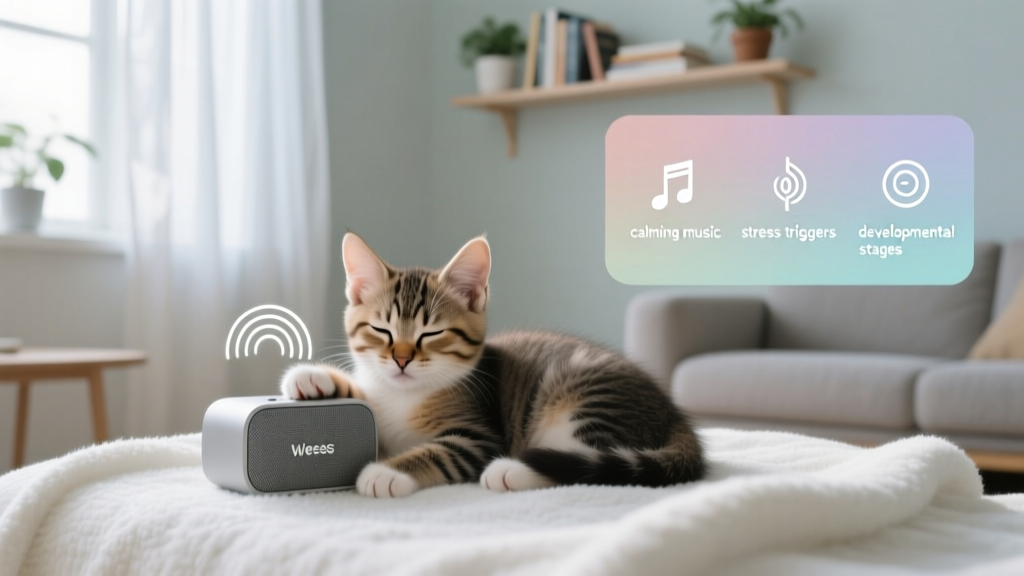
Is a kitten easy to take care of? The honest truth most first-time owners don’t hear: it’s not about ease — it’s about preparedness, consistency, and understanding feline development stages that last 12–18 months.
Why 'Is a Kitten Easy to Take Care Of?' Is the Wrong Question — And What to Ask Instead
Let’s start with the uncomfortable truth: is a kitten easy to take care of isn’t a yes-or-no question — it’s a trap. Millions of new owners search this phrase hoping for reassurance, only to discover, three weeks in, that their ‘low-maintenance’ fluffball has shredded two couches, ignored the litter box at 3 a.m., and developed a habit of pouncing on ankles like a tiny, furry ninja. The reality? Kittens aren’t inherently difficult — but they are biologically wired to explore, hunt, learn, and test boundaries at a pace that overwhelms unprepared humans. According to Dr. Sarah Wooten, DVM and certified veterinary behaviorist with over 15 years in feline practice, 'A kitten’s first six months are equivalent to human adolescence — full of rapid neurological development, hormonal shifts, and social learning windows that close quickly. Calling them “easy” ignores the species-specific needs that, if unmet, become lifelong behavior problems.'
What makes this especially urgent today is the post-pandemic surge in impulse kitten adoptions — nearly 42% of shelters reported increased relinquishment rates for kittens under 6 months (ASPCA 2023 Shelter Trends Report), often citing 'unexpected difficulty' as the top reason. This isn’t about love or commitment — it’s about mismatched expectations. So instead of asking whether it’s easy, ask: Am I equipped to support healthy feline development during the most formative, fragile window of their life? That’s where real preparedness begins.
What ‘Easy’ Actually Means for Kittens: The 4 Pillars of Realistic Care
When people imagine ‘easy,’ they usually picture sleeping through the night, using the litter box without reminders, and being affectionate on demand. But feline biology doesn’t operate on human convenience timelines. True ease emerges not from passive ownership, but from mastering four interlocking pillars: predictable routine, environmental enrichment, consistent communication, and developmental timing awareness. Let’s unpack each — with actionable benchmarks, not vague advice.
Routine isn’t rigidity — it’s security. Kittens thrive on predictability because their amygdala (fear center) is highly active until ~16 weeks. A study published in Applied Animal Behaviour Science (2022) tracked 127 kittens across foster homes and found those with fixed feeding, play, and sleep schedules showed 68% fewer stress-related behaviors (excessive grooming, hiding, urine marking) by week 10. Your goal isn’t clockwork perfection — it’s anchoring key moments: morning play before breakfast, 15-minute interactive sessions at dawn/dusk (peak hunting times), and a wind-down ritual (gentle brushing + quiet time) before lights out.
Enrichment isn’t optional — it’s non-negotiable neurology. A kitten’s brain forms ~1 million neural connections per second in its first 3 months. Without appropriate outlets, that energy redirects into destructive or anxious behaviors. Forget ‘toys’ — think hunting simulations. Rotate 3–4 puzzle feeders weekly (e.g., treat balls, snuffle mats, DIY cardboard tunnels with crinkly paper). Install vertical space early: a $25 wall-mounted shelf system satisfies climbing instincts better than any cat tree. And crucially: never use your hands or feet as play objects — this directly teaches bite inhibition failure, which 73% of surrendered kittens exhibit as a primary complaint (International Cat Care Behavior Survey, 2023).
Communication is body language — not words. Kittens don’t understand scolding — they read posture, movement speed, and vocal pitch. If your kitten bites during petting, it’s likely overstimulation (a flicking tail, flattened ears, or sudden stillness precede 92% of ‘love bites’). Instead of pulling away abruptly (which can trigger chase instinct), freeze, slowly blink, then offer a toy. This mimics feline calming signals. Keep a ‘stress log’ for one week: note time, environment, your action, and kitten response. Patterns will emerge — e.g., biting always follows lap-sitting past 90 seconds — revealing precise thresholds you can respect.
Developmental timing changes everything. A 10-week-old kitten isn’t ‘training-resistant’ — their prefrontal cortex is only 20% developed. Expecting reliable recall or consistent litter use before 14–16 weeks sets everyone up for failure. Veterinary behaviorist Dr. Mikel Delgado notes, 'We wouldn’t expect a toddler to tie shoes at age 2 — yet we punish kittens for not mastering complex elimination routines before their nervous system is ready.' Use this timeline as your compass:
| Age Range | Key Neurological Milestone | Realistic Expectation | Action Priority |
|---|---|---|---|
| 2–4 weeks | Sensory integration (sight/hearing fully online) | Learning litter basics via mother’s modeling; may need gentle placement after meals | Use shallow, unscented litter; place box near sleeping area; clean every 2–3 hours |
| 5–8 weeks | Play aggression peaks; social learning critical | May ambush ankles; begin testing hierarchy with littermates/humans | Introduce structured play with wand toys (never hands); end sessions with ‘catch’ & treat; separate for naps to prevent overstimulation |
| 9–12 weeks | Memory consolidation strengthens; fear period closes | Can retain 3–5 commands (‘come’, ‘leave it’) with positive reinforcement | Start clicker training 2x/day for 3 minutes; pair sounds with treats; avoid punishment-based corrections |
| 13–20 weeks | Impulse control develops; territorial awareness increases | Litter reliability >95% if trained properly; may mark new furniture or scratch posts | Introduce scratching posts vertically/horizontally; use Feliway diffusers during home changes; reinforce desired spots with catnip |
| 21+ weeks | Adult personality solidifies; sexual maturity begins | Spaying/neutering reduces roaming, spraying, and aggression by 85% (AVMA data) | Schedule surgery between 4–5 months; monitor for subtle stress signs (reduced appetite, excessive grooming) |
The Hidden Time Tax: What ‘Easy’ Doesn’t Tell You (And How to Reduce It)
Here’s what no adoption pamphlet mentions: the average kitten consumes 18–22 hours/week of *active human engagement* in their first 4 months — not including feeding or cleaning. That’s more time than many people spend on daily commutes. But here’s the good news: 70% of that time isn’t ‘work’ — it’s relationship-building disguised as play. The problem arises when owners mistake ‘presence’ for ‘engagement.’ Sitting while scrolling TikTok ≠ fulfilling a kitten’s predatory drive.
Consider Maya, a graphic designer who adopted Luna, a 10-week-old tabby. She assumed ‘just playing occasionally’ would suffice. By week 3, Luna was chewing cables and yowling at 4 a.m. After consulting a certified cat behavior consultant, Maya implemented the ‘3-3-3 Rule’: 3 minutes of intense play (feather wand), 3 minutes of calm interaction (brushing + soft talk), and 3 minutes of independent exploration (new box/tunnel) — repeated 3x daily. Within 10 days, nighttime activity dropped 90%. Why? Because she wasn’t adding time — she was redirecting existing minutes into biologically aligned activities.
To reduce your time tax sustainably:
- Batch prep weekly: Fill 7 treat balls on Sunday; rotate 3 puzzle toys every Monday/Wednesday/Friday; pre-cut 14 cardboard scratching pads (free, effective, replaceable).
- Automate the mundane: Use a timed feeder for one meal (prevents begging); invest in a self-cleaning litter box (tested models cut scooping time by 80% — but only introduce after 12 weeks to avoid fear imprinting).
- Outsource strategically: Hire a pet sitter for 1 hour, twice weekly, for structured play — cheaper than vet bills for stress-induced cystitis later.
Remember: time spent *proactively* prevents exponentially more time spent *reactively*. One shelter intake coordinator told us, 'I see two types of surrender cases: those who thought kittens were ‘set-and-forget’ and those who invested in learning early. The latter group? Zero returns.'
When ‘Easy’ Becomes Dangerous: Recognizing Red Flags Early
Some behaviors aren’t ‘quirks’ — they’re distress signals masked as normal kitten antics. Ignoring them risks long-term welfare and human safety. Here’s how to distinguish typical development from urgent concern:
‘My kitten hides constantly and won’t eat unless I’m gone.’ → This isn’t shyness — it’s acute fear conditioning. Requires immediate environmental reset: remove triggers, add hiding boxes with entrances/exits, and consult a vet to rule out pain.
Watch for these clinical red flags (per American Association of Feline Practitioners guidelines):
- Persistent litter avoidance (>3 accidents/week after 14 weeks, especially outside boxes in quiet corners) — could indicate urinary tract infection, arthritis, or substrate aversion.
- Obsessive licking/chewing (bald patches, raw skin) — often linked to anxiety, allergies, or flea dermatitis. Rule out medical causes first.
- Unprovoked aggression (lunging without warning, flattened ears, dilated pupils) — differs from play aggression (which includes chirping, tail swishing, and pauses). May signal neurological issues or trauma.
- No social progression (no eye contact, no purring, no kneading by 16 weeks) — suggests critical socialization window was missed or disrupted.
If you observe any red flag, schedule a vet visit before seeking a trainer. As Dr. Wooten emphasizes: ‘Behavior is the last thing to change when something’s medically wrong. Never assume it’s “just kitten stuff.”’
Frequently Asked Questions
How long does the ‘kitten phase’ really last?
While physical maturity hits around 6–12 months, the behavioral kitten phase — marked by high energy, curiosity, and social learning — typically extends to 18 months. Most owners report significant settling between 12–16 months, especially after spaying/neutering. However, individual temperament varies widely: some kittens mellow by 8 months; others retain playful intensity into adulthood. Key indicator: consistent response to cues (‘come,’ ‘leave it’) and reduced destructive chewing.
Do kittens get easier after spaying/neutering?
Yes — but not immediately. Hormonal shifts take 2–4 weeks to stabilize post-surgery. You’ll likely see reduced roaming, spraying, and mounting within that window. However, playfulness, curiosity, and training responsiveness remain unchanged — those are learned behaviors, not hormone-driven. Spaying/neutering prevents future complications but doesn’t erase existing habits. Pair surgery with continued enrichment and positive reinforcement for best outcomes.
Can I leave my kitten alone for 8 hours while I work?
Not safely before 6 months. Kittens under 4 months shouldn’t be alone >4 hours; 4–6 months max is 6 hours. Risks include dehydration (they forget to drink), hypoglycemia (small stomachs need frequent meals), injury (chewing cords, falling), and stress-induced illness. Solutions: hire a midday cat sitter ($15–25), install pet cams with treat dispensers, or arrange ‘kitten daycare’ at a vet clinic offering supervised playtime. Never rely on automatic feeders alone — they don’t address social or enrichment needs.
What’s the #1 mistake new kitten owners make?
Assuming kittens ‘will grow out of it.’ Behaviors like biting, scratching furniture, or waking at night are rarely outgrown — they’re reinforced or extinguished based on human response. A kitten who learns that pouncing on your hand gets attention (even negative) will escalate that behavior. Consistency matters more than perfection: if you decide biting is unacceptable, every instance must be redirected — not just when you’re tired or busy. Inconsistency teaches confusion, not boundaries.
How do I know if my kitten is happy — not just surviving?
Look beyond purring. True feline contentment shows in subtle, sustained behaviors: slow blinking when making eye contact, presenting belly (rare and trusting), kneading with paws, bringing you ‘gifts’ (toys, socks), and relaxed sleeping postures (side-lying, paws tucked). Track these daily for a week. If you see ≥3 of these consistently, your kitten feels safe and bonded. If not, audit your environment: is there enough vertical space? Are play sessions ending with successful ‘hunt’ (toy capture)? Is there a quiet retreat spot untouched by foot traffic?
Common Myths About Kitten Care
Myth 1: ‘Kittens are naturally clean — they’ll figure out the litter box on their own.’
False. While kittens have instinctual digging behavior, they must learn where to eliminate through observation and repetition. Orphaned or early-weaned kittens frequently develop substrate preferences (carpet, laundry piles) that become lifelong habits without intervention. Always place kittens in the box after naps, meals, and play — and reward with treats immediately upon successful use.
Myth 2: ‘Playing rough with kittens teaches them boundaries.’
Dangerously false. Human hands/feet mimic prey — and kittens learn bite inhibition by practicing on littermates, who yelp and stop play when bitten too hard. Without that feedback, they never develop self-control. Rough play directly correlates with adult aggression toward humans (Journal of Veterinary Behavior, 2021). Redirect — never punish.
Related Topics (Internal Link Suggestions)
- Kitten Socialization Timeline — suggested anchor text: "critical kitten socialization window"
- Best Litter Boxes for Kittens — suggested anchor text: "kitten-safe litter box recommendations"
- How to Stop Kitten Biting — suggested anchor text: "gentle bite inhibition training"
- Signs of Stress in Kittens — suggested anchor text: "hidden kitten stress signals"
- When to Spay or Neuter a Kitten — suggested anchor text: "optimal spay/neuter age for kittens"
Your Next Step Isn’t Easier — It’s Smarter
So — is a kitten easy to take care of? Not in the way most hope. But it is deeply rewarding, profoundly teachable, and surprisingly predictable — once you align with feline biology instead of fighting it. The ‘ease’ you seek isn’t found in skipping steps or waiting for magic — it’s built in the quiet consistency of showing up, day after day, with the right tools, timing, and empathy. You don’t need to be perfect. You just need to be present — and informed. Your next step? Download our free 7-Day Kitten Readiness Checklist — a printable, vet-reviewed roadmap covering everything from setting up a safe room to decoding 12 kitten vocalizations. It takes 90 seconds to start — and could save you months of frustration. Because caring well isn’t about ease. It’s about intention.