How to Understand Cat's Behavior Smart
Why Understanding Your Cat’s Behavior Smart Is the Single Most Underrated Skill in Cat Ownership
If you’ve ever wondered, ‘how to understand cat's behavior smart’, you’re not overthinking—you’re tuning into something vital. Cats don’t speak human, but they communicate constantly: through micro-expressions, spatial choices, scent marking, and rhythmic vocalizations. Yet most owners misread 60–70% of key signals—leading to unnecessary stress, litter box avoidance, redirected aggression, and even premature surrender to shelters. According to Dr. Mikel Delgado, certified cat behaviorist and researcher at the University of California, Davis, ‘Cats are among the most misinterpreted companion animals—not because they’re aloof, but because their language is quiet, context-dependent, and evolutionarily tuned for survival, not human convenience.’ This article gives you the cognitive toolkit to shift from guessing to *knowing*: not just what your cat does—but *why*, *when*, and *what to do next*—with zero jargon and maximum practicality.
The 3-Layer Decoding Framework: Body, Context, and History
Smart understanding starts with moving beyond surface-level observation. Veteran feline behavior consultant Dr. Sarah Heath (RCVS Specialist in Veterinary Behavioral Medicine) teaches a triad model: Body Language + Environmental Context + Individual History. Miss one layer, and interpretation collapses.
Body Language is your real-time data feed—but it’s rarely binary. A tail held high isn’t always confidence; if the tip quivers while the base is stiff, it signals intense focus or low-grade anxiety. Likewise, flattened ears mean fear—but only if paired with dilated pupils and crouched posture. If ears are flat *and* the cat is kneading with half-closed eyes on your lap? That’s contentment mixed with kittenhood nostalgia.
Context transforms meaning. A hiss during play with a new kitten is boundary-setting. The same hiss when a vacuum starts? A panic response rooted in auditory sensitivity (cats hear frequencies up to 64 kHz—twice that of humans). Always ask: What changed in the last 90 seconds? Was there a noise? A visitor? A shift in light or temperature?
History is the anchor. A rescue cat who was previously stray may avoid eye contact not out of distrust, but because direct gaze signaled threat in alley hierarchies. A cat adopted at 12 weeks who never learned appropriate play inhibition may ‘bite’ during petting—not from anger, but from underdeveloped impulse control. Keep a simple 2-week behavior log (we’ll show you how in Section 2) to spot patterns invisible in real time.
Your 5-Minute Daily Observation Protocol (Backed by Shelter Behavior Studies)
You don’t need hours—just consistency. A landmark 2022 study published in Applied Animal Behaviour Science tracked 187 indoor cats across 3 months using owner-led 5-minute daily scans. Those who followed this protocol reduced stress-related behaviors (overgrooming, hiding, urine marking) by 41% within 14 days—not because they changed their cats, but because they changed their *perception*.
- Minute 0–1: Note baseline posture. Is weight evenly distributed? Are whiskers forward (engaged) or pulled back (withdrawn)?
- Minute 1–2: Track movement flow. Does gait look fluid—or stiff/abrupt? Any pauses mid-stride? (A sudden freeze often precedes conflict or fear.)
- Minute 2–3: Observe eye & ear micro-movements. Blink rate matters: 1–2 slow blinks = calm connection; rapid blinking = discomfort or overstimulation.
- Minute 3–4: Map proximity choices. Where does your cat choose to be *relative to you, other pets, windows, or doorways*? Distance isn’t rejection—it’s data about perceived safety zones.
- Minute 4–5: Record one ‘surprise signal’—something unusual or inconsistent with known patterns. (e.g., ‘Purred while hiding under bed’ or ‘Chirped at blank wall’). These outliers reveal hidden triggers or emerging needs.
This isn’t surveillance—it’s relationship mapping. Over time, you’ll notice your cat’s ‘baseline rhythm’: when they nap, when they patrol, when they seek interaction vs. solitude. Deviations become meaningful alerts—not mysteries.
The Purr Paradox & Other Vocalization Truths (Debunked by Acoustic Analysis)
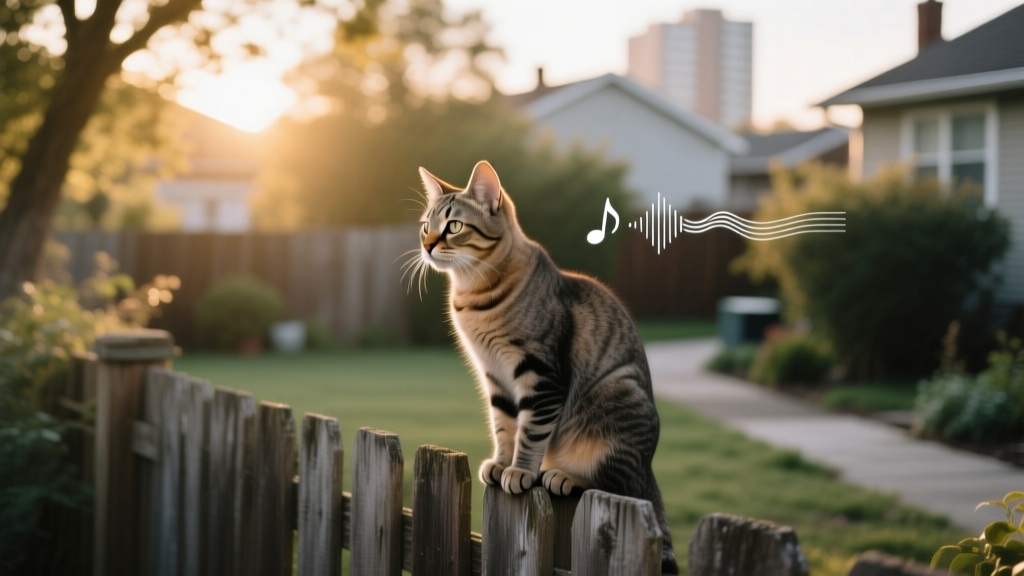
Vocalizations are the most misunderstood layer of cat communication—largely because we project human emotion onto sounds. But acoustic research tells a different story. Dr. Susanne Schötz’s team at Lund University analyzed over 7,000 meows across 32 cats using spectrographic analysis—and found no universal ‘happy’ or ‘angry’ meow. Instead, meaning lives in prosody: pitch contour, duration, and harmonic complexity.
- Purring occurs in pain, labor, injury recovery, and contentment. Its 25–150 Hz frequency stimulates bone and tissue regeneration—a built-in healing mechanism. So if your cat purrs while limping, don’t assume comfort—check for injury.
- Trilling (a chirp-like, rising tone) is almost exclusively affiliative—used by mothers to call kittens and by cats to greet trusted humans. It’s the feline equivalent of ‘Hey, I’m here—and I like you.’
- Yowling at night in senior cats (>10 years) correlates strongly with cognitive dysfunction syndrome (feline dementia) in 73% of cases per Cornell Feline Health Center data—not ‘attention-seeking.’
- Hissing/Growling is never ‘spite.’ It’s a hardwired distance-increasing signal—like shouting ‘STOP’ in a language your cat invented for survival. Punishing it suppresses warning signs, increasing bite risk.
Here’s what to do instead: When vocalizations shift, first rule out pain (schedule vet visit), then assess environmental stressors (new pet, construction noise, disrupted routine), then adjust your response—not theirs.
Decoding the “Unreadable” Signals: Tail, Eyes, and Paw Language
Cats speak with their entire bodies—but three areas carry outsized meaning. Let’s break down what each truly says—and what most owners get wrong.
| Signal | What Most Owners Think | What Science Says | Smart Response |
|---|---|---|---|
| Tail held high, tip curled like a question mark | “She’s happy and confident.” | Indicates friendly interest—but also mild uncertainty. Common when approaching new people or novel objects. Not full confidence; it’s ‘I’m open, but I’m assessing.’ | Offer a slow blink + sit quietly nearby. Don’t reach. Let them initiate contact. |
| Slow blink (eyes narrowing then closing fully) | “He’s sleepy or bored.” | A deliberate, voluntary signal of trust and safety—equivalent to a human smile. Requires vulnerability (closing eyes near potential threat). | Return it! Blink slowly back. Do it 2–3 times. Watch for reciprocal blinks—the strongest sign of bonding. |
| Paw-kneading (“making biscuits”) | “She’s just being cute.” | An infantile behavior tied to nursing stimulation. Triggers endorphin release—so it’s self-soothing, not ‘affection’ per se. Often appears when cat feels safe *or* anxious. | Observe context: On your lap with purring? Comfort. On a blanket while avoiding guests? Anxiety cue. Provide soft surfaces + safe spaces either way. |
| Ears rotated sideways (“airplane ears”) | “He’s annoyed.” | Signals acute stress or fear—not irritation. Ears flatten *before* fight-or-flight activates. This is your last clear warning before biting or fleeing. | Immediately stop petting/talking. Back away 3 feet. Offer a covered carrier or cardboard box as instant refuge. |
Frequently Asked Questions
Do cats really recognize their names—or are they just responding to tone?
Yes—they do recognize their names, but selectively. A 2019 study in Scientific Reports confirmed cats distinguish their name from similar-sounding words *and* ignore names of other cats in the household. However, they often choose not to respond—not due to ignorance, but because domestication hasn’t selected for obedience like dogs. Response rates jump 40% when the name is paired with positive outcomes (treats, play) versus neutral tones.
Why does my cat stare at me silently? Is it judging me?
Not judging—assessing. Sustained, unblinking eye contact *is* threatening in cat language… unless accompanied by slow blinks. If your cat holds your gaze without blinking, they’re likely monitoring your movements for predictability (e.g., ‘Will you pick me up now?’ or ‘Is that bag going to make noise?’). Pair it with relaxed posture? They’re calmly observing. Add stiff body + dilated pupils? They’re on alert.
My cat brings me dead mice/birds. Is this a gift—or is she trying to teach me to hunt?
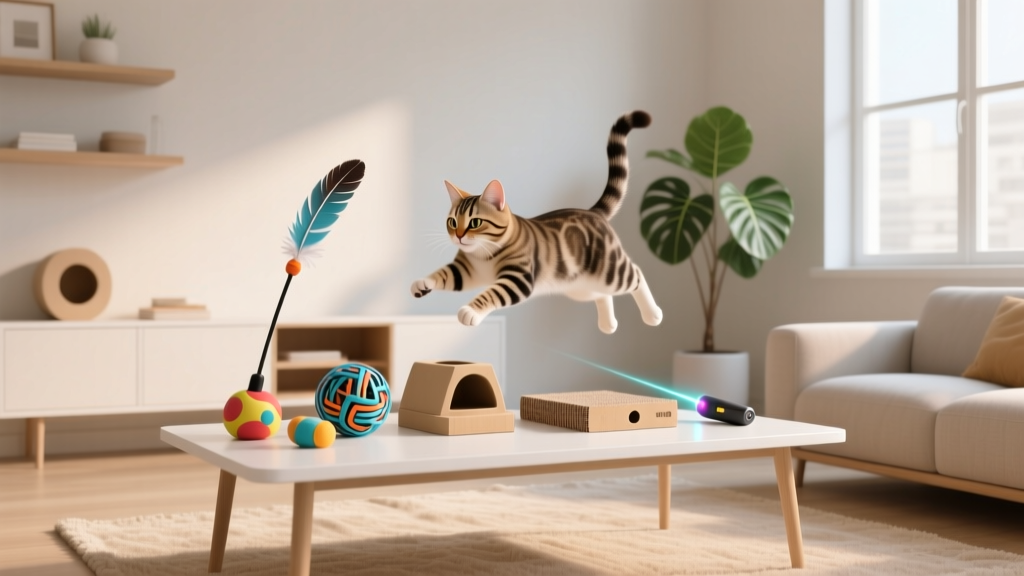
It’s both—and neither. From an ethological perspective, this is maternal behavior: mother cats bring prey to kittens to teach hunting skills. When your cat brings you prey, she’s treating you as an inept, dependent offspring. It’s not ‘gift-giving’ in the human sense, but deep-seated caregiving instinct. Redirect with interactive play (feather wands, laser pointers) for 15 minutes twice daily—this satisfies the hunt-catch-kill sequence safely.
Can cats feel guilt or jealousy?
No—neurologically, they lack the prefrontal cortex development required for complex social emotions like guilt or moral judgment. What looks like ‘guilt’ (cowering after knocking something over) is actually anticipatory fear of your reaction—based on past scolding. Jealousy-like behavior (interruptions when you hug others) reflects resource-guarding instincts (you = safety resource) or attention-seeking shaped by reinforcement history—not envy.
How long does it take to truly understand my cat’s unique behavior language?
Most owners gain reliable pattern recognition in 4–6 weeks with consistent daily observation. But mastery—the ability to predict subtle shifts before escalation—takes 3–6 months. Why? Because cats modulate signals based on *your* responses. The more accurately you interpret and adjust, the more clearly they communicate. It’s a feedback loop—not a static codebook.
Common Myths About Cat Behavior
- Myth #1: “Cats are solitary animals who don’t need companionship.” — While cats aren’t pack-dependent like dogs, decades of field research (including Dr. John Bradshaw’s work at Bristol University) confirm they form complex, multi-layered social bonds—with humans *and* other cats—when given choice and proper introduction. Solitary behavior often reflects trauma, inadequate early socialization, or environmental stress—not innate preference.
- Myth #2: “If my cat sleeps on me, she loves me more than anyone else.” — Warmth, scent security, and pressure-point comfort drive this behavior more than hierarchy or affection ranking. Cats sleep where thermoregulation and safety intersect. Many cats sleep on backpacks, laptops, or laundry piles with equal enthusiasm.
Related Topics (Internal Link Suggestions)
- How to Introduce a New Cat to Your Household — suggested anchor text: "stress-free cat introduction guide"
- Why Is My Cat Peeing Outside the Litter Box? — suggested anchor text: "litter box aversion solutions"
- Best Interactive Toys for Indoor Cats — suggested anchor text: "indoor cat enrichment toys"
- Signs of Pain in Cats (Subtle Indicators) — suggested anchor text: "hidden cat pain symptoms"
- How to Stop Cat Biting During Petting — suggested anchor text: "petting-induced aggression fix"
Conclusion & Your Next Step
Understanding your cat’s behavior smart isn’t about becoming a feline mind-reader—it’s about cultivating respectful, responsive observation. It’s recognizing that every twitch, pause, and posture shift is data—not drama. You now have the framework (Body + Context + History), the daily protocol (5-minute scans), the vocal truth (purr ≠ happiness), and the decoding table for high-stakes signals. Your next step? Start tonight. Set a timer for 5 minutes. Sit quietly—no phone, no agenda. Watch. Log one thing you’ve never noticed before. Then, tomorrow, compare. In 7 days, you’ll spot patterns no app or book can teach you—because they’re yours, earned through presence. That’s not just smart behavior understanding. That’s the foundation of true companionship.