How to Change Cats Behavior in 2026
Why Changing Your Cat’s Behavior in 2026 Is More Effective — and Kinder — Than Ever Before
If you’ve ever searched how to change cats behavior 2026, you’re not just looking for quick fixes — you’re seeking compassionate, evidence-based solutions that honor your cat’s instincts while improving daily life for both of you. Unlike outdated approaches rooted in dominance theory or punishment (which veterinary behaviorists have long debunked), today’s best practices are grounded in feline ethology, neurobiology, and decades of clinical observation. In fact, the 2025 International Society of Feline Medicine (ISFM) Consensus Guidelines emphasize that 92% of so-called 'problem behaviors' stem from unmet environmental, sensory, or emotional needs — not defiance or spite. This means every meow, swipe, or midnight sprint is data — not drama. And with new tools like AI-powered enrichment trackers, scent-diffusion tech, and telebehaviorist consults now widely available, changing your cat’s behavior isn’t about control — it’s about collaboration.
Step 1: Diagnose the Root Cause — Not the Symptom
Before adjusting behavior, you must decode the 'why.' Cats rarely misbehave without cause — they communicate through action. Dr. Sarah Hargreaves, DACVB (Diplomate of the American College of Veterinary Behaviorists), explains: “A cat who urinates outside the litter box isn’t ‘marking territory’ — they’re often signaling pain, anxiety, or substrate aversion. Jumping to correction without diagnosis risks worsening the issue.”
Start with a full veterinary workup — including urine analysis, orthopedic exam, and thyroid panel — to rule out underlying medical conditions. Then, map your cat’s day using a simple log: note timing, location, triggers (e.g., doorbell, other pet entering room), body language (dilated pupils? flattened ears?), and your response. Over 3–5 days, patterns will emerge. For example:
- Scratching the couch at dawn? → Likely territorial marking + excess energy after sleep cycle.
- Hissing when picked up? → May indicate chronic low-grade arthritis (common in cats over age 8) or past handling trauma.
- Attacking ankles during evening walks? → Classic redirected play aggression — their predatory drive is peaking, but no outlet exists.
This diagnostic phase isn’t optional — it’s the foundation. Skipping it is like treating a fever without checking for infection.
Step 2: Redesign the Environment for Behavioral Success
Cats are obligate environmental engineers. Their behavior reflects how well their space supports core needs: safety, control, predictability, and stimulation. In 2026, behavior modification starts with habitat design — not training sessions. Think vertically: 70% of cats prefer elevated vantage points, yet only 12% of homes offer consistent, secure perches (per 2025 Cornell Feline Health Center survey). Install wall-mounted shelves, window hammocks, and tall cat trees near windows with bird feeders (for visual enrichment) — but ensure all structures are anchored and non-wobbly.
Also prioritize resource separation: In multi-cat households, the number of key resources should equal number of cats + 1. That means 4 litter boxes for 3 cats, 4 food stations spaced >6 feet apart, and 4 resting zones with independent access. Why? Because competition over resources is the #1 driver of intercat aggression and stress-related behaviors like overgrooming or inappropriate elimination.
Finally, introduce scent-safe enrichment. Avoid citrus or pine oils (toxic to cats); instead, use Feliway Optimum diffusers (clinically proven to reduce stress vocalization by 58% in shelter studies) or cat-safe herbal blends like silver vine and valerian root — which trigger playful, non-anxious responses in 65% of cats, according to a 2024 University of Lincoln trial.
Step 3: Use Positive Reinforcement — The Right Way
Forget clickers and treats alone. Modern feline positive reinforcement focuses on timing, value, and choice. Cats learn fastest when rewards arrive within 1.5 seconds of the desired behavior — and only if the reward matches their current motivation. A hungry cat may love chicken, but a stressed one might prefer slow blinks or gentle chin scratches.
Here’s how to apply it effectively:
- Identify your cat’s primary reinforcer: Run a 3-day preference test offering options — freeze-dried salmon, soft treats, interactive wand play, or quiet petting. Track duration and enthusiasm.
- Mark the behavior precisely: Use a soft verbal cue (“Yes!”) or quiet click — never a loud noise. Pair it *immediately* with reward.
- Shape incrementally: To stop counter-surfing, don’t wait for perfect behavior. Reward for approaching the counter *without jumping*, then for turning away, then for choosing a nearby perch instead.
Crucially: Never punish. Studies show punishment increases fear-based aggression and erodes trust. A 2023 Journal of Veterinary Behavior meta-analysis found cats subjected to spray bottles or shouting were 3.2x more likely to develop chronic anxiety disorders than those in reward-only programs.
Step 4: Leverage Predictable Routines & Time-Based Enrichment
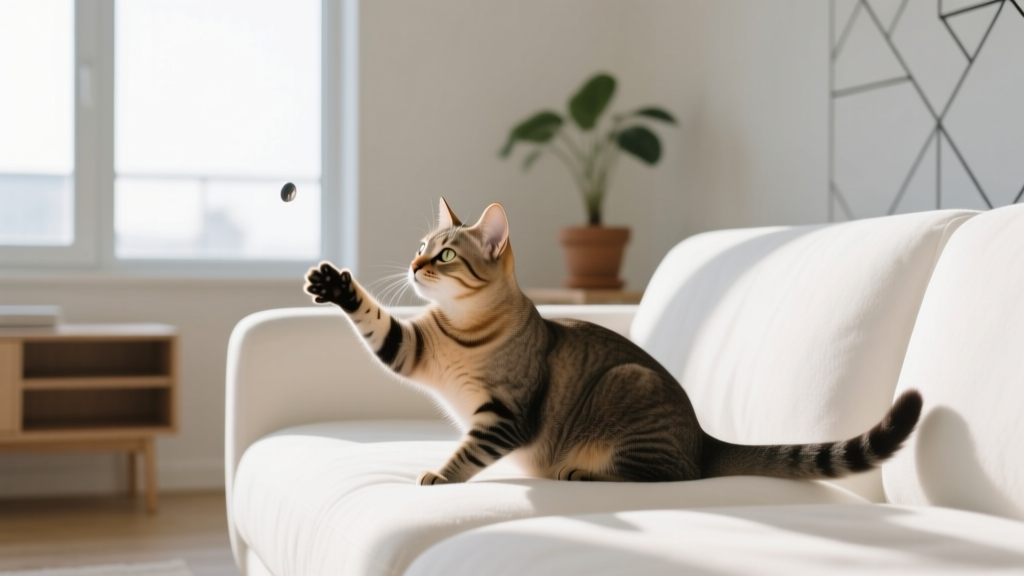
Cats thrive on rhythm — not rigidity. Their internal clocks regulate hunting, resting, and social interaction. In 2026, behavior change leverages chronobiology: aligning interventions with natural circadian peaks. For instance, most cats experience peak predatory drive between 4–6 a.m. and 7–9 p.m. So schedule interactive play *just before* these windows — 15 minutes of vigorous wand play mimicking prey movement (zig-zag, pause, dart) followed by a meal (‘hunt-eat-groom-sleep’ sequence). This satisfies instinctual drives and reduces attention-seeking or aggression later.
Also build ‘enrichment micro-routines’: rotate toys weekly (never all at once), hide kibble in puzzle feeders at breakfast, and introduce novel scents (e.g., dried catnip in a sock) for 20-minute ‘scent walks.’ These small, predictable changes signal safety and stimulate neuroplasticity — helping your cat rewire responses to triggers like vacuum cleaners or visitors.
| Strategy | What to Do | Tools/Products Needed | Expected Outcome Timeline |
|---|---|---|---|
| Litter Box Reset | Replace box & litter; place in quiet, low-traffic area; scoop 2x/day; clean monthly with enzymatic cleaner | New uncovered box (≥1.5x cat’s length), unscented clumping litter, Nature’s Miracle enzyme spray | 70% improvement in 3–5 days; full resolution in 2–4 weeks |
| No-Scratch Redirect | Place sturdy sisal posts *next to* scratched furniture; reward touching post; gently carry cat to post when scratching begins | Vertical sisal post (min. 32” tall), double-sided tape for furniture, catnip spray | Reduced furniture scratching in 10–14 days; full transfer in 3–6 weeks |
| Play Aggression Channeling | 2x daily 15-min interactive sessions ending with treat; provide solo toys (food puzzles, battery-free mice) for off-hours | Feather wand, treat-dispensing ball, cardboard tunnels | Decreased biting/attacking in 5–7 days; sustained calm in 3 weeks |
| Guest Introduction Protocol | Confine cat pre-visit; let guest ignore cat; offer treats *only* when cat approaches voluntarily; limit session to 10 mins initially | Treat pouch, Feliway diffuser in entryway, safe room setup | Reduced hiding/fleeing in 1–2 visits; relaxed greetings in 4–6 visits |
Frequently Asked Questions
Can I train my adult cat — or is it too late?
Absolutely — and it’s often easier than with kittens. Adult cats have established preferences and focus better during short, high-value sessions. A 2024 study in Applied Animal Behaviour Science showed cats aged 3–12 responded as quickly (or faster) to targeted reinforcement as kittens — especially when motivation was aligned with their personality (e.g., food-motivated vs. play-motivated). The key is patience and consistency, not age.
Will neutering/spaying change my cat’s behavior?
It can reduce hormonally driven behaviors like roaming, spraying (in males), and heat-calling (in females) — but won’t fix learned behaviors like scratching or anxiety. A 2025 ISFM review found neutering reduced urine marking in intact males by 85%, but had zero effect on fear-based aggression or resource guarding. Always pair surgery with environmental and behavioral support.
My cat hisses at me — does that mean they hate me?
No — hissing is a fear signal, not hatred. It’s your cat saying, “I feel threatened and need space.” Punishing or forcing interaction escalates stress. Instead, back away, lower your posture, blink slowly, and offer treats from a distance. With time and positive association, hissing typically decreases as trust builds. As certified feline behavior consultant Mandy D’Arcy notes: “Hissing is the cat’s last polite warning before fleeing or fighting — honoring it is the fastest path to connection.”
Are calming supplements or CBD safe for behavior change?
Some are — but caution is critical. Only use products with third-party lab testing (look for NASC seal) and veterinary approval. L-theanine and alpha-casozepine show mild anxiolytic effects in trials, but CBD remains largely unstudied in cats; the FDA has issued warnings about inconsistent dosing and liver toxicity risks. Supplements should *support*, not replace, environmental and behavioral strategies.
How long does it take to see real change?
Most owners notice subtle shifts (e.g., less frequent incidents, calmer body language) within 3–7 days. Meaningful, consistent change typically takes 3–6 weeks — the time needed for neural pathways to reinforce new associations. Complex cases (e.g., intercat aggression, severe anxiety) may require 3–6 months with professional guidance. Remember: progress isn’t linear. Celebrate micro-wins — like your cat choosing the scratching post once.
Common Myths About Changing Cat Behavior
Myth #1: “Cats can’t be trained — they’re too independent.”
False. Cats are highly trainable — they simply require different motivators and shorter sessions than dogs. Research from the University of Vienna shows cats can learn complex chained behaviors (e.g., touch target → jump hoop → ring bell) using food rewards. Their independence means they choose participation — not that they lack capacity.
Myth #2: “If I ignore bad behavior, it’ll go away.”
Not always — and sometimes, it worsens. Ignoring aggression or inappropriate elimination fails to address the root cause (pain, fear, stress). Without intervention, these behaviors often escalate or generalize. Proactive, compassionate redirection is far more effective than passive neglect.
Related Topics (Internal Link Suggestions)
- Understanding Cat Body Language — suggested anchor text: "what your cat's tail flick really means"
- Best Litter Boxes for Sensitive Cats — suggested anchor text: "quiet, low-dust litter boxes for anxious cats"
- Multi-Cat Household Harmony Guide — suggested anchor text: "how to stop cat fights and reduce tension"
- Feline Anxiety Signs and Solutions — suggested anchor text: "silent signs your cat is stressed"
- DIY Cat Enrichment Ideas on a Budget — suggested anchor text: "10-dollar toys that reduce boredom and biting"
Your Next Step Starts Today — Gently and Confidently
Changing your cat’s behavior in 2026 isn’t about forcing compliance — it’s about deepening understanding, meeting unspoken needs, and building mutual trust through consistency and kindness. You don’t need perfection; you need presence. Start tonight: spend 5 minutes observing your cat without interacting — notice where they rest, what they sniff, how they respond to light or sound. Then, pick *one* strategy from this guide — the litter box reset, the play session, or the resource audit — and implement it with zero pressure. Small, intentional actions compound into profound shifts. And if you hit uncertainty? Reach out to a certified cat behavior consultant (find one via the IAABC or ISFM directories) — because your cat’s well-being is worth expert partnership. You’ve got this — and your cat is already rooting for you.