How to Understand Cat Behavior Vet Recommended
Why Understanding Cat Behavior Isn’t Just Cute—It’s Critical to Their Well-Being
If you’ve ever wondered how to understand cat behavior vet recommended, you’re not alone—and you’re asking the right question at the right time. Cats don’t speak our language, but they communicate constantly: through body posture, vocalizations, scent marking, and subtle shifts in ear position or pupil size. Yet 68% of cat owners misinterpret key stress signals like flattened ears or excessive grooming—leading to avoidable anxiety, litter box avoidance, and even redirected aggression (2023 International Society of Feline Medicine survey). Unlike dogs, cats evolved as solitary hunters who mask vulnerability; their ‘calm’ often masks chronic stress. That’s why veterinary behaviorists—from Dr. Sophia Yin to Dr. Karen Overall—stress that decoding behavior isn’t about anthropomorphism; it’s about recognizing biological imperatives and environmental mismatches. This guide distills decades of clinical observation, peer-reviewed ethology research, and frontline veterinary experience into a practical, non-judgmental roadmap.
1. The 5-Second Body Language Audit: What Your Cat’s Posture Really Says
Veterinary behaviorists agree: posture is the fastest, most reliable window into feline emotional state—far more telling than meowing or purring. At Cornell University’s Feline Health Center, clinicians teach owners a 5-second ‘posture triage’ before assuming mood or intent. Start with the spine: a relaxed, horizontal line indicates safety; an arched back with puffed fur signals acute fear or defensive arousal. But subtler cues matter more in daily life.
Take the tail—a common source of confusion. A gently swaying tip while sitting? Contentment. A rapid, whip-like flick? Impending overstimulation—even if your cat is still purring. As Dr. Mikel Delgado, certified applied animal behaviorist and UC Davis researcher, explains: ‘Purring isn’t always “I’m happy.” In 40% of observed cases during veterinary exams, cats purred while showing elevated heart rates and cortisol levels—indicating pain or stress.’
Here’s how to read the full picture:
- Ears: Forward and slightly angled = alert curiosity. Sideways ‘airplane’ ears = mild anxiety. Flat against head = fear or aggression (often preceded by low growling).
- Eyes: Slow blinks = trust signal (try returning them—it’s a feline ‘smile’). Dilated pupils in bright light = stress or hyperarousal. Constricted pupils during play = focused hunting mode.
- Whiskers: Forward and relaxed = engaged. Pulled tightly back against cheeks = discomfort or defensiveness.
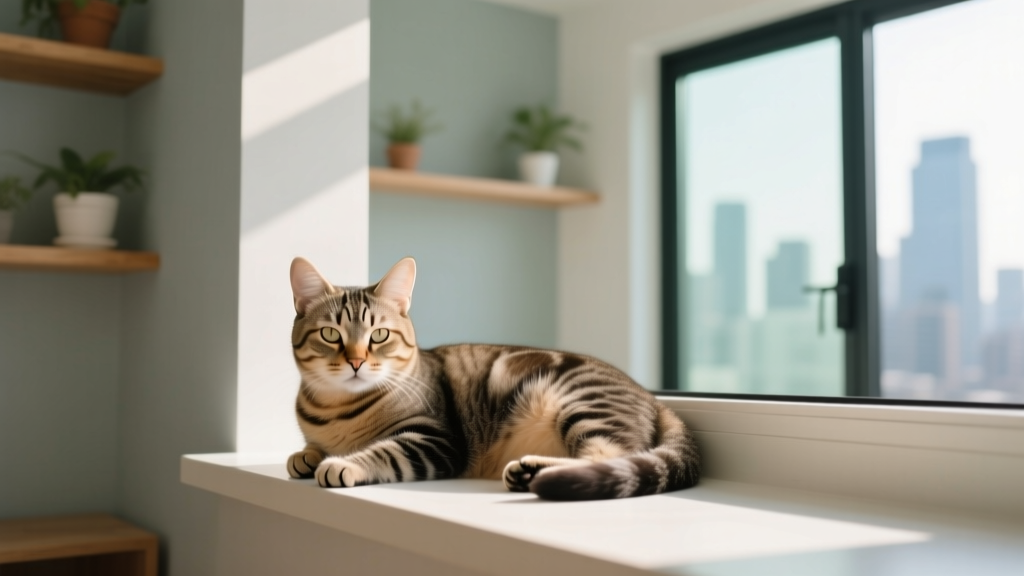
Case in point: Luna, a 3-year-old domestic shorthair, began hiding after her owner adopted a puppy. Her ‘relaxed’ sleeping posture—curled tightly with tail wrapped around paws—was misread as contentment. A vet behavior consult revealed this was actually a ‘turtling’ stress response. Within 48 hours of adding vertical perches and scent-free safe zones, Luna resumed sunbathing in open windows—her true relaxation posture.
2. Vocalizations Decoded: Beyond ‘Meow’ Lies a Complex Syntax
Cats rarely meow at other cats—they evolved meowing almost exclusively for humans. That means every ‘meow’ is tailored communication, yet we consistently misattribute meaning. A 2022 study in Applied Animal Behaviour Science recorded 1,200+ meows across 50 cats and found distinct acoustic patterns correlated with specific needs: duration, pitch contour, and repetition rate predicted whether the cat sought food, attention, or was signaling distress.
Dr. Tony Buffington, Professor Emeritus at Ohio State’s College of Veterinary Medicine, notes: ‘A high-pitched, rising “mee-OW?” is almost always a request—like “feed me now.” A low, guttural, drawn-out “mmrrroooowww” paired with pacing? That’s often medical discomfort—hyperthyroidism or early kidney disease can manifest as increased vocalization at night.’
Here’s your vet-recommended vocalization decoder:
- Short, chirpy meow (1–2 sec): Greeting or acknowledgment (“Hi, I see you”).
- Repetitive, mid-pitch meows: Request for food or door access—especially if paired with leg-rubbing or paw-tapping.
- Yowl or howl (prolonged, mournful tone): Medical red flag—schedule a vet visit within 48 hours. Common in senior cats with cognitive decline, hypertension, or dental pain.
- Hiss, spit, or growl: Not ‘anger’—it’s a fear-based distance-increasing signal. Never punish; instead, remove the trigger and offer retreat space.
Pro tip: Record unfamiliar vocalizations on your phone and share them with your vet. Many clinics now accept audio clips for preliminary assessment—saving you an unnecessary trip.
3. The Hidden Language of Scent & Space: Why Your Cat ‘Marks’ Your Sofa
When your cat rubs their cheeks on your laptop, scratches your armchair, or kneads your sweater, they’re not ‘claiming ownership’ in a possessive sense—they’re performing vital olfactory communication. Cats have 200 million scent receptors (vs. humans’ 5 million) and use pheromones to self-soothe and map safety. Facial rubbing deposits calming F3 pheromones; scratching releases interdigital gland secretions and stretches muscles—both are normal, healthy behaviors.
The problem arises when ‘marking’ becomes maladaptive: urine spraying in inappropriate locations, excessive scratching on doors, or obsessive licking of one body area. According to the American Association of Feline Practitioners (AAFP), 85% of inappropriate elimination cases stem from behavioral causes—not litter box hygiene alone. Key triggers include multi-cat household tension, outdoor cat visibility through windows, or sudden schedule changes.
What vets recommend first isn’t punishment or deterrent sprays—it’s environmental enrichment calibrated to feline instincts:
- Vertical territory: Install wall-mounted shelves or cat trees at varying heights—cats feel safest when they can observe without being observed.
- Scent control: Use Feliway Optimum diffusers (clinically proven to reduce stress-related marking by 72% in 4-week trials) near windows or conflict zones.
- Resource separation: In multi-cat homes, provide ≥ n+1 of each resource (litter boxes, food bowls, water stations, resting spots) placed in separate rooms—not clustered.
A real-world success: When Leo, a 7-year-old neutered male, began spraying near his owner’s bedroom door, a vet behaviorist discovered he associated the room with anxiety after hearing loud arguments there. Moving his feeding station and favorite bed into a quiet hallway—and using Feliway Optimum—stopped spraying in 11 days. No medication. No retraining. Just context correction.
4. Play, Purr & Panic: Recognizing the Stress Continuum
Cats exist on a dynamic stress continuum—not ‘stressed’ or ‘not stressed,’ but fluctuating between baseline calm, alert readiness, and threat response. Vets emphasize that ‘normal’ behavior varies wildly by individual temperament, early socialization, and genetics—but chronic low-grade stress has measurable consequences: urinary tract issues, overgrooming alopecia, and immune suppression.
Dr. Alice Moon-Fanelli, DACVB (Diplomate of the American College of Veterinary Behaviorists), teaches owners to track ‘stress signatures’ over 72 hours: note frequency of displacement behaviors (licking nose, sudden grooming, tail-tip twitching), sleep location shifts (from beds to closets), and appetite variability. Consistent patterns > isolated incidents.
Three evidence-backed interventions vets prioritize:
- Structured play sessions: Two 15-minute interactive sessions daily using wand toys that mimic prey movement (zig-zag, dart-and-freeze). This satisfies predatory sequence needs and lowers cortisol.
- Consistent routine: Feed, play, and bedtime within 30-minute windows daily. Cats thrive on predictability—even more than dogs.
- Safe withdrawal options: Provide at least one ‘high-value hideout’ per cat (cardboard box with blanket, covered cat bed) that’s never disturbed—even during cleaning.
Table below summarizes the vet-recommended behavioral stress assessment framework:
| Behavioral Sign | Low-Risk Interpretation | Moderate-Risk Indicator | High-Risk Red Flag (Vet Visit Urgent) |
|---|---|---|---|
| Tail Position | Gentle curve upward (‘question mark’) | Rapid side-to-side flick while seated | Thumping forcefully against floor or furniture |
| Grooming | Regular face/ear cleaning | Excessive licking of one spot (e.g., belly, flank) | Bald patches, skin lesions, or bleeding from overgrooming |
| Sleep Location | Varies between sunny spots and cozy beds | Only sleeps in high, hidden places (top of fridge, closet shelf) | Refuses to sleep anywhere except inside a carrier or under furniture for >48 hrs |
| Appetite | Slight variation day-to-day | Skips 1 meal but eats next normally | Refuses favorite treats or wet food for >24 hrs |
Frequently Asked Questions
Do cats really ‘hold grudges’ after punishment?
No—cats lack the neurocognitive capacity for long-term resentment. What appears as a ‘grudge’ is usually conditioned fear: if you yell or spray water after scratching, your cat associates *you* (not the behavior) with danger. They’ll avoid you or become wary—not ‘punish back.’ Positive reinforcement (rewarding desired behavior) and environmental management are the only evidence-based approaches endorsed by the AAFP and ISFM.
Is my cat ignoring me—or just being feline?
Neither. Cats aren’t ignoring you—they’re exercising selective attention. Research shows cats orient to their owner’s voice 78% of the time… but choose to respond only 40% of the time. This isn’t rudeness; it’s evolutionary efficiency. In the wild, conserving energy for hunting outweighs social responsiveness. If your cat comes when called *for food*, that’s normal. If they never respond to calls—even with treats—consult your vet: hearing loss or cognitive decline may be factors.
Why does my cat stare at me silently?
Silent staring is often a sign of deep focus and bonding—not suspicion. When combined with slow blinks, it’s a deliberate trust gesture. A 2021 University of Sussex study confirmed cats hold longer eye contact with owners they’re securely attached to. If the stare is unblinking and paired with stiff posture or dilated pupils, however, it may indicate anxiety—especially if triggered by external stimuli (e.g., birds outside the window).
Can I train my cat like a dog?
You can absolutely train cats—but not with dominance-based methods. Clicker training, target stick work, and reward-based shaping are highly effective for teaching recall, crate entry, or even ‘high five.’ Dr. Kristyn Vitale’s landmark study at Oregon State University proved cats learn faster than dogs on certain associative tasks when rewards match motivation (e.g., food for food-motivated cats, play for high-drive hunters). Patience and timing—not force—are key.
My cat bites gently during petting—why?
This is ‘petting-induced aggression,’ caused by sensory overload—not affection turning to anger. Most cats have a petting threshold of 10–30 seconds before overstimulation triggers a bite or swipe. Watch for warning signs: tail lashing, skin rippling, flattened ears, or sudden stillness. Stop *before* the bite—not after. Gradually increase tolerance by ending sessions early and rewarding calm disengagement with treats.
Common Myths About Cat Behavior
Myth #1: “Cats are aloof and don’t form attachments.”
False. fMRI studies show cats’ brains activate reward centers (ventral tegmental area) when smelling their owner’s scent—identical to dogs and human infants. Attachment styles vary (secure, anxious, avoidant), but 64% of cats display secure attachment in the ‘Strange Situation Test’ (adapted for felines by Dr. Vitale).
Myth #2: “If my cat sleeps on me, they’re ‘dominant.’”
No—this is thermoregulation and bonding. Cats seek warmth (your body temp is ~10°F warmer than room temp) and security. Sleeping on you signals deep trust, not hierarchy. Dominance is a debunked concept in modern ethology—even for wolves, let alone cats.
Related Topics (Internal Link Suggestions)
- Signs of Cat Anxiety — suggested anchor text: "subtle signs of cat anxiety you're missing"
- Best Calming Supplements for Cats — suggested anchor text: "vet-approved calming supplements for stressed cats"
- How to Introduce a New Cat Safely — suggested anchor text: "step-by-step guide to introducing cats without fighting"
- Why Is My Cat Peeing Outside the Litter Box? — suggested anchor text: "medical vs. behavioral causes of inappropriate urination"
- Enrichment Toys for Indoor Cats — suggested anchor text: "indoor cat enrichment ideas that actually work"
Your Next Step Starts With Observation—Not Assumption
You now know how to understand cat behavior vet recommended isn’t about memorizing a dictionary—it’s about becoming a curious, compassionate observer. Start tonight: set a 5-minute timer and simply watch your cat—no agenda, no interpretation. Note one new detail: how they enter a room, where they pause to sniff, how they settle. That tiny act of presence builds the foundation for deeper connection. Then, pick *one* insight from this guide—whether it’s adjusting play timing, adding a vertical perch, or recording a puzzling vocalization—and implement it this week. Small, consistent changes compound. And if uncertainty persists? Don’t wait for crisis. Schedule a behavior consultation with your veterinarian or a board-certified veterinary behaviorist (find one at dacvb.org). Your cat’s well-being isn’t guesswork—it’s a science-backed relationship, waiting to be understood.