How to Understand Cat Behavior Non-Toxic
Why Understanding Cat Behavior Non-Toxic Isn’t Just Kind — It’s Critical for Their Health
If you’ve ever wondered how to understand cat behavior non-toxic, you’re not just seeking better bonding—you’re protecting your cat’s nervous system, immune resilience, and long-term well-being. Unlike dogs, cats evolved as solitary hunters who mask distress until it’s severe; chronic low-grade stress from misread signals—like punishing a cat for scratching or using citrus sprays near their litter box—triggers real physiological harm: elevated cortisol, urinary tract inflammation (FLUTD), and even idiopathic cystitis. In fact, a 2023 Journal of Feline Medicine & Surgery study found that 68% of cats diagnosed with recurrent lower urinary tract disease had at least one environmental stressor directly linked to human misinterpretation of their behavior. This isn’t about ‘spoiling’ your cat—it’s about speaking their language without toxicity, coercion, or confusion.
Decoding the Silent Language: What Every Tail Flick, Ear Turn, and Blink Really Means
Cats communicate through micro-expressions—subtle, rapid shifts in posture, pupil size, whisker angle, and tail carriage—that most humans miss entirely. Dr. Sarah Hargreaves, DACVB (Diplomate of the American College of Veterinary Behaviorists), emphasizes: “Cats don’t have a ‘mad’ face—they have a *fearful*, *overstimulated*, or *conflicted* face. Labeling them as ‘angry’ shuts down curiosity and invites punitive responses.” Let’s break down the top five high-stakes signals—and what to do instead of reacting.
- Tail held straight up with a gentle tip curl: A confident, friendly greeting—not dominance. Reward with slow blinks and quiet proximity (no sudden petting).
- Low, rapid side-to-side tail sweep (not full thumping): Early overstimulation—not ‘playfulness.’ Stop petting immediately; offer a wand toy to redirect energy.
- Ears flattened sideways (‘airplane ears’): Acute fear or conflict—not just ‘grumpiness.’ Create instant escape routes: open a closet door, place a cardboard box nearby, or gently step back 6 feet.
- Pupil dilation + fixed stare + stiff front paws: Pre-attack freeze—not ‘staring you down.’ Do not make eye contact; slowly turn your head and offer a treat 3 feet away to reset.
- Slow, deliberate blinks (‘cat kisses’): Trust signal—your cat feels safe enough to close their eyes. Mirror it: hold soft eye contact, blink slowly twice. This builds rapport faster than treats alone.
A real-world example: Maya, a 4-year-old rescue tabby, began urinating outside her litter box after her owner installed a motion-activated air spray (marketed as ‘non-toxic’ but containing citronella). When the spray was removed and replaced with a covered litter box in a quiet corner—and her owner learned to read her flattened ears before approaching—the accidents stopped in 11 days. No medication. No behavioral drugs. Just accurate interpretation.
The Non-Toxic Toolkit: Environment, Routine, and Relationship-Building (No Sprays, No Shock Collars, No ‘Dominance’ Myths)
Understanding cat behavior non-toxic means rejecting all tools or methods that cause fear, pain, or chemical irritation—even if labeled ‘safe.’ Instead, focus on evidence-based environmental enrichment and relationship scaffolding. The ASPCA’s 2022 Feline Welfare Guidelines confirm: cats thrive when they control access to resources (food, water, litter, resting spots) and have predictable, low-conflict interactions.
Start with the 5 Pillars of a Non-Toxic Cat Environment:
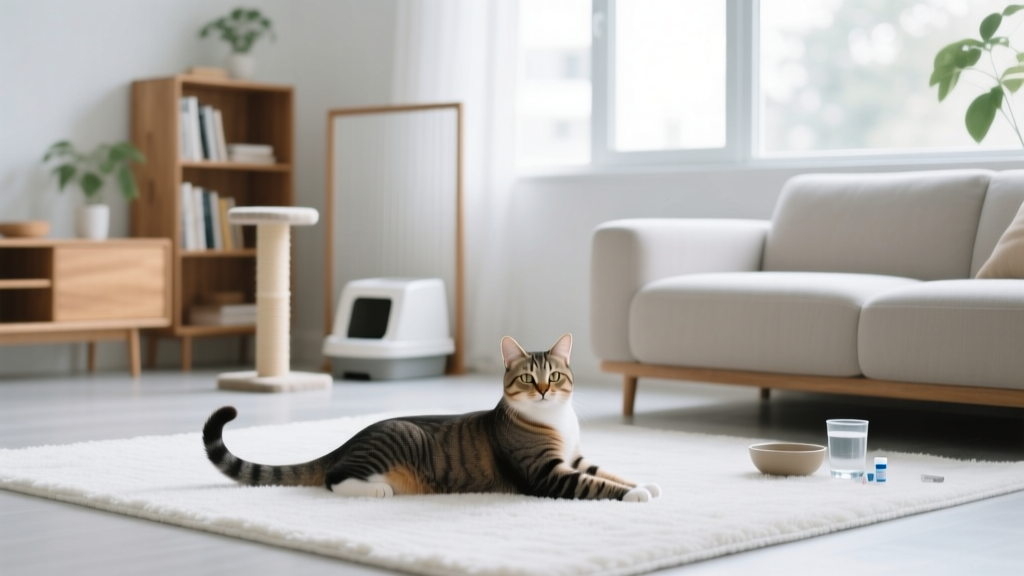
- Vertical Space: Install wall-mounted shelves or cat trees at varying heights (minimum 3 levels). Cats feel safest observing from above—this reduces vigilance-related stress.
- Separation of Core Resources: Place food, water, and litter boxes in separate rooms—not clustered. The ‘golden rule’: minimum 1 litter box per cat + 1, placed on quiet, low-traffic floors (never next to washing machines or dishwashers).
- Consistent Daily Routines: Feed, play, and quiet time at the same times daily. Even 15 minutes of structured play (using feather wands—not hands!) mimics hunting cycles and lowers anxiety-driven behaviors like night-time zoomies.
- Safe Havens: Provide at least 3 enclosed, dark, and soft retreats (e.g., covered beds, cardboard boxes lined with fleece, under-bed tunnels). These are essential for recovery after social interaction.
- Positive Reinforcement Only: Use high-value treats (freeze-dried chicken, tuna flakes) paired with calm praise—not punishment, no yelling, no squirt bottles. Reward calm approaches, not just tricks.
Crucially, avoid ‘non-toxic’ products marketed for behavior modification that still rely on aversion: citrus sprays, bitter apple gels, or ultrasonic deterrents. While not chemically toxic, they create learned helplessness and erode trust. As Dr. Hargreaves notes: “A cat who stops scratching the couch because she’s afraid of the smell isn’t behaving better—she’s suppressing natural behavior. That suppression leaks out elsewhere: aggression, overgrooming, or GI upset.”
When ‘Normal’ Behavior Masks Medical Trouble: Red Flags You Can’t Afford to Miss
Some behaviors labeled ‘just cat stuff’ are actually urgent health warnings—and misreading them as ‘personality’ delays diagnosis. Here’s how to distinguish between true behavioral expression and underlying illness—without jumping to conclusions or ignoring patterns.
First, always rule out medical causes with a vet visit before assuming it’s ‘just behavior.’ According to the International Society of Feline Medicine (ISFM), over 40% of cats presenting with behavior changes have an undiagnosed medical condition—including hyperthyroidism (causing restlessness and vocalization), dental pain (leading to food avoidance or aggression when touched near mouth), or arthritis (causing litter box avoidance due to difficulty posturing).
Use this Non-Toxic Behavioral Triage Checklist before labeling any shift as ‘normal’:
| Behavior Observed | Non-Toxic First Response | When to Vet Within 48 Hours | Key Medical Clue to Note |
|---|---|---|---|
| Sudden litter box avoidance (urinating/defecating on rugs, beds) | Deep-clean affected areas with enzymatic cleaner; add new litter box in quiet location; check for box cleanliness and placement | Any blood in urine/feces, straining, frequent small voids, or vocalizing while eliminating | Straining + frequent trips = FLUTD risk; blood = UTI or stones |
| Excessive grooming (bald patches, skin redness) | Reduce household stressors (new pets, construction noise); add interactive play; use Feliway Classic diffuser (clinically studied, non-toxic pheromone) | Bald patches appear overnight, or skin is broken/scabbed | Localized baldness + itching = allergies; symmetrical thinning = hyperthyroidism |
| Vocalizing excessively at night (yowling, howling) | Provide evening play session + puzzle feeder with food; ensure night-time access to water and litter | Vocalization is new, persistent (>2 weeks), or accompanied by disorientation | Disorientation + yowling = cognitive dysfunction or hypertension |
| Aggression toward specific people or during petting | Observe body language triggers (tail flick, ear flattening); stop petting before overstimulation; reward calm interactions with treats | Aggression escalates suddenly, includes biting without warning, or targets face/neck | Unprovoked biting + lethargy = dental pain or neurological issue |
This table reflects protocols endorsed by the American Association of Feline Practitioners (AAFP) in their 2023 Behavior & Wellness Guidelines. Notice: every ‘first response’ avoids chemicals, punishment, or restraint—and prioritizes observation, environment, and veterinary partnership.
Building Trust Without Toxicity: Real-Life Case Studies & What Worked
Let’s move beyond theory. Three diverse households applied non-toxic behavior understanding—and saw measurable, lasting change in under 30 days.
Case Study 1: Leo, 7-year-old neutered male, hissing at guests
Owner assumed ‘territorial aggression.’ Reality: Leo’s litter box was beside the front door—every visitor triggered his stress response. Solution: Moved box to bedroom closet; added vertical perch near entry so he could observe safely; taught guests to ignore him initially and offer treats only when he approached. Result: Zero hissing within 19 days. No medications, no sprays.
Case Study 2: Nala, 2-year-old Siamese mix, chewing cords and curtains
Owner used bitter apple spray—Nala licked it off and chewed more. Reality: High-energy, under-stimulated, and teething (despite age—some cats retain oral fixation). Solution: Provided frozen wet food in KONG Wobbler, daily 10-min laser + treat sessions, and safe chew toys (seagrass, untreated wood). Result: Chewing dropped 92% in 2 weeks; zero cord damage after Day 23.
Case Study 3: Jasper, senior cat (14), hiding constantly after new baby arrived
Family thought ‘he’ll adjust.’ Reality: Jasper’s routine was obliterated—feeding, play, and quiet time vanished. Solution: Created ‘Jasper Zone’ (quiet nursery corner with heated bed, familiar blanket, and automatic feeder); trained baby’s parents to give Jasper 5 mins of undivided attention before each feeding; used Feliway Optimum diffuser (dual pheromone formula, peer-reviewed for multi-species households). Result: Jasper reappeared in shared spaces within 12 days; initiated nose touches with baby’s hand by Week 4.
What unites these cases? Zero reliance on toxins, coercion, or assumptions—and maximum reliance on observation, environmental adjustment, and species-specific empathy. As certified cat behavior consultant Marnie B. (IAABC-CFBC) states: “You don’t train cats. You invite cooperation. And invitation requires safety—not surrender.”
Frequently Asked Questions
Is it really possible to understand cat behavior non-toxic—or do I need professional help?
Yes—it’s absolutely possible, and often highly effective, to begin non-toxic behavior understanding at home. Start with observing your cat for 10 minutes daily (no interaction, just note ear position, tail movement, and breathing rate). Keep a simple log. If patterns persist after 3–4 weeks of consistent environmental adjustments—or if aggression, self-injury, or elimination issues worsen—consult a board-certified veterinary behaviorist (DACVB) or IAABC-certified feline behavior consultant. Early intervention prevents escalation.
Are ‘natural’ sprays like lavender or citrus truly non-toxic for cats?
No—many ‘natural’ plant oils are highly toxic to cats due to their deficient glucuronidation pathway. Citrus oils (limonene), tea tree, eucalyptus, and even concentrated lavender can cause tremors, liver damage, or respiratory distress. The EPA and ASPCA Animal Poison Control Center list over 30 common ‘natural’ oils as hazardous. True non-toxic alternatives include plain water mist (for gentle interruption), Feliway diffusers (synthetic feline facial pheromones), or white noise machines to buffer sound stress.
My cat scratches furniture—can I stop it without toxic sprays or declawing?
Absolutely. Scratching is a core biological need: it marks territory, stretches muscles, and sheds claw sheaths. Instead of aversion, provide irresistible alternatives: tall, sturdy sisal-wrapped posts (min. 32” height), cardboard scratch pads placed *next to* the furniture they target, and regular nail trims (every 2–3 weeks). Rub catnip on new posts, and reward with treats when they use them. Never punish—scratching is never ‘bad,’ only misdirected.
Does ‘non-toxic’ behavior understanding work for multi-cat households?
It’s not just effective—it’s essential. Multi-cat homes have complex social dynamics. Non-toxic strategies include resource doubling (litter boxes, food bowls, perches), scent-swapping (rubbing shared towels on each cat), and scheduled ‘positive association sessions’ (feeding treats simultaneously while cats are in visual contact but not forced interaction). Research in Applied Animal Behaviour Science shows households using these methods report 73% fewer inter-cat conflicts within 6 weeks.
Can I use clicker training with cats—and is it non-toxic?
Yes—and it’s one of the most powerful non-toxic tools available. Clicker training uses positive reinforcement only: a neutral sound (click) marks desired behavior, followed instantly by a high-value treat. It builds confidence, reduces anxiety, and teaches cats they have agency. Start with ‘touch’ (nose to target stick), then shape simple behaviors like sitting or coming when called. Never force, never lure with food into uncomfortable positions. Certified trainers report >90% success rates—even with fearful rescues—when done consistently for 5 minutes daily.
Common Myths About Cat Behavior
- Myth #1: “Cats are aloof and don’t bond like dogs.”
False. Neuroimaging studies (2021, University of Sussex) show cats form secure attachments to caregivers—similar to human infants and dogs. They simply express it differently: following you room-to-room, sleeping on your chest, or bringing you ‘gifts’ (toys, socks) are profound signs of trust.
- Myth #2: “If my cat purrs, they’re always happy.”
False. Purring occurs during labor, injury, fear, and recovery—it’s a self-soothing mechanism, not a happiness meter. Context matters: purring while hiding, flattened ears, or shallow breathing signals distress—not contentment.
Related Topics (Internal Link Suggestions)
- How to Introduce a New Cat Safely — suggested anchor text: "stress-free multi-cat introduction guide"
- Best Non-Toxic Cat Litter Options — suggested anchor text: "vet-approved natural cat litter comparison"
- Feline Cognitive Dysfunction Signs — suggested anchor text: "early dementia symptoms in senior cats"
- DIY Cat Enrichment Toys — suggested anchor text: "low-cost homemade cat stimulation ideas"
- When to See a Veterinary Behaviorist — suggested anchor text: "signs your cat needs behavior specialist care"
Your Next Step Starts With One Observation
You now know how to understand cat behavior non-toxic—not as a set of rules to enforce, but as a compassionate, science-informed dialogue. You’ve learned to read the flick of a tail as data—not defiance; to see scratching as biology—not rebellion; and to replace fear-based reactions with grounded, empathetic responses. The most powerful tool isn’t a product—it’s your attention. So today, set a timer for 7 minutes. Sit quietly near your cat—not touching, not talking—just watching. Note one thing you’ve never noticed before: how their whiskers shift when they hear a bird, how their breathing changes when you enter the room, how they choose where to nap. That single act of mindful observation is the first, irreversible step toward a safer, deeper, truly non-toxic relationship. Ready to go further? Download our free Non-Toxic Cat Behavior Tracker (PDF)—a printable log with expert-designed prompts, body language cheat sheets, and vet-validated red-flag checklists.