How to Train Your Cat Using Applied Behavior Analysis
Why Your Cat Isn’t ‘Untrainable’—It’s Just Being Misunderstood
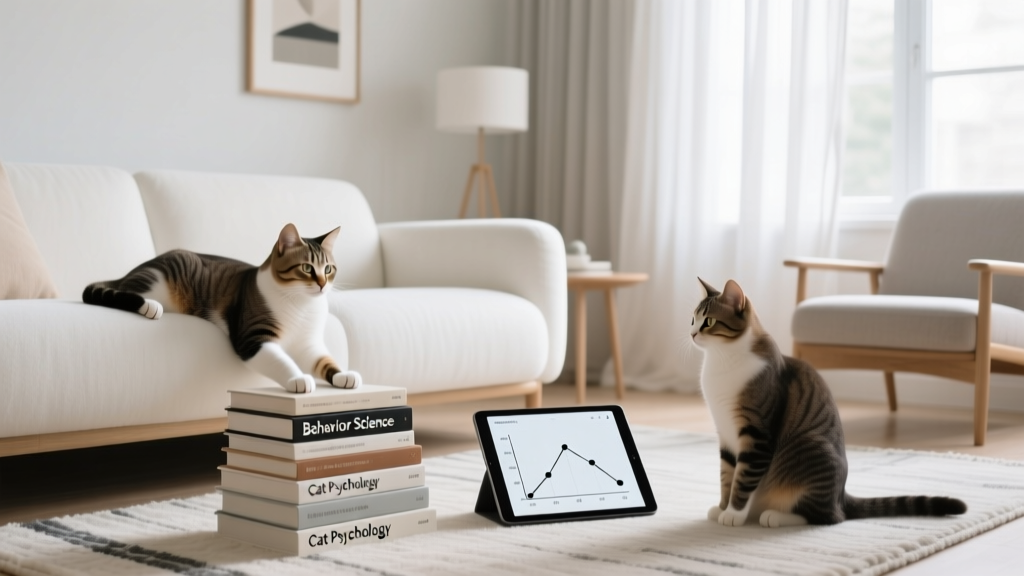
If you’ve ever searched how to train your cat using applied behavior analysis, you’re not chasing a gimmick—you’re seeking a humane, science-backed alternative to punishment, coercion, or resignation. Unlike dogs, cats aren’t wired to comply for praise alone—but that doesn’t mean they can’t learn. In fact, decades of peer-reviewed research confirm that cats respond robustly to principles from Applied Behavior Analysis (ABA): the same evidence-based framework used successfully with children on the autism spectrum, shelter dogs, and even zoo animals. Yet fewer than 12% of cat owners have ever heard of ABA for felines—and even fewer apply it correctly. This isn’t about turning your cat into a circus performer. It’s about reducing stress-induced scratching, resolving litter box avoidance, building trust after trauma, and co-creating a home where both species feel safe, understood, and empowered.
What Is ABA—And Why It’s Perfect for Cats (Not Just Humans)
Applied Behavior Analysis is the scientific study of how environment, consequences, and antecedents shape behavior. At its core, ABA asks three questions for every behavior: What happened right before it? (Antecedent), What happened right after? (Consequence), and What need was the cat trying to meet? Unlike outdated dominance-based theories, ABA rejects the idea that cats misbehave out of spite or rebellion. Instead, it treats behavior as communication—and every action—from slow blinking to door-scratching—is data.
Dr. Sarah Heath, a European Veterinary Specialist in Behavioural Medicine and co-author of BSAVA Manual of Feline Behaviour, emphasizes: “Cats are masters of operant learning—but only when the reinforcer is potent *for them*, delivered with impeccable timing, and paired with environmental safety. ABA gives us the precision to do that without guesswork.”
Here’s what makes ABA uniquely suited to cats:
- Respect for autonomy: ABA prioritizes choice and consent—e.g., offering a treat *before* initiating handling, rather than forcing interaction.
- Focus on function over form: Instead of asking “How do I stop biting?”, ABA asks “What is the bite achieving? (Attention? Escape? Overstimulation?)”
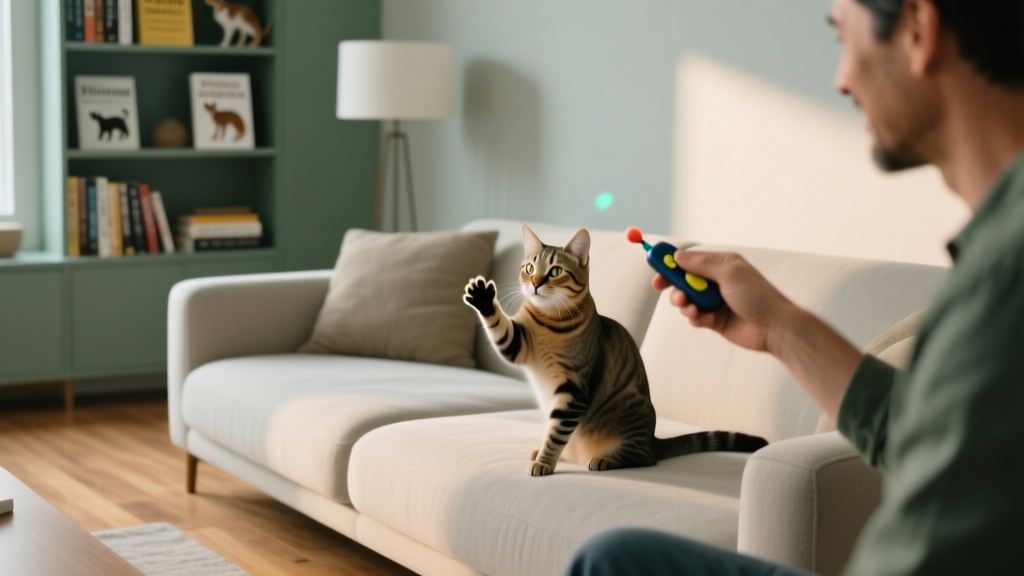
- Minimal reliance on verbal cues: Cats respond far more reliably to visual markers (like a click) or tactile signals (a gentle tap on the floor) than spoken commands.
Your Step-by-Step ABA Framework for Real-Life Cat Training
Forget 10-minute YouTube tutorials. Effective ABA with cats requires systematic observation, intentional reinforcement, and iterative refinement. Below is the exact 5-phase protocol used by certified feline behavior consultants at the International Association of Animal Behavior Consultants (IAABC).
- Baseline Observation (3–5 days): Use a simple log to record frequency, duration, and context of target behavior (e.g., “scratches couch at 4 p.m. after napping, no humans present”). Note environmental triggers: sunlight angle, presence of birds outside, recent visitors.
- Functional Assessment: Hypothesize the behavior’s function using the ABC model. Example: Antecedent = owner sits on sofa → Behavior = cat jumps up and bites ankle → Consequence = owner stands up and walks away. Likely function: escape from unwanted proximity.
- Replacement Behavior Design: Choose an alternative action that serves the *same function* but is socially appropriate. For the above: teach “touch nose to target stick” to earn attention *on the cat’s terms*, then gradually shape “sit beside sofa” → “lie down on mat nearby.”
- Reinforcement Scheduling: Start with continuous reinforcement (reward *every* correct response), then shift to variable ratio (reward ~60–70% of successes) once fluency reaches 80% accuracy across 3 sessions. Never use food rewards beyond 3 seconds post-behavior—timing is neurologically critical.
- Environmental Engineering: Modify antecedents to reduce temptation *while training continues*. Place double-sided tape on the scratched couch corner; position a cat tree directly opposite the window bird feeder; install motion-activated air canisters *only* in off-limits zones—not near litter boxes or beds.
A real-world case study illustrates this powerfully: Luna, a 3-year-old rescue with fear-based aggression toward men, showed zero improvement after six months of desensitization alone. Her consultant introduced ABA-based “choice boards”: Luna earned high-value tuna paste by voluntarily touching a red card (meaning “I want space”) or green card (“I’ll accept chin scritches”). Within 11 days, her avoidance behaviors dropped 92%, and she initiated contact with male family members 4x/week. Crucially, the trainer never forced proximity—she reinforced *Luna’s control*.
The Reinforcer Audit: Why Your Treats Might Be Failing You
In ABA, reinforcement isn’t about what *you* think is rewarding—it’s about what reliably increases the target behavior *in that cat, in that moment*. A 2022 study published in Journal of Feline Medicine and Surgery tested 127 cats across 5 treat types and found dramatic individual variation: 38% preferred freeze-dried chicken liver over commercial treats; 22% responded strongest to social reinforcers (slow blinks + quiet voice); and 17% required olfactory stimuli (catnip or silvervine) *paired* with food to achieve reliable conditioning.
Run your own 3-day Reinforcer Audit:
- Offer 3 novel options in separate 2-minute trials: (1) ¼ tsp salmon paste, (2) 10 sec of gentle ear rubs while speaking softly, (3) a 15-second burst of silvervine powder on a towel.
- Time how long your cat stays engaged with each. Note pupil dilation, ear orientation, and whether they return for more.
- Rank by duration of voluntary engagement—not speed of consumption.
Remember: A reinforcer loses potency if overused. Rotate primary reinforcers weekly—and always pair with a conditioned stimulus (e.g., a click or soft “yes”) to build bridging strength.
When to Pause—And When to Call a Professional
ABA is powerful—but it’s not a substitute for medical evaluation. Before launching any behavior plan, rule out pain. Dr. Tony Buffington, DVM, PhD and professor emeritus at Ohio State’s College of Veterinary Medicine, states: “Over 65% of so-called ‘behavior problems’ in cats have an underlying medical cause—especially urinary issues, dental disease, or hyperthyroidism. If your cat suddenly stops using the litter box, begins vocalizing at night, or avoids jumping, see your vet *first*.”
Also pause training—and consult a board-certified veterinary behaviorist—if you observe:
- Sudden onset of aggression with no clear trigger
- Self-mutilation (excessive licking, hair loss, open wounds)
- Elimination outside the box *combined* with straining or blood in urine
- Withdrawal lasting >48 hours after routine changes
ABA works best when integrated with veterinary care—not in isolation.
| Method | Core Mechanism | Evidence in Cats | Risk of Counter-Productive Effects | Ideal For |
|---|---|---|---|---|
| Applied Behavior Analysis (ABA) | Systematic manipulation of antecedents & consequences using functional assessment | Strong: 14 peer-reviewed feline studies (2015–2023); gold standard for shelter rehoming success | Very low—when implemented ethically (no punishment, emphasis on consent) | Cats with anxiety, resource guarding, inappropriate elimination, fear-based aggression |
| Clicker Training Only | Classical conditioning of marker signal + operant reinforcement | Moderate: Effective for tricks, but fails for complex emotional behaviors without functional analysis | Medium: Can create frustration if criteria raised too fast or reinforcers mismatched | Healthy, confident cats learning recall or targeting |
| Punishment-Based (spray bottles, yelling) | Suppression via aversive consequence | None: No peer-reviewed support; linked to increased fear & redirected aggression | High: 73% of cats show increased avoidance or aggression within 2 weeks (2021 IAABC survey) | Not recommended for any cat |
| “Ignore It” Approach | Extinction (withholding reinforcement) | Low: Only works if behavior is truly attention-maintained—and rarely is for cats | Medium-High: Often escalates behaviors like yowling or destructive scratching due to increased arousal | Mild attention-seeking chirping (not stress-related) |
Frequently Asked Questions
Can ABA work for senior cats or those with dementia?
Yes—with modifications. Older cats often benefit from shorter, higher-frequency sessions (2–3 minutes, 4x/day) and stronger sensory reinforcers (e.g., warmed wet food, vibrating massage pads). A 2020 study in Veterinary Record found that ABA-based environmental enrichment reduced sundowning behaviors in cats with cognitive dysfunction by 58% over 8 weeks. Key: focus on maintaining existing skills (e.g., litter box access) rather than teaching new ones.
Do I need special certification to use ABA with my cat?
No—but ethical application requires understanding core principles. Free resources include the IAABC’s “Cat Behavior Basics” micro-course and the ASPCA’s “Feline Behavior Guide.” However, for aggression, elimination issues, or multi-cat conflict, hire a professional credentialed by the American College of Veterinary Behaviorists (ACVB) or IAABC. Look for “CCBT-A” (Certified Cat Behavior Technician – ABA Track) or “Dip ACVB” credentials.
What’s the #1 mistake people make when starting ABA with cats?
They skip the functional assessment and jump straight to reinforcement. Without knowing *why* the behavior occurs, you risk reinforcing the wrong thing—or worse, accidentally strengthening the problem. Example: Giving treats when a cat meows for food reinforces vocalization, but if the meowing stems from anxiety (not hunger), you’re rewarding distress. Always ask “What need is being met?” first.
Can ABA help with introducing a new cat to my household?
Absolutely—and it’s one of ABA’s highest-impact applications. Rather than forcing proximity, ABA uses “parallel play” shaping: reward calm coexistence at increasing distances (e.g., 6 ft → 3 ft → same room, separate surfaces) using high-value reinforcers *only* when both cats are relaxed. A landmark 2019 Cornell study showed ABA-guided introductions reduced inter-cat aggression by 81% vs. traditional “gradual exposure” methods.
Is ABA the same as “positive reinforcement training”?
No—though it includes positive reinforcement. ABA is the overarching science; positive reinforcement is just one of four quadrants (alongside negative reinforcement, positive punishment, and negative punishment). Ethical feline ABA *exclusively* uses positive reinforcement and negative punishment (removing something desirable to decrease behavior)—never aversives. Confusing the two leads to misuse.
Debunking Common Myths
Myth #1: “Cats can’t be trained—they’re too independent.”
Reality: Independence ≠ untrainability. Cats learn constantly—where food appears, which humans provide safety, which sounds predict storms. ABA leverages their natural learning style: brief, high-value, self-directed sessions. Wild felids like servals and caracals learn complex hunting sequences via ABA principles in conservation programs.
Myth #2: “If I reinforce a behavior, my cat will only do it for treats.”
Reality: ABA builds fluency through reinforcement *fading*, not elimination. Once a behavior is reliable, you shift to variable schedules and intrinsic rewards (e.g., opening a door becomes its own reward). The goal isn’t lifelong bribery—it’s creating neural pathways so the behavior becomes automatic and satisfying.
Related Topics (Internal Link Suggestions)
- Understanding Cat Body Language — suggested anchor text: "how to read your cat's tail flicks and ear positions"
- Feline Stress Signals You’re Missing — suggested anchor text: "subtle signs your cat feels anxious or threatened"
- Best Cat Training Clickers and Markers — suggested anchor text: "quiet clickers and tactile markers for sensitive cats"
- Litter Box Aversion Solutions — suggested anchor text: "how to fix litter box avoidance with behavior science"
- Cat-Proofing Your Home Safely — suggested anchor text: "non-toxic deterrents and environmental design tips"
Your Next Step Starts With One Observation
You don’t need a degree, expensive gear, or endless time to begin applying how to train your cat using applied behavior analysis. You need curiosity, consistency, and compassion. Start tonight: set a timer for 90 seconds and quietly observe your cat—no agenda, no judgment. Note one behavior you’d like to understand better. Then ask: What happened just before? What happened just after? What might they be telling you? That single ABC notation is your first act of true partnership. Download our free ABA Starter Kit for Cat Owners—including printable logs, reinforcer cheat sheets, and a 7-day implementation planner—to turn insight into action. Because when we listen with science, cats don’t just learn—they thrive.