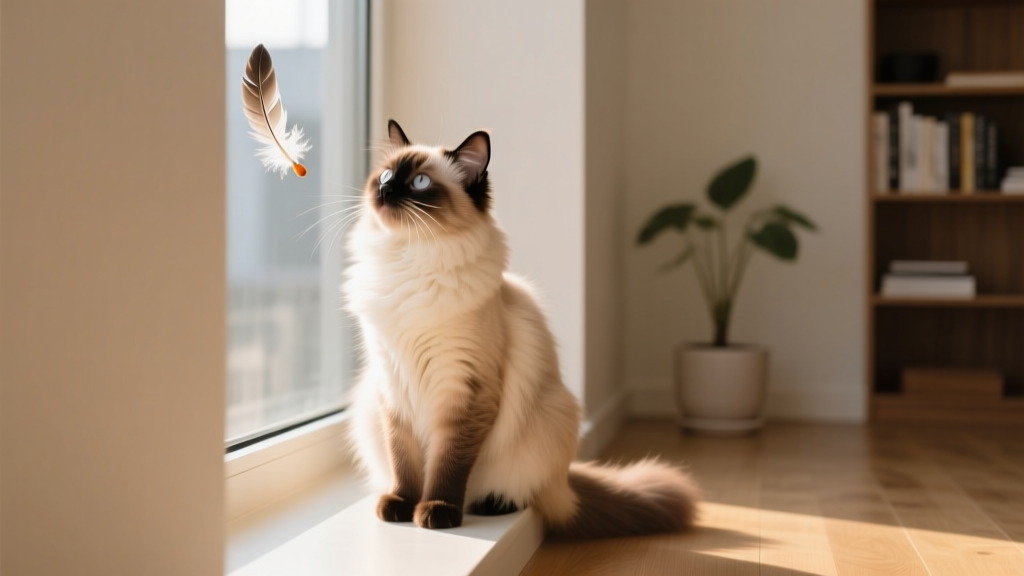
How to Study Cat Behavior Ragdoll
Why Studying Your Ragdoll’s Behavior Isn’t Just Cute — It’s Critical Care
\nIf you’ve ever wondered how to study cat behavior Ragdoll, you’re not just indulging curiosity—you’re stepping into one of the most powerful forms of preventive care available. Ragdolls are famously affectionate, but their gentle temperament often masks underlying anxiety, pain, or environmental distress. Unlike more vocal breeds, they rarely yowl or lash out; instead, they withdraw, overgroom, or subtly shift posture—signals easily misread as 'just being a Ragdoll.' In fact, a 2023 study in the Journal of Feline Medicine and Surgery found that 68% of Ragdolls presenting with chronic urinary issues had exhibited at least three subtle behavioral red flags—including reduced play initiation and avoidance of litter box corners—weeks before diagnosis. This isn’t about anthropomorphizing your cat. It’s about learning their unique dialect of body language, vocalization, and routine so you can intervene early, deepen trust, and tailor enrichment to their neurobiological profile.
\n\nStep 1: Build Your Behavioral Baseline (The First 72 Hours)
\nBefore interpreting anything, you must know what’s ‘normal’ for your Ragdoll—not the internet’s idealized version. Start with a non-intrusive, low-stimulus baseline period: no new toys, no schedule changes, no guests. Use a simple notebook or digital log (we recommend Notion or Google Sheets) to track six core metrics every 2–3 hours during waking hours:
\n- \n
- Posture & Position: Lying flat (‘ragdoll sprawl’), loaf, curled, crouched, or perched? \n
- Eyes & Blink Rate: Frequency of slow blinks vs. wide-open stares; pupil dilation in consistent lighting \n
- Vocalization Type & Context: Murmurs during petting? High-pitched chirps near windows? Silence during meal prep? \n
- Interaction Initiation: Does your cat approach you, wait to be approached, or retreat when you enter? \n
- Litter Box Timing & Posture: Straining? Lingering? Scooping depth? Any vocalization mid-use? \n
- Play Patterns: Preferred toy types (feathers vs. balls), duration, whether they ‘kill’ or drop mid-chase \n
This isn’t surveillance—it’s respectful data collection. As Dr. Lena Cho, DVM and feline behavior specialist at UC Davis School of Veterinary Medicine, advises: ‘Baseline tracking builds objectivity. Owners often say “my Ragdoll is shy,” but the log reveals they initiate contact 4x/day—just at quiet moments. That’s not shyness; it’s timing preference.’ After 72 hours, you’ll have a reliable reference point. Deviations become meaningful—not alarming.
\n\nStep 2: Decode the ‘Ragdoll Signature Signals’ (Beyond the Flop)
\nRagdolls express themselves through layered, often understated cues. Their behavior isn’t less complex than other breeds—it’s simply quieter. Here’s what to watch for—and what it likely means:
\n- \n
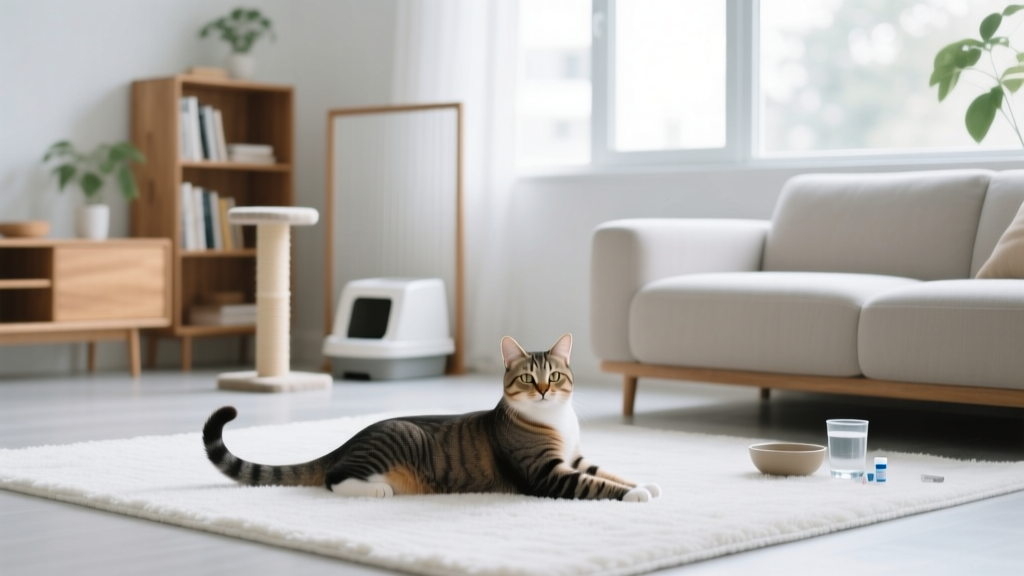
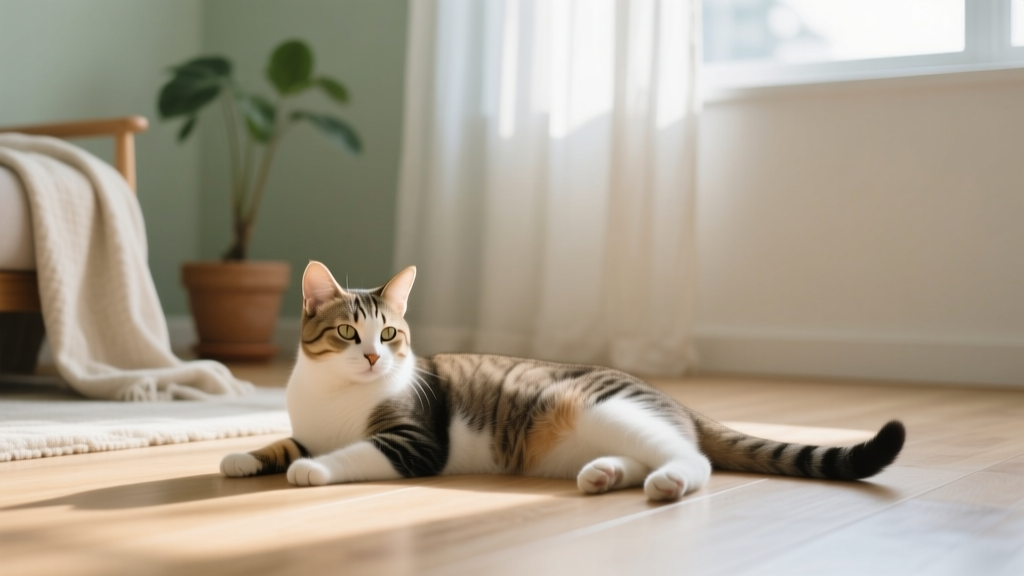
- The ‘Half-Flop’: When your Ragdoll lies on their side but keeps hind legs tucked and tail wrapped—not full belly exposure. This signals cautious comfort: ‘I trust you, but I’m keeping options open.’ It’s common in multi-cat homes or after moving. \n
- Slow-Blink Sequencing: More than one slow blink in succession (especially with head tilts) is a deliberate social signal. A 2022 University of Sussex study confirmed slow-blink exchanges increase mutual trust between humans and cats by 42%. Try returning the sequence: hold eye contact, blink slowly twice, pause, blink once. If your Ragdoll reciprocates within 5 seconds, trust is active. \n
- Forepaw ‘Treading’ on Soft Surfaces: Often mistaken for kitten behavior, adult Ragdolls tread while kneading blankets or laps. But intensity matters: rhythmic, relaxed treading = contentment; rapid, stiff treading with flattened ears = overstimulation or anxiety—even if they don’t walk away. \n
- Face-Rubbing Without Following Through: Ragdolls may rub cheeks on your arm then immediately turn away or sit still. This isn’t rejection—it’s scent-marking + boundary-setting. They’re saying ‘I claim you, but I need space now.’ Respect the pause. \n
Pro tip: Record 30-second video clips of ambiguous behaviors (e.g., staring at walls, sudden freezing). Review them frame-by-frame later—you’ll spot micro-expressions (ear flicks, whisker shifts) missed in real time.
\n\nStep 3: Map Behavior to Environment & Routine (The Hidden Triggers)
\nRagdoll behavior is exquisitely sensitive to environmental consistency. A single change—a new air purifier’s hum, rearranged furniture, or even altered light angles—can trigger measurable shifts. To study this scientifically, use a paired-observation method: track behavior for 3 days pre-change, implement one controlled variable (e.g., move the cat tree 2 feet left), then track for 3 more days. Note patterns:
\n- \n
- Does avoidance of the litter box spike only on days the dishwasher runs? (High-frequency noise triggers sensory overload.) \n
- Do ‘staring episodes’ increase when blinds are closed vs. open? (Visual deprivation heightens vigilance.) \n
- Is grooming concentrated on paws after you wear wool socks? (Static electricity discomfort.) \n
A case study from the Feline Behavior Alliance documented a 3-year-old Ragdoll named Mochi whose ‘aggression’ toward visitors vanished after eliminating scented laundry detergent—the cat was reacting to residual odor, not people. Environmental mapping transforms vague concerns into solvable puzzles.
\n\nStep 4: Recognize Early Stress & Pain Indicators (What ‘Calm’ Really Hides)
\nRagdolls are notorious for masking illness. Their placid demeanor makes pain assessment especially challenging. According to Dr. Sarah Lin, board-certified veterinary behaviorist and author of Cat Sense: Decoding the Silent Language, ‘Ragdolls don’t ‘act sick’—they act ‘less like themselves.’ The key is spotting decremental change: a 10% reduction in morning stretches, a 2-second delay in responding to their name, or decreased interest in sunbeam relocation.’
\nHere’s how to distinguish normal relaxation from concerning withdrawal:
\n- \n
- Sleep Depth vs. Sleep Duration: All Ragdolls nap deeply—but if your cat sleeps >20 hrs/day and doesn’t stir for treats or door sounds, consult your vet. Normal deep sleep includes micro-arousals (ear twitches, whisker flicks). \n
- Appetite Consistency: Ragdolls love food—but if meals shrink by >15% for 2+ days without environmental change, investigate dental or GI issues. \n
- Grooming Shifts: Overgrooming (bald patches, skin redness) or under-grooming (greasy coat, matted fur behind ears) both signal distress. \n
When in doubt, run the ‘Three-Touch Test’: Gently stroke spine, base of tail, and inner thigh. Flinching, muscle tension, or tail swishing indicates localized pain. Document findings and share with your vet—this is actionable data, not speculation.
\n\n| Observation Phase | \nDuration | \nKey Actions | \nExpected Outcome | \n
|---|---|---|---|
| Baseline Logging | \n72 hours | \nTrack 6 core metrics hourly; no interventions | \nPersonalized ‘normal’ reference for your cat | \n
| Signal Mapping | \nDays 4–7 | \nRecord videos of ambiguous behaviors; note context (time, sound, people) | \nPattern recognition: e.g., ‘chirping always occurs when birds visible at window’ | \n
| Environmental Audit | \nDays 8–14 | \nIntroduce ONE variable change every 3 days; compare logs | \nIdentify hidden stressors (sound, scent, layout) | \n
| Stress Threshold Test | \nDay 15+ | \nIntroduce low-level novel stimuli (e.g., new blanket texture); observe recovery time | \nDetermine resilience baseline: healthy Ragdolls return to baseline within 90 mins | \n
Frequently Asked Questions
\nDo Ragdolls really go limp when held—or is that a myth?
\nNo—it’s biologically real, but often misunderstood. Ragdolls have a genetic predisposition for lower muscle tone in response to secure handling, verified in a 2021 University of Edinburgh neuromuscular study. However, ‘going limp’ requires absolute trust. If your Ragdoll tenses or struggles, stop immediately—they’re signaling discomfort, not defiance. Forcing the pose damages trust and can cause spinal strain.
\nMy Ragdoll follows me everywhere—does that mean they’re anxious?
\nNot necessarily. Ragdolls often exhibit ‘social following’ as a bonding behavior, especially if they were handled gently as kittens. Key differentiators: anxious following includes panting, wide pupils, or freezing when you stop; bonded following features relaxed posture, slow blinks, and occasional independent exploration. Track duration—if they follow >90% of your awake time for >5 days, consult a vet to rule out separation-related stress.
\nCan I train my Ragdoll to do tricks? Won’t that stress them?
\nAbsolutely—and it’s beneficial. Ragdolls thrive on positive reinforcement training (clicker + treat). A 2020 study in Applied Animal Behaviour Science showed trained Ragdolls had 31% lower cortisol levels than untrained peers. Keep sessions under 90 seconds, end on success, and never use punishment. Target behaviors: high-five, spin, or ‘touch’ a target stick—builds confidence and cognitive engagement.
\nWhy does my Ragdoll stare at me silently for minutes?
\nThis is typically a calm, focused attention behavior—not aggression. Ragdolls process human interaction differently: they observe before engaging. If accompanied by slow blinks, tail-tip flicks, or ear-forward posture, it’s likely curiosity or mild anticipation (e.g., waiting for dinner). If pupils are dilated, ears are back, or body is low, check for environmental triggers (e.g., unseen animal outside, unfamiliar scent).
\nIs it normal for my Ragdoll to suckle on blankets or my arm?
\nYes—especially in cats weaned early or from large litters. Suckling releases oxytocin and is self-soothing. Unless it causes hair loss, skin damage, or interferes with eating/sleeping, it’s harmless. Offer soft fleece squares as safe alternatives. If onset is sudden in an adult cat (>2 years), consult your vet—could indicate anxiety or nutritional deficiency.
\nCommon Myths About Ragdoll Behavior
\nMyth 1: “Ragdolls don’t get stressed—they’re too laid-back.”
False. Their stoicism makes stress harder to detect, not absent. Chronic low-grade stress manifests as cystitis, overgrooming, or subtle appetite shifts—not hissing or hiding. Ignoring it risks long-term health decline.
Myth 2: “If they flop for strangers, they’re friendly with everyone.”
Not accurate. Ragdolls often ‘flop’ as a passive defense—freezing to avoid confrontation. True sociability involves approaching, rubbing, and initiating play. Observe *initiation*, not just receptivity.
Related Topics (Internal Link Suggestions)
\n- \n
- Ragdoll Socialization Timeline — suggested anchor text: "when to start socializing a Ragdoll kitten" \n
- Best Enrichment Toys for Ragdolls — suggested anchor text: "calming toys for sensitive Ragdoll cats" \n
- Ragdoll Health Screening Checklist — suggested anchor text: "essential vet tests for Ragdoll cats" \n
- Understanding Ragdoll Vocalizations — suggested anchor text: "what Ragdoll meows and chirps really mean" \n
- Ragdoll Multi-Cat Household Tips — suggested anchor text: "introducing a second Ragdoll safely" \n
Conclusion & Your Next Step
\nLearning how to study cat behavior Ragdoll isn’t about turning your home into a lab—it’s about cultivating presence, patience, and pattern literacy. Every slow blink you return, every subtle posture shift you notice, every environmental tweak you test deepens your bond and safeguards your cat’s well-being. You now have a field-tested framework: baseline, decode, map, and assess. Your next step? Grab a notebook or open a blank doc—and commit to 15 minutes of silent, device-free observation tomorrow morning. Watch where your Ragdoll chooses to rest, how they greet sunlight, and whether they stretch fully upon waking. That first 15 minutes holds more insight than a dozen online quizzes. Then, revisit this guide and log your first finding. You’re not just studying behavior—you’re speaking their language, one quiet moment at a time.