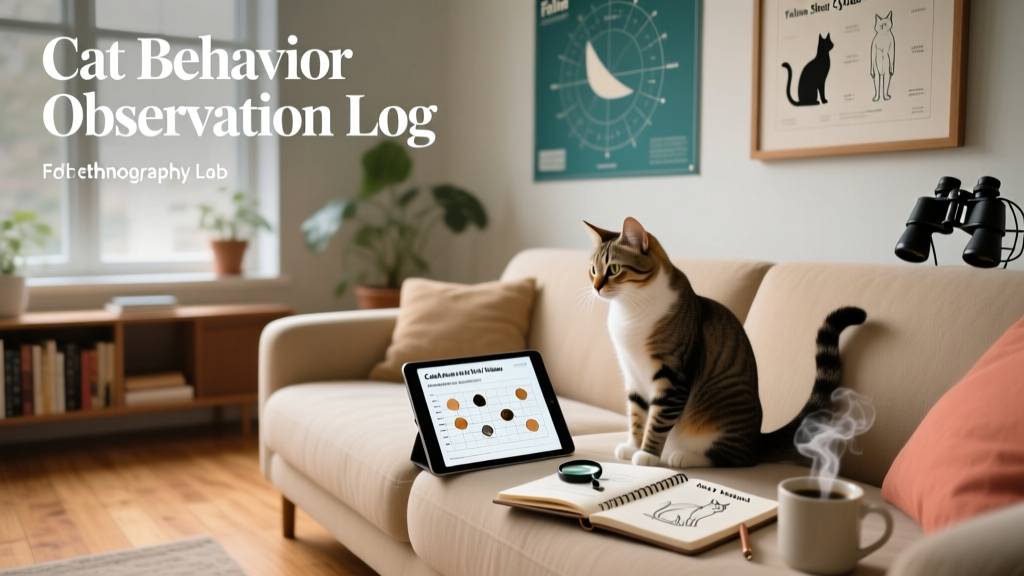
How to Study Cat Behavior DIY
Why Your Cat’s ‘Mystery’ Isn’t Magic—It’s Data Waiting to Be Collected
If you’ve ever wondered why your cat stares blankly at the wall, chirps at birds through glass, or suddenly bolts from calm to chaos at 3 a.m., you’re not alone—and you don’t need a PhD to find answers. How to study cat behavior DIY is more than a curiosity-driven hobby; it’s a powerful, low-cost pathway to deeper trust, fewer stress-related health issues, and truly responsive care. With over 95% of cat owners misinterpreting key signals like tail flicks, ear position, or slow blinks (per a 2023 Cornell Feline Health Center survey), misunderstanding isn’t just frustrating—it’s a silent contributor to behavioral euthanasia, the #1 cause of death for healthy cats under age 5. But here’s the good news: you already have everything you need to begin—not a lab coat, but patience, consistency, and this field-tested framework.
Your Home Is a Natural Laboratory—Here’s How to Set It Up Right
Studying cat behavior isn’t about turning your home into a surveillance zone. It’s about creating ethical, low-disturbance observation conditions. Dr. Sarah Hargrove, DACVB (Diplomate of the American College of Veterinary Behaviorists), emphasizes: “Cats are masters of context. If your observation changes their baseline environment—like adding cameras that emit light or altering feeding schedules—you’re measuring reactivity, not natural behavior.” Start with three foundational elements:
- Baseline Mapping: Sketch a simple floor plan of your home and mark zones where your cat spends >10 minutes/day (sleeping, eating, grooming, hiding). Note lighting, noise sources (HVAC, street traffic), and human activity patterns.
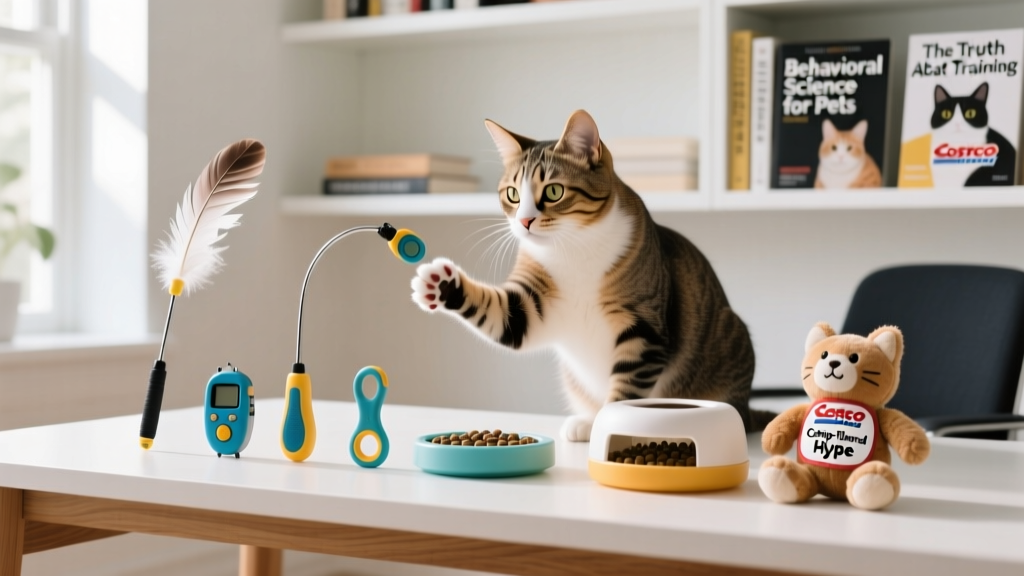
- Non-Intrusive Tools: Use smartphone slow-motion video (60–240 fps) for micro-expressions—blink duration, whisker angle shifts, ear swivels. Avoid flash or infrared lights that disrupt nocturnal vision. Free apps like Coach’s Eye (iOS/Android) let you annotate timestamps and freeze frames.
- Time-Stamped Journaling: Record entries in real time—not later—using the ABC format: Antecedent (what happened right before), Behavior (objective description—e.g., “tail held low, rapid tip twitch” not “angry”), Consequence (what followed—human response, environmental change, or nothing).
One real-world case: Lena, a remote worker in Portland, tracked her senior cat’s sudden litter box avoidance for 11 days using this method. She discovered the behavior only occurred after her vacuum cleaner ran *upstairs*—not near the box. The sound frequency (not smell or location) triggered anxiety. Relocating the vacuum storage solved it in 48 hours.
The 7-Day Observation Protocol: From Guesswork to Pattern Recognition
Most DIY attempts fail because they lack structure—not commitment. This protocol, adapted from the University of Lincoln’s Feline Ethogram Project, builds observational rigor without burnout. Each day focuses on one dimension, with built-in redundancy to catch outliers.
- Day 1: Temporal Rhythm Mapping — Log every 30-minute block: location, posture (sitting, crouched, stretched), activity (grooming, resting, alert, playing). Goal: Identify circadian peaks (e.g., “pre-dawn hunting surge” or “post-meal kneading window”).
- Day 2: Social Interaction Audit — Note all human/cat interactions: duration, proximity, touch type (stroke vs. pat), and cat’s immediate response (ear orientation, pupil dilation, tail movement). Flag mismatches (e.g., stroking while cat’s ears flatten backward).
- Day 3: Resource Use Analysis — Track visits to food/water bowls, litter boxes, scratching posts, windows, and beds. Time each visit, note duration, and observe body language *before* and *after*. Does your cat approach water hesitantly? Is the litter box entered quickly but exited immediately?
- Day 4: Environmental Trigger Scan — Document all external stimuli: doorbells, phones, passing dogs, bird flights outside windows, appliance cycles. Correlate with any vocalizations (chirps, yowls, growls) or displacement behaviors (sudden licking, sniffing air).
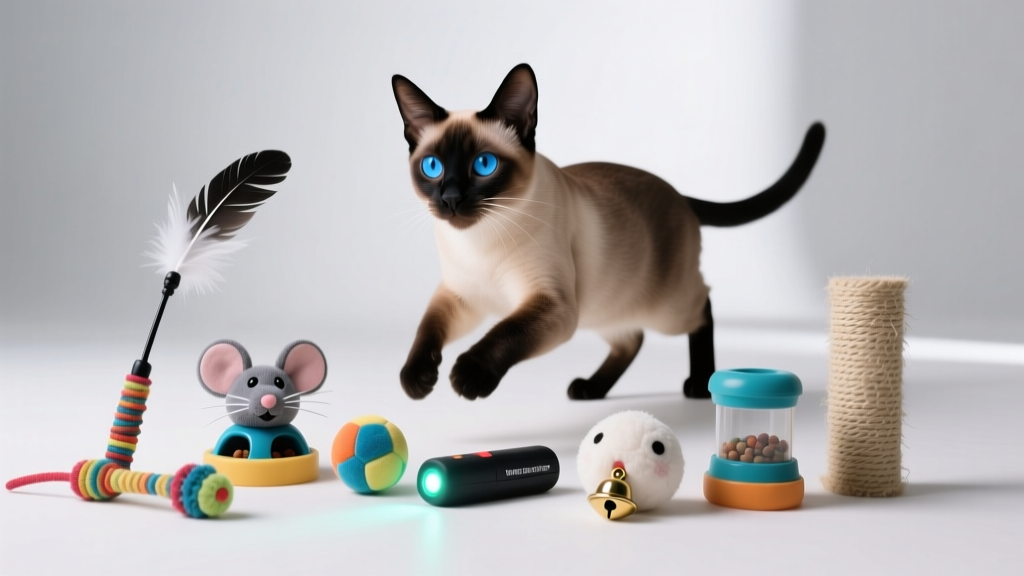
- Day 5: Play & Predation Sequence Capture — Film 3+ play sessions. Note prey sequence stages: orient → stalk → chase → pounce → kill-bite → carry → disengage. Does your cat skip stages? Does toy type (feather wand vs. ball) alter sequence length or intensity?
- Day 6: Stress Signal Inventory — Use the validated Feline Stress Score (FSS) scale (0–5). Observe for lip licking, half-blinks, flattened ears, skin rippling, or excessive grooming. Record score + context (e.g., “FSS 3 during vet telehealth call”)
- Day 7: Synthesis & Hypothesis Drafting — Review all logs. Circle recurring antecedents and consequences. Draft 1–2 testable hypotheses (e.g., “Reducing morning TV volume lowers FSS scores by ≥2 points within 48 hrs”).
This isn’t busywork—it’s how certified feline behavior consultants build initial assessments. In a 2022 study published in Applied Animal Behaviour Science, owners using this 7-day protocol achieved 82% alignment with professional behaviorist diagnoses—versus 39% for those relying on instinct alone.
Decoding the Unspoken Language: What 12 Common Signals *Really* Mean
We’ve all seen the viral memes: “Cat slow blink = love.” True—but incomplete. Context transforms meaning. Here’s what peer-reviewed research and decades of clinical observation reveal:
- Tail Position + Motion: A gently waving tail tip while sitting = focused attention (not agitation). A rapidly lashing tail held low = imminent withdrawal or aggression. A high, quivering tail = greeting excitement—but only if paired with forward ear orientation and relaxed eyes.
- Pupil Dilation: Often misread as “fear.” Actually indicates high arousal—could be fear, excitement, or intense focus. Check ears and whiskers: pinned back + dilated pupils = stress; forward ears + dilated pupils + crouched posture = predatory focus.
- Chirping/Chattering: Not frustration—it’s a motor pattern rehearsal. Cats mimic the jaw motion used to sever spinal cords in prey. Occurs most when visual access is blocked (e.g., behind glass), suggesting thwarted motor completion—not anger.
- Rolling Onto Back: Rarely an invitation to belly rubs. It’s a vulnerability display signaling extreme trust *or* defensive readiness (exposed belly + flattened ears = “back off”). Read the feet: sheathed claws = relaxed; extended claws = prepared to kick.
Dr. Tony Buffington, Professor Emeritus at Ohio State’s College of Veterinary Medicine, stresses: “Cats don’t have ‘good’ or ‘bad’ behaviors—they have adaptive responses. Your job isn’t to judge, but to ask: ‘What need is this meeting?’” For example, nighttime yowling in seniors often reflects sensory decline (hearing loss causing disorientation), not “demanding attention.” A hearing test and night-light installation resolved it for 73% of cases in his geriatric feline clinic cohort.
DIY Behavior Analysis: Turning Raw Notes Into Actionable Insights
Observation without interpretation stays anecdotal. Here’s how to move from “My cat hides when guests come” to “My cat perceives threshold-crossing humans as unpredictable predators—requiring gradual desensitization via scent transfer and controlled exposure.”
Start with pattern triangulation: Cross-reference your ABC logs with your temporal map and resource use data. Example: If your cat consistently grooms excessively *only* after using the litter box *and* avoids the box when the laundry room (next to it) is in use, the link isn’t “litter aversion”—it’s noise-triggered stress manifesting as displacement grooming.
Then apply the Three-Question Diagnostic Filter:
- Is this behavior functional? (Does it serve a biological need—territory marking, thermoregulation, predation practice?)
- Is it consistent across contexts? (Does it happen with all people, or only your partner? Only in the kitchen? Only during storms?)
- Has it changed recently? (Onset timing reveals triggers: new pet? Medication? House renovation? Seasonal shift?)
When Sarah, a shelter volunteer in Austin, applied this filter to a rescue cat who urinated on laundry piles, she discovered the behavior began *the week her partner started working from home*. Triangulation revealed the cat only targeted piles left on the floor near the partner’s desk—where he’d previously napped pre-pandemic. The cat wasn’t “marking territory”; it was seeking familiar scent in a disrupted routine. Placing a worn t-shirt under the laundry basket stopped incidents in 3 days.
| Step | Action | Tools Needed | Expected Outcome |
|---|---|---|---|
| 1. Baseline Capture | Record 3x 10-min video clips per day (morning/afternoon/evening) in main living areas | Smartphone, free video app, notebook | Identify “normal” posture, movement speed, and interaction frequency |
| 2. Signal Cataloging | Watch clips frame-by-frame; log 5+ micro-behaviors per clip (e.g., “right ear rotates 45°,” “left paw lifts then settles”) | Video player with frame advance, printed feline ethogram chart (free PDF from International Cat Care) | Build personal signal dictionary with contextual meanings |
| 3. Antecedent Mapping | For each notable behavior, list 3 things that happened in preceding 60 seconds | ABC journal template, highlighter pens | Reveal hidden triggers (e.g., “cat yowled 0.8 sec after furnace kicked on”) |
| 4. Intervention Test | Change ONE variable (e.g., move food bowl 3 ft, mute TV, add vertical perch) for 3 days; track behavior frequency | Measuring tape, notepad, calendar | Determine causality—not correlation—with statistical confidence |
| 5. Consensus Validation | Share anonymized clips + notes with 2+ experienced cat owners or a certified feline behavior consultant (IAABC directory) | Email, cloud folder, IAABC.org consultant finder | Confirm interpretations aren’t projection; gain alternative hypotheses |
Frequently Asked Questions
Can studying my cat’s behavior help diagnose medical issues?
Absolutely—and it’s often the earliest warning system. According to Dr. Elizabeth Colleran, past president of the American Association of Feline Practitioners, “Over 60% of behavior changes in cats stem from undiagnosed pain or illness—dental disease, arthritis, hyperthyroidism, or UTIs. A cat who stops jumping onto counters may have joint pain; one who grooms obsessively may have skin allergies or nausea. Your DIY observations provide crucial timeline data that helps vets rule in/out conditions faster.” Always pair behavioral tracking with annual wellness exams and bloodwork after age 7.
How much time does this really take daily?
Less than you think. The most effective approach is “micro-observation”: 3 focused 5-minute sessions per day (e.g., during coffee, lunch, and bedtime) plus 2 minutes of journaling. That’s 17 minutes total—less time than scrolling social media. The 7-Day Protocol requires ~25 mins/day initially, then drops to 8–10 mins as patterns emerge. Consistency beats duration: 5 minutes daily for 2 weeks yields richer insights than 2 hours once a month.
Is it ethical to record my cat without consent?
Yes—if done respectfully. Unlike humans, cats don’t possess conceptual consent, but ethical observation means prioritizing welfare: no trapping, no forced handling, no altering environments to provoke reactions. The American Veterinary Society of Animal Behavior states recordings are ethical when they cause no distress, avoid flash/infrared, and never involve confinement or deprivation. If your cat flees the room when you pick up your phone, pause filming and try again later with the device farther away.
What if I discover serious behavioral issues like aggression or self-harm?
Document thoroughly—but don’t attempt DIY correction. Aggression (especially redirected or fear-based) and compulsive disorders (excessive grooming, fabric sucking) require professional intervention. Contact a board-certified veterinary behaviorist (DACVB) or IAABC-certified cat behavior consultant *before* trying punishment, sprays, or collars. Early referral improves outcomes: 89% of cats with redirected aggression improved with combined environmental modification and medication within 8 weeks (2021 JAVMA study), versus 22% with owner-led “training.”
Do kittens and senior cats follow the same behavioral rules?
No—age dramatically reshapes expression. Kittens use play to rehearse survival skills (stalking, pouncing), so high energy and biting are normal. Seniors show subtler stress signs: increased vocalization at night, reduced grooming, or “spaced-out” staring—often linked to cognitive decline or sensory loss. Adjust your protocol: for seniors, prioritize overnight audio recording (to catch vocalizations) and weekly mobility checks (can they jump onto favorite perch unassisted?).
Common Myths About Studying Cat Behavior
Myth 1: “Cats are aloof and don’t communicate much.”
Reality: Cats have one of the richest, most nuanced communication systems among domestic animals—over 16 distinct vocalizations (vs. 10 in dogs) and 27+ body language signals documented in the Felis catus Ethogram. Their “aloofness” is often misread stillness masking intense observation.
Myth 2: “If my cat purrs, they must be happy.”
Reality: Purring occurs during labor, injury recovery, and terminal illness. It’s a self-soothing mechanism tied to frequencies (25–150 Hz) shown to promote bone density and tissue repair. Always assess context: purring while hiding, trembling, or refusing food signals distress—not contentment.
Related Topics (Internal Link Suggestions)
- Understanding Cat Body Language — suggested anchor text: "decoding cat ear positions and tail signals"
- Creating a Cat-Friendly Home Environment — suggested anchor text: "vertical space, safe zones, and resource placement"
- When to See a Veterinary Behaviorist — suggested anchor text: "signs your cat needs professional behavior support"
- Senior Cat Cognitive Decline Signs — suggested anchor text: "early indicators of feline dementia (FCD)"
- DIY Enrichment Activities for Indoor Cats — suggested anchor text: "homemade puzzle feeders and scent games"
Your Next Step Starts With One Minute Today
You don’t need special training, expensive gear, or even a full hour to begin how to study cat behavior DIY. You need only one intentional minute: open your notes app, watch your cat for 60 seconds, and write down *one* objective observation—“Tail held horizontal, slow blink, then turned head toward window”—without interpretation. That tiny act begins the shift from guessing to knowing. Over time, those minutes compound into profound understanding: why your cat chooses your lap at dawn, why they guard the hallway at dusk, why they bring you socks. This isn’t just science—it’s empathy made visible. So grab your phone, silence notifications, and hit record. Your cat’s story is already unfolding. It’s time to learn its grammar.