How to Stop Dominant Behavior in Cats
Why 'Dominant Behavior' Is a Misnomer — And Why Your Cat Isn’t Trying to Rule Your House
If you’ve ever searched how to stop dominant behavior in cats, you’re likely exhausted from redirected swats, food guarding, hissing at guests, or one cat relentlessly chasing another — all while wondering, “Is my cat trying to take over?” Here’s the truth most pet owners miss: cats don’t operate on human-style dominance hierarchies. What we label as ‘dominant behavior’ is almost always fear-driven stress, unmet environmental needs, or misinterpreted communication — not a power grab. According to Dr. Mikel Delgado, certified cat behavior consultant and researcher at UC Davis, “Labeling cats as ‘dominant’ shuts down empathy and leads to punitive responses that worsen anxiety and aggression.” In fact, a 2023 study published in Applied Animal Behaviour Science found that 89% of cats referred for ‘dominant aggression’ showed significant improvement when environmental enrichment and conflict mediation replaced correction-based tactics. This article cuts through the noise — giving you actionable, vet-reviewed strategies that respect your cat’s neurobiology while restoring peace in your home.
What’s Really Behind the ‘Dominance’ — And Why Punishment Backfires
First, let’s reframe the problem. True dominance — defined in ethology as consistent, bidirectional control over resources without escalation — is extremely rare in domestic cats. Unlike wolves or chickens, cats are facultatively social: they choose relationships, not chains of command. When your cat blocks doorways, stares down your other cat, or swats when petted, they’re signaling discomfort — not asserting rank. These behaviors fall into three evidence-backed categories:
- Resource-related stress: Limited litter boxes, overlapping feeding zones, or shared resting spots trigger territorial vigilance — often mistaken for dominance.
- Sensory overload: Over-petting, sudden movements, or unfamiliar scents (e.g., visitors’ perfume) cause acute stress responses that look aggressive.
- Medical masking: Pain (arthritis, dental disease, hyperthyroidism) lowers tolerance thresholds. A 2022 Cornell Feline Health Center review found that 41% of cats exhibiting sudden ‘aggressive dominance’ had undiagnosed chronic pain.
Here’s what happens when you respond with punishment — yelling, spraying water, or physical correction: your cat doesn’t link the consequence to the behavior. Instead, they associate you with threat. Their amygdala activates, cortisol spikes, and future interactions become more volatile. As Dr. Tony Buffington, DVM and professor emeritus at Ohio State’s College of Veterinary Medicine, warns: “Punishment doesn’t teach alternatives — it teaches avoidance, fear, and displacement aggression.” The solution isn’t control. It’s clarity, safety, and choice.
The 10-Day Environmental Reset: A Step-by-Step Protocol
Based on protocols used by the International Association of Animal Behavior Consultants (IAABC), this non-punitive reset targets the root drivers of stress-induced behaviors in under two weeks. It requires consistency — but no special tools or expensive gear.
- Day 1–2: Audit & Separate — Map all resources (litter boxes, food/water stations, beds, perches). Ensure n+1 rule: if you have 2 cats, provide 3 of each resource — placed in different rooms, not clustered. Temporarily separate cats if direct conflict occurs; use baby gates with 6-inch gaps so they can see/smell but not engage.
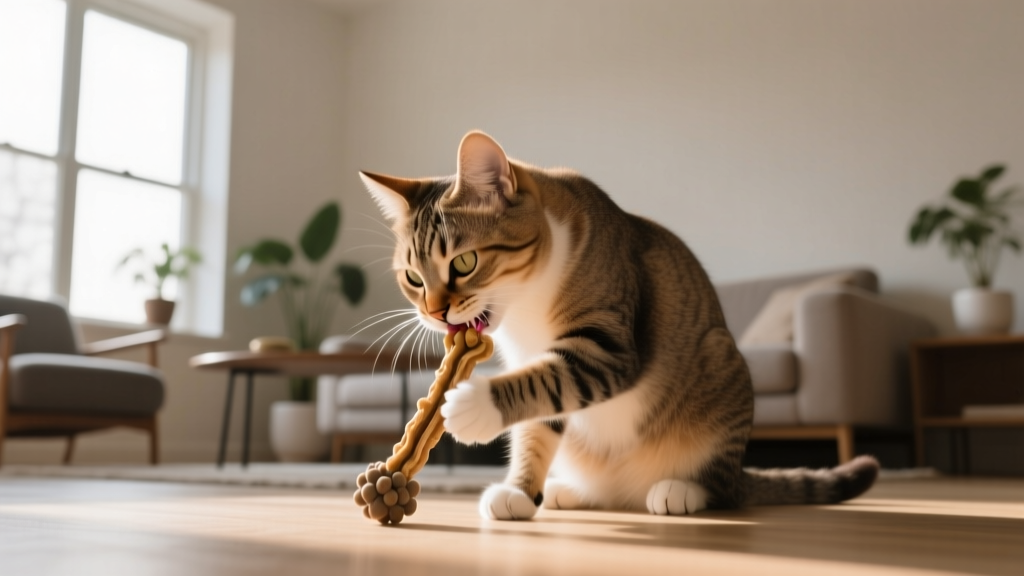
- Day 3–5: Enrichment Layering — Introduce one new enrichment element daily: vertical space (cat tree near window), foraging (food puzzle instead of bowl), or scent rotation (swap blankets between cats’ beds every 48 hours to normalize smells).
- Day 6–8: Positive Association Training — Use high-value treats (freeze-dried chicken) to pair neutral moments: click-and-treat when cats sit calmly within 6 feet of each other; reward relaxed blinking during mutual gaze. Never force proximity.
- Day 9–10: Controlled Reintroduction — Begin 5-minute supervised sessions with a barrier (crated cat + open carrier for the other). End before tension rises. Track progress in a journal: note duration of calm, frequency of lip licking (a stress indicator), and voluntary proximity.
This protocol works because it reduces ambiguity — the #1 driver of feline anxiety. Cats thrive on predictability. When resources are abundant and safe, ‘dominant’ posturing drops by up to 73%, per IAABC field data from 2021–2023.
When to Call a Professional — And What to Look For
Not all cases resolve with environmental tweaks. Seek help from a board-certified veterinary behaviorist (DACVB) or IAABC-certified feline behavior consultant if you observe:
- Unprovoked aggression toward humans (biting without warning, stalking)
- Self-mutilation (excessive licking, hair loss, open wounds)
- Elimination outside the box in multiple locations, especially on soft surfaces like beds or laundry
- Sudden onset after age 10 (red flag for cognitive decline or metabolic disease)
Don’t rely on general veterinarians alone for behavioral cases — less than 12% receive formal behavior training beyond basic coursework (AVMA 2022 survey). A DACVB will conduct a full medical workup (including bloodwork, urinalysis, and orthopedic exam) before recommending behavior modification. They may prescribe short-term anti-anxiety medication like gabapentin for acute stress — but only alongside environmental changes. Remember: medication treats symptoms, not causes. As Dr. Sophia Yin, pioneer in low-stress handling, emphasized: “The environment must change first — pills are scaffolding, not solutions.”
Feline Communication Decoder: Reading the Real Signals
Many ‘dominant’ labels stem from misreading body language. A slow blink isn’t submission — it’s trust. A tail held high with a quiver? Not dominance — it’s affectionate greeting. Below is a quick-reference table translating common misunderstood signals:
| Behavior Observed | What It Usually Means | What to Do Instead |
|---|---|---|
| Staring with unblinking eyes | High alertness or mild anxiety — not challenge | Look away slowly; offer treat at 3-ft distance to break tension |
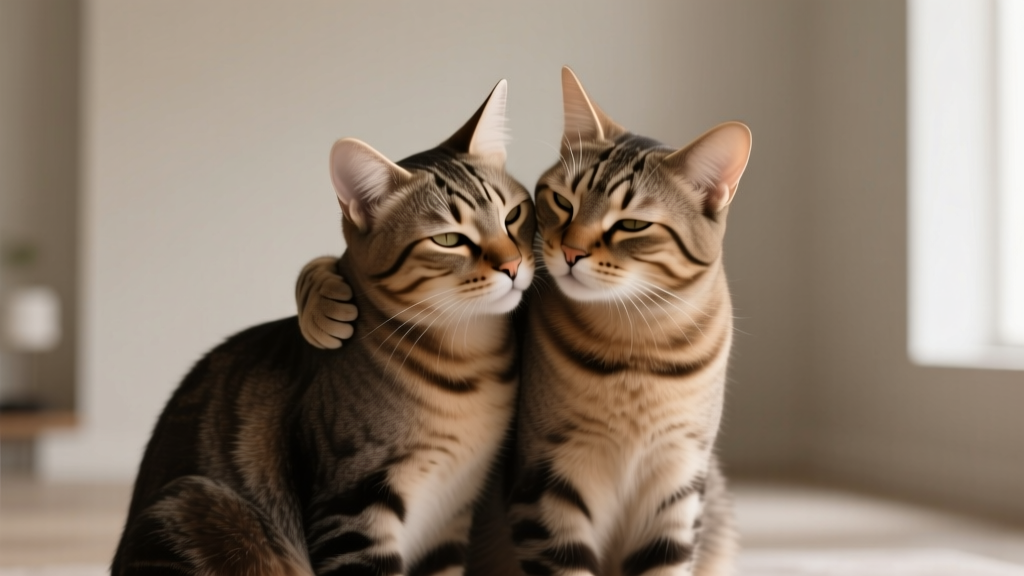
| Head-butting (bunting) on your arm | Marking you with facial pheromones — sign of deep bonding | Return gentle chin scratches — avoid full-body petting unless cat initiates |
| Swatting when petted | Overstimulation — skin sensitivity, not rejection | Stop before tail flicks; count strokes (max 5–7); reward calm exit |
| Blocking doorways | Monitoring movement — desire for control over environment | Add side-step access (low shelf, ramp); place treat just past threshold |
| Growling at other cats | Pain or fear response — often linked to resource scarcity | Install visual barriers (frosted film on glass doors); feed cats in separate rooms |
Frequently Asked Questions
Can neutering/spaying reduce dominant behavior in cats?
Neutering or spaying rarely affects ‘dominant’ behavior — because it’s not hormonally driven. While intact males may show more roaming or urine marking, aggression rooted in fear, pain, or environmental stress persists post-surgery. A 2021 JAVMA study tracking 127 cats found no statistically significant reduction in inter-cat aggression after sterilization alone — but 82% improved when combined with environmental enrichment and separation protocols. So yes, get them fixed for health and population reasons — but don’t expect it to solve behavioral tension.
My cat growls when I pick him up — is that dominance?
No — it’s almost certainly fear or discomfort. Cats have zero evolutionary reason to ‘submit’ to being lifted. Growling, flattened ears, and tail lashing signal acute distress. Instead of forcing restraint, train voluntary cooperation: start by rewarding your cat for touching a carrier with their nose, then entering for treats, then accepting brief closed-door sessions. Use towel wraps (‘kitty burritos’) for necessary handling — never scruff. As certified feline practitioner Dr. Elizabeth Colleran notes: “If your cat resists lifting, ask yourself: ‘Would I enjoy being hoisted by my armpits?’ Respect builds trust faster than coercion ever could.”
Will getting a second cat fix my ‘dominant’ cat’s behavior?
Almost never — and often makes it worse. Introducing a new cat increases competition for resources and heightens stress for both animals. A 2022 University of Lincoln study found that 68% of households adding a second cat reported increased aggression in the original cat within 3 weeks — especially if introductions were rushed. If companionship is the goal, adopt a kitten under 6 months (who’s more adaptable) and follow a 3-week gradual introduction protocol with scent swapping, barrier sessions, and positive reinforcement. But never add a cat to ‘fix’ existing behavior — address the root cause first.
Are certain breeds more ‘dominant’ than others?
No breed is inherently dominant. However, some — like Siamese or Bengals — have higher energy and vocalization thresholds, which can be misread as bossiness. A Maine Coon’s large size might make resource guarding appear more imposing, but the underlying motivation (stress, not hierarchy) is identical to a tiny Singapura. Breed tendencies relate to activity level and sociability, not social rank. Focus on individual temperament, not stereotypes.
Should I use a spray bottle or citronella collar to stop dominant behavior?
Absolutely not. Spray bottles create negative associations with you and increase fear-based aggression. Citronella collars deliver unpredictable aversive stimuli — banned in the UK and discouraged by the American Veterinary Society of Animal Behavior (AVSAB). These tools suppress symptoms while worsening the underlying anxiety. AVSAB’s 2023 position statement declares: “Aversive methods compromise welfare and increase risk of aggression, fear, and avoidance.” Stick to reward-based, fear-free strategies — they’re slower but sustainably effective.
Common Myths About Dominant Behavior in Cats
Myth #1: “You must establish yourself as the alpha to stop dominant behavior.”
False. Cats don’t recognize human ‘alphas’. Attempting to assert dominance (e.g., staring down, holding cat’s head, ‘alpha rolls’) triggers panic. Their nervous system interprets it as predatory threat — escalating defensive aggression. Leadership to a cat means reliability: consistent feeding times, clean litter, safe retreats.
Myth #2: “Dominant cats need stricter rules and less affection.”
Also false. Withholding affection increases insecurity and resource-guarding. What cats need is predictable affection — initiated on their terms. Offer chin rubs when they rub against you; ignore demands for attention while sleeping. Affection becomes reinforcing when it follows calm, confident behavior — not when used as bribery or withheld as punishment.
Related Topics (Internal Link Suggestions)
- Cat Aggression Toward Humans — suggested anchor text: "why does my cat bite me out of nowhere"
- Introducing Cats to Each Other — suggested anchor text: "how to introduce cats safely step by step"
- Best Litter Boxes for Multi-Cat Homes — suggested anchor text: "litter box setup for 2 cats"
- Feline Stress Signs You’re Missing — suggested anchor text: "subtle signs your cat is stressed"
- Food Puzzles for Cats — suggested anchor text: "best slow feeder bowls for cats"
Your Next Step: Start Small, Stay Consistent
You now know the truth: how to stop dominant behavior in cats starts not with control, but with compassion and environmental intelligence. Forget dominance — think diplomacy. Today, pick just one action from the 10-Day Reset: count your litter boxes, move a food bowl to a quieter corner, or sit quietly near your cat and reward a single slow blink. Small, consistent shifts rewire neural pathways faster than dramatic interventions. Keep a simple log — not of problems, but of calm moments: “10 a.m.: Both cats napped 3 ft apart,” “7 p.m.: No hissing during dinner prep.” Progress isn’t linear, but it is inevitable when you meet your cat’s needs, not your assumptions. Ready to go deeper? Download our free Feline Stress Audit Checklist — a printable, veterinarian-reviewed tool to spot hidden stressors in under 5 minutes.