How to Stop Cat Behavior Peeing for Good
Why This Isn’t Just ‘Bad Habits’ — It’s Your Cat Screaming for Help
If you’re searching how to stop cat behavior peeing, you’re likely exhausted: scrubbing carpets at midnight, replacing sofa cushions, wondering if your beloved companion suddenly hates you—or worse, if something’s seriously wrong. Here’s the truth no one tells you upfront: inappropriate urination is rarely about spite or rebellion. It’s your cat’s primary language of distress—whether from silent urinary tract pain, unmet environmental needs, or unresolved anxiety. And ignoring it doesn’t make it go away; it often escalates into multi-site marking, substrate preference shifts (like peeing on laundry or beds), or full-blown avoidance of the litter box altogether. The good news? With accurate diagnosis and targeted intervention, over 85% of cases resolve within 4–6 weeks—not months.
Step 1: Rule Out Medical Causes — Before You Change a Single Litter Box
Never assume inappropriate urination is purely behavioral. Up to 40% of cats presenting with how to stop cat behavior peeing concerns actually have underlying medical conditions—including feline lower urinary tract disease (FLUTD), chronic kidney disease, diabetes mellitus, hyperthyroidism, or painful urinary crystals. Dr. Sarah Wooten, DVM and certified veterinary behaviorist, emphasizes: “If your cat is straining, vocalizing while urinating, producing small or bloody urine, or licking their genital area excessively, this is a medical emergency—not a training issue.”
What to do immediately:
- Collect a fresh urine sample (ideally first-morning void) using non-absorbent litter like Yesterday’s News or a clean ceramic bowl placed under the litter—then bring it to your vet within 2 hours for urinalysis and culture.
- Request abdominal ultrasound if initial tests are inconclusive—especially for older cats or those with recurrent episodes. Stones or microcrystals can hide in bladder folds.
- Track patterns meticulously: Note time of day, surface type (carpet vs. tile), proximity to doors/windows, and whether other pets or people were present. A pattern may reveal stressors invisible to you.
Pro tip: Even if your cat seems perfectly healthy, get a baseline urinalysis before starting any behavioral plan. Why? Because untreated cystitis causes lasting bladder hypersensitivity—and once pain becomes associated with the litter box, the behavior persists long after the infection clears.
Step 2: Audit Your Litter Box Setup Like a Feline Interior Designer
Cats don’t just “use” litter boxes—they evaluate them as critical real estate: Is it safe? Private? Clean? Convenient? Yet 73% of households fail at least three core litter box principles, according to the 2023 International Cat Care Environmental Enrichment Survey. Here’s how to pass the feline inspection:
- Quantity rule: Provide n + 1 boxes (where n = number of cats). Two cats? Three boxes. Three cats? Four boxes—not two larger ones. Cats avoid sharing, especially if dominant/submissive dynamics exist.
- Location matters more than you think: Boxes must be on quiet, low-traffic floors (never basements or laundry rooms with dryers), away from food/water bowls, and not tucked inside closets or behind doors. One cat in our case study—a 5-year-old Maine Coon named Jasper—stopped peeing on the guest bed only after we moved his box from the noisy utility room to a sunlit hallway corner with visual cover.
- Litter texture & depth: Most cats prefer unscented, fine-grained clumping clay or soft paper-based litter, 2–3 inches deep. Avoid crystal litters (too noisy), scented varieties (irritating to sensitive noses), or liners (they crinkle and trap urine).
And yes—cleaning frequency is non-negotiable. Scoop at least twice daily. Fully change litter and wash the box with mild soap (no ammonia or bleach—smells mimic urine and attract repeat visits) every 7–10 days. A 2022 Cornell Feline Health Center study found that cats were 3.2x more likely to avoid boxes cleaned less than once per day—even if visibly clean.
Step 3: Decode the Message Behind the Mess — Is It Marking, Anxiety, or Aversion?
Not all inappropriate urination is equal. Understanding the why dictates the fix:
- Marking (typically on vertical surfaces like walls, doors, or furniture): Often tied to territorial insecurity—new pets, construction noise, outdoor cats visible through windows, or household changes (new baby, roommate, renovation). Urine volume is small; posture is upright with tail quivering.
- Avoidance (urinating on soft fabrics, beds, or rugs near sleeping areas): Usually signals litter box aversion—due to pain, poor placement, or negative associations (e.g., being startled while eliminating).
- Anxiety-driven elimination (small puddles in quiet corners, closets, or laundry piles): Common in multi-cat homes with subtle social tension or during life transitions (moving, holidays, work-from-home shifts).
Real-world example: Luna, a 3-year-old Siamese, began peeing on her owner’s yoga mat. Initial assumption? Marking. But video monitoring revealed she’d approach the box, sniff, then back away—only to urinate minutes later on the mat. Her vet confirmed early-stage interstitial cystitis. After pain management and adding a second box with softer litter, incidents dropped from 5x/week to zero in 18 days.
Key intervention: For marking, reduce visual access to outdoor cats with opaque window film or motion-activated sprinklers. For anxiety, introduce pheromone support (Feliway Optimum diffusers—clinically shown to reduce marking by 64% in 4-week trials) and create ‘safe zones’ with elevated perches, hiding spots, and consistent routines.
Step 4: Retrain Without Shame — Positive Reinforcement Protocols That Stick
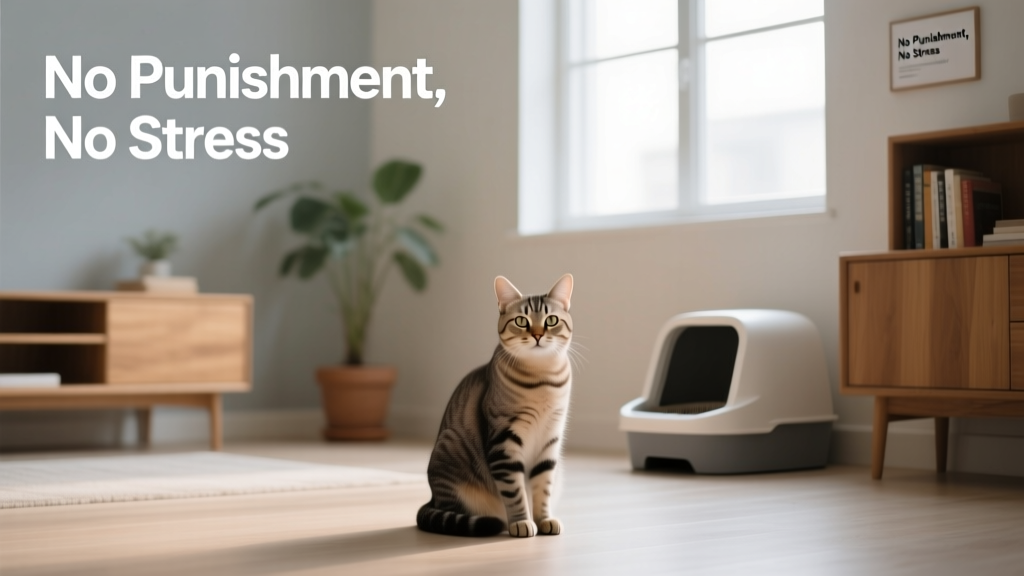
Punishment—spraying, yelling, rubbing noses in urine—is not only ineffective but actively harmful. It destroys trust, increases fear-based urination, and teaches cats to hide elimination behaviors (making detection harder). Instead, use reward-based redirection:
- Confine temporarily: Use a spare bathroom or large crate with bedding, food, water, and one immaculately clean litter box. Keep confinement short (3–5 days max) and supervised. Only expand space when 48+ hours pass with zero accidents.
- Reset associations: If your cat pees on the bed, thoroughly enzymatically clean the spot (avoid vinegar or steam cleaners—they set odors), then place their food bowl there for 1–2 weeks. Cats avoid eliminating where they eat.
- Clicker train targeting: Teach ‘touch’ with a target stick, then lure your cat into the box and click/treat for entering, sniffing, and eventually covering. Reward calm, relaxed postures—not just elimination.
- Gradual reintegration: Once accident-free in confinement, add one new room per day—always with its own box nearby. Monitor closely with motion-activated cameras (like Furbo or Petcube) for early warning signs.
Consistency beats intensity. A 2021 Journal of Veterinary Behavior study showed cats trained with daily 5-minute positive sessions had 91% success at 6 weeks versus 47% in groups relying solely on environmental changes.
| Step | Action | Tools Needed | Expected Outcome Timeline |
|---|---|---|---|
| 1. Medical Triage | Urinalysis + physical exam; treat infections/stones if found | Vet visit, sterile collection kit, transport bag | 1–3 days for results; resolution in 5–14 days if medical |
| 2. Litter Box Reset | Add n+1 boxes; optimize location, litter type, cleaning schedule | Extra boxes, unscented clumping litter, mild soap | Reduction in incidents within 3–7 days; full compliance in 2–3 weeks |
| 3. Stress Mitigation | Install Feliway Optimum, block outdoor cat views, add vertical space | Feliway diffuser, window film, cat trees, cardboard boxes | Behavioral improvement in 7–14 days; sustained effect by week 4 |
| 4. Positive Retraining | Confinement + clicker training + food-bowl relocation | Clicker, treats, enzymatic cleaner, extra food bowls | Zero accidents in confined zone within 3–5 days; full home reintegration in 10–21 days |
Frequently Asked Questions
Will neutering/spaying stop my cat from spraying?
Yes—in most cases. Intact males spray in ~85% of households; neutering reduces this to ~10%. For females, spaying cuts spraying incidence by ~95%. However, if spraying begins after neutering/spaying (especially after age 1), it’s almost always behavioral or medical—not hormonal. Don’t assume sterilization is a cure-all for established habits.
Can I use vinegar or hydrogen peroxide to clean cat urine?
No—absolutely not. Vinegar’s acidic pH can react with alkaline urine salts, creating new odor compounds. Hydrogen peroxide may bleach fabrics but fails to break down urea crystals and proteins. Only enzymatic cleaners (like Nature’s Miracle Advanced or Anti-Icky-Poo) contain protease and urease enzymes that digest organic waste at the molecular level. Always test on fabric first and allow 12+ hours of dwell time.
My cat only pees outside the box when I’m on vacation—what’s going on?
This points strongly to separation-related anxiety or disruption of routine. Cats thrive on predictability. Even minor changes—different feeder, altered feeding times, or unfamiliar sitters—can trigger stress urination. Solutions include pre-trip desensitization (have sitters visit 3x before departure), leaving worn clothing with your scent, and using timed feeders + Feliway diffusers. Video monitoring helps confirm timing and context.
Is it okay to punish my cat by putting their nose in the urine?
No—it’s counterproductive and damaging. Cats don’t associate punishment with past actions (they live in the moment). Nose-in-urine causes fear, erodes your bond, and may shift elimination to hidden locations (under beds, inside closets). Instead, interrupt gently with a soft ‘psst’, then redirect to the box. Focus on preventing future incidents—not punishing past ones.
How long should I wait before seeing improvement?
With correct medical clearance and consistent implementation of environmental + behavioral strategies, expect noticeable reduction within 3–7 days. Full resolution typically takes 3–6 weeks. If no improvement by week 3, revisit your vet—consider referral to a board-certified veterinary behaviorist (DACVB) or advanced diagnostics like cystoscopy.
Common Myths About Inappropriate Urination
- Myth #1: “Cats pee out of revenge or spite.” Cats lack the cognitive capacity for vengeful motivation. What looks like ‘revenge’ is usually heightened anxiety triggered by your absence, a new pet, or even your stress levels—cats mirror human emotional states neurologically.
- Myth #2: “If my cat uses the box sometimes, it’s definitely behavioral—not medical.” Partial box use is common in early-stage FLUTD or arthritis. A cat may enter the box but urinate beside it due to pain or stiffness—especially in senior cats. Always rule out pain first.
Related Topics (Internal Link Suggestions)
- Feline urinary tract health — suggested anchor text: "signs of UTI in cats"
- Best litter boxes for senior cats — suggested anchor text: "low-entry litter box for arthritic cats"
- How to introduce a new cat without stress — suggested anchor text: "multi-cat household peeing solutions"
- Enzymatic cleaners for pet urine — suggested anchor text: "best urine odor remover for carpets"
- Feliway diffuser reviews and science — suggested anchor text: "does Feliway really work for spraying?"
Your Next Step Starts Today — Not Tomorrow
You now hold a roadmap grounded in veterinary science and real-world success—not guesswork or folklore. how to stop cat behavior peeing isn’t about fixing your cat; it’s about listening deeply to what their body and environment are telling you. Start with the medical check—today. Then implement one change from the litter box audit. Track results for 72 hours. Small, evidence-based actions compound faster than dramatic overhauls. If you’ve tried everything and still see no progress, don’t hesitate to seek a DACVB-certified behaviorist—the American College of Veterinary Behaviorists directory is free to search online. Your cat isn’t broken. They’re communicating. And now, you know exactly how to answer.