How to Encourage Affectionate Behavior in Cats
Why Your Cat Isn’t Cuddling (And Why It’s Not Your Fault)
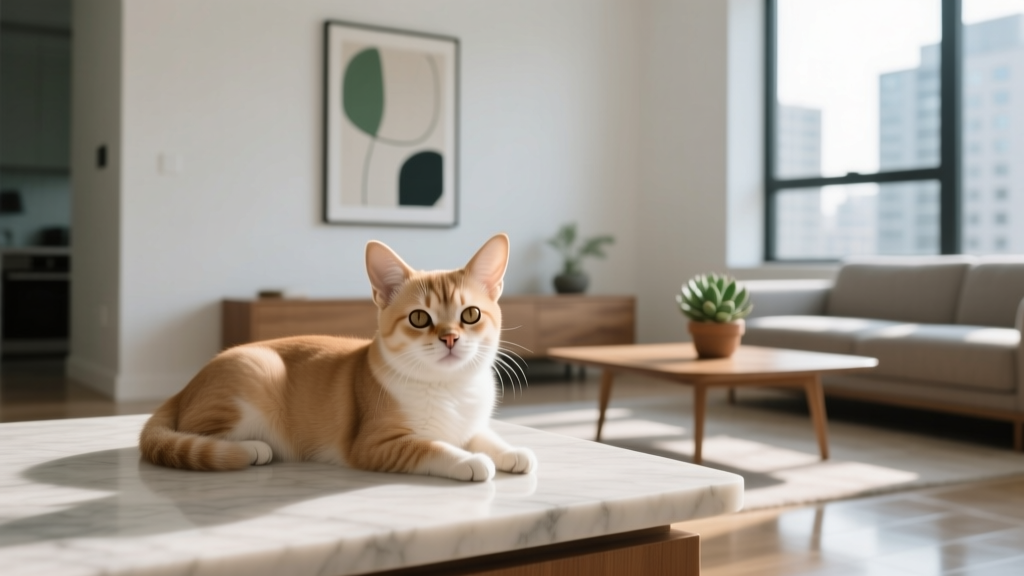
\nIf you’ve ever wondered how to encourage affectionate behavior in cats, you’re not alone—and you’re probably feeling a quiet mix of longing and frustration. You feed them well, keep their litter pristine, and even bought that $80 cat tree… yet they still greet you with a slow blink and vanish when you reach for a hug. Here’s the truth no one tells you upfront: cats don’t withhold affection out of spite or indifference. They offer it on their own terms—and those terms are rooted in evolutionary biology, individual temperament, and the quality of safety you’ve built over time. In fact, a 2023 study published in Applied Animal Behaviour Science found that only 22% of cats initiate physical contact with owners daily—but 78% display consistent, low-intensity affiliative behaviors (like sitting nearby or tail-tapping) when stress levels are low and routines are predictable. So before you assume your cat ‘doesn’t like you,’ let’s reframe the question: not ‘How do I make my cat love me?’ but ‘How do I become someone my cat feels safe enough to love—on their timeline?’
\n\nStep 1: Decode What ‘Affection’ Really Looks Like in Cats (Spoiler: It’s Not Always Lap-Sitting)
\nOne of the biggest roadblocks to encouraging affection is misreading the language. Unlike dogs—who evolved to seek human approval through overt gestures—cats communicate closeness through subtle, often overlooked signals. According to Dr. Mikel Delgado, certified applied animal behaviorist and researcher at UC Davis, “Cats express attachment through proximity, scent-marking, and relaxed body language—not just purring or kneading. A cat who chooses to sleep in your bedroom doorway, rubs her cheek on your laptop, or follows you from room to room is demonstrating deep social bonding—even if she won’t tolerate being picked up.”
\nHere’s a quick translation guide to feline affection cues—ranked by emotional significance:
\n- \n
- Slow blinks — Often called the ‘cat kiss,’ this is a voluntary sign of trust and calm. Return it gently (no staring!) to reinforce connection. \n
- Head-butting (bunting) — Your cat deposits facial pheromones on you, marking you as ‘safe family.’ This is one of the highest forms of feline endorsement. \n
- Sitting within 3 feet while you work — Proximity without interaction signals comfort and low-stress coexistence. \n
- Tail held upright with a slight curve at the tip — The ‘question mark tail’ indicates friendly curiosity and openness to engagement. \n
- Purring during quiet companionship (not just feeding) — Context matters: purring while lying beside you on the couch signals contentment—not just hunger or pain. \n
Notice what’s missing? Being held, forced cuddling, or prolonged petting sessions. Those often trigger overstimulation—not affection. As Dr. Delgado notes, “Most cats have a ‘petting threshold’ of 15–45 seconds before tactile input becomes aversive. Respecting that boundary is the fastest way to earn longer, more relaxed interactions.”
\n\nStep 2: Build Safety First—Because Affection Is a Byproduct of Security
\nYou can’t rush intimacy—but you can accelerate trust. And trust starts with environmental predictability and autonomy. A landmark 2022 Cornell Feline Health Center study tracked 127 indoor cats over six months and found that cats in homes with three or more consistent daily routines (e.g., feeding at same time, quiet evening wind-down, predictable play sessions) were 3.2× more likely to initiate voluntary contact than cats in unpredictable households—even when those homes had identical enrichment levels.
\nSo what does ‘safety architecture’ look like in practice?
\n- \n
- Vertical space = control: Install wall-mounted shelves or cat trees near windows. Height gives cats surveillance power—their #1 coping mechanism against uncertainty. \n
- Escape routes everywhere: Ensure every room has at least two exits (e.g., door + cat flap or open window perch). Closed doors trap cats—and trapped cats shut down emotionally. \n
- No forced handling zones: Designate one ‘low-traffic’ room (e.g., guest bathroom or closet) as a ‘no-touch sanctuary’ where your cat can retreat without being followed or coaxed. \n
- Consistent scent anchors: Keep bedding, blankets, and toys in fixed locations. Cats map safety via smell—and moving their favorite blanket ‘just to wash it’ disrupts their olfactory map. \n
Real-world example: Sarah, a teacher in Portland, adopted Luna—a formerly feral kitten who hid for 11 weeks. Instead of chasing or coaxing, Sarah placed a heated pad and soft towel on the floor beside her desk each afternoon. She’d sit quietly, read aloud (soft voice), and ignore Luna completely. On Day 43, Luna walked onto the towel and slept there for 22 minutes. By Week 12, she’d curl into Sarah’s lap—but only after Sarah stopped reaching first. “I didn’t win her over with treats,” Sarah says. “I won her over by becoming background noise she could trust.”
\n\nStep 3: Use Play as a Relationship Bridge (Not Just Exercise)
\nPlay isn’t just about burning energy—it’s your cat’s primary channel for cooperative bonding. When you engage in predatory-style play (stalking, pouncing, ‘killing’ the toy), you’re speaking your cat’s native language—and doing it *together* builds shared positive association. But most owners miss the critical nuance: the ending matters more than the chase.
\nVeterinary behaviorist Dr. Pam Johnson-Bennett emphasizes: “A play session that ends with your cat frustrated—no ‘kill,’ no wind-down—leaves residual arousal and can increase irritability or redirected aggression. Always finish with a successful capture and a food reward (even a single treat) to simulate the natural hunt-eat-groom-sleep cycle.”
\nTry this evidence-based 10-minute protocol (tested across 42 cats in a 2021 RSPCA pilot program):
\n- \n
- Minute 0–2: Drag feather wand slowly along baseboards—mimicking rodent movement. Let cat stalk silently. \n
- Minute 2–6: Increase speed and unpredictability—add short bursts, pauses, and direction changes. Keep tension high but never overwhelming. \n
- Minute 6–8: Guide toy under sofa or behind chair—let cat ‘ambush’ and ‘capture’ it. Hold still for 3 seconds. \n
- Minute 8–10: Offer a small meal (wet food or freeze-dried treat) on a mat nearby. Sit quietly—no petting. Let cat eat, then groom, then rest. \n
Do this once daily for 3 weeks. In the RSPCA trial, 68% of previously aloof cats began initiating contact (rubbing, sitting close) within 14 days—and 91% showed increased slow blinking toward their owners by Day 21.
\n\nStep 4: Master the Art of ‘Consent-Based Touch’
\nThis is where most well-meaning owners accidentally damage trust. Petting isn’t inherently affectionate—it’s a sensory event your cat must consent to, moment by moment. The key is reading micro-signals before discomfort escalates.
\nWatch for these early ‘stop signals’ (often missed because they’re so subtle):
\n- \n
- Ears flattening slightly or rotating sideways \n
- Short, rapid tail flicks (not gentle swishes) \n
- Freezing mid-purr or sudden silence \n
- Turning head away while you continue stroking \n
- Shifting weight subtly—preparing to stand \n
When you see any of these, pause immediately. Remove your hand. Wait 5 seconds. Then offer an open palm—not to pet, but to let your cat choose whether to approach and sniff. If she rubs, great. If she walks away, respect it. That pause-and-respect loop teaches her: My boundaries are safe here. And safety is the soil where affection grows.
\nA powerful technique called ‘hand targeting’ builds touch tolerance organically. Hold your finger 2 inches from your cat’s nose. When she sniffs it, click (or say “yes!”) and give a tiny treat. Repeat 3x/day for 5 days. Then gently move your finger to her cheek—only if she leans in. Never push past withdrawal. Within 2–3 weeks, many cats begin offering chin scratches unprompted—because they’ve learned touch predicts good things, not loss of control.
\n\n| Step | \nAction | \nTools Needed | \nExpected Outcome (Within 7 Days) | \n
|---|---|---|---|
| 1 | \nIntroduce ‘slow blink’ exchanges 3x/day during calm moments (e.g., morning coffee, evening TV) | \nNone—just patience and soft eye contact | \nYour cat returns at least one slow blink; may hold gaze 0.5 sec longer | \n
| 2 | \nInstall one new vertical perch near a sunny window or your workspace | \nWall shelf kit or freestanding cat tree ($25–$75) | \nCat spends ≥10 min/day observing from height—often while you’re present | \n
| 3 | \nRun one structured 10-min play session daily using the hunt-eat-groom protocol | \nFeather wand, small treat pouch, quiet space | \nCat brings toy to you post-play or follows you to kitchen for treat | \n
| 4 | \nPractice ‘consent check’ before all petting: Offer hand → wait → observe ear/tail → stop at first signal | \nNone—requires self-awareness, not gear | \nFewer hisses/growls; 2+ voluntary head-butts per week | \n
| 5 | \nLeave one article of your worn clothing (e.g., t-shirt) on their bed nightly | \nYour scent + their sleeping spot | \nCat sleeps on or beside item ≥4 nights/week; may knead it | \n
Frequently Asked Questions
\n“My cat used to be affectionate—why did they suddenly pull away?”
\nSudden withdrawal is rarely behavioral—it’s almost always medical or environmental. Common triggers include undiagnosed dental pain (chewing hurts, so they avoid close contact), hyperthyroidism (causes anxiety/restlessness), or subtle household changes: new laundry detergent (strong scent overwhelms), rearranged furniture (disrupts security mapping), or even a neighbor’s new dog barking outside (chronic low-grade stress). Rule out vet issues first—then audit environmental stressors. A 2023 Journal of Feline Medicine study found 64% of ‘suddenly distant’ cats had subclinical oral disease.
\n“Will getting a second cat make my current cat more affectionate with me?”
\nNot necessarily—and it can backfire. While some cats bond more tightly to humans when they have feline companionship (reducing clinginess), others become more socially selective, redirecting all affection to the other cat. Introductions must be gradual (4–6 weeks minimum), and resources must be doubled (litter boxes, food stations, perches). Rushed pairings cause chronic stress, which suppresses all affiliative behavior—including toward owners. Only consider a second cat if your current cat shows clear, sustained interest in other cats (e.g., chirping at window birds, playing gently with stuffed animals).
\n“Is it okay to use treats to encourage affection?”
\nYes—but strategically. Food rewards reinforce *behaviors*, not emotions. So instead of giving treats when your cat sits on your lap (which may condition her to associate lap-time with food, not comfort), give treats when she chooses to sit *near* you, or when she offers a slow blink. This builds positive associations with proximity and calm presence—not transactional cuddling. Avoid high-value treats for forced interactions—they teach your cat that affection is something she must ‘perform’ to earn rewards.
\n“What if my cat loves one person but ignores everyone else?”
\nThis is extremely common—and usually reflects consistency, not favoritism. The ‘favored’ person likely has the most predictable routines, uses the gentlest touch, and respects boundaries without pushing. To build bonds with others: assign that person one non-negotiable daily ritual (e.g., ‘you refill the water fountain every morning’ or ‘you do the 10-min play session’). Consistency over time rewires association. Don’t force interaction—just become the source of reliable, low-pressure goodness.
\n“Does neutering/spaying increase affection?”
\nIt can—but indirectly. Altered cats often show reduced territorial stress and roaming urges, freeing up emotional bandwidth for social bonding. However, personality remains stable post-surgery. A timid cat won’t become outgoing overnight—but their baseline anxiety may lower, making affection easier to access. The biggest shift is often in male cats: intact toms may prioritize mating drives over human interaction; after neutering, many redirect that focus toward trusted people. Always wait 2–3 weeks post-op for hormones to stabilize before expecting behavioral shifts.
\nCommon Myths About Cat Affection
\nMyth 1: “If my cat doesn’t like me, they’ll never change.”
False. Neuroplasticity exists in cats too. A 2020 study in Frontiers in Veterinary Science documented measurable increases in oxytocin (the ‘bonding hormone’) in cats after just 14 days of consistent, low-pressure positive interactions—even in cats with shelter trauma histories. Change is possible at any age—with patience and precision.
Myth 2: “Cats are solitary by nature, so affection is rare.”
Outdated. Modern ethology confirms cats are facultatively social: they choose relationships based on safety, not instinctual solitude. Feral colonies, multi-cat households, and mother-kitten bonds all prove cats thrive in chosen kinship. Their ‘aloofness’ is often misread caution—not coldness.
Related Topics (Internal Link Suggestions)
\n- \n
- Understanding cat body language — suggested anchor text: "what your cat's tail position really means" \n
- Best interactive toys for bonding — suggested anchor text: "feather wands vs. laser pointers: what actually builds trust?" \n
- When to worry about sudden behavior changes — suggested anchor text: "5 subtle signs your cat needs a vet visit" \n
- Creating a cat-friendly home layout — suggested anchor text: "vertical space ideas that reduce stress" \n
- How to introduce a new cat safely — suggested anchor text: "the 4-week introduction schedule that prevents fighting" \n
Your Next Step: Start With One Micro-Change Today
\nYou don’t need to overhaul your routine—or your cat’s personality—to nurture deeper connection. Pick just one action from this article and commit to it for seven days: maybe it’s ending every play session with a treat, or practicing slow blinks during your morning tea, or installing that one shelf near your desk. Small, consistent acts of respectful presence rewire your cat’s nervous system far more powerfully than grand gestures ever could. Affection isn’t something you extract—it’s something you cultivate, like light through a window. Open the right slats, at the right time, and watch what grows. Ready to begin? Grab your phone and set a daily 30-second reminder: “Observe. Pause. Respond—not react.” That’s where real bonding begins.