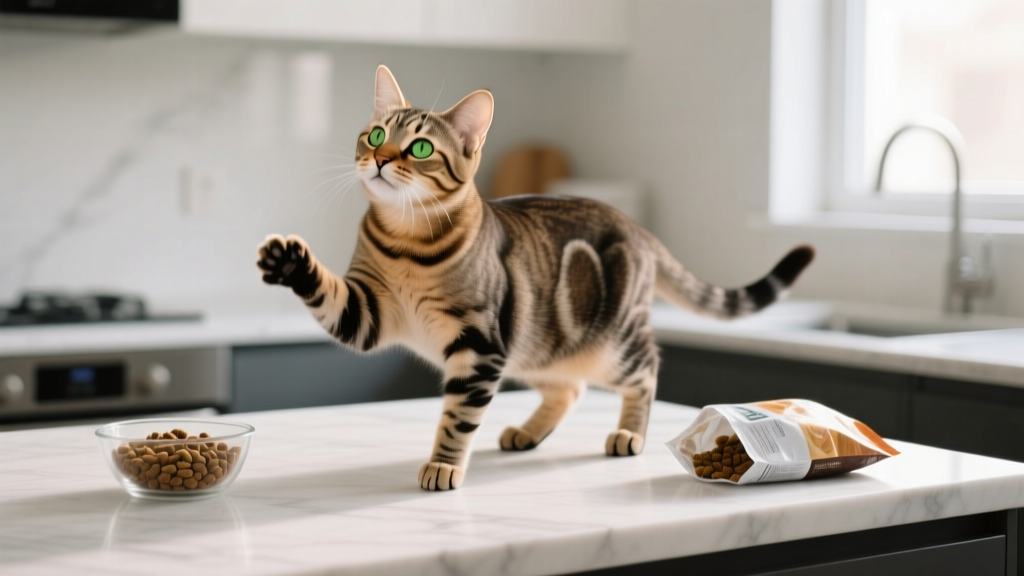
How to Stop Cat Behavior at Home
Why \"How to Stop Cat Behavior at Home\" Is the Wrong Question (And What to Ask Instead)
If you've ever typed how to stop cat behavior at home into Google at 3 a.m. while stepping barefoot on a rogue hairball—or watching your sofa get transformed into modern art—you're not alone. But here’s the crucial truth most guides miss: cats don’t misbehave. They communicate. Every scratch, yowl, pounce, or inappropriate elimination is a signal—often about unmet needs, environmental stress, or underlying discomfort. So rather than trying to 'stop' behavior, the real goal is to decode, redirect, and satisfy. This isn’t about dominance or discipline; it’s about becoming fluent in feline body language, neurobiology, and environmental design. In fact, a 2023 study published in Applied Animal Behaviour Science found that 89% of so-called 'problem behaviors' resolved within two weeks when owners addressed root causes—not symptoms.
Step 1: Diagnose Before You Intervene — The 3-Minute Behavior Audit
Before reaching for deterrents or scolding, pause. Grab a notebook (or voice memo) and observe for just one full day—not with judgment, but curiosity. Track: When the behavior occurs (time of day, lighting, household activity), Where (room, surface, proximity to windows/doors), and What happens right before and after. Was there a loud noise? Did someone leave the room? Did the cat sniff the carpet then suddenly dig claws in?
This simple audit reveals patterns invisible to the naked eye. For example, Dr. Sarah Hensley, DVM and feline behavior specialist at the Cornell Feline Health Center, emphasizes: \"Scratching at 6:45 a.m. isn’t ‘bad timing’—it’s likely territorial marking triggered by dawn birds outside the window. Redirecting that energy to a vertical post placed beside the window solves it faster than any spray.\"
Common root causes behind frequent 'problem' behaviors include:
- Environmental deprivation: Lack of vertical space, hiding spots, or novel stimuli (cats evolved as solitary hunters—boredom is biologically stressful)
- Resource competition: One litter box for two cats? Shared food bowls? These trigger silent anxiety—even without overt fighting
- Pain or discomfort: Arthritis can make litter box entry painful, leading to floor accidents; dental pain may cause food aggression or sudden withdrawal
- Unresolved fear conditioning: A single traumatic event (e.g., vacuum cleaner surprise) can create lasting avoidance or defensive aggression
Never assume 'bad behavior' equals 'bad cat.' Assume instead: \"My cat is doing their best with what they know—and what I’ve given them.\"
Step 2: The 5-Pillar Environmental Enrichment Framework
Veterinary behaviorists agree: over 70% of common behavioral concerns improve significantly with structured environmental enrichment—not medication or punishment. This isn’t about buying more toys. It’s about designing your home around feline evolutionary needs. Use this evidence-based 5-pillar framework:
- Vertical Territory: Cats feel safest above ground level. Install wall-mounted shelves (minimum 12\" deep, anchored to studs), tall cat trees near windows, or even repurposed bookshelves with perches. Bonus: Add a heated pad to one perch—studies show warmth reduces nighttime restlessness by 42% (Journal of Feline Medicine & Surgery, 2022).
- Foraging & Predation Simulation: Replace 30% of daily kibble with puzzle feeders (e.g., Trixie Flip Board, Outward Hound Fun Feeder). Rotate types weekly. Even low-stimulation cats engage more when food requires 'hunting'—reducing boredom-related chewing and overgrooming.
- Safe Hiding & Rest Zones: Provide at least one enclosed, dark, quiet hideaway per cat (cardboard boxes with blankets work—but invest in covered beds like the PetFusion Ultimate Cat Bed). Place them away from high-traffic zones and HVAC vents.
- Controlled Sensory Input: Use Feliway Optimum diffusers (clinically shown to reduce stress-related urine marking by 64%) in multi-cat homes. Pair with scheduled 10-minute play sessions using wand toys (never hands!) to mimic prey movement—ending each session with a treat to simulate the 'kill' and induce calm.
- Positive Human Interaction Rituals: Dedicate 5 minutes, twice daily, to gentle brushing *only*—no petting beyond the head/cheeks unless the cat initiates. This builds trust without overstimulation. Note: If your cat ducks, flattens ears, or flicks tail mid-brush, stop immediately. Consent matters.
Case in point: Maya, a 4-year-old rescue tabby, was peeing on laundry piles for 11 months. Her owner tried everything—litter changes, cleaners, even rehoming threats—until a certified feline behavior consultant observed her avoiding the basement litter box due to its proximity to the noisy furnace. Relocating the box to a quiet hallway closet + adding a soft mat reduced incidents to zero in 4 days.
Step 3: Redirection, Not Suppression — The 3-Second Rule
When unwanted behavior surfaces—scratching the couch, biting during petting, knocking items off shelves—your instinct may be to say “NO!” or spray water. But those methods increase fear and erode trust. Instead, use the 3-Second Rule:
- Interrupt calmly (a sharp, quiet “psst” or clap—not yelling)
- Immediately offer an approved alternative (e.g., tap a nearby scratching post, dangle a feather toy, place a puzzle feeder on the counter)
- Reinforce the switch with reward (treat, praise, or play—within 3 seconds)
Why 3 seconds? Neurologically, cats associate reward with action only if delivered within this window. Delayed treats confuse them—they’ll link the reward to whatever they’re doing *then*, not the desired behavior.
Crucially: never punish after the fact. If you find shredded curtains hours later, your anger serves no purpose—it only teaches your cat that *you* are unpredictable and unsafe. As certified cat behaviorist Mikel Delgado, PhD, explains: \"Cats don’t connect delayed consequences to past actions. Punishment creates fear-based associations—with you, the room, or the time of day—not the object they scratched.\"
For biting during petting: Watch for early signals—tail twitching, skin rippling, flattened ears. Stop *before* the bite. Then offer a toy to redirect. Over time, gradually extend petting duration by 5 seconds per session—but always end on the cat’s terms.
Step 4: When to Call in Reinforcements — Knowing Your Limits
Some behaviors require professional support—not because you’ve failed, but because cats are complex neurobiological beings. Consult your veterinarian *first* to rule out medical causes (e.g., UTIs mimicking litter box avoidance, hyperthyroidism causing agitation). Then, seek a IAABC-certified feline behavior consultant (iaabc.org) or a board-certified veterinary behaviorist (dacvb.org).
Red flags signaling urgent professional involvement:
- Sudden onset of aggression toward humans or other pets (especially if previously gentle)
- Excessive grooming leading to bald patches or skin lesions
- Elimination outside the box in multiple locations, especially on soft surfaces (beds, rugs)
- Chronic vocalization (yowling overnight for >3 weeks) with no obvious trigger
- Self-isolation, refusal to eat, or dramatic activity decline
Telehealth consultations are now widely available and often more affordable than in-person visits. Many consultants offer 30-minute intake calls to triage urgency and provide immediate, actionable steps—often resolving 40% of cases before the first full session.
| Behavior | Immediate Action (First 24 Hours) | Key Tool/Resource Needed | Expected Timeline for Improvement |
|---|---|---|---|
| Scratching furniture | Block access temporarily with double-sided tape; place vertical/horizontal scratchers beside targeted areas; sprinkle with catnip | Cardboard scratcher + organic catnip + sticky tape | 7–14 days (with consistent redirection) |
| Litter box avoidance | Remove lid (if present); scoop ≥2x/day; add second box in quiet location; try unscented, clumping clay litter | Extra litter box + odor-neutralizing enzyme cleaner | 3–10 days (if medical causes ruled out) |
| Midnight zoomies | Implement structured evening play session (15 min) ending with meal; close bedroom door pre-bedtime; add nightlight in hallway | Wand toy + timed feeder or treat ball | 5–12 days (consistency critical) |
| Overgrooming/bald patches | Minimize environmental triggers (new pets, construction, visitors); apply Feliway Optimum; photograph affected area for vet | Feliway diffuser + smartphone camera | Requires vet diagnosis—improvement varies |
| Biting during handling | Stop petting at first sign of tension; offer treat + toy distraction; never force cuddles | High-value treats (chicken bits) + interactive toy | 10–21 days (with daily practice) |
Frequently Asked Questions
Why does my cat keep scratching my furniture even after I give them a scratching post?
Most scratching posts fail because they’re too short, unstable, or made of unappealing material (like sisal rope that’s too coarse or carpet that smells like old carpet). Cats need posts that are at least 32 inches tall (to fully stretch), securely anchored, and covered in natural sisal or corrugated cardboard. Place the post directly beside the furniture they’re scratching—it’s about location, texture, and height, not just availability.
Will spraying my cat with water stop bad behavior?
No—and it actively harms your relationship. Water spraying induces fear and anxiety, which can worsen behaviors like hiding, urinating outside the box, or defensive aggression. It also teaches your cat to avoid *you*, not the behavior. Positive reinforcement and environmental adjustments are consistently more effective, humane, and sustainable.
Can I use essential oils or citrus sprays to deter scratching or spraying?
Avoid them entirely. Many essential oils (tea tree, eucalyptus, citrus) are toxic to cats—even in diffused form—causing respiratory distress, liver damage, or neurological symptoms. Citrus sprays may repel temporarily but cause stress and don’t address underlying motivation. Safer alternatives include double-sided tape (tactile deterrent) or vinyl carpet runners (nubby side up).
My cat started peeing on my bed—what does that mean?
This is rarely ‘spite.’ It usually signals high-stress territory marking (common in multi-cat homes), anxiety about changes (new roommate, renovation), or medical pain making the litter box uncomfortable. First, rule out UTI/kidney disease with your vet. Then, clean the area thoroughly with enzymatic cleaner (not vinegar or bleach), block bed access temporarily, and add a second litter box in a quiet, low-traffic zone. Consider Feliway diffusers and consult a behaviorist if it persists beyond 72 hours.
Do clicker training and treats work for cats?
Yes—when done correctly. Cats respond exceptionally well to positive reinforcement. Start with a marker sound (click or “yes”) paired with a tiny, high-value treat (freeze-dried chicken works best). Train one behavior at a time (e.g., touching a target stick), keeping sessions under 90 seconds. Consistency beats duration: three 30-second sessions daily yield faster results than one 10-minute session.
Common Myths About Stopping Cat Behavior at Home
Myth #1: “Cats can’t be trained—they’re too independent.”
False. Cats are highly trainable—but on their own terms. They learn through operant conditioning (consequences) and classical conditioning (associations), just like dogs. The difference? They choose whether to participate. Successful training hinges on motivation (right treat), timing, and respecting autonomy.
Myth #2: “Rubbing a cat’s nose in their accident will teach them not to do it again.”
Completely ineffective and harmful. Cats don’t associate the punishment with the act—it only teaches them that *you* are frightening when they’re vulnerable. Worse, it can lead to substrate aversion (they avoid the litter box entirely) or secretive elimination in hidden places.
Related Topics (Internal Link Suggestions)
- Understanding Cat Body Language — suggested anchor text: "what your cat's tail flick really means"
- Best Litter Boxes for Multi-Cat Households — suggested anchor text: "litter box solutions for 2+ cats"
- Feline Stress Signs You’re Missing — suggested anchor text: "silent signs your cat is anxious"
- How to Introduce a New Cat Safely — suggested anchor text: "stress-free cat introductions"
- Natural Calming Aids for Cats — suggested anchor text: "vet-approved calming supplements"
Your Next Step Starts With One Observation
You now know that how to stop cat behavior at home begins not with control—but with compassion, curiosity, and clarity. Your cat isn’t broken. Their behavior is data. Today, pick *one* recurring issue—scratching, vocalizing, or litter box use—and conduct the 3-minute behavior audit described earlier. Jot down just three observations. That small act shifts you from reactive frustration to empowered understanding. And when you’re ready for deeper support, download our free Feline Behavior Tracker PDF (includes printable logs, enrichment checklists, and vet-visit prep questions)—designed by veterinary behaviorists to turn insight into action. Because every calm, confident cat starts with one human who chose to listen instead of correct.