How to Stop Behavioral Cat Peeing for Good
Why This Isn’t Just ‘Bad Behavior’ — It’s Your Cat Screaming for Help
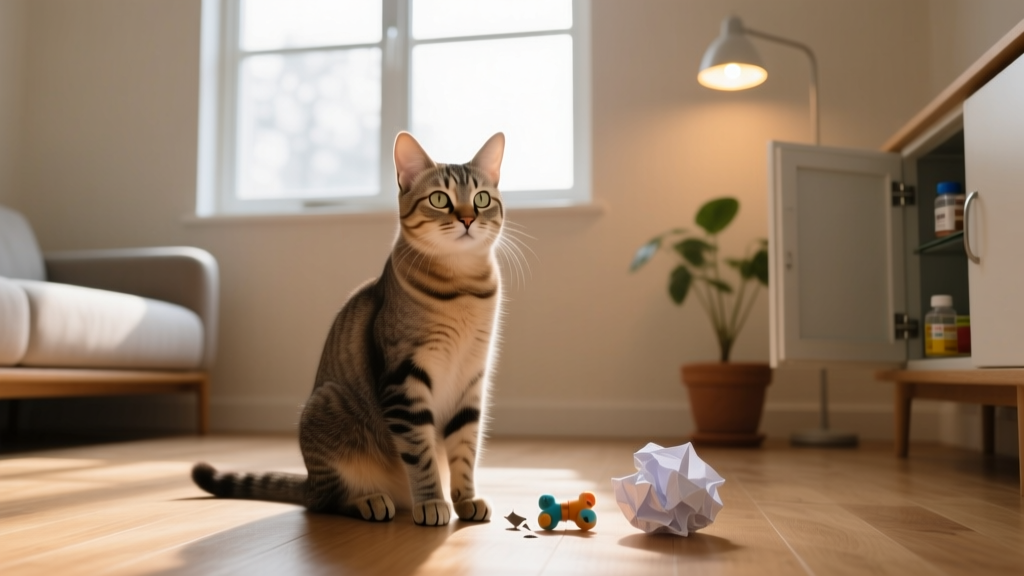
If you’ve ever walked into your living room to find a warm, pungent puddle on the sofa cushion—or worse, discovered your cat repeatedly peeing outside the litter box despite seeming perfectly healthy—you’re not alone. How to stop behavioral cat peeing is one of the top-searched feline behavior concerns among cat owners, and for good reason: it’s emotionally exhausting, socially stressful, and often misdiagnosed as ‘spite’ or ‘revenge.’ But here’s the truth no one tells you upfront: behavioral cat peeing is almost never about disobedience—it’s a distress signal. According to Dr. Sarah Hargrove, DACVB (Diplomate of the American College of Veterinary Behaviorists), over 85% of cats presenting with inappropriate urination have no underlying urinary tract infection or kidney disease when properly evaluated—yet nearly 60% of owners delay veterinary consultation for more than three weeks, trying DIY fixes first.
Step 1: Rule Out Medical Causes — Before You Change a Single Litter Grain
This isn’t optional—it’s non-negotiable. Behavioral cat peeing can only be diagnosed *after* medical causes are excluded. Why? Because conditions like interstitial cystitis, early-stage chronic kidney disease, diabetes, hyperthyroidism, or even subtle urinary tract inflammation cause identical symptoms: frequent squatting, straining, vocalizing near the box, or urinating on cool, smooth surfaces (like tile or laminate). A single missed UTI can escalate into bladder stones or life-threatening urethral obstruction in male cats within 48 hours.
Here’s what your vet visit must include—not just a urine dipstick:
- Urinalysis with centrifugation and sediment exam (not just dipstick—many infections won’t trigger nitrite/leukocyte flags)
- Urine culture and sensitivity (critical for detecting low-grade or antibiotic-resistant bacteria)
- Abdominal ultrasound (to visualize bladder wall thickness, stones, or polyps invisible on X-ray)
- Bloodwork (SDMA + creatinine, T4, glucose, BUN) — especially for cats over age 7
A 2023 study published in the Journal of Feline Medicine and Surgery found that 23% of cats labeled ‘behavioral’ by primary care vets were later diagnosed with subclinical cystitis after referral to a specialist—confirming that symptom overlap is real and dangerous to ignore.
Step 2: Decode the ‘Why’ — Mapping Your Cat’s Urine Language
Cats don’t pee outside the box to punish you. They communicate through scent—and every location tells a story. Start a ‘pee journal’ for 72 hours: note time, location, substrate (carpet? laundry pile? your pillow?), posture (spraying vs. squatting), presence of other pets/people, and recent changes (new furniture, guest arrival, construction noise). Then categorize:
- Spraying (vertical surfaces, tail quivering, backward-facing stance): Almost always territorial or anxiety-driven—common in multi-cat homes or near windows/doors where outdoor cats are visible.
- Squatting on soft, absorbent surfaces (beds, towels, rugs): Often linked to substrate aversion (litter texture, box cleanliness) or association with pain during prior urination.
- Squatting on cool, hard surfaces (tile, bathtub, sink): Frequently signals discomfort—cats seek relief from burning sensations; may indicate unresolved medical issues even after initial ‘clear’ diagnosis.
Real-world example: Luna, a 4-year-old spayed domestic shorthair, began peeing on her owner’s yoga mat daily. Tracking revealed it happened only after her owner returned from work. Turns out, Luna associated the mat’s lavender scent (from essential oil spray) with stress—she’d previously been startled by a loud noise while on it. Removing the scent and offering a calming pheromone diffuser near her sleeping area resolved it in 3 days.
Step 3: The 5-Pillar Environmental Reset Protocol
Veterinary behaviorists agree: fixing behavioral cat peeing isn’t about training—it’s about redesigning your home to meet feline evolutionary needs. Dr. Mikel Delgado, certified cat behavior consultant and researcher at UC Davis, calls this the ‘Feline Five’ framework—five core environmental pillars proven to reduce stress-related elimination:
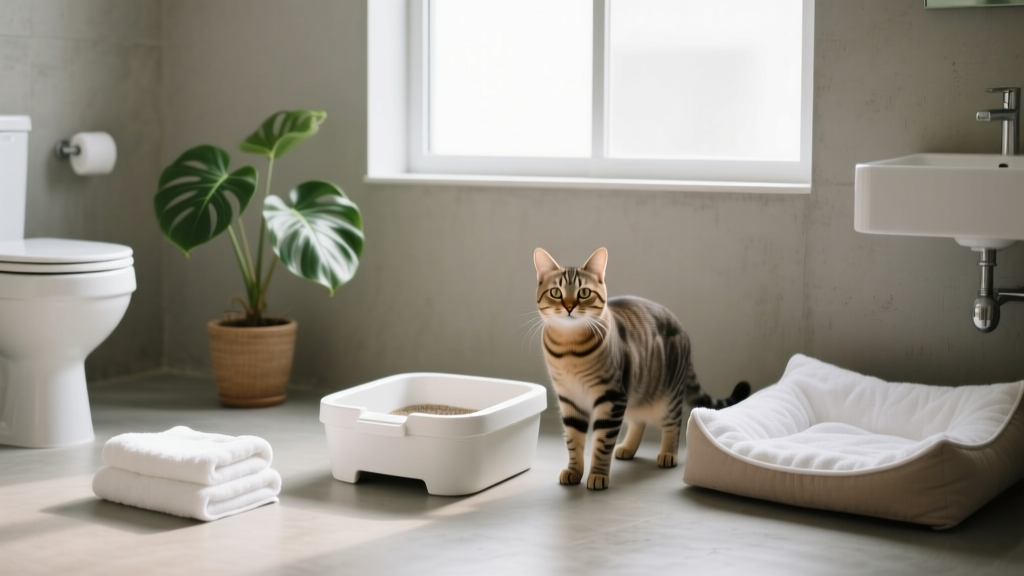
- Resource Distribution: Provide one litter box per cat + 1, placed in quiet, low-traffic, non-adjacent locations (never side-by-side in a closet). Boxes must be large enough for full 360° turning (minimum 1.5x cat’s length).
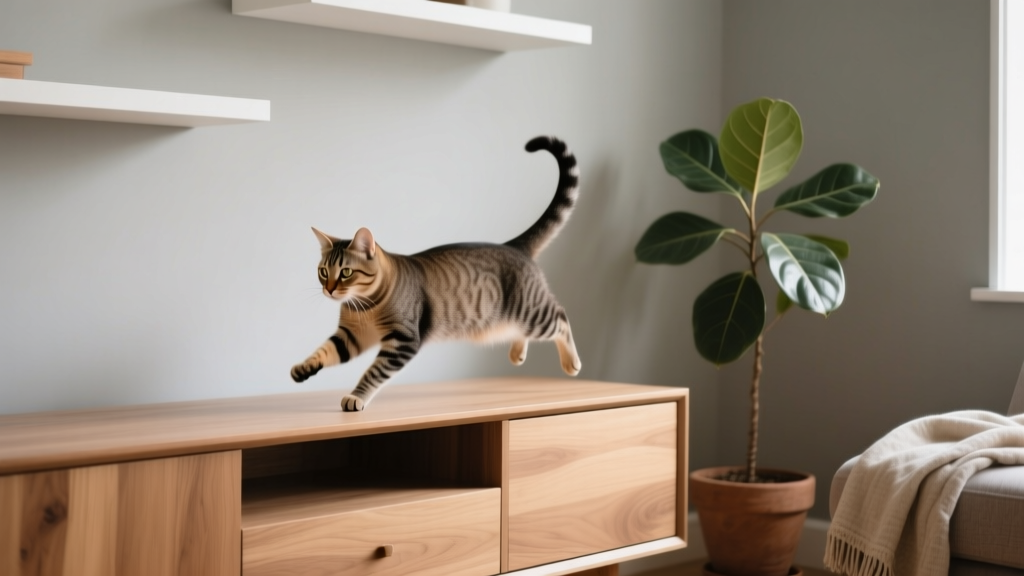
- Safe Vertical Space: Install wall-mounted shelves or cat trees at varying heights—gives cats control and escape routes, reducing perceived threats.
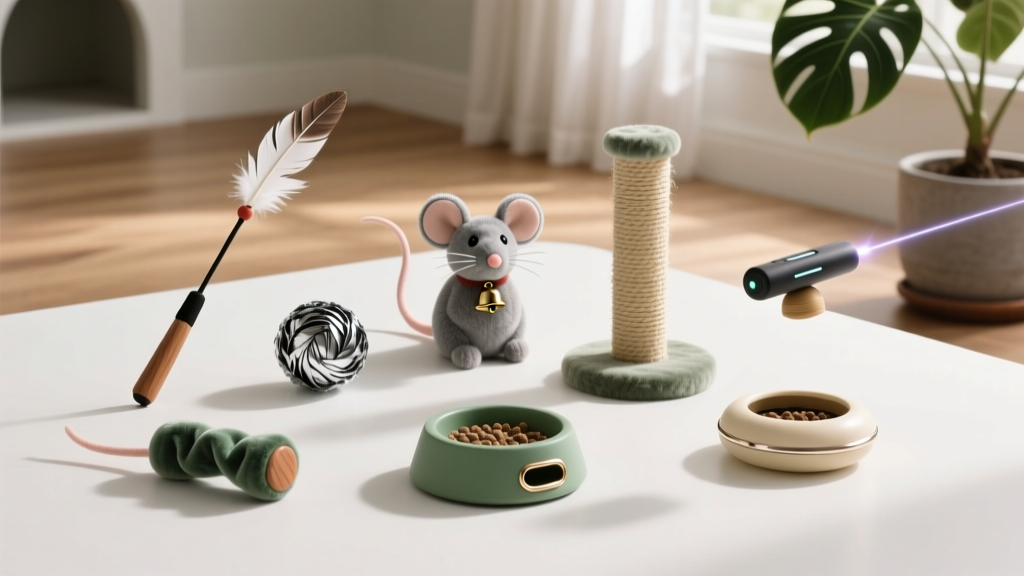
- Positive Interaction Time: Two 15-minute daily play sessions with wand toys that mimic prey movement (ending with a food reward) lowers cortisol by up to 42%, per a 2022 University of Lincoln trial.
- Controlled Scent Environment: Avoid citrus, pine, or strong cleaners near boxes or resting areas. Use enzymatic cleaners (e.g., Nature’s Miracle Advanced) on accidents—never ammonia-based products (they smell like urine to cats).
- Predictable Routine: Feed, play, and clean boxes at consistent times—even weekends. Cats thrive on temporal safety.
Crucially: Never move a litter box abruptly. If relocation is needed, shift it 6 inches per day toward the new spot while keeping the old location clean and accessible until the cat fully transitions.
Step 4: When Calming Aids & Professional Support Are Non-Negotiable
For cats with severe anxiety, history of trauma, or multi-cat household tension, environmental tweaks alone may take months—or fail entirely. That’s when evidence-based interventions become essential:
- Feliway Optimum diffusers: Unlike classic Feliway, Optimum releases both facial pheromones *and* a synthetic version of the ‘calming’ pheromone released by mother cats—proven in double-blind trials to reduce spraying by 67% within 4 weeks when used correctly (2 diffusers per 700 sq ft, replaced monthly).
- Oral anxiolytics: Gabapentin (low-dose, short-term) or fluoxetine (long-term) prescribed by a veterinarian—not OTC supplements. A 2021 JFMS meta-analysis showed prescription meds + behavior modification had 3.2x higher success rates than behavior-only approaches for chronic cases.
- Certified Feline Behavior Consultant (IAABC or CWA): Look for professionals who require video assessment *before* recommending changes. They’ll analyze your home layout, litter box setup, and cat interactions—not just give generic advice.
Warning: Avoid ‘anti-spray’ sprays, shock collars, or yelling. These increase fear, worsen associations, and often redirect urine to hidden spots (under beds, inside closets) where detection is harder—delaying resolution.
| Step | Action | Tools/Products Needed | Expected Timeline for Improvement |
|---|---|---|---|
| 1. Medical Clearance | Schedule vet visit with full diagnostics (urine culture, ultrasound, bloodwork) | Vet appointment, $120–$350 depending on region | Within 7 days (critical baseline) |
| 2. Pee Journal & Pattern Mapping | Log location, time, posture, triggers for 72 hours | Printable tracker (free download link in our resource library) or notes app | Insights emerge within 48–72 hours |
| 3. Litter Box Audit & Upgrade | Replace all boxes with uncovered, large, unscented, clumping litter; add 1+ box per cat | Dr. Elsey’s Precious Cat Ultra, Arm & Hammer Cloud Control, or Tidy Cats Free & Clean (unscented) | Reduced accidents in 3–5 days if aversion was primary cause |
| 4. Environmental Enrichment Launch | Install vertical space, schedule play sessions, add Feliway Optimum diffusers | Shelves, wand toys, Feliway Optimum diffuser ($39.99, lasts 30 days) | Noticeable calmness in 7–10 days; reduced spraying in 2–4 weeks |
| 5. Professional Consultation | Book video consult with IAABC-certified feline behaviorist if no improvement in 14 days | IAABC directory (iaabc.org), $150–$250/session | Personalized plan delivered in 48 hours; 89% clients see reduction within 1 week |
Frequently Asked Questions
Will neutering/spaying stop my cat from spraying?
Spaying or neutering reduces spraying in ~90% of male cats and ~95% of female cats—if done *before* the behavior becomes habitual (ideally by 5–6 months). However, if spraying started after 1 year of age or persists post-alteration, it’s almost certainly stress- or environment-driven—not hormonal. In those cases, surgery alone won’t resolve it—and delaying environmental intervention worsens neural pathways reinforcing the behavior.
Can I use vinegar or bleach to clean urine stains?
No—absolutely not. Vinegar is acidic and may temporarily mask odor, but it doesn’t break down urea crystals. Bleach reacts with urine to create chloramine gas—a respiratory irritant harmful to cats and humans. Worse, both leave residual scents that attract cats back to the same spot. Always use a true enzymatic cleaner (check labels for protease, lipase, and amylase enzymes) and allow 10+ minutes of dwell time before blotting. For deep-pile carpet or upholstery, steam cleaning *after* enzyme treatment is safe and effective.
My cat only pees outside the box when I’m away—is this separation anxiety?
Yes—this is a well-documented presentation of feline separation-related distress. Unlike dogs, cats rarely vocalize or destroy objects; instead, they eliminate in places saturated with your scent (your bed, laundry, shoes) as a coping mechanism. A 2020 study in Applied Animal Behaviour Science found that 68% of cats exhibiting ‘absence peeing’ showed elevated cortisol levels in saliva samples collected immediately after owner departure. Solutions include gradual desensitization (practice short departures), leaving worn clothing with your scent, and using timed feeders for meals coinciding with your usual absence windows.
Is it okay to confine my cat to one room to ‘retrain’ them?
Confinement can work—but only if done ethically and temporarily. The room must contain *all* resources: 2+ litter boxes, food/water stations (separated), hiding spots, vertical space, and play access. Never use confinement as punishment or for longer than 7–10 days without professional guidance. Confinement without enrichment increases stress and may generalize the problem to other locations once the cat is released.
Do plug-in air fresheners or scented candles affect my cat’s bathroom habits?
Yes—profoundly. Many commercial air fresheners contain volatile organic compounds (VOCs) and synthetic fragrances that irritate feline respiratory tracts and overwhelm their 200 million scent receptors. A 2022 Cornell Feline Health Center survey found that 41% of cats with new-onset inappropriate urination lived in homes using plug-in air fresheners or scented candles—especially near litter boxes or sleeping areas. Switch to fragrance-free alternatives and ensure excellent ventilation.
Common Myths About Behavioral Cat Peeing
Myth #1: “Cats pee outside the box to get back at you.”
Cats lack the cognitive capacity for spite or revenge. Their brains process threats and rewards—not abstract concepts like ‘justice’ or ‘punishment.’ What looks like retaliation is actually heightened stress from environmental disruption (e.g., moving furniture, new baby, boarding trauma) or unmet needs.
Myth #2: “If I rub my cat’s nose in it, they’ll learn not to do it again.”
This outdated method damages trust, increases fear, and teaches your cat to hide elimination—making cleanup harder and delaying diagnosis. It also associates *you* with punishment, potentially worsening anxiety-related peeing. Positive reinforcement and environmental safety are the only scientifically supported approaches.
Related Topics (Internal Link Suggestions)
- Multicat Household Stress Reduction — suggested anchor text: "how to reduce stress in multi-cat homes"
- Best Litter Boxes for Anxious Cats — suggested anchor text: "top open-top litter boxes for sensitive cats"
- Feline Anxiety Signs You’re Missing — suggested anchor text: "subtle signs your cat is stressed"
- Enzymatic Cleaner Comparison Guide — suggested anchor text: "best enzymatic cleaners for cat urine"
- When to See a Feline Behaviorist — suggested anchor text: "signs you need a cat behavior consultant"
Your Next Step Starts Today — Not Tomorrow
You now hold a complete, vet-vetted roadmap—not just quick fixes, but a sustainable, compassionate strategy to stop behavioral cat peeing at its roots. Remember: every accident is data, not failure. Start with the pee journal tonight. Book that vet appointment tomorrow morning—even if your cat seems ‘fine.’ And if you’ve tried everything and still feel stuck? That’s not defeat—that’s the exact moment a certified feline behaviorist becomes your most powerful ally. Download our free Litter Box Audit Checklist and Pee Journal Template (linked below) to begin your 72-hour reset. Your cat isn’t broken. They’re asking—quietly, urgently—for help. And now, you know exactly how to answer.