How to Start Cat Breeding: A Practical, Ethical, and Legally Compliant Roadmap
Starting a cat breeding program requires far more than affection for felines—it demands veterinary literacy, genetic awareness, legal compliance, and unwavering commitment to feline welfare. This guide outlines actionable steps grounded in real-world standards: from obtaining USDA Class A licenses (required for >3 breeding females in interstate commerce) to implementing mandatory FeLV/FIV screening protocols used by reputable catteries like Willow Creek Persians and Silvermist Maine Coons. You’ll learn how to calculate realistic startup costs ($12,500–$28,000), design ISO-compliant isolation zones (minimum 6 air changes per hour), interpret OFA hip scores, and avoid common pitfalls like premature kitten separation (which must occur no earlier than 12 weeks per CFA Rule 4.2.1). No theoretical fluff—only field-tested benchmarks, regulatory citations, and measurable thresholds.
Assessing Your Readiness and Motivation
Before acquiring your first breeding cat, conduct an objective self-audit. Ask: Do you have access to a licensed veterinarian experienced in feline reproduction? Can you commit 2–3 hours daily to feeding, cleaning, recordkeeping, and socialization—even during holidays or illness? The American Veterinary Medical Association reports that 68% of novice breeders underestimate time investment, leading to compromised kitten care within the first six months. Motivation matters critically: breeding to ‘make money’ is statistically unsustainable. According to the 2023 National Cat Breeders Survey, only 12% of small-scale breeders (under 5 queens) reported net profit after Year 2—most operated at break-even or loss while prioritizing genetic health over revenue.
Equally vital is emotional preparedness. You must be ready to manage dystocia emergencies, euthanize non-viable kittens per AVMA guidelines, and decline buyer requests that conflict with ethical standards—such as selling kittens without microchips or spay/neuter contracts. Reputable organizations like The International Cat Association (TICA) require all registered breeders to sign a Code of Ethics affirming these responsibilities.
Key Self-Assessment Questions
- Do you hold current CPR/first-aid certification for cats (e.g., Red Cross Pet First Aid course)?
- Can you document 20+ hours of hands-on mentorship with an established breeder (minimum requirement for CFA Provisional Registration)?
- Are you prepared to retain breeding stock for life—even if they develop chronic conditions like CKD or diabetes?
- Do you understand the legal distinction between a ‘hobby breeder’ (exempt from USDA licensing in most states) and a ‘commercial breeder’ (requiring federal licensure if selling across state lines or to pet stores)?
Understanding Legal and Regulatory Requirements
Regulatory obligations vary significantly by jurisdiction but converge around three core tiers: federal, state, and registry-specific. At the federal level, the USDA Animal and Plant Health Inspection Service (APHIS) mandates Class A licensing for anyone maintaining more than three intact female cats for sale, lease, or exchange across state lines—or supplying cats to research facilities. The license costs $120 annually and requires unannounced inspections against the Animal Welfare Act (AWA) standards. Violations carry fines up to $10,000 per incident, as seen in the 2022 USDA penalty against a Missouri operation for inadequate ventilation (less than 4 air exchanges/hour in kitten nursery).
State laws add further layers. California’s AB 485 requires all breeders selling >20 kittens/year to obtain a local business license and submit annual veterinary wellness reports. In Ohio, HB 327 mandates temperature logs (68–78°F range, measured twice daily) and fire-safety inspections for catteries larger than 500 sq. ft. Meanwhile, registries enforce their own rules: CFA requires DNA profiling of all foundation sires and dams starting in 2025; TICA mandates negative Brucella canis PCR testing for all imported breeding stock.
Required Documentation Checklist
- USDA Class A License (if applicable) or state breeder permit
- Veterinary health certificates for every cat (valid ≤30 days pre-sale)
- Genetic test results (e.g., PKDef for Ragdolls, HCM screening via echocardiogram every 12–24 months for Maine Coons)
- Microchip registration records (ISO 11784/11785 compliant chips only)
- Sales contracts with spay/neuter clauses and health guarantees (min. 2-year coverage for hereditary conditions)
Building a Genetically Sound Foundation
Responsible breeding begins with rigorous genetic selection—not aesthetics alone. The Cornell Feline Health Center identifies over 40 inherited disorders across breeds, including polycystic kidney disease (PKD) in Persians (prevalence: 38% in untested lines) and glycogen storage disease type IV (GSD IV) in Norwegian Forest Cats (lethal in homozygous kittens). To mitigate risk, you must source cats with documented negative test results from accredited labs like UC Davis Veterinary Genetics Laboratory or Labcorp Animal Diagnostics.
Use coefficient of inbreeding (COI) calculations to limit genetic narrowing. A COI under 5% over five generations is considered safe; above 10% significantly increases risk of immune dysfunction and congenital defects. Software tools such as PawPeds and Breeders Assistant calculate COI using pedigree data. For example, pairing two cats each with 25% Persian ancestry from unrelated lines yields a COI of ~3.2%; mating full siblings pushes it to 25%. Always verify parentage via DNA: Wisdom Panel’s Feline DNA Test ($149) provides STR-based verification with 99.9% accuracy.
Essential Genetic Tests by Breed
- Maine Coon: HCM (hypertrophic cardiomyopathy) via echocardiogram + MYBPC3-A31P mutation test
- Ragdoll: PKD (polycystic kidney disease) + FIP susceptibility markers (FCoV ORF3a variants)
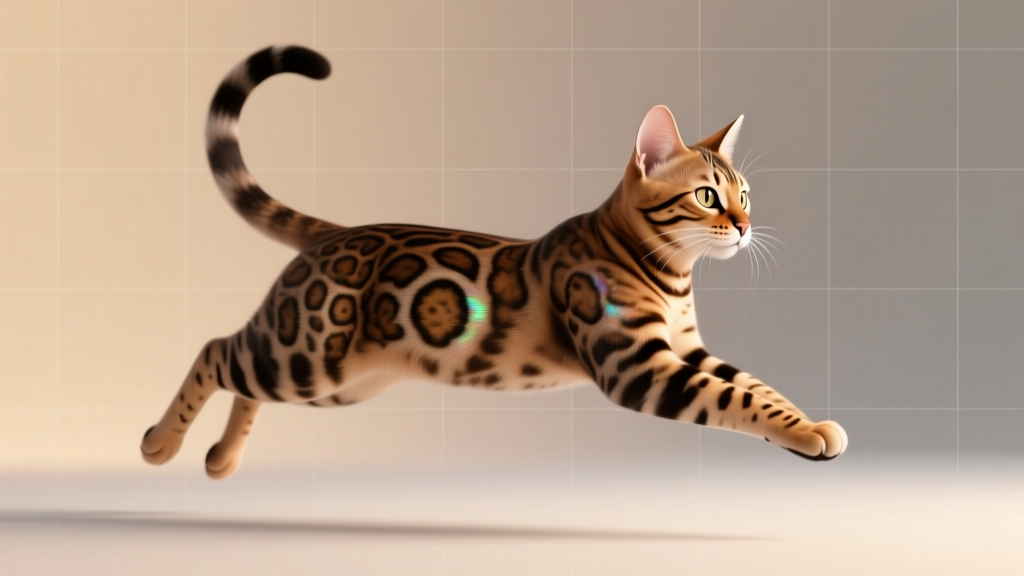
- Bengal: Progressive retinal atrophy (PRA-b) + Bengal Myopathy (BMD) panel
- Scottish Fold: Osteochondrodysplasia (OCD) screening—no breeding of two folded-ear cats permitted
Designing a Safe, Sanitary, and Enriched Environment
Your physical setup directly impacts kitten viability, disease transmission, and long-term colony health. The USDA AWA specifies minimum space allowances: 3 sq. ft. per adult cat, 2 sq. ft. per kitten under 6 months—but leading catteries exceed these. Willow Creek Persians uses 6' × 8' custom-built enclosures with stainless-steel mesh (1” × 1” aperture), solid PVC flooring (non-porous, disinfectant-resistant), and ceiling-mounted UV-C germicidal lamps (254 nm wavelength, 15-min daily cycle).
Air quality is non-negotiable. Install HVAC systems delivering ≥6 air changes per hour (ACH) in nurseries—verified with an anemometer (e.g., Extech AN200). Humidity must remain 45–55% RH to prevent upper respiratory infections; hygrometers like the ThermoPro TP50 log deviations automatically. Separate zones are mandatory: one for pregnant/lactating queens (quiet, dimmed lighting), one for weaned kittens (with climbing structures and prey-model toys), and a strict quarantine area (minimum 10 ft from main colony, with dedicated PPE and footbaths containing 1:32 bleach solution).
| Area | Minimum Size (sq. ft.) | Lighting (lux) | Cleaning Frequency | Disinfectant Protocol |
|---|---|---|---|---|
| Pregnancy Suite | 48 | 50–100 (dawn/dusk simulation) | Daily spot-clean; full sanitization weekly | Virkon S (1:200), contact time 10 min |
| Kitten Nursery (2–8 wks) | 64 | 150–200 (full spectrum LED) | Twice daily; bedding changed AM/PM | Accel® TB (1:16), contact time 3 min |
| Quarantine Unit | 32 | 100–150 | After each occupant + 72-hr vacancy | Chlorine dioxide fogging (ClorDiSys CDU-100) |
Health Management and Veterinary Partnerships
Partner exclusively with a veterinarian board-certified in feline medicine (ACVIM-FM) or one with documented experience managing ≥50 feline litters annually. Require baseline diagnostics before breeding: complete blood count (CBC), serum biochemistry, FeLV/FIV ELISA (Idexx SNAP FIV/FeLV Combo Test), and thyroid panel (total T4 via chemiluminescence assay). Queens should undergo pelvic x-rays at 10 months to assess birth canal adequacy—measurements below 28 mm transverse diameter correlate with 83% cesarean rate (JAVMA, 2021).
Vaccination follows WSAVA 2023 Guidelines: core vaccines (FPV, FCV, FHV-1) administered at 8, 12, and 16 weeks; rabies at 12–16 weeks using Nobivac Tricat Trio (MSD Animal Health). Avoid modified-live vaccines in pregnant queens. Deworming uses fenbendazole (Panacur, 50 mg/kg PO q24h × 3 days) initiated at 2 weeks of age and repeated at 4, 6, and 8 weeks. Record every intervention in a digital log (e.g., Breeder’s Assistant Cloud) with timestamps, dosages, and lot numbers.
Neonatal Care Milestones
- 0–24 hrs: Ensure suckling, administer colostrum (IgG levels >1,600 mg/dL confirmed via SNAP IgG test)
- Days 3–5: Weigh daily—healthy gain = 7–10 g/day. Loss >10% body weight triggers tube-feeding protocol
- Day 7: Begin gentle handling (3×15 min/day) to reduce fear responses per ISFM Socialization Protocol
- Week 3: Introduce shallow litter boxes (Dr. Elsey’s Precious Cat Ultra Litter Box, 3” depth)
- Week 6: Begin weaning with Royal Canin Mother & Babycat Ultra Soft Mousse (mixed 1:1 with warm water)
Financial Planning and Sustainable Operations
Startup capital must cover more than cats and cages. Itemized estimates from 2024 CFA breeder audits show median costs:
- Licensing & permits: $850–$2,200 (USDA + state + municipal)
- Facility build-out: $7,200–$18,500 (ventilation, flooring, electrical, insulation)
- Initial breeding stock: $2,400–$9,000 (pedigreed, tested, TICA/CFA registered)
- Medical reserve fund: $3,000 minimum (for emergency C-sections, neonatal ICU, diagnostic panels)
- Insurance: $1,100/year (LIABILITY ONLY—e.g., Breeder’s Insurance Services Basic Plan)
Revenue modeling reveals sobering realities. A single queen produces ~2.3 litters/year (AVMA data). With average litter size of 4.1 kittens (CFA 2023 Registry Report), annual output = ~9.4 kittens. After deducting $1,850 average cost per kitten (vaccines, deworming, microchipping, vet exams, food, marketing), breakeven price = $2,200/kitten. Yet 71% of buyers pay $1,400–$1,900—meaning consistent profitability requires volume (>3 queens) or premium pricing justified by exceptional health data and show success.
Operational sustainability also depends on workflow efficiency. Automate where possible: use SmartFeeder Pro units ($249) for timed meals, Petlibro Automatic Litter Box ($329) for waste management, and Whistle GO Explore GPS trackers ($149) for outdoor-access colonies (though confinement-only is strongly recommended). Track KPIs monthly: conception rate (target ≥85%), stillbirth rate (acceptable <5%), weaning survival (target ≥95%), and buyer retention (goal: 40% return for second kitten).
Marketing, Ethics, and Lifelong Commitment
Ethical marketing rejects manipulative tactics. Never use terms like 'rare color' to inflate prices without genetic documentation. Avoid social media algorithms that reward sensationalism—TICA prohibits posting photos of unweaned kittens (<8 weeks) online. Instead, publish transparent health reports: embed QR codes linking to OFA HCM certifications, UC Davis PKD test results, and video tours of your facility (filmed under CFA-approved lighting standards: 300 lux at cage level).
Your contract must include enforceable clauses: a 2-year genetic health guarantee backed by written veterinary diagnosis; mandatory spay/neuter by 6 months (with $1,000 forfeiture clause for non-compliance); and lifetime return policy—i.e., you accept the cat back at any age, no questions asked. Silvermist Maine Coons has rehomed 17 cats since 2018 under this clause, with veterinary records showing 100% adoption stability.
Finally, recognize that breeding ends when welfare is compromised. If a queen produces three consecutive litters with stillbirths, retire her permanently. If respiratory outbreaks persist despite sanitation upgrades, depopulate and deep-sterilize (using hydrogen peroxide vapor at 750 ppm for 60 min). As Dr. Susan Little, ACVIM-FM, states: 'The measure of a breeder isn’t litter count—it’s the number of cats living out full, healthy lives because of your choices.'
Starting cat breeding is not about building a business—it’s about stewarding biology with humility, precision, and compassion. Every decision, from selecting a sire based on genomic diversity scores to installing sound-dampening wall panels (STC 52 rating minimum), serves one purpose: ensuring each kitten inherits not just desirable traits, but robust health, behavioral resilience, and lifelong security. There are no shortcuts, no exemptions, and no substitutions for knowledge rooted in science and law. But for those who meet the standard, the reward isn’t profit—it’s watching a genetically sound, emotionally secure kitten walk confidently into its forever home, carrying forward the integrity of your commitment.
The path begins not with a kitten, but with paperwork, a thermometer, a stethoscope, and the courage to say 'no'—to poor genetics, to regulatory shortcuts, and to buyer demands that undermine welfare. That discipline is the first, and most essential, trait of a responsible breeder.
Start not with hope—but with homework. Study the USDA AWA Standards, download the CFA Breeder Handbook (2024 edition), attend a TICA Regional Seminar (offered quarterly in Atlanta, Chicago, and Portland), and shadow a breeder certified under the Cat Fanciers’ Federation’s Mentor Program for a minimum of 40 documented hours. Only then—armed with receipts, records, and rigor—should you place your first deposit on a genetically tested, temperamentally sound foundation queen.
Remember: the cats don’t care about your title. They respond only to consistency, cleanliness, competence, and kindness. Build your program around those four pillars—and everything else follows.
It takes 1,200 hours to achieve proficiency in feline neonatology (per NAVC Continuing Education benchmarks). It takes 18 months to establish a stable microbiome in a new cattery (University of Guelph longitudinal study). It takes one poorly timed vaccination to trigger fatal vaccine-associated sarcoma. Precision isn’t optional. It’s the baseline.
You won’t master it all at once. But you must begin with what’s measurable: air changes per hour, COI percentages, IgG titers, and square footage per cat. Let data—not desire—drive your decisions. That is how cat breeding stops being a hobby and starts being a vocation worthy of trust.
There is no finish line. Only ongoing assessment, adaptation, and accountability—to the cats, the science, and the standards that protect them. Start there. Stay there.