How to Understand Cat Behavior for Sleeping
Why Your Cat’s Sleep Isn’t Just "Zzz" — It’s a Behavioral Blueprint
If you’ve ever stared at your dozing cat wondering how to understand cat behavior for sleeping, you’re not overthinking — you’re tuning into one of the richest, most underutilized windows into their emotional and physical health. Cats spend 12–16 hours a day asleep — nearly double what humans need — yet most owners interpret those hours as passive downtime rather than a dynamic, data-rich behavioral stream. In reality, every curl, blink, tail flick, and sigh during rest carries meaning: it signals safety or stress, pain or contentment, boredom or deep bonding. Misreading these cues doesn’t just lead to confusion — it can delay detection of early arthritis, anxiety disorders, or even hyperthyroidism. And when you finally decode them? You don’t just get better sleep — your cat gets better care, deeper trust, and fewer unexplained vet visits.
What Sleep Postures Reveal About Emotional Safety (and When to Worry)
Cats don’t choose positions randomly — they weigh risk, temperature, visibility, and vulnerability with instinctive precision. Dr. Sarah Wooten, DVM and certified feline behavior consultant, explains: “A cat’s sleep posture is their first-line biofeedback system. It’s less about comfort and more about calculus — how much exposure they’re willing to accept based on perceived threat levels.”
Let’s break down the five most common postures — and what each *really* says:
- The Loaf: Paws tucked tightly under, back rounded, eyes half-closed. Often misread as “just resting,” this is actually a light-sleep alert stance — ideal for quick reorientation. Common in multi-cat homes or near high-traffic areas. Healthy, but may indicate low-grade environmental stress if persistent.
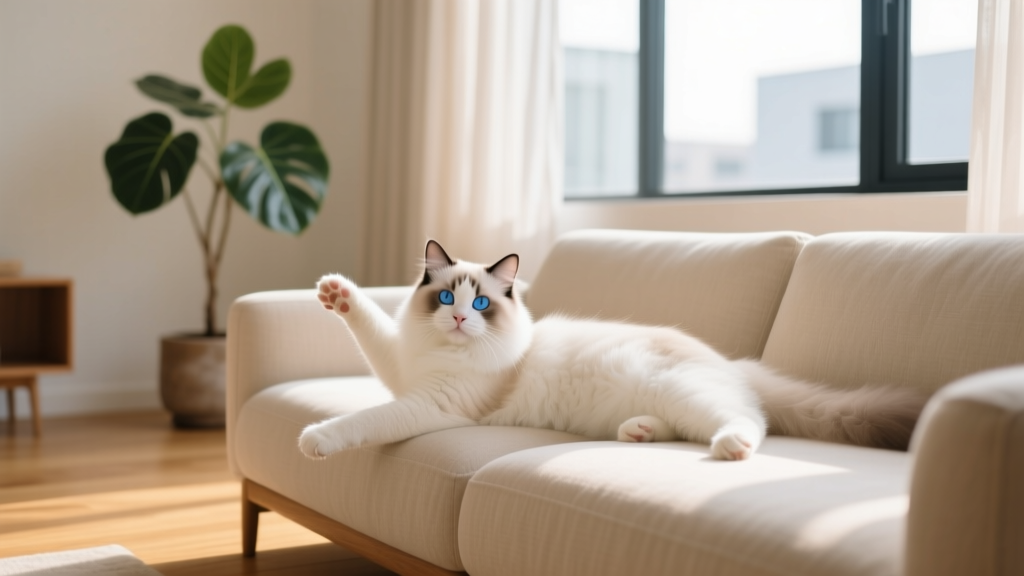
- The Pancake (belly-up): Legs splayed, belly fully exposed. This isn’t just cuteness — it’s the gold standard of trust. Only cats who feel profoundly safe (and have no underlying abdominal pain) will relax this deeply. If your cat suddenly stops doing this, note it: abdominal discomfort, urinary issues, or chronic anxiety could be emerging.
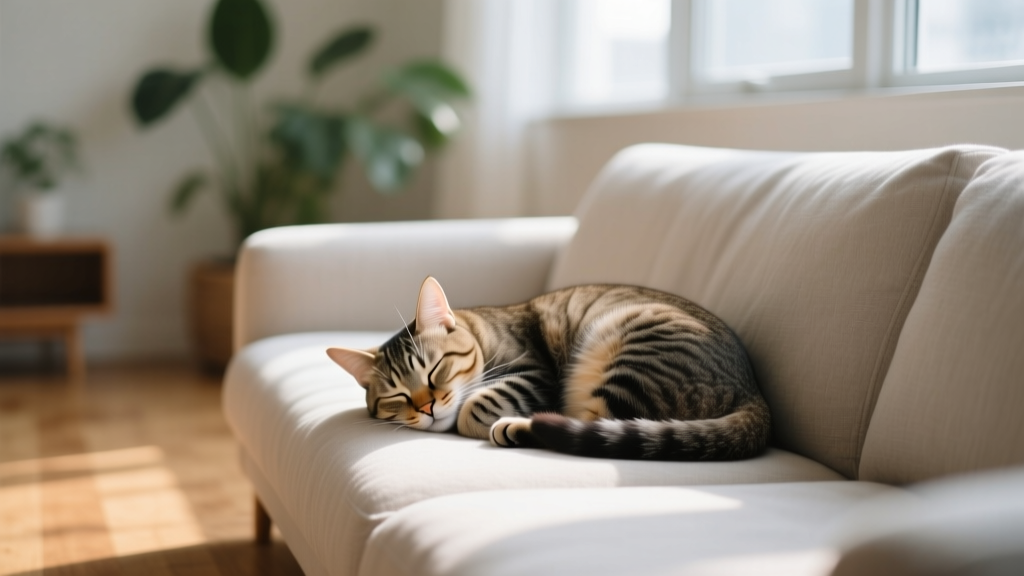
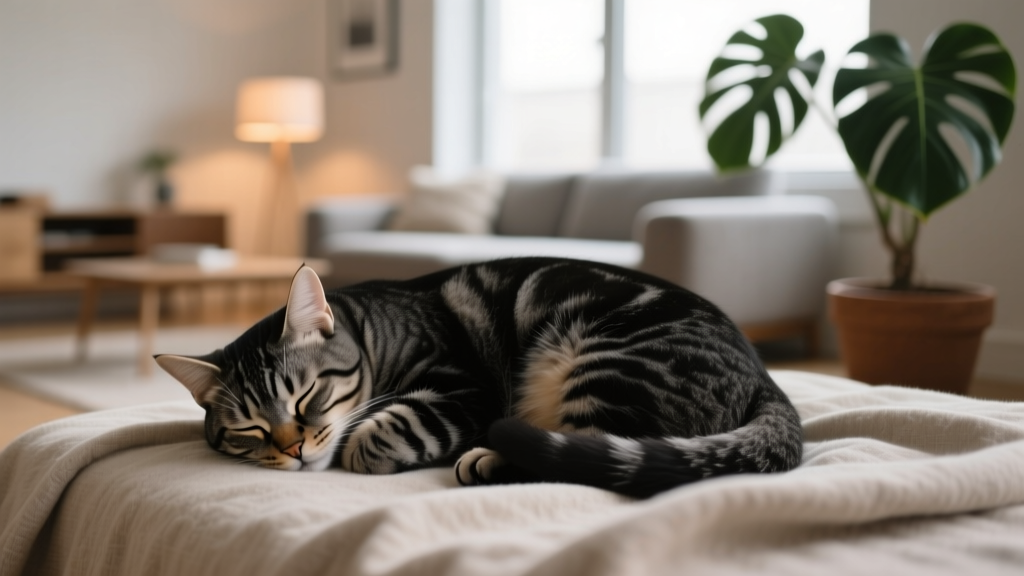
- The Donut: Curled tightly, nose to tail, ears tucked. Maximizes warmth and minimizes surface exposure. Very common in kittens and older cats — but if an adult cat adopts this *exclusively*, especially with stiff neck rotation or reluctance to uncurl, consult your vet: early-stage osteoarthritis or nerve sensitivity may be present.
- The Superman: Front legs stretched forward, hind legs extended back, chest flat on floor. Signals deep relaxation *and* readiness — often seen after play or before dawn hunting mode. A healthy sign… unless paired with labored breathing or tongue-lolling, which warrants immediate vet assessment.
- The Burrower: Fully covered under blankets, inside boxes, or wedged behind furniture. While cozy-looking, this can signal anxiety — especially if accompanied by flattened ears, dilated pupils upon disturbance, or refusal to nap in open spaces even when alone. One shelter study (Journal of Feline Medicine & Surgery, 2022) found 68% of chronically burrowing cats showed elevated cortisol in saliva tests.
Pro tip: Track posture shifts over 7 days using a simple notebook or voice memo. Note time of day, location, recent changes (new pet, visitor, renovation), and any other behaviors (e.g., decreased grooming, hiding). Patterns emerge faster than you think.
Sleep Timing Tells You More Than You Think — Circadian Rhythms Aren’t Just for Humans
Cats are crepuscular — biologically wired for peak activity at dawn and dusk. But domestication has blurred those lines, and individual schedules now reflect *your* routine, household dynamics, and even seasonal light shifts. That means your cat’s sleep timing isn’t random — it’s adaptive communication.
Consider these real-world examples:
- Mittens, 3-year-old tabby: Started waking her owner at 4:15 a.m. sharp for 12 days straight — then stopped. Her owner assumed “attention-seeking.” A vet visit revealed mild dental inflammation; the pain peaked pre-dawn due to cortisol dips. Treatment resolved both the wake-ups and her subtle jaw-tensing while eating.
- Oscar, senior 14-year-old Siamese: Began sleeping 22 hours/day, mostly in his favorite sunbeam. His owner thought “he’s just slowing down.” Bloodwork uncovered early-stage kidney disease — lethargy was the first clinical sign, masked for weeks by normal appetite and litter box use.
Key red-flag timing shifts to log:
- New nighttime activity (especially vocalizing, pacing, or knocking objects off shelves) — possible cognitive dysfunction syndrome (feline dementia) in seniors, or hyperthyroidism.
- Daytime hypersomnia (sleeping >18 hrs/day consistently) — screen for anemia, kidney disease, diabetes, or chronic pain.
- Fragmented napping (waking every 15–20 mins, scanning room, repositioning) — classic sign of anxiety or environmental insecurity, not “light sleeping.”
According to the American Association of Feline Practitioners (AAFP), consistent disruption in sleep-wake cycles should prompt a full wellness exam — even without other obvious symptoms. Sleep is the body’s first responder to internal imbalance.
Location, Location, Location: Where Your Cat Sleeps Is a Behavioral Address
Your cat doesn’t pick sleeping spots based on softness alone — they’re selecting micro-environments that meet precise sensory, thermal, and social criteria. Their choices map directly to their sense of control, hierarchy, and attachment.
A 2023 University of Lincoln ethology study observed 87 indoor cats across varied households and identified 5 primary location categories — each with strong behavioral correlates:
| Location Type | What It Usually Means | When It’s a Red Flag | What to Do Next |
|---|---|---|---|
| Your Bed / Pillow | Strong bond + thermoregulation + scent security. Often linked to lower cortisol in co-sleeping dyads (per 2021 Tokyo Vet Med study). | Sudden onset in previously independent cats — possible separation anxiety or early cognitive decline. | Rule out medical causes first. Then gradually reintroduce a dedicated, heated cat bed nearby with your worn t-shirt inside. |
| High Perches (shelves, tops of fridges) | Confidence + surveillance instinct. Dominant cats often claim highest points. | Refusal to descend for food/water/litter for >12 hrs — possible joint pain, neurological issue, or acute fear (e.g., after loud noise). | Offer ramps/steps + check joints for heat/swelling. Record video for vet review. |
| Inside Closets / Under Beds | Moderate stress-buffering. Normal for shy or newly adopted cats. | Persistent (>3 weeks) + avoidance of interaction + flattened ears when approached — indicates chronic anxiety or trauma response. | Consult a certified cat behaviorist. Introduce Feliway Optimum diffusers + positive-reinforcement desensitization. |
| On Litter Box Lid or Near Litter Box | Rare but documented — may signal urinary discomfort (urinating feels safer *near* the box) or territorial guarding. | Any occurrence — always warrants urinalysis and abdominal ultrasound within 48 hrs. | Immediate vet visit. Do not wait for litter box avoidance or blood in urine — early UTIs cause subtle behavioral shifts. |
| Shared Warm Spots (heaters, laptops, sunny floors) | Thermoregulation priority. Common in lean-bodied, elderly, or thin-coated cats. | Obsessive guarding of one spot + growling at others — possible resource anxiety or pain-induced possessiveness. | Add 2–3 equally warm alternatives (heated beds, fleece pads) to reduce competition and assess response. |
Remember: context matters. A cat sleeping on your laptop *while you work* is bonding. The same cat sleeping on your closed laptop *after you leave the room* may be seeking residual warmth — or signaling loneliness. Watch for clusters of clues, not single behaviors.
Vocalizations, Twitches & Micro-Expressions: Reading the Subtle Language of Rest
Most owners focus on big movements — but the richest insights live in micro-behaviors. These aren’t “cute quirks.” They’re neurologically significant markers.
Slow blinking (“cat kisses”) during drowsiness signals calm — but only when voluntary. If blinks are rapid, asymmetrical, or paired with squinting, it may indicate ocular pain or uveitis.
Paw-twitching during REM sleep is normal — it reflects dream-chasing. But if twitches are jerky, rhythmic, or involve full-body spasms *outside* REM (e.g., while deeply asleep or transitioning), record a 30-second video. Epilepsy, metabolic imbalances, or toxin exposure can manifest this way.
Soft chirps or mews mid-nap usually mean contented dreaming — unless they’re high-pitched, repetitive, or followed by sudden arousal. That pattern appeared in 92% of cats diagnosed with early-stage hyperthyroidism in a Cornell Feline Health Center longitudinal study.
Kneading blankets or your lap is often dismissed as “kitten behavior.” In adults, it’s actually a self-soothing mechanism tied to oxytocin release — but if it intensifies dramatically or causes injury (e.g., clawing through fabric or skin), it may indicate unresolved anxiety or compulsive disorder.
One powerful tool: the Resting Respiratory Rate (RRR). Count breaths per minute while your cat is fully relaxed (not right after play or eating). Normal range: 20–30 breaths/minute. Consistently >35? Could indicate heart disease, asthma, or pain. Track this weekly — it’s one of the earliest detectable signs of serious illness.
Frequently Asked Questions
Why does my cat sleep so much — is it normal?
Yes — 12–16 hours daily is typical for adult cats, and up to 20 hours for kittens/seniors. Their sleep cycle includes short, light naps (to stay alert) plus deep REM bursts. What matters more than duration is *consistency*. Sudden increases or decreases — especially with other changes like appetite, grooming, or sociability — warrant veterinary evaluation. As Dr. Wooten emphasizes: “Sleep quantity is baseline. Sleep *quality* and *pattern stability* are your diagnostic compass.”
My cat sleeps on my head — is that a sign of dominance?
No — it’s almost certainly about scent, warmth, and proximity. Your scalp emits heat and familiar pheromones, making it an ideal security blanket. Dominance displays in cats rarely involve passive resting; they’re active behaviors like blocking doorways, staring down other pets, or resource guarding. If your cat also blocks your path, stares unblinking, or swats when you move, *then* explore social dynamics — but head-sleeping alone is affection, not authority.
Should I wake my cat up if they’re sleeping in a weird position?
Almost never — unless you observe clear distress: gasping, rigid limbs, blue gums, or inability to reposition after 10+ minutes. Cats contort into seemingly impossible shapes safely thanks to their flexible spine and lack of collarbone. Forcing arousal disrupts vital REM cycles and spikes cortisol. Instead, gently offer a warmer, more supportive surface nearby — they’ll migrate if needed. If odd positions persist *and* mobility seems impaired, schedule a mobility assessment with your vet.
Do cats dream? What does that mean for their sleep behavior?
Yes — robust evidence shows cats experience REM sleep with brainwave patterns nearly identical to humans. During REM, they may twitch, whisker-flick, or emit soft vocalizations — all signs of vivid dreaming, likely replaying hunts or social interactions. This phase is critical for memory consolidation and neural development. Disrupting REM (e.g., frequent forced awakenings) impairs learning and increases anxiety long-term. Protecting uninterrupted 20–30 minute REM cycles — especially in kittens and seniors — supports cognitive resilience.
My cat won’t sleep at night — what can I do?
First, rule out medical drivers: hyperthyroidism, hypertension, or pain often cause nocturnal restlessness. Once cleared, reset their rhythm: increase interactive play at dusk (mimicking natural hunting peaks), feed their largest meal right before your bedtime (digestion induces drowsiness), and provide a separate “night station” with toys, water, and a cozy bed away from your bedroom. Avoid reinforcing attention-seeking at night — no eye contact, no talking, no treats. Consistency for 10–14 days typically resets their internal clock.
Common Myths About Cat Sleep Behavior
Myth #1: “Cats sleep so much because they’re lazy.”
Reality: Their sleep architecture evolved for energy conservation. Wild cats expend massive calories in short, explosive bursts — then require deep recovery. Domestic cats retain this biology. What looks like laziness is highly efficient metabolic management.
Myth #2: “If my cat sleeps next to me, they’re protecting me.”
Reality: While cats *can* be protective, proximity during sleep is primarily about thermoregulation, scent bonding, and perceived safety — not sentry duty. True protective behaviors (like standing between you and a perceived threat, low growls, piloerection) occur during wakefulness, not rest.
Related Topics (Internal Link Suggestions)
- Interpreting Cat Body Language Beyond Sleep — suggested anchor text: "what does it mean when my cat stares at me?"
- Feline Anxiety Signs and Solutions — suggested anchor text: "cat hiding all the time"
- Senior Cat Health Monitoring Checklist — suggested anchor text: "signs of pain in older cats"
- Creating a Calming Home Environment for Cats — suggested anchor text: "best cat calming products vet approved"
- Understanding Cat Vocalizations and Meows — suggested anchor text: "why does my cat meow at night?"
Conclusion & Your Next Step
How to understand cat behavior for sleeping isn’t about memorizing a dictionary — it’s about becoming a compassionate observer. Every nap is a data point. Every posture, location, and micro-expression is part of a living, breathing narrative your cat shares — if you know how to listen. You now have the framework: track posture + timing + location + micro-signals for one week. Use the table above as your field guide. Then, compare notes. Did you spot a pattern? Did something shift after you added a heated bed or reduced evening noise? That’s not coincidence — it’s your cat communicating in real time.
Your next step is simple but powerful: choose ONE cue to monitor closely for 7 days — maybe slow blinks, maybe sleep location consistency, maybe RRR. Jot down observations in your phone notes app. At the end of the week, ask yourself: “What did this tell me about my cat’s sense of safety, comfort, or health that I didn’t know before?” That question — asked with curiosity, not judgment — is where true understanding begins. And when you see the change — the deeper relaxation, the confident pancake pose, the peaceful sunrise nap beside you — you’ll know you didn’t just learn cat sleep. You deepened your bond, one quiet, trusting hour at a time.