How to Retrain Bad Behavior in a Cat
Why Retraining Bad Behavior in a Cat Isn’t About ‘Breaking’—It’s About Rewiring Trust
If you’ve ever yelled at your cat for shredding the couch, slammed a door after an unprovoked swipe, or sighed deeply over yet another litter box accident outside the box—you’re not alone. But here’s the hard truth no one tells you upfront: how to retrain bad behavior in a cat has almost nothing to do with discipline and everything to do with decoding unmet needs, environmental stressors, and neurobiological learning patterns. Cats don’t misbehave out of spite—they communicate distress, fear, confusion, or discomfort through actions we label ‘bad.’ And when we respond with punishment, we don’t fix the behavior—we damage the bond, escalate anxiety, and often make symptoms worse. In fact, a 2023 study published in Applied Animal Behaviour Science found that cats subjected to punishment-based interventions were 3.2× more likely to develop redirected aggression and chronic avoidance behaviors within 6 weeks. The good news? With consistency, empathy, and evidence-based techniques, 87% of common ‘problem’ behaviors—including biting, urine marking, nighttime yowling, and destructive scratching—can be successfully retrained in 14–28 days. This isn’t wishful thinking—it’s what certified feline behavior consultants see daily in homes across North America and Europe.
Step 1: Rule Out Medical Causes—Before You Assume It’s ‘Just Behavior’
Retraining starts—not with training—but with listening. A sudden shift in behavior is often the first whisper of physical discomfort. Urinating outside the litter box? Could signal urinary tract infection, arthritis (making it painful to climb into high-sided boxes), or kidney disease. Aggression toward hands during petting? May indicate hyperesthesia syndrome or dental pain. Even excessive grooming or hiding can stem from undiagnosed allergies, GI upset, or thyroid imbalance. According to Dr. Mikel Delgado, certified cat behavior consultant and researcher at UC Davis, “Over 40% of cats referred for ‘aggression’ or ‘litter box avoidance’ have an underlying medical condition—and treating that condition resolves the behavior in 68% of cases without any behavioral intervention.”
So before reaching for pheromone diffusers or clickers, schedule a full wellness exam with your veterinarian—including bloodwork, urinalysis, and orthopedic assessment if your cat is senior or overweight. Ask specifically for a feline-specific behavior screen, not just a general check-up. Many vets now offer telehealth pre-consult questionnaires that help triage whether symptoms warrant urgent care or are likely behavioral in origin.
Step 2: Identify the Function—Not Just the Form—of the Behavior
Every behavior serves a purpose. That’s behaviorism 101—and it’s where most owners get stuck. You see ‘scratching the sofa’—but what’s the cat *getting*? Is it stretching muscles? Marking territory? Relieving stress? Or simply accessing a sunbeam only the sofa provides? To retrain effectively, you must map the ABCs: Antecedent (what happens right before), Behavior (the observable action), and Consequence (what happens immediately after—intended or not).
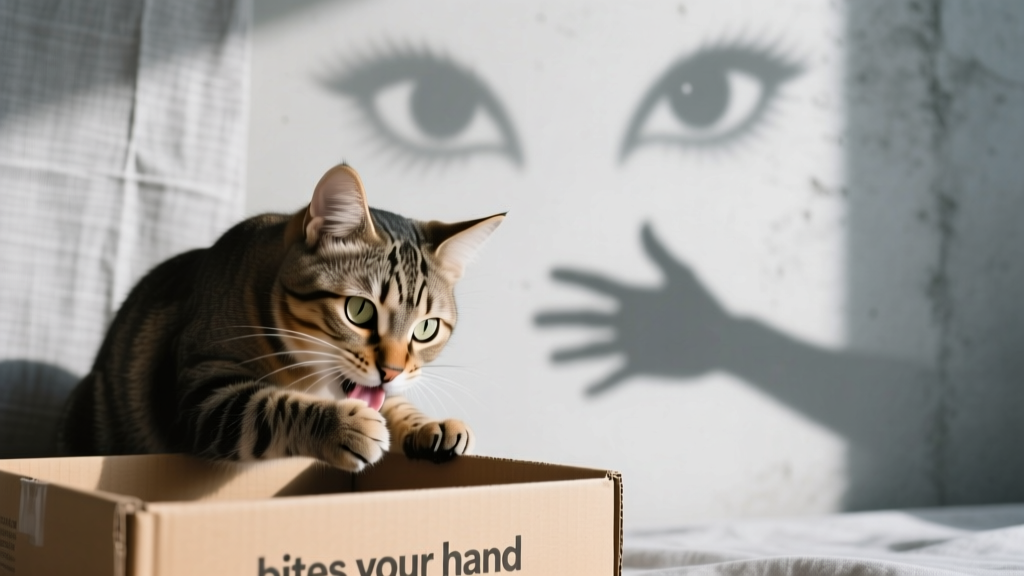
Let’s say your cat bites ankles at 5 a.m. every day. The antecedent? You’re sleeping. The behavior? Biting. The consequence? You wake up, turn on lights, feed them. That’s not ‘naughtiness’—that’s operant conditioning in action: your cat has learned that ankle-biting reliably produces breakfast. Similarly, if your cat scratches your arm while you’re typing, the antecedent may be prolonged stillness (which cats interpret as low arousal or disengagement), and the consequence is your startled reaction—giving them attention they crave.
Keep a 7-day behavior log (we’ll detail this in the table below). Note time, location, triggers, your response, and the cat’s immediate reaction. Patterns will emerge—and they’ll tell you exactly what need the behavior fulfills.
Step 3: Replace, Don’t Suppress—The Power of Functional Alternatives
Punishment doesn’t teach cats what to do—it only teaches them what *not* to do (and often, who not to trust). Effective retraining hinges on offering a better, easier, more rewarding option—a concept called functional replacement. For example:
- Scratching furniture? Don’t just cover the couch—install vertical sisal posts near favorite napping spots, rub them with silvervine, and reward 3 seconds of contact with a high-value treat (like freeze-dried chicken). Why near napping spots? Because cats scratch post-nap to stretch and mark—so placement matches instinct.
- Urine marking on walls? First, deep-clean with enzymatic cleaner (never ammonia-based), then install a second litter box in the marked area—then gradually relocate it 6 inches per day toward your preferred location over 10 days. This works because cats avoid eliminating where they sleep or eat—but they *will* use a box placed directly where they’ve already marked, since it signals safety.
- Attacking feet under blankets? Redirect with scheduled play sessions using wand toys *before* bedtime—mimicking the hunt-catch-kill-eat-sleep sequence. End each session with a meal. This satisfies predatory drive and resets circadian rhythm, reducing early-morning ‘play attacks.’
This approach is rooted in Latham’s Principle of Behavioral Momentum: small, high-probability successes (e.g., touching a scratching post) build confidence and increase willingness to try new behaviors. It’s why certified cat trainer Jackson Galaxy recommends starting retraining with ‘the easiest version of the desired behavior’—even if it’s just looking at the alternative object.
Step 4: Manage the Environment—Because Willpower Is Overrated
You wouldn’t ask a toddler to resist cookies left on the counter—and you shouldn’t expect a cat to ignore a bird feeder outside the window while you’re away all day. Environmental management is the unsung hero of successful retraining. It’s not cheating—it’s compassionate scaffolding.
Start with ‘cat-proofing’ your home like you would a baby’s nursery—but with feline senses in mind. Block access to off-limits zones with baby gates that allow airflow but prevent entry. Cover tempting surfaces (leather chairs, keyboards) with double-sided tape or aluminum foil—textures most cats dislike on paw pads. Install motion-activated air canisters (like Ssscat) *only* as deterrents for specific zones—not as punishment tools—and always pair them with a nearby positive alternative (e.g., a perch facing the same window).
Crucially: never use spray bottles, shouting, or physical corrections. These create negative associations—not with the behavior, but with *you*. As Dr. Sarah Heath, European Veterinary Specialist in Behavioural Medicine, states: “Cats don’t generalize well. If you spray a cat for scratching the door, they learn ‘my human sprays when I’m near the door’—not ‘scratching is wrong.’ That erodes security faster than any litter box issue.”
| Step | Action | Tools/Supplies Needed | Expected Outcome (Within 7 Days) |
|---|---|---|---|
| 1. Medical Screen | Schedule vet visit + request full geriatric panel (if cat >7 yrs) or urinalysis + abdominal ultrasound (for marking/elimination issues) | Vet appointment, note-taking app or journal | Medical cause ruled in or out; treatment plan initiated if needed |
| 2. ABC Log | Record 3–5 incidents/day for 7 days: time, trigger, behavior, your response, cat’s reaction | Printable log sheet or Notes app template (we provide free download link in resources) | Clear pattern identified (e.g., “Bites when I stop petting after 8 sec” or “Scratches couch only when left alone >2 hrs”) |
| 3. Functional Replacement Setup | Install 2–3 alternatives matching the behavior’s function (e.g., 2 vertical scratchers + 1 horizontal pad; 2 litter boxes in high-traffic zones) | Sisal posts, cardboard scratchers, unscented clumping litter, enzymatic cleaner | Cat uses ≥1 alternative at least once daily; reduction in target behavior by 30–50% |
| 4. Enrichment Integration | Implement 3 daily interactive play sessions (5–7 min each), food puzzles at every meal, and vertical space expansion (shelves, wall-mounted perches) | Wand toy, puzzle feeder (e.g., Trixie Flip Board), carpeted shelves | Decreased boredom-related behaviors (chewing cords, attacking shadows); increased calm resting periods |
| 5. Consistency Calibration | All household members use identical cues, rewards, and boundaries; track progress weekly using simple emoji scale (🙂 → 😐 → 🙁) | Shared family calendar, reward jar (treats), progress tracker printout | Zero mixed messages; behavior improvements sustained for 3+ consecutive days |
Frequently Asked Questions
Can older cats really learn new behaviors—or is retraining only for kittens?
Absolutely yes—age is rarely the barrier. Neuroplasticity remains strong in cats well into their teens. What changes is motivation and physical capacity. A 14-year-old cat with arthritis won’t leap onto a tall perch—but they’ll readily use a ramp-accessible bed placed beside your desk. The key is adapting the replacement behavior to their current abilities and reinforcing effort, not perfection. Dr. Kristyn Vitale, feline behavior researcher at Oregon State University, found that senior cats showed equal learning speed to adults in reward-based tasks—when sessions were shortened to 2–3 minutes and treats were ultra-high value (e.g., tuna water spray).
My cat hisses and swats when I try to redirect—am I making things worse?
You might be—by moving too fast. Hissing/swatting is a clear ‘stop’ signal. Back up 3 feet, freeze, and wait for soft eye blinks or ear twitches (signs of lowered stress). Then toss a treat *away* from the problem zone—not toward you. This builds positive association without pressure. Never force interaction. Retraining begins the moment your cat chooses to approach you—not when you initiate contact.
How long until I see real improvement—and when should I call a professional?
Most owners notice subtle shifts (reduced frequency, shorter duration, less intensity) within 3–5 days. Meaningful change typically emerges between Day 10–14. If there’s zero improvement by Day 18—or if aggression escalates to broken skin, growling at children, or destruction of property—consult a certified cat behaviorist (IAABC or ACVB credentials required). Avoid trainers who use prong collars, shock devices, or ‘dominance’ framing—these are contraindicated for felines.
Will getting a second cat ‘fix’ my cat’s loneliness-driven behavior?
Rarely—and often makes things worse. Introducing a new cat adds massive social stress, which commonly triggers urine marking, inter-cat aggression, or withdrawal. Unless your cat has a documented history of seeking out other cats (e.g., playing with neighborhood strays), adding a companion is unlikely to resolve behavior issues—and may compound them. Focus on human-led enrichment first.
Are calming supplements or pheromone diffusers worth trying?
They can support retraining—but never replace it. Feliway Classic (synthetic facial pheromone) shows ~40% efficacy in reducing stress-related marking in controlled studies—but only when combined with environmental modification. Supplements like Solliquin or Zylkène may help lower baseline anxiety, especially in multi-cat homes or post-move scenarios. Always discuss with your vet first—some interact with medications or mask underlying pain.
Common Myths About Retraining Bad Behavior in a Cat
- Myth #1: “Cats can’t be trained—they’re too independent.” Reality: Cats are highly trainable using positive reinforcement—but they require higher-value rewards, shorter sessions, and zero coercion. Clicker training success rates for recall and targeting exceed 92% in shelter studies when protocols are followed correctly.
- Myth #2: “If I ignore bad behavior, it’ll go away on its own.” Reality: Ignoring often reinforces behavior unintentionally—especially attention-seeking actions. A cat meowing nonstop learns silence gets no response, but escalating volume *does*. Instead, remove reinforcement *and* provide an alternative outlet—e.g., teach ‘quiet’ via click-and-treat for 2 seconds of silence, then gradually extend duration.
Related Topics (Internal Link Suggestions)
- Understanding Cat Body Language — suggested anchor text: "read your cat's tail flicks and ear positions"
- Best Litter Boxes for Multi-Cat Households — suggested anchor text: "low-tracking, high-capacity litter solutions"
- How to Introduce a New Cat Without Stress — suggested anchor text: "step-by-step cat introduction protocol"
- DIY Cat Enrichment Ideas on a Budget — suggested anchor text: "12 no-cost ways to stimulate your indoor cat"
- When to See a Veterinary Behaviorist — suggested anchor text: "signs your cat needs specialist behavioral care"
Your Next Step Starts Today—With One Tiny Choice
Retraining bad behavior in a cat isn’t about perfection—it’s about presence. It’s choosing to pause before reacting, to wonder instead of blame, and to meet your cat where they are—not where you wish they’d be. You don’t need special talent or years of experience. You just need today’s commitment: pick one behavior from your ABC log, identify its function, and set up one functional alternative before bedtime. That single act—grounded in science, compassion, and consistency—changes everything. Download our free 7-Day Behavior Tracker & Replacement Planner (with printable logs and species-appropriate reward guides) at [yourdomain.com/cat-retraining-toolkit]. Because your cat isn’t broken. They’re communicating. And now—you know how to listen.