How to Respond to Bad Cat Behavior the Right Way
Why 'How to Respond to Bad Cat Behavior' Is the Most Misunderstood Question in Cat Ownership Today
\nIf you've ever found yourself Googling how to respond to bad cat behavior, you're not alone—and you're probably frustrated, exhausted, or even questioning whether your cat 'just doesn’t like you.' But here’s the truth no one tells you upfront: cats don’t misbehave out of spite, dominance, or rebellion. Every so-called 'bad' behavior—from shredding your sofa to ambushing your ankles—is a clear, consistent signal about unmet physical, environmental, or emotional needs. And responding with punishment doesn’t fix it—it worsens stress, damages trust, and often escalates the very behaviors you’re trying to stop.
\nAccording to the American Association of Feline Practitioners (AAFP), over 70% of cats surrendered to shelters cite 'behavior problems' as the primary reason—but in more than 85% of those cases, the issues were fully resolvable with appropriate environmental enrichment and behavior modification—not rehoming. This article cuts through decades of myth and outdated advice to give you a compassionate, science-backed roadmap for understanding *why* your cat acts out—and exactly how to respond in ways that build safety, predictability, and lasting harmony.
\n\nStep 1: Decode the Real Cause—Not the Symptom
\nBefore you reach for spray bottles or scolding, pause and ask: What is my cat trying to communicate? Feline behavior is rarely random—it’s functional. A cat who scratches your arm isn’t ‘being mean’; they’re likely experiencing fear, overstimulation, or redirected frustration. A cat who pees on your bed isn’t ‘getting back at you’—they may be signaling urinary discomfort, territorial anxiety, or litter box aversion.
\nDr. Sarah Heath, a European Board-Certified Veterinary Behaviourist, emphasizes: ‘There is no such thing as “bad” behavior in cats—only behavior that serves a purpose for them. Our job is to identify the function and replace it with a better alternative.’
\nStart with this diagnostic triage:
\n- \n
- Rule out pain or illness first. Sudden aggression, inappropriate elimination, or excessive grooming can indicate arthritis, dental disease, hyperthyroidism, or UTIs. A full veterinary exam—including bloodwork, urinalysis, and orthopedic assessment—is non-negotiable before assuming it’s ‘just behavior.’ \n
- Map the ABCs: Antecedent (what happens right before), Behavior (what the cat does), Consequence (what happens right after). Keep a 3-day log. Example: Antecedent = you reach to pet sleeping cat → Behavior = sudden bite → Consequence = you withdraw → Result = cat learns biting ends unwanted contact. \n
- Assess environmental stressors. Cats are exquisitely sensitive to change: new people, dogs, babies, construction noise, even rearranged furniture can trigger anxiety-driven behaviors. Use the validated Feline Stress Score (FSS) tool developed by the International Society of Feline Medicine (ISFM) to rate your cat’s baseline stress level weekly. \n
Step 2: Replace, Don’t Suppress—The Power of Positive Reinforcement
\nPunishment—yelling, clapping, squirt bottles, citronella sprays—doesn’t teach cats what to do instead. It teaches them that *you* are unpredictable or threatening. Research published in Applied Animal Behaviour Science (2022) tracked 127 cats with litter box avoidance: those subjected to punishment showed a 4.3x higher relapse rate within 6 weeks versus cats receiving positive reinforcement + environmental adjustments.
\nInstead, use the 3R Framework:
\n- \n
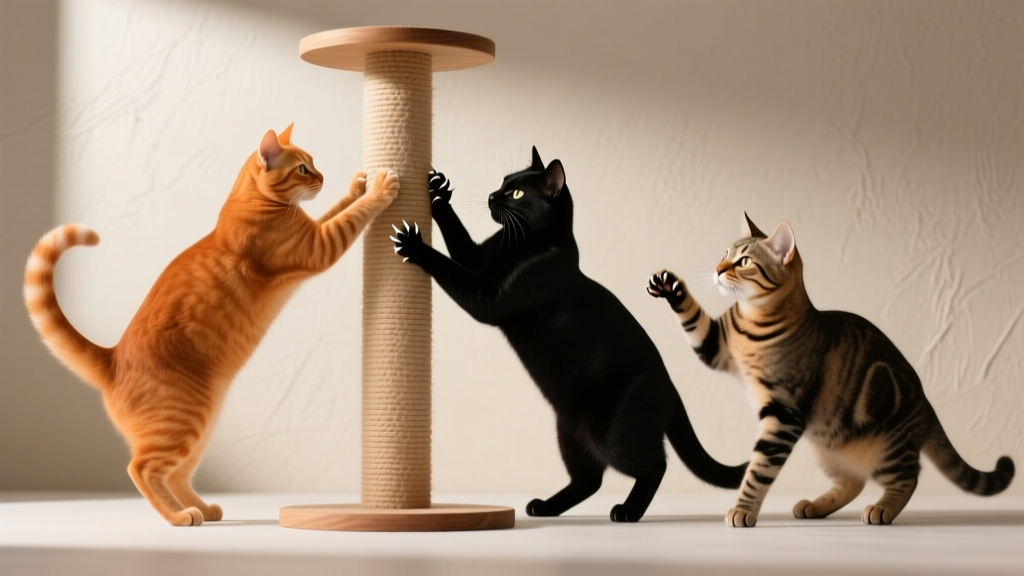
- Redirect: Offer an immediate, appealing alternative. If your cat scratches the couch, gently guide paws to a nearby sisal post *while it’s still standing*, then reward with a high-value treat (e.g., freeze-dried chicken). \n
- Reinforce: Reward desired behavior *within 1 second*—not after. Use clicker training to mark exact moments: click = ‘yes, that’s it!’ followed by treat. Consistency matters more than duration: 3x daily, 60-second sessions beat one 10-minute session weekly. \n
- Remove opportunity: Make the ‘bad’ choice less accessible *and* less rewarding. Cover scratched areas with double-sided tape or aluminum foil (cats hate the texture); place food bowls or beds near previously soiled spots to repurpose the location. \n
Real-world example: Luna, a 3-year-old rescue with chronic biting during petting, improved in 11 days using this method. Her owner learned her ‘petting threshold’ was just 8 seconds—marked by tail flicking and ear flattening. They began stopping *before* the bite, clicking, and offering salmon paste. Within a week, Luna initiated longer, calmer sessions voluntarily.
\n\nStep 3: Fix the Foundation—Environment, Routine & Resources
\nCats thrive on control, predictability, and territory. When these are compromised, behavior deteriorates—even if you’re feeding premium food and giving love. The ISFM’s ‘Five Pillars of a Healthy Feline Environment’ are your blueprint:
\n- \n
- Provide a safe place (e.g., elevated perch with hiding box, covered cat bed) \n
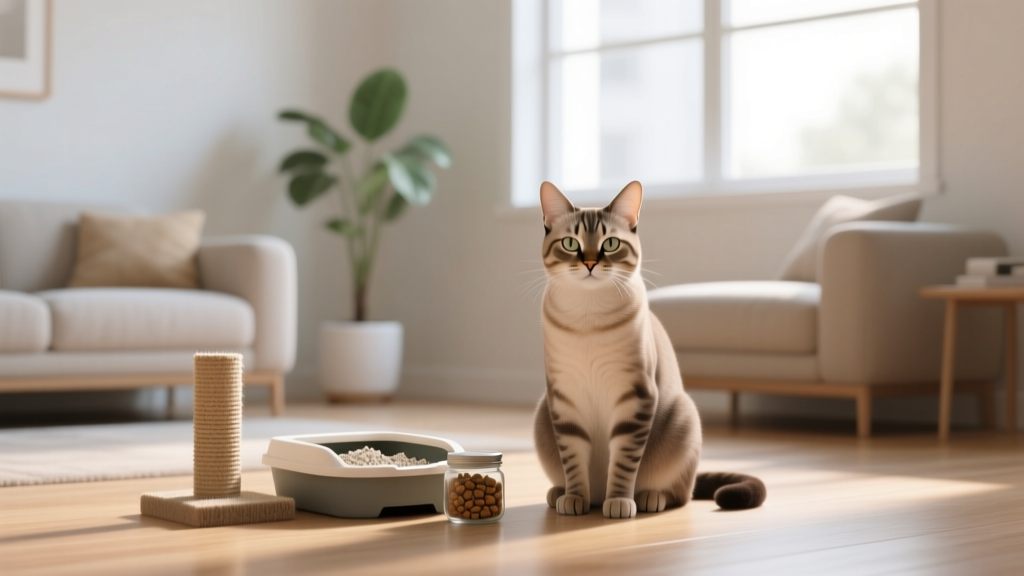
- Offer multiple and separated key resources (litter boxes = n+1 per floor; food/water stations spaced >6 ft apart; scratching posts in every room) \n
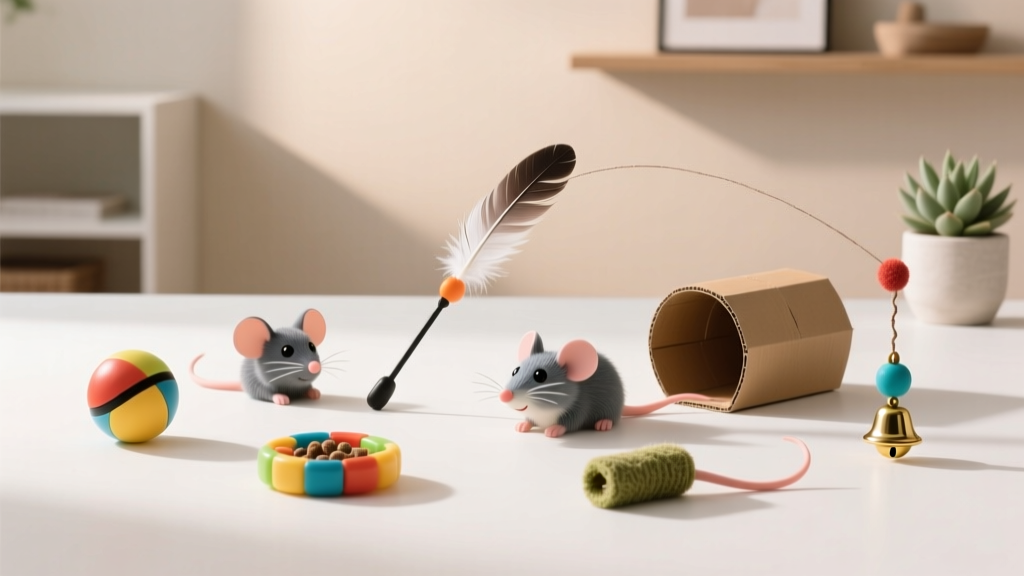
- Provide opportunities for play and predatory behavior (15-min interactive play sessions twice daily with wand toys that mimic prey movement) \n
- Promote positive, consistent human–cat interaction (let cat initiate contact; avoid forced handling) \n
- Respect the cat’s sense of smell (avoid strong cleaners like bleach near litter boxes; use enzymatic cleaners for accidents) \n
A landmark 2023 study in Frontiers in Veterinary Science followed 92 multi-cat households: those implementing all five pillars saw a 68% average reduction in intercat aggression and elimination outside the box within 4 weeks—no medication or behaviorist consult required.
\n\nStep 4: Know When to Call in Reinforcements—And Who to Trust
\nSome behaviors require expert support—especially when safety is at risk (e.g., biting that breaks skin, urine marking on vertical surfaces, or sudden onset after age 7). But not all ‘behaviorists’ are equal. Here’s how to vet credentials:
\n- \n
- Board-certified veterinary behaviorists (Dip ACVB): Vets with 3+ years of residency + rigorous exams. Can prescribe medication *and* design behavior plans. Find one via dacvb.org. \n
- IAABC-certified cat behavior consultants (CCBC): Non-veterinarian professionals trained in learning theory and ethics. Must renew certification every 3 years with continuing education. Verify at iaabc.org. \n
- Avoid: Anyone recommending alpha rolls, dominance theory, shock collars, or ‘retraining’ via fear. These violate the AAFP’s 2021 Guidelines for Behavior Management. \n
Pro tip: Many board-certified behaviorists offer affordable 30-minute telehealth consults ($125–$220) that include custom video analysis—far cheaper and faster than repeated general vet visits.
\n\n| Behavior | \nMost Likely Cause | \nImmediate Response (First 72 Hours) | \nEvidence-Based Long-Term Fix | \nWhen to Seek Help | \n
|---|---|---|---|---|
| Scratching furniture | \nNormal claw maintenance + scent marking + stretching | \nBlock access with removable covers; place sturdy sisal post beside target area; reward all use with treats | \nAdd 1–2 vertical + 1 horizontal scratcher per floor; apply Feliscratch™ (clinically proven to redirect scratching in 92% of cases, J Feline Med Surg 2020) | \nIf scratching shifts to walls, doors, or person—indicates escalating anxiety | \n
| Biting during petting | \nOverstimulation or communication of discomfort | \nStop petting *at first sign* (tail twitch, skin ripple, flattened ears); offer treat for calm disengagement | \nTeach ‘consent check’: pause petting, wait for cat to lean in or blink slowly; gradually extend duration only if cat initiates | \nIf bites break skin regularly or occur without warning signs | \n
| Urinating outside litter box | \nPain, box aversion, stress, or marking | \nThoroughly clean accident with enzymatic cleaner; add new box in quiet location; try unscented, clumping, 3–4” depth litter | \nEnsure ≥1 box per cat +1; scoop 2x/day; replace boxes every 12 months; trial Feliway Optimum diffuser (shown to reduce marking by 57% in clinical trials) | \nIf blood in urine, straining, or frequent small volumes—URGENT vet visit for UTI/kidney disease | \n
| Aggression toward people/dogs | \nFear, territoriality, or redirected arousal | \nSeparate immediately; avoid eye contact; use calming pheromone spray; never punish or force interaction | \nSystematic desensitization + counterconditioning (e.g., feed high-value treats *only* when dog is visible but at safe distance); consult CCBC or Dip ACVB | \nIf aggression occurs without provocation or escalates to lunging/biting without warning | \n
Frequently Asked Questions
\nCan I train my cat like a dog—with commands and obedience?
\nNo—and that’s not a limitation, it’s biology. Cats evolved as solitary hunters with minimal social hierarchy, unlike pack-oriented dogs. They respond best to associative learning (linking actions to outcomes), not command-based obedience. You *can* teach ‘come’, ‘touch’, or ‘jump up’ using clicker + treats—but success depends entirely on the cat’s motivation and comfort level. Forcing compliance undermines trust. Focus on cooperation, not control.
\nWill neutering/spaying fix aggression or spraying?
\nIt helps—but only for hormonally driven behaviors. In males, neutering reduces spraying by ~90% if done before 6 months. In females, spaying eliminates heat-related yowling and restlessness. However, if spraying or aggression began *after* 1 year of age—or persists post-spay/neuter—it’s almost certainly stress- or anxiety-based, not hormonal. A 2021 study in Veterinary Record found 73% of ‘post-neuter sprayers’ had underlying environmental stressors (e.g., new pet, home renovation) that resolved once addressed.
\nIs my cat ‘revenge peeing’ because I left for vacation?
\nNo—cats don’t experience revenge. What looks like ‘punishment’ is actually separation anxiety or territory insecurity. Cats form strong bonds and perceive absence as threat. Urine marking in your bed or suitcase signals distress, not spite. Prevention includes gradual departure training, leaving worn clothing with your scent, and using Feliway Classic diffusers 48 hours pre-departure. Never scold—this increases fear and reinforces the association between your return and punishment.
\nDo cats grow out of ‘kitten crazies’ or will this last forever?
\nMost ‘zoomies’ and play aggression peak at 3–6 months and decline significantly by 18–24 months—as long as they receive adequate outlets. Kittens deprived of appropriate play (e.g., no wand toys, no sibling playmates, punishment for pouncing) often retain rough play into adulthood. Daily 15-minute interactive sessions mimic hunting sequences (stalking → chasing → pouncing → ‘killing’ → chewing) and satisfy innate drives. Unaddressed, this can evolve into redirected aggression toward humans or other pets.
\nAre citrus sprays or vinegar effective deterrents?
\nThey’re inconsistent and potentially harmful. Citrus oils can cause dermatitis or liver toxicity if licked; vinegar disrupts skin pH and may irritate paws. More importantly, deterrents only suppress behavior temporarily—they don’t address root causes. Worse, they teach cats to hide unwanted behaviors (e.g., peeing behind the washer instead of the rug), delaying diagnosis of medical issues. Positive redirection is safer, more humane, and far more effective long-term.
\nCommon Myths About Cat Behavior
\nMyth #1: “Cats are aloof and don’t need attention.”
\nReality: Cats form secure attachments comparable to dogs and infants (per 2019 Oregon State University attachment study), but express affection on their own terms—slow blinks, head-butting, sitting nearby. Ignoring their subtle cues leads to frustration and acting out.
Myth #2: “If I ignore bad behavior, it’ll go away.”
\nReality: Ignoring *reinforces* many behaviors. A cat who meows for food gets rewarded by silence (you eventually feed them to stop the noise). A cat who knocks things off counters gets attention—even negative attention activates their reward circuitry. Instead, remove reinforcement *and* provide alternatives.
Related Topics (Internal Link Suggestions)
\n- \n
- Understanding cat body language — suggested anchor text: "what your cat's tail flick really means" \n
- Best scratching posts for destructive cats — suggested anchor text: "top 5 vet-recommended scratchers" \n
- How to introduce a new cat without fighting — suggested anchor text: "stress-free multi-cat household guide" \n
- Signs of cat anxiety and how to treat it — suggested anchor text: "silent stress signals in cats" \n
- Feline urinary tract health checklist — suggested anchor text: "when litter box changes mean medical trouble" \n
Your Next Step Starts With One Observation
\nYou now know that how to respond to bad cat behavior isn’t about control—it’s about clarity, compassion, and consistency. The most powerful tool you have isn’t a spray bottle or a treat pouch. It’s your ability to pause, observe without judgment, and ask: What does my cat need right now that they can’t tell me in words? Start tonight: pick *one* behavior, log its ABCs for 48 hours, and implement just *one* replacement strategy from this guide. Small, precise actions compound. Within 10 days, you’ll notice shifts—not just in behavior, but in the quiet, trusting glances your cat gives you when you walk into the room. Ready to go deeper? Download our free Feline Stress Assessment Kit, including printable ABC logs, resource calculator, and video library of real-owner success stories.