How to Read Your Cats Behavior
Why Understanding How to Read Your Cats Behavior Changes Everything
If you've ever stared at your cat mid-purr while they stare blankly back — wondering whether that slow blink means love or exhaustion, or whether that sudden zoomie sprint signals joy or anxiety — you're not alone. How to read your cats behavior isn’t just a cute party trick; it’s the foundational skill that separates reactive pet ownership from proactive, empathetic caregiving. Cats don’t speak our language — but they communicate constantly, through micro-expressions, posture shifts, vocal tonality, and environmental choices. Misreading these signals leads to avoidable stress, damaged trust, inappropriate discipline, and even missed early warnings of pain or illness. In fact, a 2023 study published in Frontiers in Veterinary Science found that 68% of cats surrendered to shelters exhibited undiagnosed behavioral distress rooted in misinterpreted cues — not aggression or 'untrainability.' This guide distills over a decade of feline ethology research, veterinary behaviorist insights, and real-world case studies into actionable, evidence-backed decoding tools you can use today.
Your Cat’s Body Language: The 5-Second Diagnostic System
Forget memorizing 30+ postures. Veterinarian and certified feline behaviorist Dr. Sarah Lin, DVM, DACVB, teaches clients a rapid triage framework she calls the “Five-Point Scan”: ears, eyes, tail, posture, and mouth. Done in under five seconds, it reveals your cat’s baseline emotional state — and flags urgent deviations.
Start with the ears. Forward-facing ears signal alert curiosity — ideal for play or greeting. But if those ears pivot sideways like airplane wings? That’s mild anxiety. Flattened backward (‘airplane ears’ or ‘helicopter ears’) means acute fear or defensive readiness. A 2022 Cornell Feline Health Center observational study tracked 127 cats during routine vet exams and found ear position predicted stress escalation 4.2x faster than vocalizations alone.
Next, eyes. Dilated pupils aren’t always excitement — in low light, yes; but in bright rooms, they often mean hyperarousal or fear. More telling is the slow blink: when your cat locks eyes with you and deliberately closes them for 1–2 seconds, then reopens — this is a feline ‘I love you’ signal, confirmed by multiple peer-reviewed studies as a voluntary sign of trust and safety. Try returning it — many cats reciprocate within days.
The tail is famously misunderstood. A high, upright tail with a gentle tip curl? Confident greeting. A rapidly whipping tail? Not playful — it’s a clear ‘back off’ warning, escalating toward swatting or biting. But here’s the myth-buster: a puffed-up tail *alone* doesn’t mean aggression. Paired with flattened ears and hissing? Yes. Paired with forward ears and wide eyes? It’s likely an overstimulated kitten reacting to sudden movement — not hostility.
Posture tells the full story. Crouched low with weight shifted backward? Defensive preparation. Arched back + sideways stance? Classic ‘Halloween cat’ — a bluff to appear larger, usually when startled. But a relaxed, stretched-out ‘loaf’ with paws tucked? Deep contentment. And the ‘sploot’ — hind legs splayed backward — signals both comfort *and* thermoregulation (cats sploot more in warm rooms).
Finally, the mouth. Chattering jaws at windows? Not frustration — it’s a hardwired predatory motor pattern, mimicking the bite that kills prey. Lip licking outside mealtime? A displacement behavior signaling low-grade stress — like checking your phone during an awkward conversation. And excessive grooming *in one spot*, especially near the base of the tail? Often a sign of pain or dermatological irritation — not just ‘nervous habit.’
Vocalizations Decoded: Beyond ‘Meow’ and ‘Hiss’
Cats evolved meowing almost exclusively for human communication — kittens meow to mothers, but adult feral cats rarely meow at each other. So every meow is intentional. But tone, duration, and context transform meaning entirely.
A short, rising ‘mew?’ is a question — ‘Are you coming?’ or ‘Is food ready?’ A drawn-out, descending ‘meooooow’ with vibrato? That’s demand — often paired with pawing or circling. High-pitched, staccato chirps? Excitement — usually when spotting birds or during interactive play. But a guttural, low-frequency ‘grumble’ while being petted? That’s your cat saying ‘I’m tolerating this, but I’m done soon.’ Ignore it, and you’ll get a gentle (or not-so-gentle) love bite.
Hissing and growling are clear distance-increasing signals — but crucially, they’re *not* aggression. They’re fear-based communication: ‘I feel threatened and need space.’ Punishing a hissing cat doesn’t teach obedience — it teaches that humans are unpredictable and unsafe. As Dr. Lin emphasizes: ‘A hiss is a gift. It’s your cat choosing non-violent de-escalation. Honor it by backing away and reassessing the environment.’
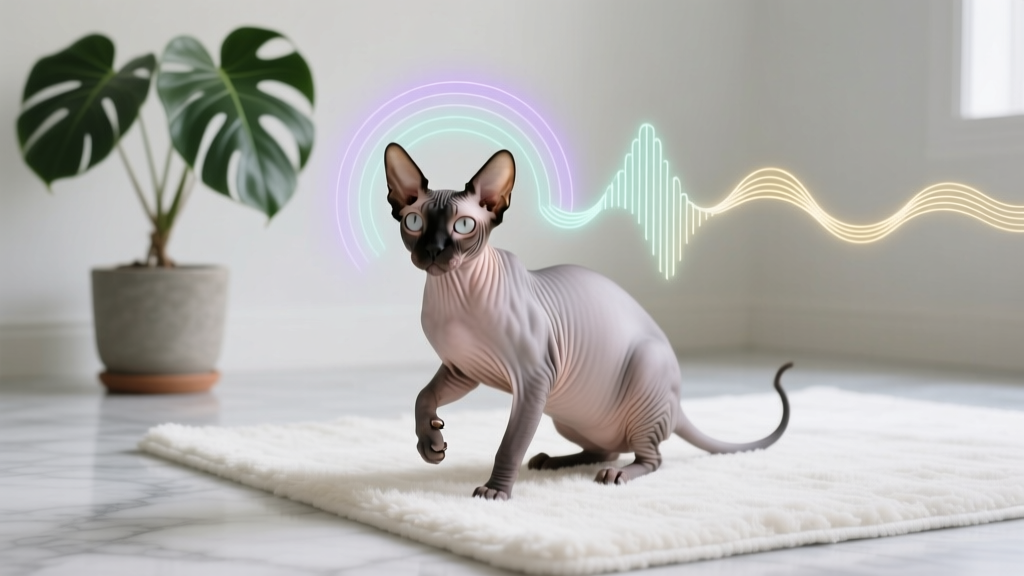
Purring is the ultimate double agent. Yes, it signals contentment — but cats also purr when injured, in labor, or facing terminal illness. Research from the University of Sussex shows purring frequencies (25–150 Hz) stimulate bone and tissue regeneration. So if your cat purrs while hiding, limping, or refusing food — don’t assume all is well. Pair it with other cues: Is their breathing shallow? Are ears pinned? Is the purr tense, not rhythmic? Context is everything.
Environmental Cues: What Your Cat’s Choices Reveal About Their Inner World
Your cat’s behavior isn’t just about what they *do* — it’s about where they *choose* to be, what they *avoid*, and how they interact with objects. These choices are data points in real time.
Take litter box habits. Scooping daily is hygiene — but location matters. If your cat starts using the bathtub instead of the box, it’s rarely ‘spite.’ More likely: box placement (near noisy appliances?), substrate aversion (new clay vs. old paper), or physical discomfort (arthritic cats struggle with high-sided boxes). A 2021 ASPCA survey found 32% of inappropriate elimination cases resolved within 72 hours simply by moving the box to a quieter, lower-traffic area — no medication, no punishment.
Sleeping spots reveal security levels. A cat sleeping belly-up in the middle of the living room? Profound trust. Sleeping curled tightly in a closet corner? Subtle anxiety — perhaps from new pets, construction noise, or even your own stressed energy. Interestingly, cats often mirror human circadian rhythms: if you’ve been working late and sleeping irregularly, your cat may shift their sleep cycle too — a sign of social bonding, not disruption.
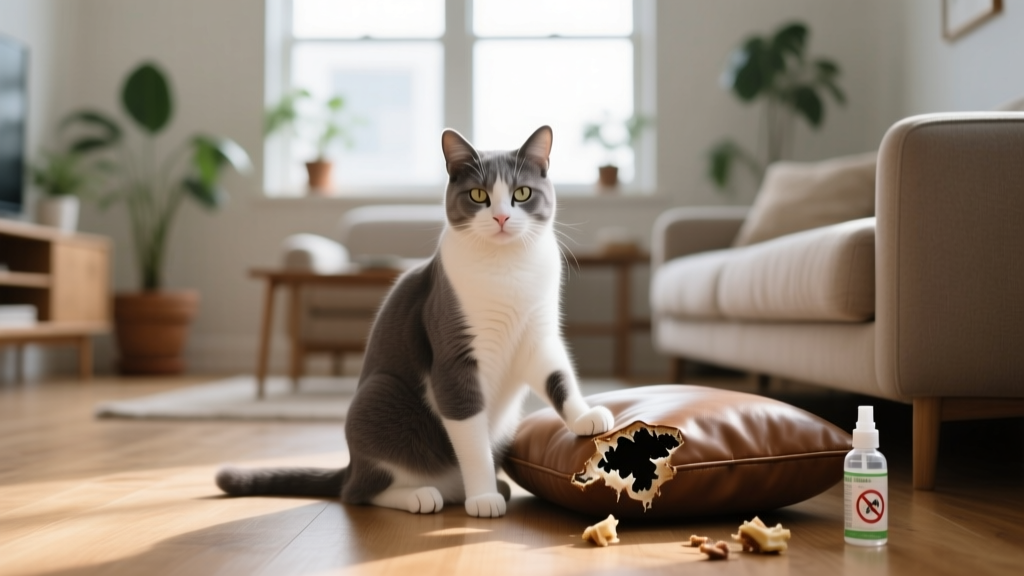
And scratching? Not destruction — communication. Vertical scratching marks territory visually *and* olfactorily (via scent glands in paw pads). Horizontal scratching stretches muscles and sheds nail sheaths. Banning scratching altogether causes frustration and redirects behavior to furniture — or worse, aggression. Instead: provide tall, stable posts covered in sisal (not carpet) near sleeping areas and entryways. Reward use with treats — not after, but *while* they’re scratching.
When Behavior Signals Health Trouble (Not Just Mood)
Behavior is often the first — and most sensitive — diagnostic tool for illness. Cats hide pain instinctively (a survival trait), so subtle shifts precede obvious symptoms by days or weeks.
Key red-flag behaviors backed by veterinary consensus:
- Decreased grooming: Matted fur, greasy coat, or unkempt face — especially in younger or previously fastidious cats — suggests lethargy from kidney disease, dental pain, or arthritis.
- Increased vocalization at night: Especially in senior cats. Can indicate cognitive dysfunction (feline dementia), hypertension, or hyperthyroidism. Rule out medical causes before assuming ‘senior crankiness.’
- Avoidance of jumping or climbing: Hesitation before leaping onto the couch, taking stairs slowly, or preferring ground-level napping? Strong indicator of osteoarthritis — affecting up to 90% of cats over age 12, per the International Society of Feline Medicine.
- Sudden aggression toward handling: If your cat used to tolerate ear cleaning or nail trims but now swats or bites, suspect pain — especially in the head, neck, or paws.
Dr. Lin recommends the ‘Three-Day Baseline Journal’: For three days, note your cat’s typical eating time, litter box visits, nap locations, play duration, and vocalization patterns — *before* any concern arises. That baseline becomes invaluable when something shifts. ‘You wouldn’t diagnose diabetes without bloodwork,’ she says. ‘Don’t diagnose “grumpiness” without behavioral data.’
| Signal | Most Likely Meaning | Action to Take | When to Consult a Vet |
|---|---|---|---|
| Excessive licking of one area (e.g., flank, tail base) | Pain, allergy, or neurological irritation | Check for fleas, skin lesions, or swelling; switch to hypoallergenic diet trial if chronic | Within 48 hours if hair loss, redness, or open sores appear |
| Staring blankly at walls or corners + twitching | Feline hyperesthesia syndrome (FHS) or seizure activity | Minimize loud noises/stressors; record video of episode | Immediately — requires neurologic workup |
| Urinating outside box on cool surfaces (tile, bathmat) | UTI, bladder stones, or stress cystitis | Increase water intake (fountains, wet food); clean box thoroughly with enzymatic cleaner | Same day — urinary blockage is life-threatening in males |
| Following you constantly + vocalizing | Separation anxiety, cognitive decline, or hunger | Establish predictable feeding/play routines; add puzzle feeders | If accompanied by disorientation, nighttime yowling, or accidents indoors |
| Sudden avoidance of favorite person or spot | Associative fear (e.g., vet visit, loud noise), pain, or environmental change | Identify recent triggers; reintroduce gradually with positive reinforcement | If persists >7 days or spreads to other people/areas |
Frequently Asked Questions
Why does my cat stare at me without blinking?
Unblinking eye contact is actually a low-level threat signal in cat language — unlike humans, who associate steady gaze with confidence or affection. If your cat holds your gaze without slow blinking, they’re likely assessing your intentions or feeling mildly uneasy. Gently break eye contact, then offer a slow blink yourself. Most cats will return it within seconds — a mutual ‘I’m safe, you’re safe’ agreement.
Is it normal for my cat to bring me dead mice or toys?
Yes — and it’s a profound compliment. In feral colonies, mother cats bring prey to kittens to teach hunting. When your cat drops a mouse (or a crumpled receipt) at your feet, they’re treating you as family — and attempting to ‘teach’ or ‘provide.’ Don’t punish or yell; calmly dispose of the item, then redirect with interactive play using a wand toy. This satisfies their predatory drive safely.
My cat kneads me but suddenly bites — why?
This is known as ‘petting-induced aggression’ and affects ~80% of cats. Kneading is a neonatal comfort behavior linked to nursing. But overstimulation — often from repetitive petting in sensitive zones (base of tail, belly, ears) — triggers a sensory overload response. Watch for early signs: tail twitching, skin rippling, flattened ears, or tensing. Stop *before* the bite — and reward calm disengagement with treats. Never force interaction.
Do cats really recognize their names?
Yes — but selectively. A landmark 2019 study in Scientific Reports confirmed cats distinguish their names from similar-sounding words and other cats’ names — especially when spoken by their owners. However, they choose whether to respond based on motivation, not obedience. Calling your cat’s name while holding treats? High response rate. Calling during nap time? Near-zero. It’s not defiance — it’s feline pragmatism.
How long does it take to learn how to read your cats behavior?
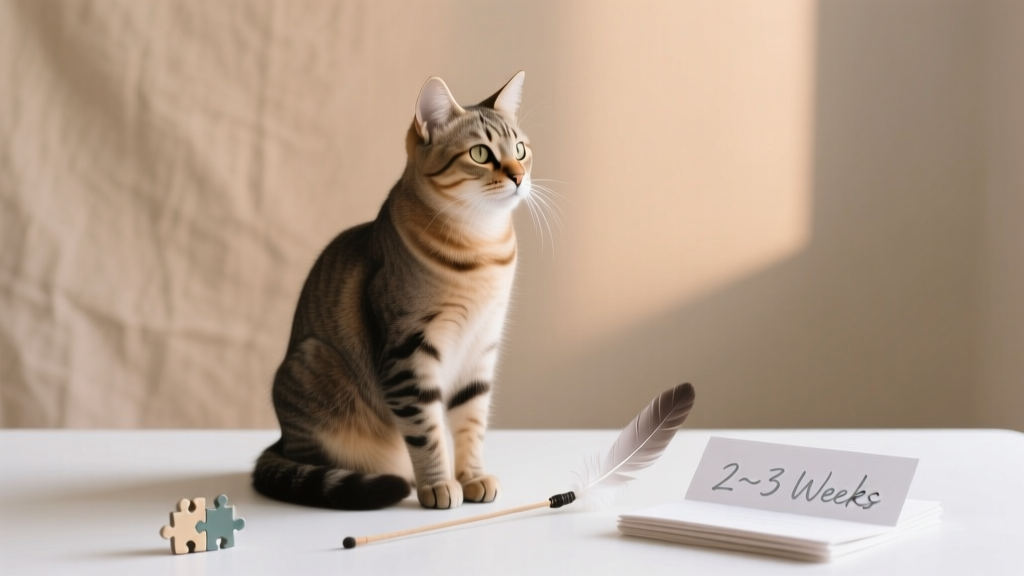
You’ll notice meaningful patterns in 2–3 weeks with consistent observation. Mastery — recognizing subtle shifts across contexts — takes 3–6 months. Keep a simple journal: date, time, behavior observed, environment (noise, people, weather), and your cat’s response to your action. Patterns emerge faster than you’d expect. Remember: fluency isn’t perfection — it’s reducing guesswork and building mutual trust, one slow blink at a time.
Common Myths About Cat Behavior
Myth #1: “Cats are aloof and don’t form deep bonds.”
False. Neuroimaging studies show cats experience attachment to owners comparable to dogs and infants — measured via secure base behavior (exploring freely when owner is present, seeking proximity when stressed). They express it differently: through proximity, rubbing, slow blinks, and following — not constant physical contact.
Myth #2: “If a cat purrs, they must be happy.”
False. While purring often signals contentment, it’s also a self-soothing mechanism activated during pain, fear, or recovery. Always assess purring alongside body language, environment, and health history — never in isolation.
Related Topics (Internal Link Suggestions)
- Understanding Cat Body Language — suggested anchor text: "cat body language decoder"
- Why Does My Cat Bite Me Gently? — suggested anchor text: "why does my cat bite me softly"
- Signs of Pain in Cats — suggested anchor text: "subtle signs your cat is in pain"
- How to Introduce a New Cat Safely — suggested anchor text: "introducing cats step by step"
- Best Litter Boxes for Senior Cats — suggested anchor text: "low-entry litter boxes for older cats"
Conclusion & Your Next Step
Learning how to read your cats behavior transforms your relationship from cohabitation to true partnership. You’ll anticipate needs before they escalate into problems, deepen trust through respectful responsiveness, and catch health issues early — all while gaining profound insight into one of nature’s most elegant communicators. Your next step? Start tonight: spend 5 minutes observing your cat without interacting. Note ear position, tail movement, and where they choose to sit. Then, tomorrow, try one slow blink — and wait. See what happens. That tiny, silent exchange? That’s where understanding begins. And once you see your cat blink back? You’ll know — you’re finally speaking the same language.