How to Read Your Cat's Behavior
Why Learning How to Read Your Cat's Behavior Is the Single Most Important Skill You’ll Ever Develop as a Cat Guardian
If you’ve ever wondered why your cat suddenly bolts from petting, hides for days after a visitor leaves, or stares at an empty corner like it’s holding a meeting—you’re not alone. But here’s the truth: cats aren’t ‘mysterious’ by nature. They’re *eloquent*—just in a language we weren’t born speaking. How to read your cat's behavior isn’t about intuition or luck; it’s a learnable, evidence-based skill rooted in ethology, veterinary behavioral science, and decades of observational research. And mastering it does far more than satisfy curiosity—it prevents unnecessary vet visits, stops household conflict before it starts, reduces chronic stress (a known contributor to feline interstitial cystitis and diabetes), and deepens the bond in ways treats and toys never can.
Decoding the Feline Face: Eyes, Ears, and Mouth Are Your First Clues
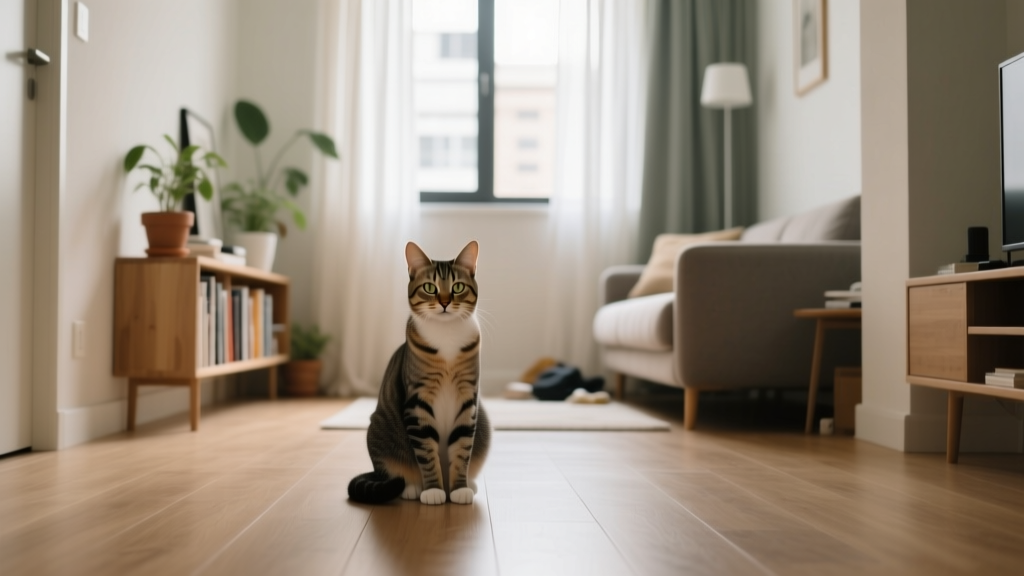
A cat’s face is a real-time dashboard—but most owners misread its signals entirely. Take slow blinking: often called the ‘cat kiss,’ it’s not just affection—it’s a deliberate, low-stakes signal of safety. When your cat blinks slowly at you while maintaining soft eye contact, they’re saying, ‘I trust you enough not to look away.’ In contrast, wide-open eyes with dilated pupils in daylight? That’s rarely excitement—it’s often acute anxiety or hyperarousal, especially if paired with flattened ears or tense whiskers.
Ear position tells an even richer story. Forward-facing ears mean relaxed attention—like when your cat watches birds from the window. But ears rotated sideways (‘airplane ears’) indicate rising uncertainty: maybe your toddler just approached too quickly, or the vacuum cleaner hummed downstairs. Ears pinned flat backward? That’s a full-blown threat display—often preceding a hiss, swat, or retreat. Crucially, veterinarians warn that chronic ear flattening—even without obvious triggers—can signal underlying pain. Dr. Sarah Wooten, DVM and certified feline specialist, notes: ‘I see dozens of cats annually diagnosed with dental disease or arthritis solely because their owners finally noticed persistent ear tension during routine grooming.’
The mouth and whiskers add nuance. A slightly open mouth with gentle panting may be heat regulation—but if accompanied by drooling, lip licking, or tongue flicking, it’s likely nausea or stress-induced nausea (common before car rides or vet visits). Whiskers held forward and taut? Curiosity or focus. Whiskers flattened tightly against cheeks? Fear or defensiveness—even if the cat appears still.
Tail Talk: What That Wiggling, Thumping, or Puffed-Up Appendage Really Means
Forget the myth that a wagging tail means happiness—dogs do that. Cats? Tail movement is almost always emotional barometer. A gently swaying tip while sitting? Mild interest. A rapid, whip-like side-to-side flick? Impending overstimulation—especially during petting. This is your last warning before the ‘love bite’ or sudden swipe. Research published in Applied Animal Behaviour Science (2022) tracked 127 cats during human interaction and found that tail-tip flicking preceded aggression in 92% of cases where petting continued past the cat’s tolerance threshold.
A puffed-up tail (‘bottlebrush tail’) signals fear or defensive arousal—not playfulness. It’s often paired with arched back and sideways stance to appear larger. Conversely, a tail held high and upright—especially with a subtle quiver at the tip—is pure feline joy and greeting. But here’s what few know: a tail held low or tucked tightly under the body isn’t just shyness—it’s a strong indicator of chronic stress or physical discomfort. In multi-cat households, this posture frequently predicts resource guarding or urine marking within 48 hours, per a Cornell Feline Health Center behavioral study.
And don’t overlook the base of the tail. A slow, rhythmic sway from the base while the cat sits still? Often concentration—like watching prey. A stiff, vibrating base? That’s intense excitement—usually pre-pounce. But if it happens while being touched near the lower back? Possible sensitivity—consider spinal issues or flea allergy dermatitis.
Vocalizations Beyond ‘Meow’: Context Is Everything
Cats evolved meowing primarily to communicate with humans—not other cats. So every ‘meow’ is tailored, intentional, and context-dependent. A short, high-pitched ‘mew’ at dawn? That’s your cat’s version of ‘Breakfast is overdue.’ A drawn-out, low-pitched yowl echoing through the house? That’s distress—possibly cognitive decline in seniors, urinary blockage (a life-threatening emergency), or territorial anxiety. According to the American Association of Feline Practitioners, unexplained yowling warrants same-day veterinary assessment.
Purring is another misunderstood signal. Yes, it often means contentment—but cats also purr when injured, in labor, or facing terminal illness. The frequency (25–150 Hz) has been shown in peer-reviewed studies to promote bone density and tissue repair. So purring isn’t always ‘I’m happy’—it’s more accurately ‘I’m trying to heal or self-soothe.’ Listen for tone: a strained, raspy purr with shallow breathing? That’s a red flag.
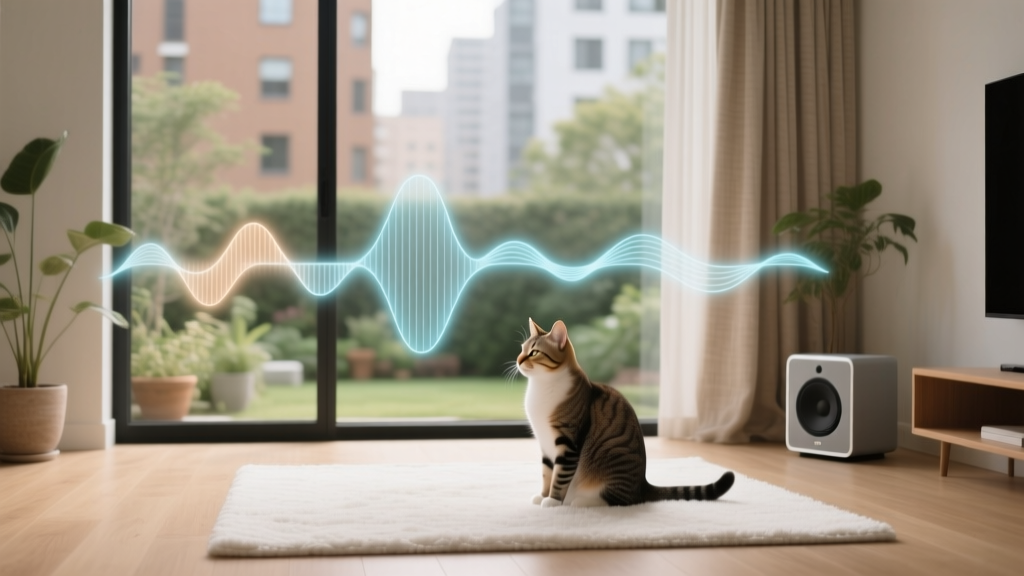
Chirps and chatters—those rapid, teeth-chattering sounds directed at birds behind glass—are expressions of frustrated predatory drive. But if your cat chirps softly while rubbing against your leg? That’s a bonding vocalization, akin to kitten-to-mother communication. Record these sounds and note timing: consistency reveals patterns no human could intuit alone.
Body Posture & Movement: From Crouching to Kneading
Posture tells the whole story. A cat lying on its side with belly exposed isn’t necessarily inviting belly rubs—that’s vulnerability, not invitation. If they roll onto their back but keep paws tucked and eyes alert, they’re relaxed but guarded. Only when legs are splayed, eyes half-closed, and breathing deep should you consider gentle chin scratches—not belly rubs.
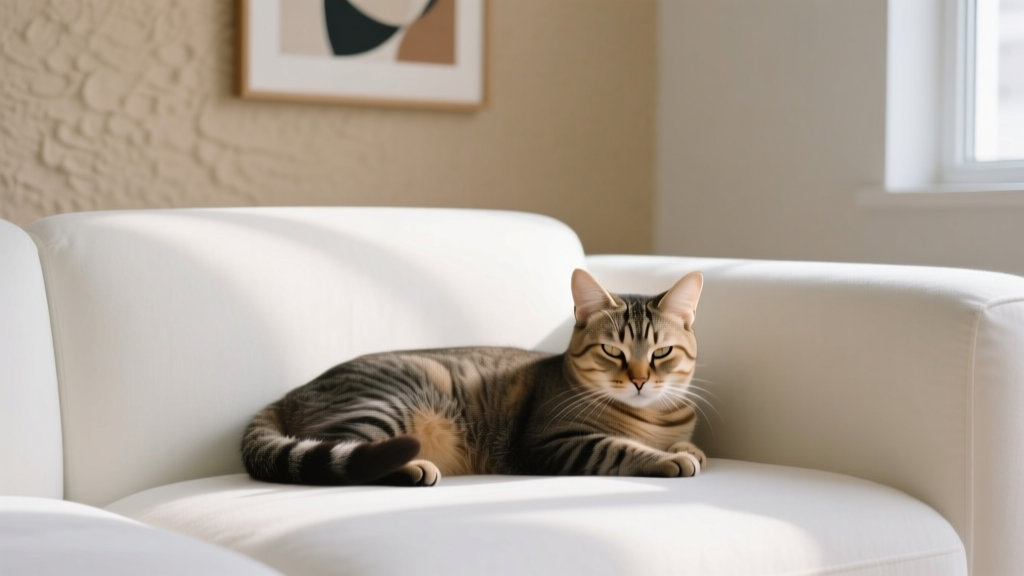
The ‘loaf’ position (paws tucked under, back rounded) signals comfort and readiness to spring—ideal for napping cats who feel safe. But if your usually active cat spends >18 hours/day loafing—and avoids jumping onto counters they once loved—it may indicate joint pain or fatigue from early kidney disease.
Kneading (‘making biscuits’) is a neonatal holdover from nursing, signaling deep security. Yet if kneading intensifies alongside excessive licking of paws or flank, it may indicate obsessive-compulsive disorder triggered by environmental stress—a condition treatable with behavior modification and, in some cases, medication.
Finally, the ‘elevator butt’—when your cat lifts hindquarters while being petted near the base of the tail—is often misread as enjoyment. While some cats do enjoy it, many find it overstimulating. Watch for tail flicking or skin twitching beneath your hand: those are clear ‘stop now’ signals.
| Signal | Most Likely Meaning | What to Do Immediately | When to Contact a Vet |
|---|---|---|---|
| Slow blink + soft gaze | Trust and calm | Mirror the blink; speak softly; maintain distance unless invited | Never—this is ideal behavior |
| Dilated pupils + flattened ears + low crouch | Acute fear or pain | Remove trigger (noise, person, object); offer quiet space; avoid handling | Within 24 hours if recurrent without obvious cause |
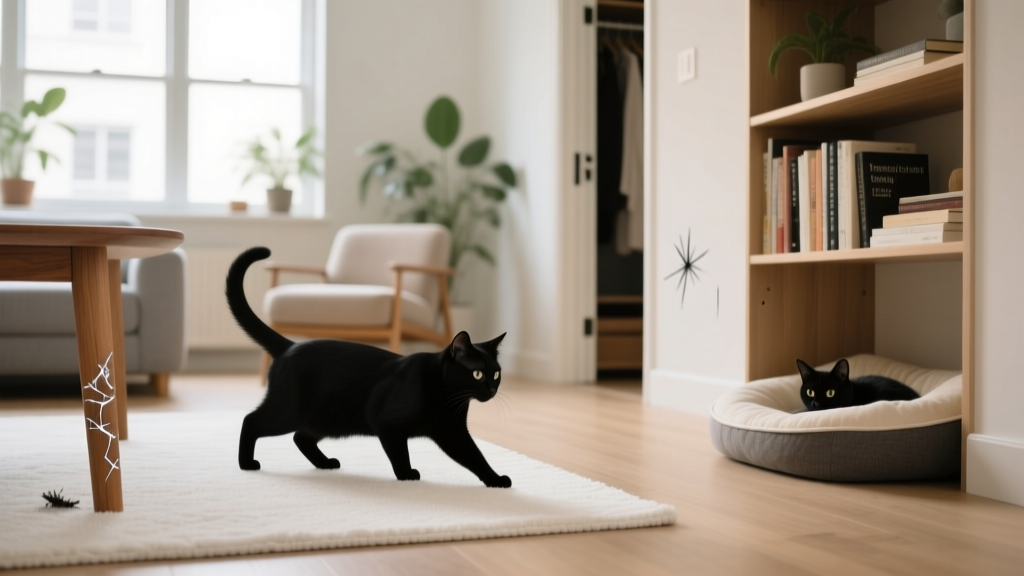
| Tail held low/tucked + reduced activity | Chronic stress or physical discomfort | Assess environment (litter box cleanliness, new pets, construction noise); add vertical spaces | Within 48 hours—rule out UTI, arthritis, or GI issues |
| Excessive licking of one area + hair loss | Anxiety, allergies, or pain | Check for fleas, irritants, or recent changes; video-record behavior | Same day—dermatological or behavioral evaluation needed |
| Yowling at night + disorientation + pacing | Possible cognitive dysfunction or hypertension | Keep lights dim; maintain consistent routine; prevent access to stairs | Immediate—hypertension can cause sudden blindness or stroke |
Frequently Asked Questions
Do cats really understand human emotions—or are they just reacting to tone?
Multiple studies confirm cats *do* recognize human emotional states. A 2020 University of Milan experiment showed cats altered their behavior significantly when their owners watched sad vs. happy videos—spending more time near owners during sadness and exhibiting more affiliative behaviors (rubbing, purring). They’re not empathizing abstractly, but they’ve learned associations between our vocal tones, facial expressions, and outcomes (e.g., calm tone = safety; raised voice = unpredictability).
My cat used to cuddle but now avoids me—could this mean they’re angry or punishing me?
No—cats don’t hold grudges or punish. Sudden withdrawal is almost always a sign of physical discomfort (dental pain, arthritis, hyperthyroidism) or environmental stress (new pet, change in routine, undetected conflict with another cat). Start with a full veterinary exam—including bloodwork and dental X-rays—before assuming behavioral causes.
Is it true that a cat’s tail ‘flick’ during petting means they want more—not less?
No—this is a dangerous misconception. Tail flicking (especially rapid, horizontal movement) is a universal ‘overstimulation’ signal across feline ethology literature. Continuing petting past this point teaches cats that humans ignore their communication, eroding trust and increasing defensive aggression. Stop *before* the flick begins—watch for earlier cues like skin twitching or ear rotation.
How long does it take to become fluent in reading my cat’s behavior?
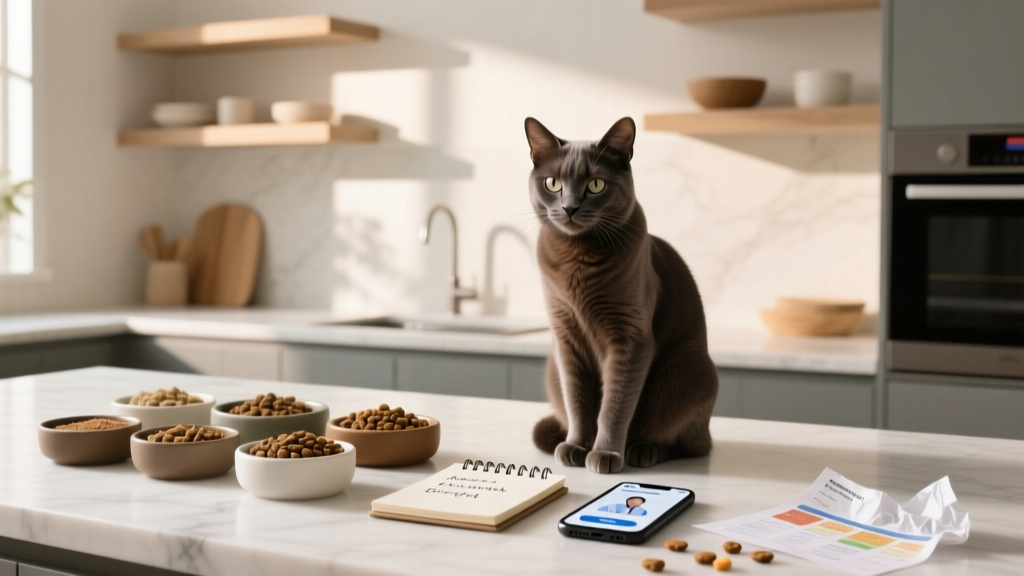
With daily focused observation (5–10 minutes of quiet, non-intrusive watching), most guardians notice meaningful pattern recognition within 2–3 weeks. Full fluency—anticipating needs before escalation—takes 3–6 months. Keep a simple journal: note time, location, trigger, body language, and outcome. You’ll spot correlations (e.g., ‘always flattens ears when the neighbor’s dog barks at 4 p.m.’) faster than any app.
Can I train my cat to show different signals—or change how they communicate?
You cannot rewire innate feline communication—but you *can* shape responses through positive reinforcement. For example, rewarding calm approaches with treats builds confidence. Teaching a ‘touch’ command (nose to hand) creates a reliable ‘yes’ signal. But never suppress natural signals (e.g., hissing)—that removes their only tool for setting boundaries, leading to bite-first reactions.
Common Myths About Cat Behavior
Myth #1: “Cats are aloof because they’re independent by nature.”
Reality: Domestic cats are facultatively social—they choose relationships based on safety and predictability, not indifference. Feral colonies demonstrate complex social structures; indoor cats simply adapt communication to human limitations. Their ‘aloofness’ is often misread caution.
Myth #2: “If my cat sleeps on my bed, they’re bonded to me.”
Reality: While proximity *can* indicate trust, cats sleep where it’s warm, elevated, and smells like their colony. Many cats prefer beds for thermal comfort—not emotional attachment. True bonding is seen in mutual slow-blinking, following you room-to-room, or bringing ‘gifts’ (toys, socks) to your lap.
Related Topics (Internal Link Suggestions)
- Understanding Cat Body Language Signals — suggested anchor text: "cat body language chart"
- Why Does My Cat Bite Me Gently? — suggested anchor text: "why does my cat nibble me"
- How to Introduce a New Cat Without Stress — suggested anchor text: "introducing cats slowly"
- Signs of Pain in Cats That Owners Miss — suggested anchor text: "hidden signs of cat pain"
- Best Calming Products for Anxious Cats — suggested anchor text: "vet-recommended cat calming aids"
Start Today—Your Cat Is Already Speaking. Will You Finally Learn Their Language?
You don’t need special training or expensive tools to begin. Right now, set a 7-minute timer. Sit quietly near your cat—no touching, no talking. Observe just one thing: ear position. Note how it shifts when the furnace kicks on, when a bird flies past the window, when you sigh. That tiny act builds neural pathways for deeper understanding. Because how to read your cat's behavior isn’t about control—it’s about reciprocity. Every flick of a tail, every blink, every chirp is an invitation to listen. And when you do, you don’t just decode signals—you honor their autonomy, protect their well-being, and transform coexistence into true companionship. Ready to go further? Download our free 7-Day Cat Communication Tracker (with printable journal pages and video examples) at the link below.