How to Modify Bad Cat Behavior the Right Way
Why \"How to Modify Bad Cat Behavior\" Isn’t About Fixing Your Cat—It’s About Understanding Their Language
If you’ve ever found yourself Googling how to modify bad cat behavior after your beloved feline shredded your couch at 3 a.m., peed beside the litter box, or hissed at your toddler for no apparent reason—you’re not failing as a pet parent. You’re simply speaking a different language. Cats don’t misbehave out of spite or rebellion; they communicate unmet needs through actions we misinterpret as 'bad.' And here’s the truth most online guides skip: punishing or suppressing these behaviors without addressing root causes doesn’t work—it often makes things worse. In fact, a 2023 study published in Journal of Veterinary Behavior found that cats subjected to punishment-based interventions were 3.2× more likely to develop chronic anxiety-related behaviors like overgrooming or redirected aggression within 6 weeks.
This isn’t about quick fixes or ‘cat whisperer’ mysticism. It’s about applying evidence-based behavior modification—grounded in feline ethology, learning theory, and veterinary behavioral medicine—to build trust, reduce stress, and create lasting change. Whether your cat is 4 months or 14 years old, the principles below have been validated by board-certified veterinary behaviorists, certified cat behavior consultants (IAABC), and thousands of real owners who’ve transformed their homes from battlegrounds to peaceful sanctuaries.
Step 1: Rule Out Medical Causes—Before You Assume It’s ‘Just Behavior’
Here’s where most people go wrong: they jump straight to training before ruling out pain or illness. A cat who suddenly starts urinating outside the box may have interstitial cystitis, urinary crystals, or arthritis making it painful to climb into a high-sided litter box. A senior cat who bites when petted might be experiencing dental disease or hyperthyroidism-induced irritability. According to Dr. Sarah Hopper, DACVB (Diplomate of the American College of Veterinary Behavior), “At least 35% of cases labeled as ‘aggression’ or ‘litter box avoidance’ have an underlying medical component—and treating that alone resolves the behavior in over half.”
So before modifying anything, schedule a full veterinary exam—including bloodwork, urinalysis, and orthopedic assessment if your cat is over age 7. Ask specifically for a feline behavior history form (many clinics offer this digitally pre-visit). Note timing, triggers, duration, and any pattern (e.g., “only scratches the sofa after I leave for work” or “bites ankles between 5–6 p.m. daily”). This data helps your vet distinguish true behavioral issues from medical mimics.
Step 2: Decode the Function—What Is Your Cat *Really* Trying to Achieve?
Every behavior serves a purpose. In applied behavior analysis (ABA), we call this the ‘function.’ Cats don’t act randomly—they seek one of four outcomes: access (to food, attention, play), escape/avoidance (of something unpleasant), sensory stimulation, or communication (e.g., ‘I’m scared’ or ‘This space is mine’).
Let’s say your cat knocks items off your desk. Is it attention-seeking? Or is it because your desk is the highest vantage point—and they’re stressed by outdoor cats visible through the window? One calls for scheduled interactive play; the other requires environmental enrichment and visual barrier solutions.
Try this real-world diagnostic exercise: For 3 days, keep a simple log: time, behavior, immediate antecedent (what happened right before), and consequence (what happened right after). You’ll likely spot patterns invisible in the moment. One client, Maria (a teacher in Portland), logged her 2-year-old rescue’s nighttime yowling and discovered it always followed her turning off the bedroom light—her cat associated darkness with abandonment due to early shelter trauma. Once she added a dim nightlight and 10 minutes of calm bonding pre-bedtime, the yowling stopped in 4 nights.
Step 3: Replace, Don’t Suppress—The Power of Positive Reinforcement & Environmental Design
Punishment—spraying water, shouting, clapping—doesn’t teach cats what to do instead. It only teaches them that *you* are unpredictable or threatening. Worse, it damages your bond and increases cortisol levels, priming them for future reactivity.
Instead, use differential reinforcement of alternative behavior (DRA): reward the action you *want*, while making the ‘bad’ behavior less rewarding. Example: Your cat scratches your arm when overstimulated during petting.
- Don’t: Push them away abruptly or yell.
- Do: Watch for ear flattening, tail flicking, or skin twitching—their ‘stop signal.’ End petting *before* they react, then immediately offer a toy on a string or toss a treat onto the floor. Over time, they learn: ‘When I give a cue, I get positive attention—and I don’t need to bite to make it stop.’
This works because it respects feline communication, builds predictability, and uses their natural motivation systems. As certified cat behavior consultant Mikel Delgado, PhD, explains: “Cats aren’t operant learners like dogs—they’re highly sensitive to context, timing, and emotional tone. Success hinges on consistency, patience, and reading their micro-expressions—not dominance.”
Environmental design is equally powerful. If your cat scratches the sofa, don’t just buy a scratching post—place it *next to the sofa*, cover the sofa arms with double-sided tape or aluminum foil temporarily, and sprinkle catnip on the post. Why? Because location matters more than material. A 2022 Cornell Feline Health Center field study showed cats used designated scratchers 89% more often when placed within 3 feet of their preferred target—and when paired with positive association (treats + praise upon use).
Step 4: Build Resilience Through Predictable Routines & Enrichment
Cats thrive on predictability. Sudden changes—a new baby, moving furniture, even switching litter brands—can trigger stress-based behaviors. But resilience isn’t built by avoiding change; it’s built by giving your cat control and outlets.
Start with the Five Pillars of a Healthy Feline Environment (developed by the AAFP and ISFM):
- Secure, quiet resting places (elevated shelves, covered beds)
- Multiple, separated key resources (litter boxes = n+1 per floor, food/water bowls spaced apart)
- Opportunities for play and predatory behavior (2x 15-min interactive sessions daily with wand toys)
- Positive, consistent human–cat interaction (let your cat initiate contact; respect withdrawal)
- An environment that respects their sense of smell (avoid citrus-scented cleaners near litter boxes or sleeping areas)
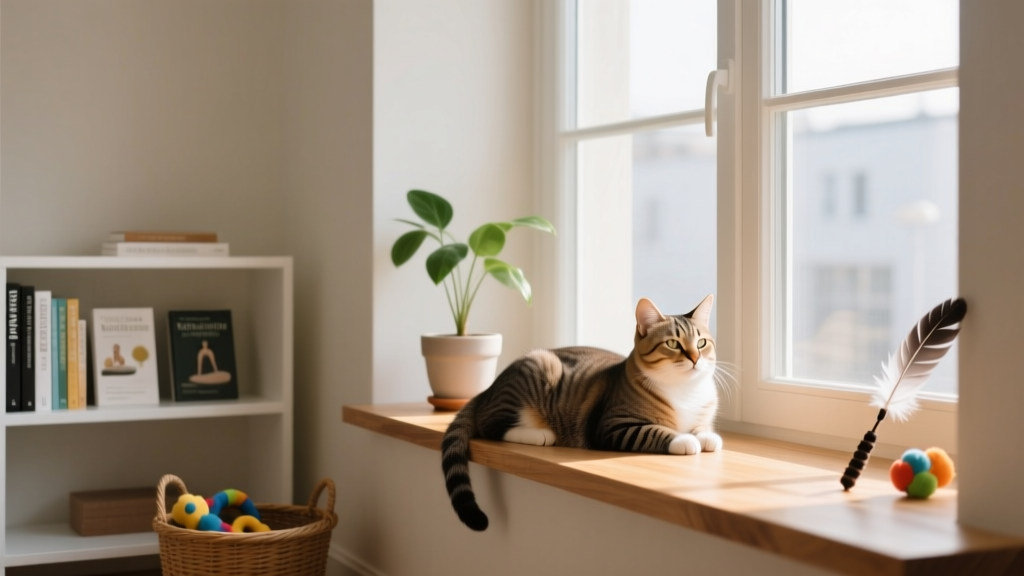
Enrichment isn’t ‘extra’—it’s essential neurobiological maintenance. Indoor cats experience up to 70% less sensory input than outdoor counterparts. Without outlets, energy converts to destructive or anxious behaviors. Try rotating puzzle feeders weekly, installing window perches with bird feeders outside, or hiding kibble in cardboard boxes for ‘foraging.’ One shelter-turned-rescue, Oliver, reduced his compulsive chewing of electrical cords by 100% after his owner introduced daily ‘hunt’ sessions with treat-dispensing balls and vertical climbing structures.
| Step | Action | Tools/Supplies Needed | Expected Timeline for Noticeable Change |
|---|---|---|---|
| 1. Medical Screening | Schedule comprehensive vet visit with behavior history form | Vet clinic, printed or digital behavior log | Immediate—rule out pain or illness first |
| 2. Functional Assessment | Log 3+ days of behavior: antecedent-behavior-consequence (ABC) pattern | Notepad or free app like ‘CatLog’ | Patterns emerge within 48–72 hours |
| 3. Environmental Adjustment | Add 1–2 species-appropriate resources (scratcher, perch, puzzle feeder); block access to problem area | Cardboard scratcher ($8), sisal rope, non-toxic deterrent spray | Reduction in target behavior within 3–7 days |
| 4. Positive Reinforcement Training | 2x daily 5-minute sessions reinforcing desired alternatives (e.g., ‘touch’ command for attention, ‘leave it’ for counter-surfing) | High-value treats (freeze-dried chicken), clicker (optional), timer | Consistent response in 2–3 weeks; full habit shift in 4–8 weeks |
| 5. Stress Reduction Protocol | Implement predictable routine + pheromone support (Feliway Optimum diffuser) + safe spaces | Feliway Optimum diffuser ($35), cozy hideaway (cardboard box + blanket) | Lower baseline anxiety in 10–14 days; improved behavior consistency by Week 3 |
Frequently Asked Questions
My cat bites me when I pet them—does that mean they don’t love me?
No—it means they’re communicating overload. Most cats have a low tolerance for sustained petting (often just 10–30 seconds). Biting is their last-resort ‘off switch.’ Watch for early signs: tail thumping, ear rotation back, skin rippling, or sudden stillness. Stop petting *before* those appear—and reward calm disengagement with a treat. Over time, gently increase duration while keeping sessions positive. Love isn’t measured in petting minutes—it’s in mutual trust and respect.
Will neutering/spaying fix my cat’s spraying or aggression?
It can significantly reduce hormonally driven behaviors—especially in intact males spraying to mark territory or females yowling during heat—but it won’t resolve stress-based or learned behaviors. A 2021 review in Veterinary Clinics of North America found that while 85% of male cats stopped spraying post-neuter, only 12% of cases involving indoor spraying had hormonal causes. If spraying persists after sterilization, look at environmental stressors: multi-cat tension, litter box aversion, or outdoor cat visibility.
Is it too late to modify bad cat behavior in an older cat?
Absolutely not. While kittens are more impressionable, adult and senior cats retain neuroplasticity—their brains can rewire with consistent, low-stress reinforcement. Dr. Katherine Houpt, veterinary behaviorist and author of Behavior Problems in Small Animals, notes: “Age isn’t a barrier; fear, pain, or lack of motivation is. Adjust pace, prioritize comfort, and celebrate tiny wins—like a 7-year-old cat choosing a new scratching post once.” Patience and precision matter more than age.
Should I use a spray bottle or citronella collar to stop scratching?
No—these tools punish without teaching alternatives and damage your relationship. Spray bottles cause startle responses that generalize to fear of hands or your presence. Citronella collars deliver aversive stimuli unpredictably, increasing anxiety. The American Veterinary Society of Animal Behavior (AVSAB) explicitly opposes punishment-based tools, stating they ‘increase fear, anxiety, and aggression while decreasing trust.’ Focus on redirection and enrichment instead.
Common Myths About Modifying Cat Behavior
Myth #1: “Cats can’t be trained—they’re independent and stubborn.”
Reality: Cats are highly trainable using positive reinforcement—but they require clarity, consistency, and high-value motivators (not just praise). Clicker training has successfully taught cats to ‘target,’ ‘spin,’ ‘high-five,’ and even use toilets. Their independence means they choose participation—not that they’re incapable of learning.
Myth #2: “If I ignore bad behavior, it will go away on its own.”
Reality: Ignoring often reinforces behavior unintentionally—especially attention-seeking acts. If your cat meows incessantly and you finally open the door after 20 minutes, you’ve reinforced the 20-minute meow. Instead, reinforce silence *before* escalation, and ensure needs (food, litter, play) are met proactively.
Related Topics (Internal Link Suggestions)
- Understanding Cat Body Language — suggested anchor text: "how to read cat tail flicks and ear positions"
- Best Litter Boxes for Multi-Cat Households — suggested anchor text: "low-tracking, high-sided litter box recommendations"
- Calming Supplements for Anxious Cats — suggested anchor text: "natural calming aids vet-approved for stress"
- How to Introduce a New Cat Safely — suggested anchor text: "step-by-step cat introduction timeline"
- DIY Cat Enrichment Ideas on a Budget — suggested anchor text: "homemade puzzle feeders and climbing structures"
Your Next Step Starts Today—And It’s Simpler Than You Think
You now know that how to modify bad cat behavior isn’t about control—it’s about compassion, curiosity, and collaboration. Every scratch, bite, or inappropriate elimination is a sentence in your cat’s native language. Your job isn’t to silence them, but to become fluent. Start small: tonight, place one new scratching surface next to their favorite furniture. Tomorrow, log one ABC observation. In one week, you’ll have data—not assumptions. In three weeks, you’ll see shifts—not miracles, but meaningful, measurable progress rooted in science and empathy. If your cat’s behavior feels overwhelming or includes sudden aggression, self-harm, or house-soiling after years of reliability, consult a board-certified veterinary behaviorist—they’re the feline equivalent of psychiatrists, and insurance often covers referrals. You’ve got this. And your cat? They’ve been waiting for you to listen.