How to Interpret Cat Behavior Wet Food
Why Reading Your Cat’s Wet Food Behavior Isn’t Just Cute—It’s Critical
\nIf you’ve ever wondered how to interpret cat behavior wet food interactions—why your usually enthusiastic eater suddenly sniffs and walks away, why they knead the bowl before eating, or why they’ll only eat from one specific dish—you’re not overthinking. You’re tuning into a vital communication channel. Cats don’t speak our language—but they broadcast rich, nuanced signals every time you open a can or squeeze a pouch. And unlike dogs, who often mask discomfort, cats express physical or emotional distress *first* through subtle shifts in feeding behavior. In fact, according to Dr. Sarah Wooten, DVM and certified feline practitioner, 'A change in how a cat approaches, interacts with, or abandons wet food is often the earliest observable sign of dental pain, nausea, anxiety, or even early kidney disease—sometimes appearing weeks before lab values shift.' Ignoring these cues doesn’t just mean wasted meals—it risks missing a window for early intervention.
\n\nWhat Your Cat’s Body Language Says Before the First Bite
\nWet food triggers a cascade of instinctual behaviors rooted in feline evolution: hunting, scent assessment, territory evaluation, and social signaling. Unlike dry kibble—which mimics scavenged scraps—wet food’s strong aroma, temperature, texture, and moisture content activate deeper sensory pathways. That’s why interpretation starts *before* consumption.
\nHere’s what to watch for—and what it likely means:
\n- \n
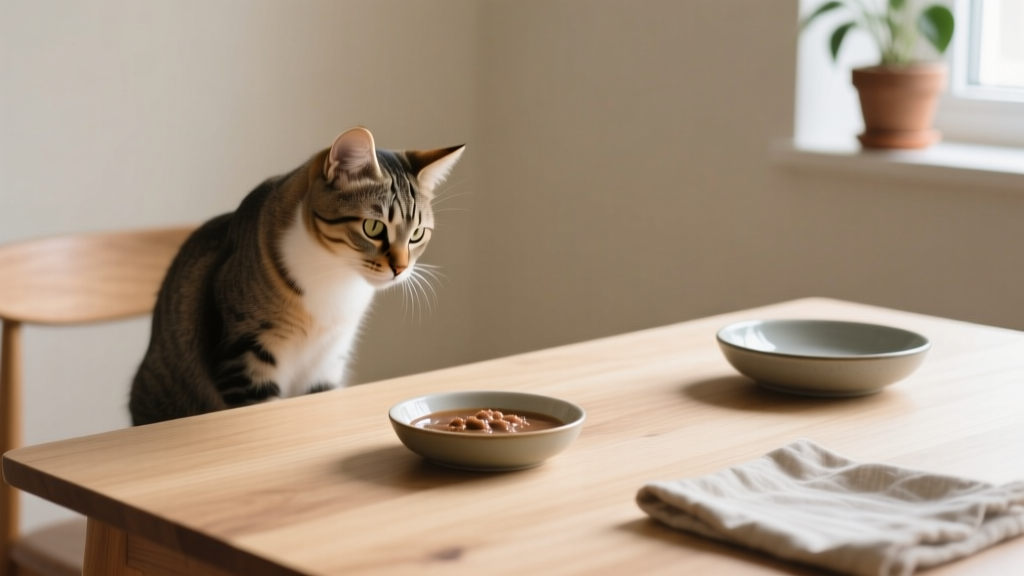
- Nose-to-bowl hovering (5+ seconds) without eating: Not indecision—it’s intense olfactory analysis. Cats have ~200 million scent receptors (vs. humans’ 5–6 million). If they pause but don’t eat, the food may smell ‘off’ (oxidized fats, bacterial growth), be too cold (below 85°F/29°C), or carry unfamiliar additives. A 2022 Cornell Feline Health Center study found 68% of cats rejecting newly introduced wet food did so due to temperature variance—not flavor. \n
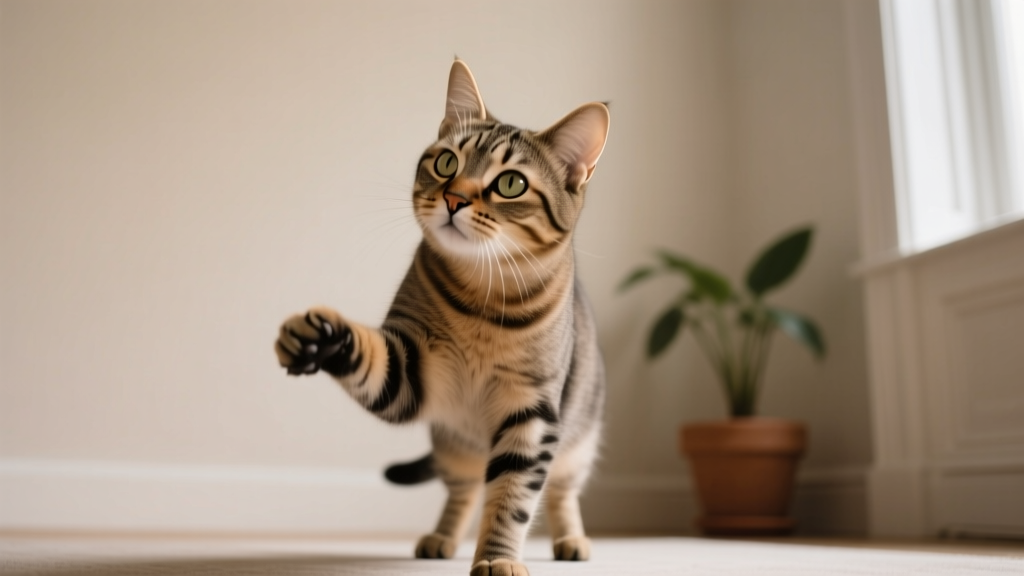
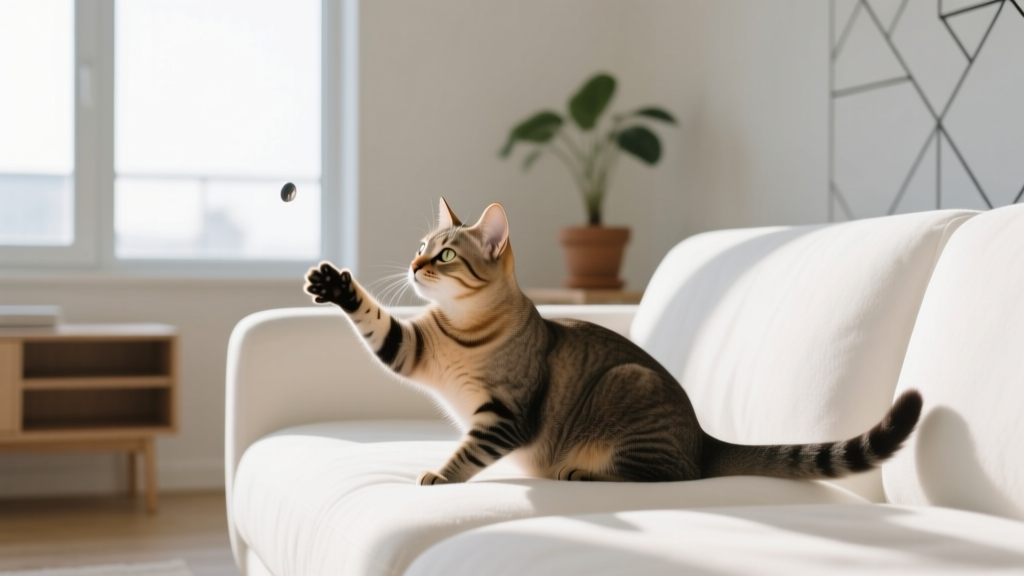
- Slow, deliberate paw taps on the surface: Often misread as ‘playing.’ In reality, this is tactile assessment—checking for movement (a prey instinct), texture consistency, or even testing if the food is ‘safe’ (e.g., no hidden foreign objects). It’s especially common in rescue cats with prior negative feeding experiences. \n
- Ears pinned sideways or backward during approach: A low-grade stress signal—not aggression. Paired with flattened whiskers or dilated pupils, it suggests environmental tension: other pets nearby, loud appliances, or even your own anxious posture while watching them eat. \n
Pro tip: Record a 30-second video of your cat’s first 2 minutes with fresh wet food. Review it frame-by-frame later—you’ll spot micro-expressions (a blink rate increase, lip licking, rapid tail tip flick) that vanish in real time.
\n\nThe Mealtime Sequence: Decoding What Happens Between Bite One and the Last Lick
\nHow your cat eats wet food—not just whether they eat it—is where behavioral gold lies. Veterinarian and feline behaviorist Dr. Mikel Delgado, PhD, emphasizes: 'Cats are obligate carnivores with a natural feeding rhythm of 10–20 small, protein-rich meals per day. Wet food should support that biology—not override it.'
\nObserve these phases closely:
\n- \n
- The First Bite Test: Does your cat take a single bite, then pause and stare? Or do they dive in immediately? A delayed start often indicates mild gastrointestinal discomfort (e.g., sensitive stomach) or palatability mismatch—even if they eventually finish. \n
- Pacing & Pausing: Natural feline feeding includes frequent breaks (simulating prey capture/rest cycles). But if pauses exceed 90 seconds repeatedly—or if your cat leaves >30% uneaten despite hunger cues (meowing, following you)—it may signal oral pain (gingivitis, resorptive lesions) or nausea. A 2023 Journal of Feline Medicine & Surgery study linked prolonged mid-meal pauses to undiagnosed chronic pancreatitis in 41% of cases. \n
- Licking the Bowl Clean vs. Leaving Residue: Thorough cleaning suggests high palatability and comfort. Leaving sticky residue (especially around edges) often points to aversion to texture (gravy vs. chunks) or temperature (too warm = off-putting fat release). \n
- Post-Meal Behavior: Rubbing head on bowl? Self-grooming intensifies? These are positive reinforcement signals—they associate the food with safety. But pacing, hiding, or excessive grooming *immediately after* may indicate postprandial nausea or anxiety. \n
Case Study: Luna, a 7-year-old Siamese, began leaving 40% of her pate-style food daily. Her owner assumed pickiness—until a vet noticed she’d lick the gravy but avoid the meat. Dental X-rays revealed Stage 2 periodontal disease. Switching to finely minced, room-temp food resolved both the behavior and her weight loss.
\n\nEnvironmental & Routine Cues: When Context Changes the Meaning
\nYour cat isn’t interpreting wet food in a vacuum. Their behavior is modulated by environment, routine, and social dynamics. A ‘refusal’ might mean ‘not here,’ not ‘not this.’
\nKey contextual factors:
\n- \n
- Location Matters: Cats prefer eating in quiet, low-traffic zones with clear escape routes. Placing the bowl near a noisy dishwasher or litter box reduces consumption by up to 60% (ASPCA Feline Environmental Needs Survey, 2021). Try moving the bowl to a hallway corner or bedroom floor—and watch for improved engagement. \n
- Feeding Schedule Consistency: Irregular timing disrupts circadian rhythms tied to digestion. Cats fed at erratic times show 3x more food-bowl pacing and vocalization before meals—a stress response, not hunger cue. \n
- Multicat Households: Dominant cats may guard bowls; shy cats may eat only when unobserved. One client reported her timid tabby ‘refused’ wet food—until a camera revealed she ate it at 3 a.m. after the dominant cat slept. Separating feeding zones increased intake by 92%. \n
- Your Presence: Some cats feel vulnerable eating. If your cat only eats wet food when you leave the room—or bolts when you approach—their behavior signals trust deficits, not food issues. \n
Try the ‘Silent Serve’ test: Place food down, walk away, and observe via phone camera for 5 minutes. Compare behavior to when you stand nearby. The difference tells you everything about security vs. sustenance.
\n\nWhen Wet Food Behavior Signals Real Health Risks (Not Just Quirks)
\nSome behaviors aren’t personality—they’re pathology. Knowing the red flags separates curious observation from urgent action.
\nImmediate Veterinary Consultation Needed If You See:
\n- \n
- Sudden, total refusal of all wet food types after months/years of consistent acceptance—especially paired with weight loss, lethargy, or vomiting. \n
- Chewing motions without swallowing (‘chattering’ at the bowl), drooling, or pawing at mouth—classic signs of dental pain or oral tumors. \n
- Aggression toward the bowl (swatting, hissing, biting the dish)—often linked to neurological issues (e.g., hyperesthesia syndrome) or severe anxiety triggered by texture/scent. \n
- Eating only from your finger or spoon—a potential indicator of esophageal pain (megaesophagus, strictures) making bowl-based eating uncomfortable. \n
Remember: Cats hide illness masterfully. As Dr. Wooten notes, 'A cat that stops eating wet food isn’t being difficult—it’s saying, “Something hurts, and I can’t tell you where.”'
\n\n| Behavior Observed | \nMost Likely Cause | \nAction Step | \nTimeframe for Concern | \n
|---|---|---|---|
| Sniffs, then walks away (repeatedly) | \nTemperature mismatch, oxidized fats, or scent fatigue (same brand/flavor for >4 weeks) | \nWarm food to 85–90°F (30°C); rotate proteins every 2–3 weeks; store opened cans covered in fridge ≤3 days | \nLow urgency—adjust within 48 hrs | \n
| Takes 1–2 bites, then grooms intensely | \nMild nausea, food sensitivity, or stress-induced displacement behavior | \nOffer smaller portions (¼ tsp), try novel protein (duck, rabbit), eliminate background noise during meals | \nModerate—monitor 3–5 days; escalate if vomiting/diarrhea occurs | \n
| Leaves food untouched for >24 hrs (but eats dry) | \nDental pain, oral inflammation, or early renal disease affecting taste perception | \nSchedule veterinary oral exam + bloodwork (SDMA, creatinine); offer warmed, ultra-smooth pate | \nHigh urgency—vet visit within 72 hrs | \n
| Stares at food, then meows plaintively | \nHunger + learned association (you respond to meowing with food), not necessarily refusal | \nUse timed feeders or puzzle toys to decouple vocalization from reward; ignore meows during meal prep | \nLow urgency—behavioral training needed | \n
| Eats only from edge of bowl or avoids center | \nWhisker fatigue (bowl too deep/narrow), texture aversion, or early arthritis limiting neck flexion | \nSwitch to wide, shallow ceramic dish; try different consistencies (shredded vs. loaf); elevate bowl 2–3 inches | \nModerate—adjust within 72 hrs | \n
Frequently Asked Questions
\nWhy does my cat dip their paw into wet food and lick it off?
\nThis is often a carryover from wild ancestors testing water sources or cooling hot food. But in homes, it frequently signals whisker stress (deep bowls cause discomfort) or texture uncertainty. Try a wide, rimless dish—and observe if the behavior stops. If it persists with vocalization or agitation, consult your vet for oral exam.
\nMy cat eats wet food only when I’m holding the spoon—is that normal?
\nIt’s common but not ideal long-term. Spoon-feeding creates dependency and may mask underlying issues like jaw pain or esophageal discomfort. Start transitioning by placing food on a flat plate beside you, then gradually move it farther away over 5–7 days. If resistance is extreme, rule out oral pain first.
\nDoes refusing wet food mean my cat prefers dry? Should I switch entirely?
\nNot necessarily. Many cats refuse wet food due to presentation—not preference. Dry food lacks moisture critical for urinary and kidney health. Instead of switching, troubleshoot: warmth, bowl type, protein variety, and feeding location. Only consider dry-only diets under direct veterinary supervision for specific medical conditions.
\nCan stress really make my cat stop eating wet food overnight?
\nAbsolutely. Stress suppresses ghrelin (the ‘hunger hormone’) and triggers cortisol release, directly inhibiting appetite. Moving, new pets, construction noise, or even rearranging furniture can trigger acute anorexia. Offer food in a quiet, covered space (like a cardboard box with entrance) and use Feliway diffusers. If fasting exceeds 24 hours, seek emergency care—cats risk fatal hepatic lipidosis.
\nIs it okay to mix wet and dry food to encourage eating?
\nYes—but strategically. Sprinkling 1 tsp of dry kibble *on top* of wet food leverages crunch appeal without diluting moisture benefits. Avoid mixing in the bowl long-term, as dry food absorbs gravy and becomes unappetizing. Better: serve wet food first, then offer dry as a ‘dessert’ 20 minutes later.
\nCommon Myths About Wet Food Behavior
\nMyth #1: “If my cat eats it sometimes, it’s not a health issue.”
False. Intermittent refusal—especially with pattern shifts (e.g., eats turkey but not chicken, or only in the morning)—can indicate early-stage dental disease, food sensitivities, or metabolic changes. Consistency matters less than *change*.
Myth #2: “Cats are just picky—they’ll eat when they’re hungry enough.”
Dangerous assumption. Unlike dogs, cats can develop life-threatening hepatic lipidosis within 48–72 hours of fasting. Hunger isn’t the driver; physiology is. Never force fast.
Related Topics (Internal Link Suggestions)
\n- \n
- Signs of dental pain in cats — suggested anchor text: "subtle signs your cat has tooth pain" \n
- Best wet food for senior cats — suggested anchor text: "veterinarian-recommended wet food for older cats" \n
- How to transition cats to wet food — suggested anchor text: "stress-free wet food transition guide" \n
- Feline chronic kidney disease early symptoms — suggested anchor text: "CKD warning signs before bloodwork changes" \n
- Cat food bowl recommendations — suggested anchor text: "whisker-friendly cat bowls that reduce stress" \n
Conclusion & Next Step
\nLearning how to interpret cat behavior wet food interactions isn’t about becoming a feline linguist—it’s about honoring your cat’s evolutionary instincts and physiological needs with compassionate attention. Every sniff, pause, and paw tap is data. Every change is a message. You now have a framework to listen deeply, act wisely, and advocate fiercely for your cat’s well-being. Your next step? Pick one behavior from this article you’ve observed—and track it for 48 hours using the Silent Serve method. Then compare notes against our table. If uncertainty remains, schedule a vet visit focused specifically on behavioral feeding assessment—not just a general checkup. Because when it comes to your cat’s health, the most important thing you’ll ever serve isn’t the food. It’s your presence, your patience, and your willingness to understand.