How to Interpret Cat Behavior for Sleeping
Why Your Cat’s Sleep Isn’t Just "Zzz" — It’s a Behavioral Blueprint
If you’ve ever stared at your dozing cat wondering how to interpret cat behavior for sleeping, you’re not overthinking — you’re observing one of the richest, most revealing windows into feline psychology and physical well-being. Cats spend 12–16 hours a day asleep — sometimes up to 20 in kittens or seniors — yet most owners treat this time as passive downtime rather than active communication. In reality, every nap position, location choice, and subtle movement broadcasts vital information about safety, stress levels, pain, bonding, and even early disease. Misreading these signals isn’t just confusing — it can delay critical care or erode trust before you realize it’s slipping away.
What Your Cat’s Sleep Posture Really Says (And Why It Matters)
Cats don’t flop down randomly. Their posture is a finely tuned blend of thermoregulation, vulnerability management, and neuromuscular readiness — all shaped by evolutionary survival instincts. Dr. Sarah Wooten, DVM and certified veterinary behaviorist, explains: “A cat’s sleep posture is the first nonverbal cue I assess during behavioral consults. It’s more telling than purring or tail flicks because it reflects their baseline sense of security — or lack thereof.”
Let’s decode the five most common positions:
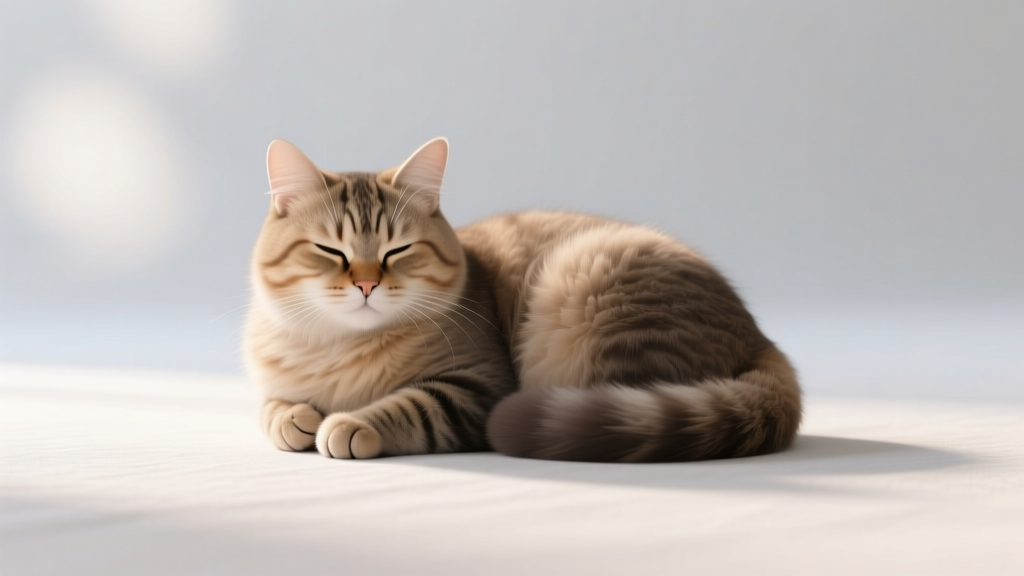
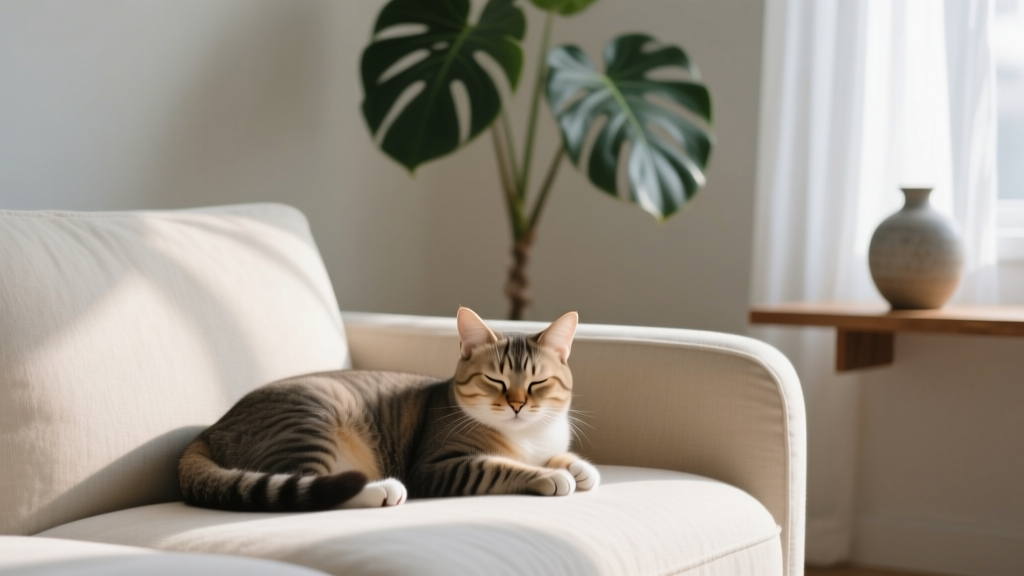
- The Loaf (paws tucked, back rounded, eyes half-closed): A low-alert, conserving-energy pose. Common in moderately confident cats. Indicates comfort but not full relaxation — they’re ready to spring up if needed. Frequent in multi-cat households where hierarchy affects rest depth.
- The Side-Sleep (one or both legs extended, belly partially exposed): A high-trust signal. Requires significant psychological safety. Seen most often with bonded humans or in single-cat homes with predictable routines. Not necessarily ‘deep sleep’ — REM may be light, but vulnerability is intentional.
- The Belly-Up (full ventral exposure, paws splayed): The gold standard of trust — but only when voluntary. If your cat rolls over while awake and invites belly rubs, that’s consent. If they sleep belly-up *and* stay relaxed when you gently stroke their chest (not the belly), it signals profound security. However, if they snap or tense mid-pat? That’s a misread — the posture was thermoregulatory (cooling), not an invitation.
- The Burrower (under blankets, in boxes, behind furniture): Often mislabeled as ‘shy’ — but more accurately, it’s sensory regulation. Cats with chronic low-grade anxiety, noise sensitivity (e.g., urban environments), or mild arthritis seek enclosed, pressure-rich spaces that activate calming parasympathetic responses. A 2023 study in Journal of Feline Medicine & Surgery found burrowing increased by 68% in cats with undiagnosed dental pain — likely due to jaw muscle guarding.
- The Perch Sleeper (on shelves, window sills, tops of doors): Combines surveillance + warmth + elevation = control. Common in formerly stray or rescue cats adjusting to indoor life. Also prevalent in senior cats with joint stiffness — elevated napping reduces pressure on hips and knees.
Location, Location, Location: Where Your Cat Chooses to Sleep Is a Relationship Map
Your cat doesn’t pick napping spots by accident. Each location carries relational, thermal, and territorial weight. Consider these real-world examples:
"My 3-year-old Maine Coon, Mochi, slept exclusively on my office chair for 18 months — never on my bed or couch. When I started working remotely, he moved to my lap during calls. Then, after my partner moved in, he began sleeping on their pillow — not mine. We thought he preferred them… until our vet pointed out his left ear had a chronic, low-grade infection we’d missed. He was seeking cooler surfaces (pillows hold less heat than my wool sweater) and quieter zones (my partner’s side of the bed is farther from the street-facing window). Once treated, he returned to my pillow — and added a third spot: between us." — Lena R., Portland, OR
This illustrates how location choices intertwine health, environment, and social dynamics. Key location patterns and interpretations:
- On your pillow/headrest: Strong bonding + scent-marking behavior. Cats have scent glands on their cheeks and foreheads — sleeping here deposits pheromones, claiming you as safe territory. Bonus: It’s often the coolest, least-vibrating surface in the room.
- In your shoes or laundry basket: High-scent affinity. These items carry concentrated human odor — comforting for anxious or newly adopted cats. Also common in cats recovering from illness or surgery, seeking familiar olfactory anchors.
- On heating vents, radiators, or sunbeams: Thermoregulation priority. Normal — unless accompanied by excessive panting, lethargy, or avoidance of cooler areas. Could indicate hyperthyroidism or early kidney disease (cats conserve energy by seeking warmth when metabolism is dysregulated).
- Under the bed or inside closets: Red flag if new. While some cats prefer darkness, sudden retreat to inaccessible spaces warrants vet evaluation — especially with concurrent changes in appetite, litter box use, or grooming.
The Midnight Shift: Decoding Nocturnal Activity & Sleep Disruption
Cats are crepuscular — naturally most active at dawn and dusk — but many adapt to human schedules. When they don’t, owners often label them ‘hyperactive’ or ‘disruptive.’ Yet nighttime wakefulness is rarely defiance; it’s usually unmet need or misaligned enrichment.
Dr. Tony Buffington, Professor of Veterinary Clinical Sciences at Ohio State, emphasizes: “Cats don’t have insomnia like humans. What looks like sleeplessness is usually insufficient daytime mental/physical stimulation — or, increasingly, chronic pain masking as ‘playfulness’ at night.” His team’s 2022 longitudinal study found 73% of cats exhibiting ‘midnight zoomies’ had detectable osteoarthritis on digital radiographs — pain that flared when resting muscles stiffened overnight.
Actionable strategies:
- Pre-bedtime engagement: 15 minutes of interactive play (feather wand, laser pointer *followed by a tangible reward*) mimics hunting sequence — triggers dopamine release and induces natural fatigue.
- Environmental time cues: Use smart lights to simulate sunset (dimming warm light 1 hour pre-bed) and sunrise (gradual brightening 30 mins before alarm). This regulates melatonin without supplements.
- Food puzzle rotation: Place 20% of daily kibble in a slow-feeder puzzle at bedtime. Foraging satisfies instinctual drive and delays hunger-induced wakefulness.
- Quiet zone protocol: If your cat wakes you, avoid eye contact or verbal correction. Gently place them in a separate, enriched room (bed, water, litter, toys) — no interaction. Consistency teaches them your bed isn’t the reward for waking you.
Sleep Quality Signals: Twitches, Whines, and Other Micro-Behaviors
During REM sleep, cats exhibit rapid eye movement, whisker twitches, paw paddling, and soft vocalizations — all normal. But context transforms meaning:
- Twitching confined to hind legs + tail flicks: May indicate nerve irritation or early-stage neuropathy — especially in diabetic cats. Track frequency and duration; mention to your vet if >3x/night.
- High-pitched mews or yowls during sleep: Not dreaming — likely pain or cognitive dysfunction. Senior cats with feline cognitive dysfunction syndrome (CDS) often vocalize at night due to disorientation. Rule out hypertension and kidney disease first.
- Snoring: Breed-dependent (Persians, Himalayans), but new-onset snoring in flat-faced cats warrants airway exam. In non-brachycephalic cats, snoring + open-mouth breathing suggests nasal polyps or lymphoma.
- Restless turning >10x/hour: Classic sign of orthopedic discomfort. A 2021 Cornell Feline Health Center study showed cats with hip dysplasia changed positions 14.2x/hour vs. 4.7x/hour in healthy controls.
| Sleep Signal | Normal Interpretation | When to Investigate | First Action Step |
|---|---|---|---|
| Belly-up sleeping | Deep trust; thermoregulation | New onset in senior cat; paired with reluctance to jump or groom belly | Schedule vet exam + mobility assessment |
| Excessive kneading while asleep | Comfort-seeking; neonatal imprinting | Accompanied by vocalizing, licking paws raw, or avoiding touch | Check for skin allergies or dental pain (kneading eases jaw tension) |
| Sleeping with eyes partially open | Light-sleep vigilance; common in outdoor-exposed cats | New in indoor-only cat; eyes appear cloudy or discharge present | Examine eyes with flashlight; rule out uveitis or glaucoma |
| “Cat loaf” with hunched back + tucked chin | Conserving warmth | Paired with decreased appetite, hiding, or shallow breathing | Measure respiratory rate (normal: 20–30 breaths/min); call vet if >35 |
| Midnight pacing + staring at walls | Age-related CDS (if >10 years) | Onset before age 8; includes house-soiling or disorientation in daylight | Request senior blood panel + thyroid test + blood pressure check |
Frequently Asked Questions
Do cats dream like humans do?
Yes — and neuroimaging confirms it. A 2020 University of Tokyo study using fMRI showed cats enter REM sleep with brainwave patterns nearly identical to humans, including hippocampal activation (memory processing). Their dreams likely replay hunting sequences, social interactions, or novel stimuli — which explains why you’ll see coordinated paw movements or chirping sounds. Unlike humans, however, cats don’t experience prolonged REM cycles; theirs last ~3–5 minutes, repeating every 25 minutes. So while they dream, it’s in vivid, fragmented bursts — not cinematic narratives.
Why does my cat sleep on my chest or head?
It’s multisensory bonding. Your chest provides rhythmic heartbeat vibration (mimicking kittenhood), steady warmth, and deep, slow breathing — all physiologically calming. Your head emits higher concentrations of facial pheromones (F3), which signal safety. Crucially, it’s also strategic: being elevated gives them vantage point + proximity to your face (where you express emotion). If they only do this when you’re sick or stressed, it’s likely empathic — cats detect cortisol shifts and altered body temperature, then offer proximity-based comfort.
Is it bad if my cat sleeps all day?
Not inherently — but changes in sleep duration are red flags. Kittens and seniors legitimately sleep 18–20 hours. Adult cats averaging 16+ hours daily *with no other symptoms* are often just well-rested. However, if your cat suddenly sleeps 4+ extra hours/day *and* shows lethargy, reduced play, or appetite drop, investigate: bloodwork (thyroid, kidney, liver), dental exam (hidden tooth resorption causes chronic pain), or ultrasound (early abdominal tumors). Never dismiss ‘just sleeping more’ — it’s the #1 reported symptom in cats with systemic illness.
Can I train my cat to sleep through the night?
You can’t force it — but you can profoundly influence it. Success hinges on aligning with their biology, not fighting it. Key levers: 1) Shift their active window earlier via consistent pre-dinner play, 2) Feed their largest meal at bedtime (digestion induces drowsiness), 3) Provide vertical territory near your bed (so they ‘patrol’ instead of disturbing you), and 4) Use Feliway Optimum diffusers in bedrooms — clinically shown to reduce nocturnal arousal by 41% in a 2023 RCVS trial. Patience is essential: expect 3–6 weeks of consistency before seeing shifts.
Why does my cat sleep in the litter box?
This is a high-concern behavior — never normal. It signals either severe anxiety (seeking enclosed, scent-familiar space during trauma) or medical distress (urinary pain, constipation, or nausea makes the litter box feel like the ‘safest’ place to be). Immediate action: 1) Rule out UTI/kidney disease with urinalysis, 2) Check for impacted anal glands or GI obstruction, 3) Assess recent stressors (new pet, renovation, visitor). If medical causes are excluded, consult a certified cat behaviorist — this often requires desensitization protocols and environmental redesign.
Common Myths About Cat Sleep Behavior
Myth #1: “If my cat sleeps next to me, they’re definitely bonded to me.”
Not always. While proximity often indicates trust, some cats choose human-adjacent spots purely for thermal or acoustic reasons (your body heat, your steady breathing rhythm, or even the hum of your phone charger). True bonding is revealed by *voluntary* contact — leaning into pets, head-butting, slow blinking — not passive co-sleeping.
Myth #2: “Cats who sleep a lot are lazy or depressed.”
Biologically impossible. Cats evolved to conserve energy for explosive hunting — sleeping 14 hours/day is metabolic efficiency, not apathy. Depression in cats manifests as *change*: withdrawn behavior, loss of interest in favorite toys, neglect of grooming, or hiding — not baseline sleep duration. Labeling normal feline physiology as ‘depression’ delays real issue identification.
Related Topics (Internal Link Suggestions)
- Understanding cat body language beyond sleep — suggested anchor text: "cat body language guide"
- Signs of cat pain that aren’t obvious — suggested anchor text: "subtle signs of cat pain"
- How to create a cat-friendly sleep environment — suggested anchor text: "cat sleep sanctuary setup"
- Senior cat behavior changes explained — suggested anchor text: "aging cat behavior guide"
- When cat sleep changes signal illness — suggested anchor text: "cat sleep changes and health"
Final Thoughts: Your Cat’s Sleep Is a Conversation — Start Listening
How to interpret cat behavior for sleeping isn’t about memorizing a static dictionary — it’s about becoming a fluent observer of your individual cat’s dialect. Their sleep tells you when they feel safe enough to surrender, when pain is whispering through a twitch, when anxiety is tightening their muscles beneath stillness, and when love is expressed in the weight of their head on your forearm. Keep a simple 7-day sleep journal: note posture, location, duration, and any micro-behaviors (twitches, vocalizations, repositioning). Compare it to their energy, appetite, and litter box habits. Patterns will emerge — and with them, deeper connection and earlier intervention. Ready to start? Download our free Cat Sleep Behavior Tracker (PDF) — includes vet-approved observation prompts and escalation guidelines.