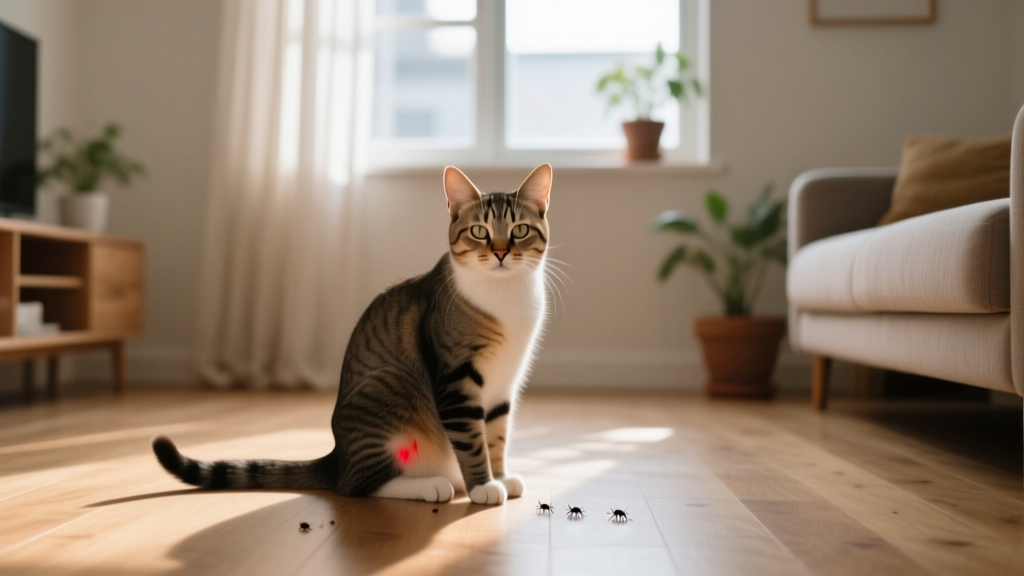
How to Help Cat Behavior Problems
Why Your Cat’s "Bad" Behavior Isn’t Bad at All — And How to Help Cat Behavior Problems the Right Way
If you’ve ever asked yourself, "How to help cat behavior problems?" while cleaning up urine outside the litter box, dodging midnight zoomies, or watching your sofa get shredded — you’re not failing as a cat parent. You’re facing one of the most misunderstood aspects of feline care: behavior isn’t disobedience — it’s communication. Over 70% of cats seen by veterinary behavior specialists present with issues rooted in unmet environmental, sensory, or emotional needs — not 'personality flaws.' And here’s the good news: nearly all common behavior problems are highly responsive to compassionate, science-backed interventions. In fact, a 2023 study published in the Journal of Feline Medicine and Surgery found that 89% of households implementing structured environmental enrichment + targeted behavior modification saw measurable improvement within 14 days. Let’s move past frustration and into fluency — with strategies that honor your cat’s biology, not fight it.
Step 1: Rule Out Medical Causes — The Non-Negotiable First Move
Before labeling any action as "behavioral," rule out pain or illness. A cat who suddenly starts urinating outside the litter box may be suffering from interstitial cystitis, kidney disease, or arthritis — conditions that make squatting painful or cause urgency. Similarly, aggression can stem from dental disease, hyperthyroidism, or even undiagnosed ear infections. According to Dr. Sarah Hopper, DACVB (Diplomate of the American College of Veterinary Behaviorists), "I see at least two cases per week where what looks like territorial spraying turns out to be a urinary tract infection. Never assume behavior is purely behavioral until physical health is confirmed." Schedule a full wellness exam including bloodwork, urinalysis, and orthopedic evaluation — especially for cats over age 7 or those with abrupt onset changes.
Watch for subtle red flags:
- Increased vocalization at night (possible hypertension or cognitive decline)
- Licking or chewing one area obsessively (allergies, pain, or neurological irritation)
- Changes in appetite, grooming, or sleep patterns
- Reduced interaction or hiding more than usual
If medical causes are ruled out, you’re cleared to move into behavioral support — but always keep your vet looped in. Some behavior medications (like gabapentin for anxiety or clomipramine for compulsive disorders) require prescription oversight and monitoring.
Step 2: Decode the "Why" — Mapping Triggers, Functions, and Feline Needs
Cats don’t misbehave — they respond. Every behavior serves a function: escape, attention, access to resources, or sensory regulation. To help cat behavior problems effectively, you must become a detective — not a disciplinarian. Start a 5-day behavior log using this framework:
- When? Time of day, duration, frequency
- Where? Location, proximity to windows/doors/other pets
- What happened right before? (Trigger: e.g., doorbell rang, dog barked, owner left room)
- What happened right after? (Consequence: e.g., you picked them up, sprayed water, closed the door)
- What was the cat’s body language? (Tail flick? Ears back? Pupil dilation? Crouching?)
In one real case study from the Cornell Feline Health Center, a 3-year-old Siamese named Luna began attacking her owner’s ankles at dawn. The log revealed attacks occurred only after the owner opened the bedroom door — and always ended when Luna was fed. The function? Access to food. Once feeding was shifted to an automatic feeder timed for 5:45 a.m., attacks dropped by 92% in 6 days.
Common functions & their solutions:
- Attention-seeking → Reward calm behavior *before* escalation (e.g., petting only when cat sits quietly on lap)
- Resource guarding → Add multiple litter boxes (n+1 rule), separate feeding stations, vertical space
- Fear-based reactivity → Create safe zones with covered beds, Feliway diffusers, and gradual desensitization
- Overstimulation → Learn petting tolerance cues (tail swish = stop now; flattened ears = retreat)
Step 3: Build the “Catified” Environment — Where Prevention Lives
Behavior problems often bloom in environments that ignore feline evolutionary needs: safety, control, predictability, and sensory engagement. Dr. Jackson Galaxy, certified cat behaviorist and author of Secrets of the Cat, emphasizes: "Cats don’t need more love — they need more territory." That means transforming your home into a low-stress, high-choice habitat. Not with expensive gadgets — but with intentional, low-cost design.
Start with the Five Pillars of Feline Environmental Needs (AVMA-endorsed):
- Safe Places — Covered cat beds, cardboard boxes with entrances cut on two sides, under-bed tunnels
- Multiple & Separated Key Resources — Litter boxes (1 per cat + 1), food/water bowls spaced >6 feet apart, scratching posts near sleeping areas
- Opportunity for Play & Predation — Daily 15-minute interactive sessions with wand toys (mimicking prey movement), followed by a treat or meal — satisfying the hunt-eat-groom-sleep cycle
- Positive, Consistent Human-Cat Social Interaction — Respect withdrawal; initiate contact on *their* terms (offer hand for sniffing, never force cuddling)
- Respect for Their Sense of Smell — Avoid citrus or pine-scented cleaners near resting/sleeping zones; use enzymatic cleaners for accidents
One overlooked lever? Vertical space. A 2022 University of Lincoln study tracked 42 multi-cat households and found that adding just two wall-mounted shelves (at different heights) reduced inter-cat aggression by 63% and decreased inappropriate elimination by 41%. Why? Height = control = reduced perceived threat.
Step 4: Apply Positive Reinforcement — Not Punishment, Ever
Punishment — yelling, squirt bottles, clapping, or rubbing a cat’s nose in urine — doesn’t teach alternatives. It teaches fear, erodes trust, and often worsens the very behavior you’re trying to stop. As Dr. Hopper states bluntly: "Punishment has zero evidence of efficacy in cats and strong evidence of harm." Instead, reward what you *want* — consistently and immediately.
Effective reinforcement requires precision:
- Timing matters: Treat or praise within 1 second of desired behavior (e.g., scratching post, not carpet)
- Value match: Use high-value treats (freeze-dried chicken, tuna flakes) for new behaviors; kibble for maintenance
- Clicker training works: Pair a click sound with a treat to mark exact moments (e.g., cat steps onto mat near litter box)
Real-world example: Milo, a 5-year-old domestic shorthair, scratched the arm of the couch daily. His owner stopped scolding and instead placed a sisal post *directly beside* the couch, sprinkled with catnip, and rewarded him with treats each time he approached or touched it. Within 11 days, 94% of his scratching occurred on the post. Bonus: she added a hammock-style perch above the post — giving him a lookout point *and* reinforcing the zone as positive.
For anxiety-related issues (hiding, trembling, excessive grooming), pair reinforcement with calming aids: Feliway Classic diffusers (studies show ~65% reduction in stress-related marking), Thundershirt wraps (used off-label for separation anxiety), and scheduled ‘calm-time’ rituals (gentle brushing + quiet music).
| Step | Action | Tools/Supplies Needed | Expected Outcome Timeline |
|---|---|---|---|
| 1 | Schedule full veterinary exam + diagnostics | Vet visit, urinalysis kit, blood panel request | Within 72 hours of noticing behavior change |
| 2 | Track behavior for 5 days using ABC log (Antecedent-Behavior-Consequence) | Printable log sheet or Notes app template | Pattern clarity by Day 5; root cause identified by Day 7 |
| 3 | Implement 3+ environmental upgrades (e.g., add 1 litter box, install 2 vertical shelves, place 1 new scratching surface near problem zone) | Cardboard scratcher ($8), wall-mounted shelf kit ($22), unscented clumping litter | Reduced stress markers visible by Day 10; fewer incidents by Day 14 |
| 4 | Begin daily 15-min interactive play + reward-based redirection (e.g., treat for touching post, not scratching couch) | Wand toy, high-value treats, clicker (optional) | Improved responsiveness by Day 12; sustained new behavior by Day 21 |
| 5 | Evaluate progress; consult board-certified veterinary behaviorist if no improvement after 3 weeks | Referral list, telehealth option, journal notes | Personalized intervention plan within 5 business days |
Frequently Asked Questions
Can I train my cat like a dog?
Not exactly — but you *can* train them effectively using species-specific methods. Cats learn best through positive reinforcement, short sessions (<5 minutes), and high-value rewards. Unlike dogs, they rarely respond to verbal commands alone; pairing sound cues (a click or soft word) with treats builds reliable associations. They also prioritize autonomy — so offering choices (“Would you like to jump up here or stay down?”) increases cooperation. Think less “sit/stay,” more “choose wisely and get rewarded.”
Will neutering/spaying fix behavior problems?
It helps — but only for hormonally driven behaviors. Neutering reduces urine spraying in ~90% of intact males and decreases roaming/fighting. Spaying eliminates heat-cycle yowling and restlessness. However, it won’t resolve fear-based aggression, litter box aversion due to pain, or anxiety from poor socialization. One study of 127 shelter cats found neutering improved spraying in 87% of males — but had zero impact on scratching or inter-cat tension in multi-cat homes without concurrent environmental changes.
My cat hisses/bites when I pet them — is this normal?
Yes — and it’s often preventable. Most petting-induced aggression stems from overstimulation, not dislike. Cats have sensitive nerve endings along their back and tail base. Watch for early warning signs: tail twitching, skin rippling, flattened ears, sudden stillness, or dilated pupils. Stop *before* the bite — then offer a treat or toy to end on a positive note. Gradually increase tolerance by petting 2 seconds, rewarding, then 3 seconds next time — building duration slowly.
How long does it take to see improvement?
Most owners report noticeable shifts in confidence and reduced incidents within 10–14 days when applying consistent, multi-layered strategies. Full resolution of chronic issues (e.g., chronic litter box avoidance, multi-cat tension) typically takes 4–8 weeks — because it requires rewiring neural pathways and rebuilding trust. Patience isn’t passive waiting; it’s daily commitment to observation, consistency, and compassion.
Are CBD or herbal remedies safe for cat behavior?
Caution is critical. There’s minimal peer-reviewed research on CBD safety or dosing in cats. The ASPCA warns that many hemp-derived products contain trace THC or harmful carrier oils (e.g., xylitol) toxic to felines. Always consult your veterinarian before introducing supplements — and avoid anything marketed as a “quick fix.” Evidence-backed options like Feliway (synthetic feline facial pheromone) or nutritional supplements containing L-theanine and alpha-casozepine (e.g., Zylkène) have stronger safety data and clinical validation.
Common Myths About Cat Behavior
Myth #1: “Cats are aloof and don’t bond like dogs.”
False. Neuroimaging studies (University of Tokyo, 2021) confirm cats form secure attachments to caregivers — evidenced by relaxed behavior, purring, and seeking proximity when stressed. They simply express attachment differently: slower blinks, head-butting, following you room-to-room, or bringing you ‘gifts.’ Ignoring these signals doesn’t mean disinterest — it means we’ve misread their language.
Myth #2: “If I ignore bad behavior, it’ll go away.”
Not necessarily — and sometimes it escalates. Ignoring *attention-seeking* behavior (e.g., meowing loudly at 4 a.m.) can work — but ignoring *fear-based* or *pain-driven* behavior (e.g., hiding, aggression, litter box avoidance) lets underlying distress fester. The goal isn’t ignoring — it’s redirecting, enriching, and resolving root causes.
Related Topics (Internal Link Suggestions)
- Understanding cat body language — suggested anchor text: "how to read your cat's tail, ears, and eyes"
- Best scratching posts for destructive cats — suggested anchor text: "top 5 durable scratching posts that actually work"
- Multi-cat household harmony tips — suggested anchor text: "how to stop fighting between cats in same home"
- Calming aids for anxious cats — suggested anchor text: "vet-approved anxiety relief for cats"
- When to see a veterinary behaviorist — suggested anchor text: "signs your cat needs a behavior specialist"
Your Next Step Starts Today — And It’s Simpler Than You Think
You now know how to help cat behavior problems — not with quick fixes or frustration, but with empathy, evidence, and environmental intelligence. Remember: every scratch, spray, or swat is a sentence in a language you’re learning to speak. Start small. Pick *one* step from the table above — maybe scheduling that vet visit, or placing a new scratching post beside the couch tonight. Consistency compounds. Trust deepens. And soon, those moments you once dreaded — the 3 a.m. yowl, the shredded rug, the standoffish glare — will transform into quiet purrs, slow blinks, and confident leaps onto your lap. Your cat isn’t broken. They’re asking — in the only way they know — for safety, choice, and understanding. You’ve got this.