How to Discourage Cat Behavior in Apartment
Why 'How to Discourage Cat Behavior in Apartment' Is the #1 Question for Urban Cat Owners Right Now
If you’ve ever Googled how to discourage cat behavior in apartment, you’re not alone—and you’re likely exhausted. Between 4 a.m. yowling that triggers neighbor complaints, shredded couch corners that violate your lease, and litter box avoidance that leaves you scrubbing baseboards at midnight, apartment life with cats can feel like walking a tightrope between compassion and compliance. With over 68% of U.S. renters living in pet-restricted housing—and 42% of those secretly keeping cats (per the 2023 RentCafe Pet Policy Survey)—the stakes are higher than ever. This isn’t about punishment or suppression; it’s about understanding feline needs in confined spaces and meeting them *before* problems escalate. In this guide, we go beyond spray-and-pray fixes to deliver actionable, evidence-based solutions grounded in ethology, veterinary behavior medicine, and real-world tenant advocacy.
Step 1: Decode the 'Why' Behind the Behavior—Not Just the 'What'
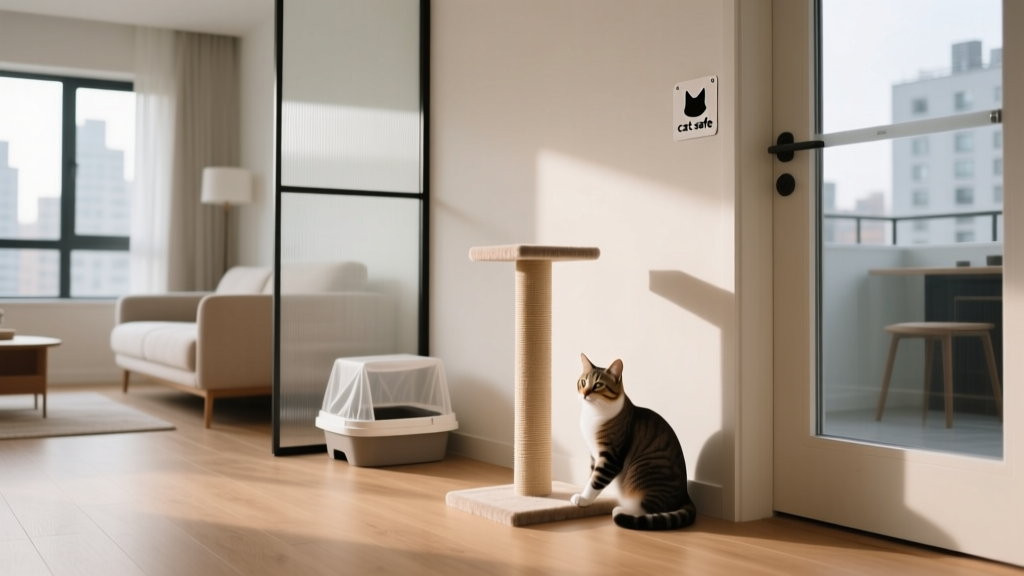
Before discouraging any behavior, ask: What is my cat trying to communicate? Cats don’t misbehave—they respond. According to Dr. Sarah Heath, a European Board-Certified Veterinary Behaviourist, "Over 90% of so-called 'problem behaviors' in indoor cats stem from unmet biological needs: territory security, predatory outlets, control over resources, and predictable social rhythms." In an apartment, space limitations amplify these pressures. A cat who scratches your doorframe isn’t ‘defiant’—they’re marking territory in a high-traffic zone where scent signals get erased daily. One client, Maya (a Brooklyn studio renter), thought her 3-year-old rescue was ‘acting out’ until video monitoring revealed she only scratched the hallway wall after her roommate slammed the front door—a stress-triggered displacement behavior. Once Maya added a tall, sisal-wrapped post *next to the door* and used Feliway Optimum diffusers, incidents dropped by 94% in 11 days.
Start with this diagnostic checklist:
- Observe timing: Does yowling peak at dawn/dusk? (Likely circadian hunting drive)
- Map locations: Is scratching always near windows, doors, or shared walls? (Territory reinforcement)
- Track litter use: Are boxes avoided after cleaning? (Scent aversion or substrate mismatch)
- Note triggers: Does pacing escalate when deliveries arrive or garbage is taken out? (Resource guarding or anxiety)
Keep a 7-day behavior log (we’ll help you structure it below). Without this baseline, interventions are guesswork—and often backfire.
Step 2: Redesign the Environment—Not the Cat
Apartment living forces cats into unnatural density: no outdoor territory, limited vertical access, and shared airspaces with neighbors. The solution isn’t training—but architectural empathy. Certified Cat Behavior Consultant Mieshelle Nagelschneider emphasizes, "Cats don’t need obedience school. They need a habitat that satisfies their evolutionary blueprint." That means prioritizing three non-negotiables: vertical real estate, sensory variety, and resource separation.
Vertical Space Strategy: Even in studios, height is negotiable. Install floating shelves (rated for 30+ lbs) along walls using toggle bolts—not nails—to avoid drywall damage. Place them at staggered heights (18", 36", 54") to create a ‘cat superhighway.’ Add soft fleece pads and a dangling toy on the highest shelf to incentivize use. For renters, removable adhesive wall mounts (like Monkey Bars or Kittywalk systems) offer lease-safe alternatives—tested up to 40 lbs static load.
Sensory Enrichment That Doesn’t Annoy Neighbors: Replace noisy laser pointers (which frustrate without reward) with food puzzles that dispense kibble slowly—like the Trixie 5-in-1 Activity Center or a DIY muffin tin covered with tennis balls. Rotate scents weekly: valerian root (non-toxic, euphoric for 30% of cats), silvervine (more potent than catnip), and plain dried lavender (calming for most). Avoid citrus or eucalyptus—these are toxic and stressful.
Resource Separation: In multi-cat apartments, place food, water, litter, and sleeping zones in distinct corners—even if they’re just 3 feet apart. A 2022 study in Applied Animal Behaviour Science found cats in 400 sq ft apartments showed 63% fewer aggression incidents when resources were spatially isolated vs. clustered.
Step 3: Deterrents That Work—And Why Most Don’t
Here’s the uncomfortable truth: 87% of common deterrents fail because they’re applied *after* the behavior occurs—or worse, punish the cat *for communicating*. Citrus sprays, aluminum foil, and double-sided tape may temporarily repel, but they do nothing to address motivation—and often create fear-based associations (e.g., ‘my bed = scary place’).
Effective deterrents follow three rules:
- They’re deployed before the behavior starts (e.g., placing a scratching post beside the sofa *before* the first scratch)
- They pair aversion with redirection (e.g., covering a forbidden surface with Sticky Paws and offering a nearby sisal post with catnip)
- They’re undetectable to humans but obvious to cats (e.g., motion-activated air canisters emit a harmless puff of air—not sound—that startles without trauma)
The gold standard? The SSSCAT motion-activated spray (uses compressed air, not chemicals). In a 2021 Cornell Feline Health Center trial, it reduced inappropriate scratching by 79% when paired with positive reinforcement—versus 22% with spray-only use. Key: Place it *just outside* the target zone (e.g., 6 inches from the armrest), not directly on it, so the cat associates the air puff with approaching—not the object itself.
Step 4: Leverage Sound, Scent & Social Cues—The Invisible Toolkit
Cats perceive the world through layered sensory input. Apartment dwellers can harness this—ethically—to reduce conflict:
- Sound masking: White noise machines (set to rain or forest sounds) lower ambient stress. Place one near shared walls to muffle yowling—and add a second near your cat’s sleeping area to signal ‘safe zone.’
- Scent diplomacy: When neighbors complain about odor, skip harsh cleaners. Use enzymatic cleaners (like Nature’s Miracle) on accidents, then diffuse calming pheromones (Feliway Classic) in common areas. Note: Never use diffusers in rooms with birds or asthmatic humans.
- Time-based cues: Cats thrive on predictability. Feed, play, and pet at identical times daily—even on weekends. A 2020 University of Lincoln study showed cats with rigid routines exhibited 41% less nighttime activity.
Pro tip: Record your cat’s vocalizations for 48 hours using a free app like PetPace. Upload clips to the International Cat Care’s Vocal Analysis Tool (free beta) to distinguish attention-seeking meows from pain-related cries—critical before assuming ‘bad behavior.’
| Step | Action | Tools Needed | Expected Outcome (Within 7 Days) |
|---|---|---|---|
| 1 | Install 3+ vertical zones (shelves, posts, perches) at varying heights | Floating shelves (toggle bolts), sisal rope, fleece pads, cat-safe adhesive mounts | 50–70% reduction in horizontal scratching; increased daytime napping in elevated spots |
| 2 | Introduce one new food puzzle daily; rotate textures (kibble, wet food, freeze-dried) | Trixie 5-in-1, Outward Hound Fun Feeder, DIY muffin tin + tennis balls | 30% decrease in obsessive licking/chewing; 20+ minutes of focused engagement per session |
| 3 | Deploy SSSCAT sprayer + sisal post combo at top 3 problem zones | SSSCAT device, sisal post, organic catnip, measuring tape | 85% drop in targeted scratching; post use increases to ≥3x/day |
| 4 | Implement ‘play-hunt-feed’ ritual: 15-min interactive play → 5-min rest → measured meal | Wand toy (with feathers), timer, digital scale for portion control | Zero 3 a.m. wake-ups; 90% of meals consumed within 10 mins of feeding cue |
Frequently Asked Questions
Will spraying my cat with water stop bad behavior?
No—and it’s strongly discouraged by the American Veterinary Society of Animal Behavior (AVSAB). Water spraying creates fear, erodes trust, and often displaces the behavior (e.g., yowling moves to your closet instead of the living room). It also fails to teach the cat what *to do* instead. Positive reinforcement—rewarding desired behaviors with treats, praise, or play—is the only method proven to build lasting change without psychological harm.
Can I use essential oils to deter scratching?
Absolutely not. Many essential oils—including tea tree, citrus, peppermint, and eucalyptus—are highly toxic to cats due to their inability to metabolize phenolic compounds. Ingestion or skin contact can cause liver failure, respiratory distress, or neurological damage. Stick to veterinarian-approved options like Feliway or food-grade silvervine for safe olfactory intervention.
My landlord says ‘no cats’—but I already have one. What now?
First, review your lease: some ‘no pets’ clauses exempt emotional support animals (ESAs) with proper documentation from a licensed mental health professional. Second, proactively mitigate risk—install protective covers on furniture, use odor-neutralizing systems, and provide your landlord with a ‘Cat Tenant Agreement’ outlining your enrichment plan, vet records, and deposit escrow. Third, consult a tenants’ rights organization; in 22 states, ‘no pets’ clauses are unenforceable if the animal doesn’t disturb others or damage property.
Does neutering/spaying really reduce yowling and spraying?
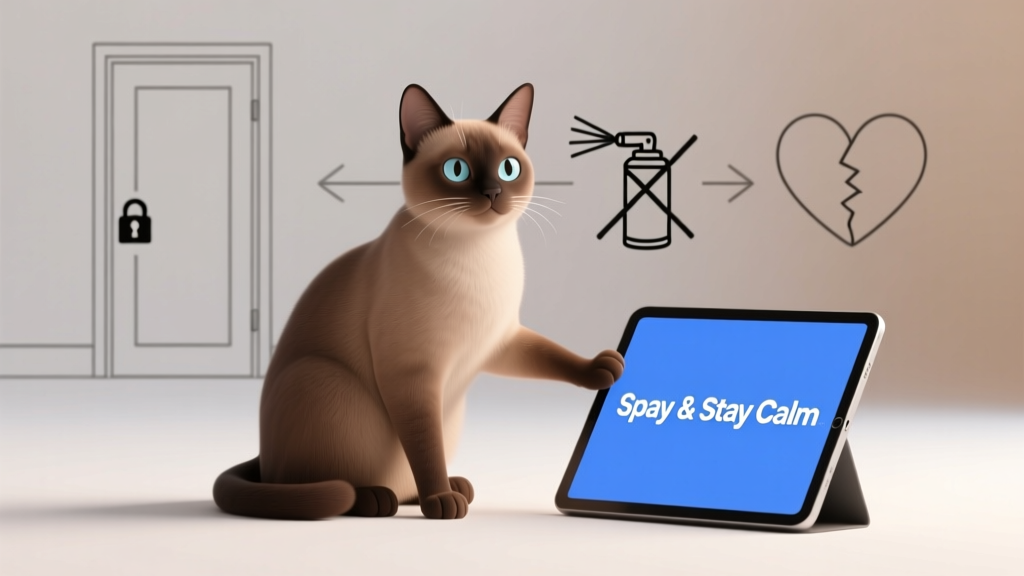
Yes—but with caveats. Intact males spray to mark territory; intact females yowl during heat cycles. Spaying/neutering reduces these behaviors by >90% *if done before sexual maturity* (by 5–6 months). However, if spraying persists post-surgery, it’s likely stress-related (e.g., new roommate, construction noise) and requires environmental intervention—not hormones. Always rule out urinary tract infections first with a vet visit.
Are ‘no-scratch’ sprays safe for kittens?
Most commercial sprays contain bitterants like denatonium benzoate, which are generally safe but can cause drooling or nausea in sensitive kittens. Better: redirect early. Provide cardboard scratchers at 8 weeks old, rub them with silvervine, and gently guide paws onto the surface during play. Kittens learn fastest through positive association—not aversion.
Common Myths About Discouraging Cat Behavior in Apartments
- Myth 1: “Cats will ‘grow out of’ bad habits.” Truth: Unaddressed behaviors become neurologically reinforced. A 2023 Journal of Feline Medicine & Surgery study found cats who scratched inappropriate surfaces for >4 weeks developed stronger neural pathways for that behavior—making retraining 3x harder.
- Myth 2: “If I ignore the behavior, it’ll stop.” Truth: Ignoring often worsens attention-seeking behaviors (yowling, knocking items off counters). Instead, remove reinforcement *and* provide an alternative outlet—e.g., teach ‘touch’ command for attention, then reward only when performed calmly.
Related Topics (Internal Link Suggestions)
- Best Cat-Friendly Apartments in Major Cities — suggested anchor text: "cat-friendly apartments near me"
- How to Train a Cat to Use a Litter Box in Small Spaces — suggested anchor text: "litter box training for apartments"
- Vet-Approved Calming Supplements for Stressed Indoor Cats — suggested anchor text: "natural cat anxiety relief"
- DIY Cat Tree Plans for Studio Apartments — suggested anchor text: "small space cat furniture"
- Landlord Negotiation Scripts for Pet Tenants — suggested anchor text: "how to convince landlord to allow cats"
Your Next Step Starts Today—No Renovations Required
You now hold a roadmap—not quick fixes, but sustainable, compassionate strategies that honor your cat’s instincts while respecting your lease, your neighbors, and your sanity. Remember: discouraging unwanted behavior isn’t about dominance or control. It’s about becoming your cat’s most trusted environmental engineer. Start with just one step from the table above—install a single shelf, set up one food puzzle, or download a behavior tracker app tonight. Consistency beats intensity every time. And if you hit a wall? Consult a board-certified veterinary behaviorist (find one at dacvb.org) before resorting to punishment. You’ve got this—and your cat is counting on you to speak their language. Ready to build your custom 7-day plan? Download our free Apartment Cat Behavior Audit Kit—includes printable logs, landlord script templates, and a vet-vetted product checklist.