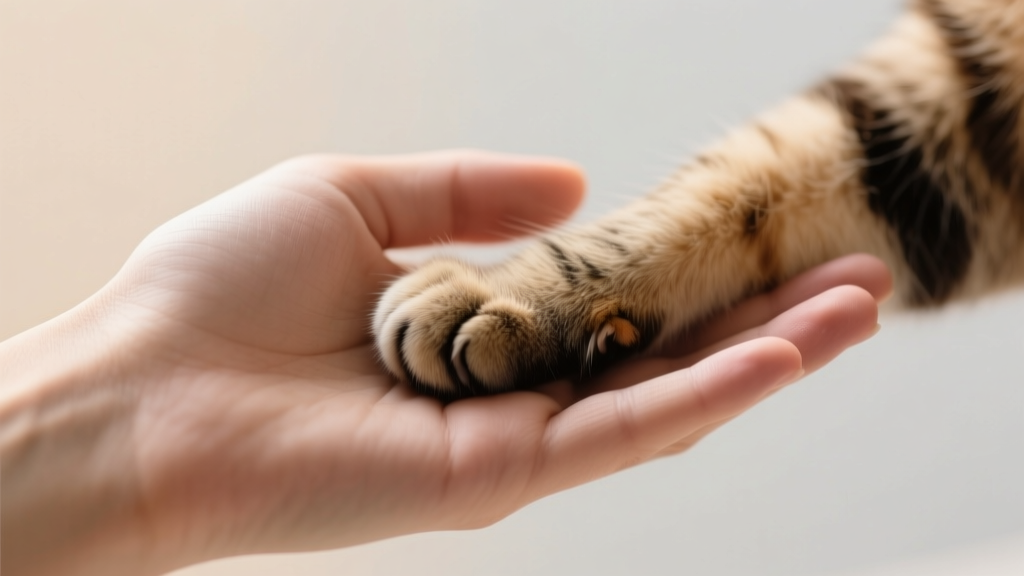
How to Deal with Bad Behavior in Cats
Why Your Cat Isn’t ‘Misbehaving’—They’re Communicating
If you’ve ever wondered how to deal with bad behavior in cats, you’re not alone—but you may be starting from the wrong assumption. What looks like ‘bad behavior’—biting during petting, shredding your couch, ambushing your ankles at 3 a.m., or avoiding the litter box—is rarely defiance or spite. It’s almost always a symptom: of unmet environmental needs, undiagnosed pain, chronic stress, or misaligned human expectations. In fact, a landmark 2022 study published in Journal of Feline Medicine and Surgery found that 83% of cats referred for ‘aggression’ or ‘inappropriate elimination’ had underlying medical conditions—including urinary tract discomfort, dental disease, or hyperthyroidism—that were only discovered after full veterinary workups. So before you reach for the spray bottle or consider rehoming, pause: your cat isn’t broken. They’re asking for help—in the only language they have.
This guide cuts through myths and offers actionable, compassionate, and clinically validated strategies—not quick fixes, but sustainable solutions rooted in ethology (the science of animal behavior), veterinary medicine, and decades of field experience working with thousands of cats in homes, shelters, and multi-cat households. Whether you’re facing one persistent issue or several overlapping challenges, this is your roadmap to harmony—backed by vets, certified cat behavior consultants (IAABC, ACVB), and real-world success stories.
Step 1: Rule Out Medical Causes—Before You Assume It’s ‘Just Behavior’
Never skip this step—even if your cat seems otherwise healthy. Cats are masters of masking illness. A sudden change in behavior is often the first (and sometimes only) sign something’s wrong. Dr. Sarah Wooten, DVM and veterinary advisor for the American Animal Hospital Association, emphasizes: ‘If your cat’s behavior changed recently—or escalated without clear trigger—assume it’s medical until proven otherwise.’
Common culprits include:
- Urinary tract issues: Painful urination leads cats to associate the litter box with discomfort—so they eliminate elsewhere (on beds, rugs, or hard floors).
- Dental disease: Gingivitis or tooth resorption causes severe oral pain, making gentle petting intolerable—triggering defensive bites.
- Osteoarthritis: Especially in senior cats, joint pain makes climbing into high-sided litter boxes difficult or painful—leading to accidents just outside the box.
- Hypertension or hyperthyroidism: Can cause restlessness, vocalization at night, and irritability.
Your action plan: Schedule a full wellness exam—including bloodwork, urinalysis, and orthopedic assessment—with a veterinarian experienced in feline medicine. Ask specifically for a feline behavior history form (many clinics now use the Feline Behavioral Assessment Tool developed by Cornell’s Feline Health Center). Document timing, location, triggers, duration, and your response. This data helps your vet spot patterns invisible in a 15-minute exam.
Step 2: Decode the ‘Why’ Behind the Behavior—Not Just the ‘What’
Once medical causes are ruled out (or managed), shift to behavioral analysis. Every ‘bad’ behavior serves a function—for the cat. Use the ABC Model (Antecedent-Behavior-Consequence) to map what’s really happening:
- A (Antecedent): What happened right before? (e.g., you reached to pet their belly; a dog barked outside; the vacuum turned on)
- B (Behavior): What did the cat *actually* do? (e.g., flattened ears, tail lashing, then bite—not ‘attacked’)
- C (Consequence): What happened immediately after? (e.g., you withdrew, yelled, or gave treats to calm them—unintentionally reinforcing the behavior)
Real-world example: Luna, a 4-year-old domestic shorthair, began swatting at her owner’s hands when being petted beyond 10 seconds. Using ABC tracking, her owner noticed Luna’s tail tip twitched (early stress signal) at ~8 seconds—and the bite occurred at 12. The consequence? Her owner stopped petting and said “Oh, poor baby!”—which Luna interpreted as attention (a reward). The fix? Pet only up to 7 seconds, stop *before* the tail flick, and offer a treat *as she disengages*. Within 10 days, tolerance increased to 25+ seconds.
This isn’t about ‘training’ cats like dogs—it’s about respecting their autonomy and communication style. As certified cat behaviorist Mikel Delgado, PhD, explains: ‘Cats don’t obey commands. They choose cooperation based on safety, predictability, and perceived value. Our job is to make the desired behavior the easiest, safest, and most rewarding choice.’
Step 3: Redesign the Environment—Because Cats Don’t ‘Misbehave’ in Enriched Spaces
Wild cats spend 70–80% of their waking hours engaged in hunting, exploring, and scent-marking. Indoor cats get none of that—unless we intentionally provide it. Boredom, frustration, and territorial insecurity drive over 60% of so-called ‘problem behaviors,’ according to the 2023 International Society of Feline Medicine (ISFM) Consensus Guidelines.
Transform your home using the 5 Pillars of a Healthy Feline Environment (developed by the AAFP and ISFM):
- Safe Places: Elevated perches (cat trees, shelves), covered beds, and hidey-holes where cats can observe without being seen.
- Multiple & Separated Key Resources: At least N+1 litter boxes (where N = number of cats), food/water stations spaced apart, and scratching posts near sleeping areas and entrances.
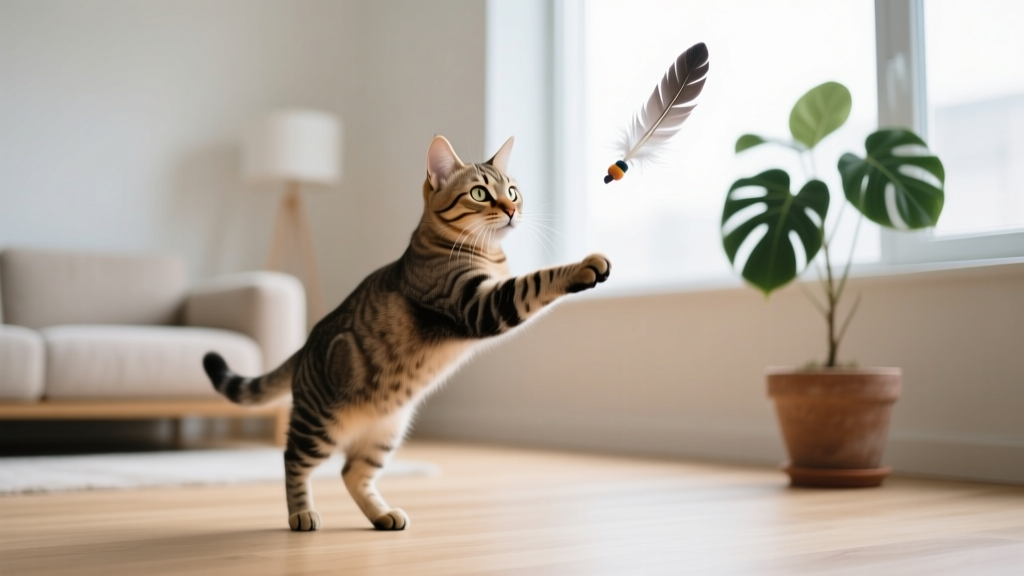
- Opportunity for Play & Predation: Daily 15-minute interactive sessions with wand toys (mimicking prey movement), followed by a ‘kill’—a small treat or kibble placed where the toy ‘died.’
- Positive, Predictable Human Interaction: Let cats initiate contact. Reward calm approaches with slow blinks and treats—not forced cuddling.
- Respect for Their Sense of Smell: Avoid citrus- or pine-scented cleaners near litter boxes or bedding. Use enzymatic cleaners for accidents—never ammonia-based products (they smell like urine to cats).
Case study: When Leo, a 2-year-old neutered male, started urine-marking doorways, his owner added two new vertical scratchers near entry points, installed a window perch overlooking a bird feeder, and moved his food bowl away from the litter box (previously 3 feet apart—too close per ISFM guidelines). Marking ceased in 11 days. No medication. No punishment.
Step 4: Interrupt & Redirect—Not Punish—With Precision Timing
Punishment (spray bottles, yelling, clapping) doesn’t teach cats what to do instead—it teaches them to fear *you* or hide behavior. Worse, it damages trust and can escalate anxiety-related issues. Instead, use positive interruption + redirection:
- For scratching furniture: Gently clap once (not at the cat—beside them) to break focus, then immediately guide paws to a nearby sisal post. Reward with treats *while scratching*.
- For biting during play: End the session *instantly* (no drama—just stillness and walk away). Resume only after 60 seconds of calm. Over time, cats learn biting ends fun.
- For nighttime activity: Shift playtime to 1 hour before bedtime. Feed a puzzle feeder dinner so they ‘hunt’ and then sleep. Never chase or shout—they’ll associate night with excitement.
Timing is critical: Intervention must occur within 0.5 seconds of the undesired behavior to be effective. If you’re too late, ignore it—and reinforce an alternative instead. Remember: You’re not correcting a cat. You’re shaping an environment where the right choice feels inevitable.
| Behavior Issue | Immediate Action (0–5 sec) | Environmental Fix (Within 24 hrs) | Long-Term Strategy (1–4 weeks) |
|---|---|---|---|
| Litter box avoidance | Thoroughly clean accident site with enzymatic cleaner; remove all traces of odor | Add 1+ new box in quiet, low-traffic area; switch to unscented, clumping litter; ensure box depth ≥3 inches | Introduce box gradually with treats inside; use Feliway Classic diffuser in room; schedule vet recheck if no improvement in 10 days |
| Aggression toward visitors | Quietly remove cat to safe room; close door; offer calming treats (Zylkène or Calming Care) | Install vertical space near entry (shelf/cat tree); place Feliway Optimum diffuser in foyer | Desensitize via ‘doorbell game’: ring bell → drop treat outside door → gradually decrease distance over sessions |
| Excessive grooming/overgrooming | Interrupt gently with soft ‘shhh’; offer lick mat with wet food to redirect oral focus | Reduce household stressors (e.g., cover windows during bird traffic; add white noise for loud neighbors) | Introduce daily 10-min interactive play; consult vet about possible dermatologic or anxiety causes; consider gabapentin trial if vet-approved |
| Nighttime vocalization | Ignore completely—no eye contact, no voice, no touch | Feed last meal via puzzle feeder at bedtime; install timed light to simulate dawn | Shift entire routine: morning play → midday nap → evening hunt → bedtime feast → lights out |
Frequently Asked Questions
Why does my cat bite me gently while purring?
This is often ‘love biting’—a carryover from kittenhood when kittens knead and nibble their mother while nursing. But it can also signal overstimulation. Watch for early cues: tail flicking, flattened ears, skin rippling along the back, or dilated pupils. Stop petting *before* the bite occurs—and reward calm disengagement with treats. Never punish; instead, teach ‘petting tolerance’ gradually using clicker training.
Will getting another cat fix my cat’s loneliness or aggression?
Rarely—and often makes things worse. Introducing a second cat without proper, months-long introduction protocols increases stress, resource guarding, and redirected aggression in >70% of cases (per ASPCA shelter data). Only consider adoption if your current cat shows consistent, positive interest in other cats (e.g., chirping at windows, seeking out feline scents). Even then, follow a 4-week scent-swapping protocol before visual contact.
Is spraying the same as urinating outside the box?
No—this is a critical distinction. Urinating outside the box (‘inappropriate elimination’) usually indicates medical issues or litter box aversion. Spraying is a vertical, tail-quivering, backward-spray marking behavior driven by stress, territorial insecurity, or hormonal factors. Neutering reduces spraying by ~90% in males—but if it starts *after* neutering, it’s almost always stress-related. A vet visit is essential to rule out cystitis or bladder stones first.
Can I use CBD oil or calming supplements safely?
Evidence is limited and regulation is weak. While some cats respond well to FDA-reviewed nutraceuticals like Solliquin or Zylkène (both clinically studied), CBD products vary wildly in purity, dosage, and THC content—which is toxic to cats. Always consult your vet before trying any supplement. Never use human melatonin or valerian root—these can cause serious adverse reactions.
My cat hisses and growls when I try to trim nails—what should I do?
This is fear—not defiance. Start with ‘touch desensitization’: sit beside your cat, offer treats, gently touch paw (no restraint) for 1 second → treat. Repeat 5x/day for 3 days. Then add light pressure on pad → treat. Then hold paw 2 seconds → treat. Only introduce clippers after 7+ days of relaxed handling. Never force. If resistance persists, ask your vet about a brief, low-dose gabapentin protocol for nail trims—it’s safer and more effective than physical restraint.
Common Myths About Cat Behavior
Myth #1: “Cats are aloof and don’t need companionship.”
Truth: Cats form secure attachments to humans—measured via the ‘secure base test’ (similar to infant attachment studies). A 2019 study in Current Biology found 64% of cats display secure attachment to their owners, seeking proximity and using them as a ‘safe base’ to explore. Loneliness manifests as overgrooming, vocalization, or destructive behavior—not indifference.
Myth #2: “If I ignore bad behavior, it will go away on its own.”
Truth: Ignoring *reinforces* many behaviors. For example, ignoring a cat who cries for food at 5 a.m. works only if you never feed them then—but if you eventually give in (even once), you’ve trained them that persistence pays off. Consistency matters more than volume. Better: preempt with scheduled feeding + puzzle feeder, so crying has zero payoff.
Related Topics (Internal Link Suggestions)
- Understanding cat body language — suggested anchor text: "what your cat's tail flick really means"
- Best litter boxes for sensitive cats — suggested anchor text: "quiet, low-dust litter boxes for anxious cats"
- How to introduce a new cat to your resident cat — suggested anchor text: "stress-free multi-cat household guide"
- Feline hyperesthesia syndrome explained — suggested anchor text: "why your cat suddenly races and bites their tail"
- When to see a veterinary behaviorist vs. trainer — suggested anchor text: "certified feline behavior consultant near me"
Conclusion & Your Next Step
Learning how to deal with bad behavior in cats isn’t about control—it’s about compassion, curiosity, and collaboration. You now know that punishment backfires, medical causes hide in plain sight, and environment shapes behavior more powerfully than any command. You’ve got vet-backed steps, a ready-to-use intervention table, myth-busting clarity, and real-world examples proving change is possible—even for long-standing issues.
Your next step? Pick *one* behavior to focus on this week. Grab a notebook, track its ABC pattern for 48 hours, and implement *just one* environmental upgrade from the 5 Pillars. Small, consistent actions compound. In 21 days, you’ll likely see shifts in confidence, calm, and connection—not because your cat ‘obeyed,’ but because you finally spoke their language.