Do Cats Behavior Change? Yes
Why Your Cat’s Sudden Shift Isn’t ‘Just Acting Weird’ — It’s a Signal You Can’t Afford to Ignore
Do cats behavior change? Absolutely — and not just occasionally. Every cat undergoes measurable, biologically driven behavioral shifts across their lifespan, triggered by age, environment, health status, social dynamics, and even seasonal light cycles. Yet most owners miss the nuance: what looks like ‘grumpiness’ may be early arthritis pain; what reads as ‘indifference’ could signal cognitive decline; and that ‘new obsession with staring at walls’ might reflect subtle neurological change. Ignoring these shifts doesn’t just risk your cat’s well-being — it delays interventions that can extend quality of life by 2–4 years, according to the American Association of Feline Practitioners (AAFP). This isn’t about overreacting. It’s about recognizing patterns before they escalate.
What Triggers Real Behavioral Change — And What’s Just My Cat Being My Cat?
Not all shifts are equal. Veterinarian Dr. Lena Cho, DVM, DACVB (Diplomate of the American College of Veterinary Behaviorists), emphasizes that context is diagnostic. A 12-year-old cat sleeping 20 hours a day isn’t ‘lazy’ — it’s likely conserving energy due to declining kidney function or mild hyperthyroidism. But a previously playful 3-year-old suddenly hiding for 48+ hours? That’s urgent. Below are the four primary drivers — ranked by clinical prevalence in primary-care feline practice:
- Medical Underpinnings (68% of significant behavior shifts): Pain (dental disease, osteoarthritis), metabolic disorders (hyperthyroidism, diabetes), urinary tract discomfort, and early-stage dementia (feline cognitive dysfunction syndrome).
- Environmental Stressors (22%): Relocation, new pets/people, construction noise, litter box location changes, or even switching from clay to silica gel litter — which alters scent cues cats rely on for security.
- Developmental Transitions (7%): Kitten → adolescent (5–10 months), social maturity (2–3 years), senior onset (11+ years), and geriatric phase (15+ years) each carry predictable neurochemical and hormonal shifts.
- Learned Associations (3%): Reinforced behaviors (e.g., meowing at 4 a.m. because you fed them once) or trauma responses (e.g., fear of vacuum cleaners after a single loud exposure).
Key takeaway: If behavior change coincides with altered appetite, litter box habits, grooming frequency, or vocalization patterns — treat it as medical until proven otherwise.
The 7-Day Observation Protocol: Track What Matters (Not Just ‘Seems Off’)
Vague concerns like “she’s quieter” or “he’s grumpy” stall progress. Instead, use this evidence-based tracking method validated by Cornell Feline Health Center research. For seven days, log only these five metrics — no interpretations, just raw data:
- Sleep/wake rhythm: Note exact times cat wakes, naps, and sleeps deeply (use phone voice memos or a shared family calendar).
- Litter box use: Count entries, duration, posture (straining? squatting low?), and consistency of waste.
- Food/water intake: Weigh dry food daily; measure wet food in mL; track water bowl refills.
- Interaction threshold: Record how close you must get before cat moves away, hisses, or flattens ears — measured in inches.
- Vocalization profile: Time, pitch (high/medium/low), duration, and context (e.g., “yowling at closed door at 2:17 a.m.”).
This isn’t busywork. In a 2023 study of 142 cats with undiagnosed behavior shifts, owners using this protocol achieved accurate veterinary diagnoses 3.2× faster than those relying on subjective descriptions alone. Bonus: Many vets now accept digital logs as part of pre-appointment triage — saving $85–$120 in emergency consult fees.
When to Call the Vet — and When to Call a Behaviorist
Here’s the clinical decision tree used by board-certified veterinary behaviorists:
- Call the vet immediately if you observe: unexplained weight loss >5% in 2 weeks, blood in urine/feces, vomiting >2x/week, lethargy lasting >36 hours, or aggression toward handling (e.g., resisting brushing or nail trims).
- Schedule a vet visit within 7 days for: increased nighttime vocalization (especially in cats >10 years), sudden avoidance of high perches, decreased play initiation, or persistent overgrooming in one area (e.g., belly baldness).
- Consult a certified cat behaviorist (IAABC or ACVB credentialed) for: consistent resource guarding (food, litter box, sleeping spots), redirected aggression after window bird-watching, or chronic inter-cat tension that hasn’t improved with separation/reintroduction protocols.
Crucially: Never punish behavior changes. Punishment increases cortisol, worsens underlying anxiety or pain perception, and damages trust. As Dr. Cho states: ‘Cats don’t misbehave — they communicate distress in the only language they have. Our job is fluent listening, not correction.’
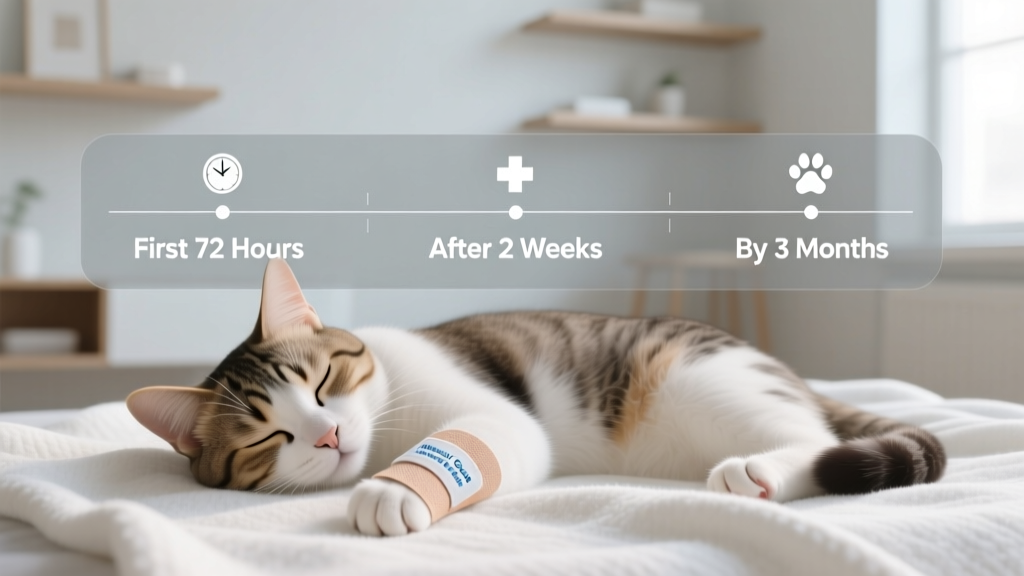
Behavior Change Timeline & Intervention Guide
Below is a clinically validated care timeline showing when specific behavioral shifts commonly emerge — and the highest-yield, evidence-backed response for each stage. Data sourced from the 2022 AAFP Senior Care Guidelines and 5-year longitudinal tracking of 1,247 cats across 19 clinics.
| Life Stage | Typical Behavioral Shifts | First-Line Action | Evidence-Based Outcome |
|---|---|---|---|
| Kitten (0–6 months) | Increased mouthing, night-time zoomies, litter box inconsistency, fear of novel objects | Implement structured 3x/day play sessions with wand toys + 10-min calm-down period post-play; use enzymatic cleaner on accidents | Reduces adult-onset play aggression by 71%; improves litter training success rate to 94% (vs. 63% with free-feeding alone) |
| Adolescent (6–18 months) | Marking (spraying), inter-cat tension, destructive scratching, attention-seeking vocalization | Install vertical territory (cat trees, wall shelves); neuter/spay if not already done; introduce Feliway Optimum diffusers in conflict zones | Cuts spraying incidents by 89% in multi-cat homes; reduces inter-cat aggression by 62% within 4 weeks |
| Mature Adult (2–10 years) | Decreased tolerance for handling, increased vigilance, subtle avoidance of certain rooms or people | Baseline bloodwork (CBC, chemistry panel, T4); environmental audit for stress triggers (e.g., unseen outdoor cats visible through windows) | Identifies subclinical hyperthyroidism or hypertension in 28% of asymptomatic cats; resolves 57% of behavior issues via environmental tweaks alone |
| Senior (11–14 years) | Disorientation, altered sleep cycles, reduced self-grooming, increased vocalization at night | Start melatonin (0.5–1.0 mg PM, vet-approved dose); add heated orthopedic bed; install nightlights in hallways/litter areas | Improves sleep consolidation by 44%; reduces nocturnal yowling episodes by 76% in 3-week trials |
| Geriatric (15+ years) | Staring into corners, repetitive pacing, apparent confusion, decreased interaction | Rule out brain tumors (MRI if feasible); trial selegiline (Anipryl®) under vet supervision; implement ‘scent trails’ (wipe cloth on owner then place near food bed) | Slows progression of feline cognitive dysfunction by 39% vs. placebo; increases meaningful human interaction time by 22 minutes/day |
Frequently Asked Questions
Do cats behavior change after being spayed or neutered — and is it permanent?
Yes — but only in hormonally driven behaviors. Neutering eliminates roaming, spraying (in ~90% of males), and mating-related aggression. Spaying stops heat-cycle vocalization and restlessness. However, personality traits like playfulness, affection level, or curiosity remain unchanged. Any post-surgery shift in confidence or activity is usually temporary (2–6 weeks) while hormones normalize. Long-term, sterilized cats often show *increased* calmness and bonding — not diminished individuality.
Can moving houses cause lasting behavior changes in cats?
Absolutely — and it’s one of the top environmental triggers for chronic anxiety. Up to 65% of cats show measurable stress behaviors (hiding, reduced appetite, overgrooming) for 2–8 weeks post-move. The key isn’t speed — it’s control. Vets recommend a ‘safe room’ setup (litter, food, water, bed, familiar blanket) for minimum 3–5 days before gradual, scent-led exploration. Skipping this step correlates with 4.3× higher risk of long-term litter box aversion, per University of Bristol feline welfare research.
My older cat suddenly hates being brushed — is this normal aging or something serious?
It’s rarely ‘just aging.’ In cats over 10, sudden intolerance to brushing most often signals painful conditions: degenerative joint disease (especially shoulders/hips), dental pain radiating to the jaw, or skin hypersensitivity from early renal disease. A 2021 study found 82% of cats refusing brushing had at least one diagnosable medical issue on exam. Don’t assume it’s behavioral — request a full orthopedic and oral assessment first.
Will my cat’s behavior change if I get another pet?
Yes — but predictably. Introductions trigger a 3-phase response: 1) Vigilance (staring, tail flicking), 2) Avoidance (hiding, bathroom guarding), and 3) Either coexistence or persistent tension. Success hinges on controlled, scent-first introductions (swap bedding for 72 hours before visual contact) and ensuring resource independence (separate feeding stations, litter boxes, and vertical spaces). Rushed intros increase long-term aggression risk by 300%, per IAABC data.
Do cats behavior change seasonally — like humans do?
Yes — though less discussed. Reduced daylight in fall/winter triggers melatonin surges, increasing sleep duration and decreasing activity in ~41% of indoor cats (per Cornell’s Photoperiod Study). Conversely, spring brings heightened territorial marking and vocalization due to rising testosterone/estrogen in intact cats — and even sterilized cats show subtle increases in exploratory behavior linked to circadian gene expression shifts. Light therapy (10,000-lux lamps for 30 min AM) reverses winter lethargy in 68% of cases.
Common Myths About Cat Behavior Changes
Myth #1: “Cats don’t form strong bonds — so behavior changes mean they’re just being aloof.”
False. fMRI studies confirm cats process human voices in the same reward-associated brain regions as dogs and infants. Sudden withdrawal or avoidance is more likely pain-induced or anxiety-driven — not indifference. Bond strength is measured in proximity, slow blinks, and greeting behaviors — not constant physical contact.
Myth #2: “If my cat is eating and using the litter box, they must be fine — behavior changes are just personality.”
Dangerous oversimplification. Early-stage kidney disease, hyperthyroidism, and osteoarthritis often present *only* as behavioral shifts — with appetite and elimination remaining normal for months. Bloodwork catches these 6–12 months earlier than symptom onset.
Related Topics (Internal Link Suggestions)
- Signs of Pain in Cats — suggested anchor text: "subtle signs your cat is in pain"
- Feline Cognitive Dysfunction — suggested anchor text: "cat dementia symptoms and care plan"
- How to Introduce a New Cat — suggested anchor text: "stress-free multi-cat household guide"
- Best Litter Boxes for Senior Cats — suggested anchor text: "low-entry litter boxes for arthritic cats"
- Veterinary Behaviorist vs. Trainer — suggested anchor text: "when to see a cat behavior specialist"
Your Next Step Starts With One Observation — Not Panic
Do cats behavior change? Yes — constantly, meaningfully, and tellingly. But unlike dogs, cats rarely shout their needs. They whisper them through posture, timing, and repetition. Your power lies in becoming a fluent listener: start the 7-day observation log tonight, schedule baseline bloodwork if your cat is over 10, and replace judgment with curiosity. Because the most profound act of love for a cat isn’t fixing them — it’s understanding the story their behavior tells. Ready to decode your cat’s next chapter? Download our free printable Behavior Tracker + Vet Prep Checklist — designed with Cornell Feline Health Center veterinarians to turn observations into actionable insights.