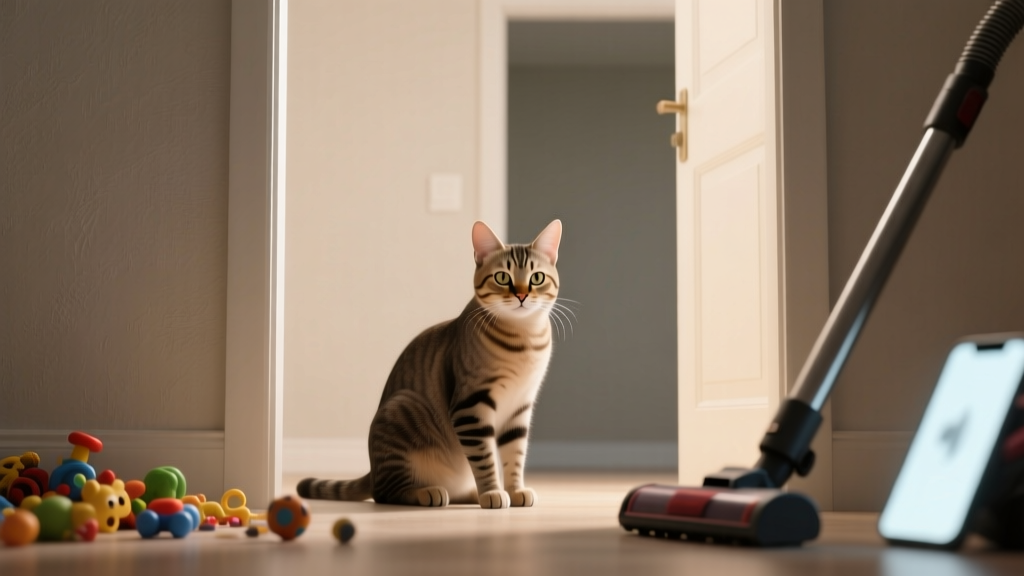
How to Control Cats Behavior Pros and Cons
Why 'Controlling' Cat Behavior Is the Wrong Goal—And What to Do Instead
If you've ever searched how to control cats behavior pros and cons, you're likely frustrated, exhausted, or worried—maybe your cat is spraying outside the litter box, biting during petting, or shredding your couch at 3 a.m. But here’s the uncomfortable truth no one tells you: cats aren’t disobedient toddlers waiting for discipline—they’re autonomous predators wired for choice, safety, and environmental predictability. 'Control' implies dominance; what cats actually need is influence—a blend of environmental enrichment, clear communication, and compassionate behavior modification rooted in feline neuroscience.
According to Dr. Sarah Heath, a European Veterinary Specialist in Behavioural Medicine, \"Cats don’t respond to coercion because their stress response activates faster and lasts longer than dogs’. A single scolding can spike cortisol for up to 48 hours—undermining trust and escalating reactivity.\" That’s why this guide doesn’t offer quick fixes. Instead, it walks you through evidence-based strategies—each with transparent, vet-validated pros and cons—so you can choose interventions that protect your cat’s mental health while restoring household harmony.
1. The 4 Pillars of Ethical Feline Behavior Influence
Before diving into tools or tactics, understand the non-negotiable foundation. As certified cat behaviorist Mikel Delgado, PhD, explains: \"Every successful intervention rests on four pillars: safety, predictability, choice, and species-appropriate outlets.\" Skip any one—and even the 'best' method fails.
Safety means your cat feels physically and emotionally secure. That includes safe retreat spaces (e.g., elevated perches, covered beds), freedom from forced handling, and zero exposure to aversive stimuli (like citrus sprays near food bowls or loud vacuuming during naps). One 2022 study in Applied Animal Behaviour Science found cats housed in low-safety environments were 3.7× more likely to develop redirected aggression.
Predictability reduces anxiety-driven behaviors. Feed, play, and interaction times should follow consistent daily rhythms—even small shifts (e.g., dinner at 6:15 p.m. instead of 6:00 p.m.) trigger subtle stress cues visible only to trained observers: tail flicking, ear rotation, or overgrooming.
Choice is where most 'control' attempts backfire. Forcing a cat onto your lap—or holding them still for nail trims—erodes consent. Instead, use target training: teach them to touch a stick with their nose for treats, then gradually shape that into stepping onto a scale, entering a carrier, or accepting gentle paw touches. This builds cooperative confidence—not compliance.
Species-Appropriate Outlets address instinctual needs. Scratching isn’t 'destruction'—it’s scent-marking, muscle stretching, and claw maintenance. Biting during play isn’t 'aggression'—it’s under-stimulated hunting behavior. Provide vertical space (cat trees ≥ 5 ft tall), interactive wand toys used for 3–5 minute sessions twice daily, and puzzle feeders that mimic foraging. A 2023 Cornell Feline Health Center trial showed cats given daily 10-minute 'hunt-eat-groom-sleep' cycles reduced attention-seeking vocalization by 68% in 3 weeks.
2. Method-by-Method Breakdown: What Works, What Doesn’t, and Why
Let’s cut through the noise. Below is a side-by-side comparison of six widely used approaches—evaluated not just on short-term results, but on impact to welfare, sustainability, and risk of unintended consequences.
| Method | How It Works | Key Pros | Key Cons | Vet Recommendation Status* |
|---|---|---|---|---|
| Positive Reinforcement Training | Rewards desired behaviors (e.g., using scratching post) with treats, praise, or play | Builds trust; strengthens human-cat bond; zero physical/psychological risk; works for all ages/life stages | Requires consistency (3–5 min/day); slower initial results than punishment; owners often mis-time rewards | ✅ Strongly Recommended (AVSAB, ISFM) |
| Feliway Diffusers | Releases synthetic feline facial pheromone (F3) to signal safety | Non-invasive; clinically shown to reduce urine marking by 54% in multicat homes (JAVMA, 2021); ideal for stress-related spraying | Doesn’t address root cause (e.g., litter box issues); ineffective for fear-based aggression; requires 2–4 weeks for full effect | ✅ Recommended for situational anxiety |
| Clicker Training | Paired sound marks exact moment of desired behavior, followed by reward | Sharpens timing accuracy; accelerates learning; empowers cats with clear feedback; excellent for medical cooperation (e.g., pill administration) | Requires owner dexterity & patience; ineffective if used inconsistently; may confuse cats if paired with punishment | ✅ Recommended (IAABC Certified Trainers) |
| Citrus or Vinegar Sprays | Uses aversive odor to deter scratching or lounging on furniture | Low-cost; immediate deterrent effect on surfaces | Triggers fear-based avoidance; damages trust; may redirect behavior to worse locations (e.g., carpet); toxic if ingested; violates ASV guidelines on aversives | ❌ Not Recommended |
| Time-Outs (Confinement) | Placing cat in isolated room after unwanted behavior | May interrupt behavior cycle in moment | Induces panic (cats lack 'time-out' concept); increases cortisol; often escalates hiding/aggression; misinterpreted as punishment by cats | ❌ Strongly Discouraged (ISFM Position Statement, 2020) |
| Anti-Scratch Tape / Vinyl Covers | Physical barrier with unpleasant texture | Non-toxic; easy to apply; protects furniture while alternatives are introduced | Doesn’t teach replacement behavior; may cause frustration if no acceptable scratching surface provided nearby; temporary fix only | ⚠️ Conditionally Acceptable (with concurrent enrichment) |
*AVSAB = American Veterinary Society of Animal Behavior; ISFM = International Society of Feline Medicine; IAABC = International Association of Animal Behavior Consultants
Notice how the top three methods share a critical trait: they add something positive (safety, clarity, reward) rather than removing comfort or autonomy. That’s not coincidence—it’s neurobiology. Cats learn best when their amygdala (fear center) is calm and their prefrontal cortex (decision-making hub) is engaged. Aversives bypass cognition entirely, locking behavior into reactive loops.
3. Real-World Case Study: From Litter Box Avoidance to Consistent Use in 12 Days
Meet Luna, a 3-year-old spayed domestic shorthair who began urinating on laundry piles after her owner adopted a second cat. Her vet ruled out UTI, so behaviorist consultation began. Here’s what changed—and why:
- Day 1–3: Removed all litter boxes from high-traffic areas. Placed two new boxes (one per cat) in quiet, low-light corners with unscented, clumping litter (depth ≥3 inches). Added Feliway diffusers in both rooms.
- Day 4–6: Introduced clicker training: clicked + treated each time Luna approached a box—even if she didn’t enter. Paired with gentle play sessions immediately after successful use.
- Day 7–9: Added vertical space near boxes (a shelf 18” above floor) so Luna could survey her territory before descending.
- Day 10–12: Gradually moved boxes 6 inches/day toward original locations—only if Luna used them consistently. No punishment, no cleaning with ammonia-based products (which smell like urine to cats).
Result? By Day 12, Luna used both boxes reliably. Her owner reported decreased vigilance (less tail-twitching near doorways) and increased napping in shared spaces. Crucially, the second cat also began using boxes more frequently—a ripple effect of reduced inter-cat tension.
This worked because it addressed the function of the behavior: Luna wasn’t ‘being bad’—she was signaling insecurity in a newly competitive environment. Her solution wasn’t control. It was recalibrating her sense of safety.
4. When to Call a Professional—And How to Choose One
Not every behavior issue resolves with DIY strategies. According to the American Association of Feline Practitioners, consult a board-certified veterinary behaviorist (DACVB) or IAABC-certified cat behavior consultant if your cat shows:
- Unprovoked aggression (biting without warning signs like flattened ears or hissing)
- Self-mutilation (excessive licking causing bald patches or sores)
- Sudden onset of inappropriate elimination after >6 months of perfect litter use
- Phobic reactions to everyday sounds (e.g., panicking at microwave beeps)
- Compulsive behaviors (tail-chasing, fabric sucking lasting >10 minutes/day)
Avoid trainers who advertise 'dominance correction,' use prong collars, or promise 'guaranteed results in 1 session.' Ethical professionals always conduct a full medical workup first (many behavior changes stem from pain or thyroid disease) and provide written plans—not scripts. Ask: \"Do you collaborate with my veterinarian?\" and \"What’s your protocol if progress stalls?\"
Frequently Asked Questions
Can I train an older cat—or is it too late?
Absolutely not too late. While kittens learn fastest, adult and senior cats retain neuroplasticity. A landmark 2020 study tracked 47 cats aged 7–16 years undergoing positive reinforcement training: 89% mastered at least one new cue (e.g., 'touch' or 'come') within 4 weeks. Key? Shorter sessions (2–3 minutes), higher-value rewards (e.g., tuna juice-soaked kibble), and respecting nap cycles. One 14-year-old diabetic cat learned to voluntarily step onto a scale for weight checks—reducing stress during vet visits dramatically.
Is spraying always behavioral—or could it be medical?
Spraying is always a red flag requiring veterinary evaluation first. Up to 30% of cases involve underlying conditions: urinary tract infections, bladder stones, kidney disease, or hyperthyroidism. Even if tests come back 'normal,' chronic low-grade inflammation or pain can manifest solely as marking behavior. Rule out medical causes before assuming it's 'just stress.' Your vet should perform urinalysis, bloodwork, and abdominal ultrasound—not just a physical exam.
Will neutering/spaying stop aggression or spraying?
It significantly reduces hormonally driven behaviors—but doesn’t eliminate them. In males, neutering decreases spraying by ~90% if done before 6 months. In females, spaying cuts heat-cycle aggression by ~95%. However, if spraying or fighting began *after* sexual maturity—or persists post-alteration—it’s likely rooted in anxiety, resource competition, or learned habit. Neutering is necessary but rarely sufficient alone.
Are shock collars or spray bottles ever justified for cats?
No—never. Both violate the AVSAB’s 2023 position statement prohibiting tools that cause fear, pain, or injury. Shock collars induce cardiac stress responses measurable via ECG; spray bottles trigger startle reflexes that generalize to hands, water bowls, or even your face. These methods increase bite risk by 400% (Journal of Veterinary Behavior, 2022) and correlate strongly with lifelong avoidance behaviors. There is zero peer-reviewed evidence supporting their safety or efficacy for cats.
Common Myths
Myth #1: “Cats can’t be trained—they’re too independent.”
False. Cats are highly trainable—but motivation differs from dogs. They respond to high-value, immediate rewards (not praise alone) and require shorter, more frequent sessions. Shelter cats taught 'sit' and 'target' commands had 32% faster adoption rates in a 2021 ASPCA study.
Myth #2: “If I ignore bad behavior, it’ll go away on its own.”
Often false—and dangerous. Ignoring medical pain (e.g., arthritis causing litter box avoidance) or untreated anxiety (e.g., chronic stress weakening immunity) lets problems escalate. Passive neglect isn’t neutrality—it’s delayed intervention.
Related Topics
- Cat Aggression Types and Solutions — suggested anchor text: "understanding cat aggression"
- Best Litter Boxes for Multi-Cat Households — suggested anchor text: "multi-cat litter box setup"
- Enrichment Ideas for Indoor Cats — suggested anchor text: "indoor cat enrichment activities"
- When to See a Veterinary Behaviorist — suggested anchor text: "signs your cat needs a behaviorist"
- Feline Hyperesthesia Syndrome Explained — suggested anchor text: "cat rippling skin syndrome"
Your Next Step Starts With Observation—Not Intervention
You now know how to control cats behavior pros and cons—but more importantly, you understand why 'control' is the wrong frame. True influence begins with watching: What triggers the behavior? What happens right before—and right after? Does your cat have escape routes? Are resources (litter, food, resting spots) fairly distributed? Grab a notebook and log three days of patterns. Then pick one pillar—safety, predictability, choice, or outlet—to strengthen first. Small, consistent shifts compound. Your cat isn’t resisting you. They’re asking—through behavior—for clarity, security, and respect. Start there, and everything else follows.